
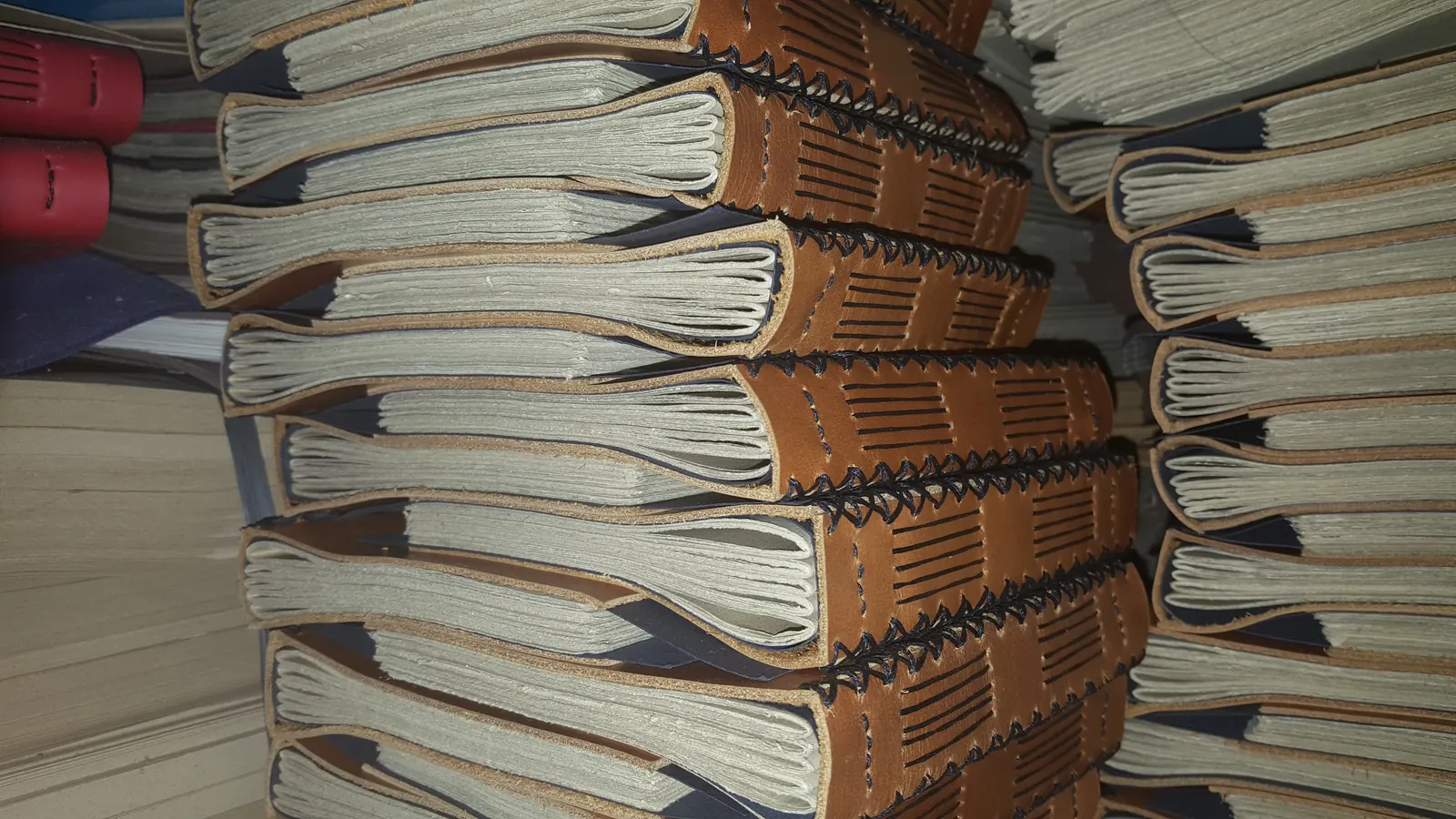
Bulk & White Label
Bulk Order & White Label Leather Journals: Your Brand, Our Craftmanship
Looking for a reliable manufacturer to produce premium handmade leather journals under your own brand? Hibrkraft is a leather journal workshop based in Cileungsi, Bogor, Indonesia with capacity up to 2,000 units per month. We serve stationery brands, corporate gifting companies, Etsy sellers, and entrepreneurs who want quality leather notebooks without building their own production facility.
Indonesian buyers usually search for this as pabrik buku agenda, produsen notebook custom or supplier jurnal kulit — that is this page. If you bind the books yourself and only need the covers, that is cover & komponen instead.
- 3 models
- 50–5,000 units
- 5 countries shipped
We handle manufacturing. You handle your brand and customers. Simple partnership.
Three models
Which model do you need?
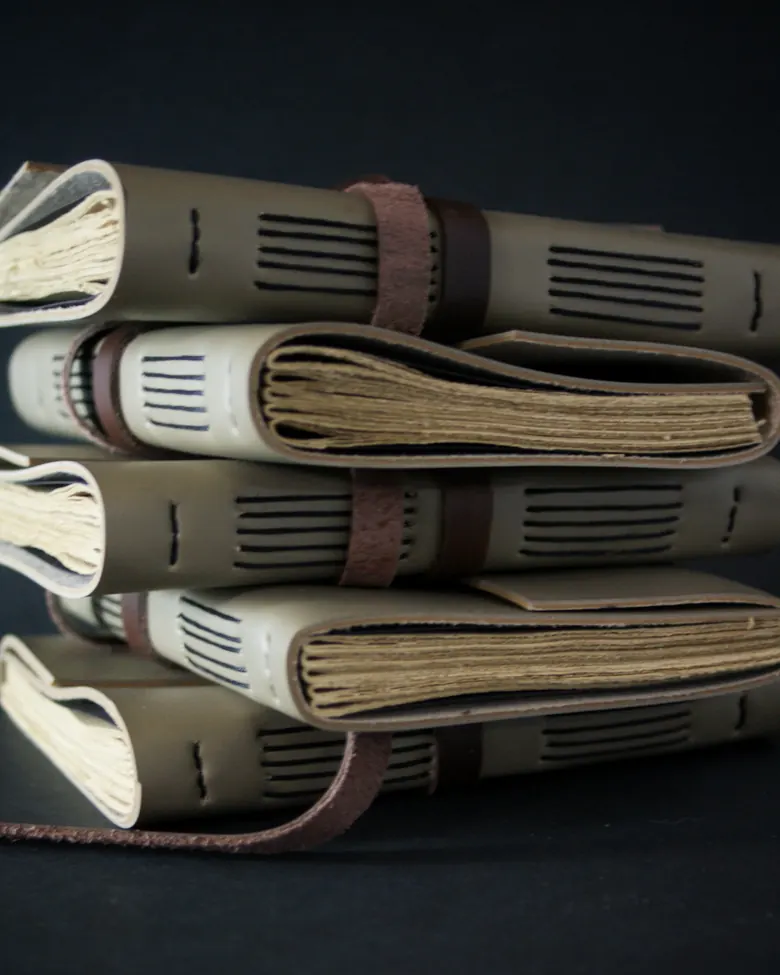
Every order here is one of three models. The difference is what happens to Hibrkraft's own mark on the product, and how much of the design is already decided. Pick the row that matches what you have today.
| Model | MOQ | Branding | Best for |
|---|---|---|---|
| Bulk Order | 50 units domestic, 100 for export | Your logo added to an existing catalog design | Corporate gifts, event merchandise, promotional items |
| White Label | 100 units | Every Hibrkraft mark removed; base shape still ours, adapted to your spec | Stationery brands and Etsy sellers scaling production |
| Private Label | 100 units per design | Fully your brand, built to your own material and design standards | Brands that need their own material standards and IP terms fixed before the first unit |
Side by side
Bulk order, white label and private label, compared
All three run through the same workshop and the same craftsmen. What changes is who owns the design and whose name ends up on the product.
| What matters | Bulk Order | White Label | Private Label |
|---|---|---|---|
| Base design | From our catalog | From our catalog, adapted to your spec | Built new, to your own standards |
| Hibrkraft branding on the product | Replaced by your logo | Removed entirely | Never present |
| Minimum order | 50 units domestic, 100 export | 100 units | 100 units per design |
| What you provide | A logo file | A brief, plus approved artwork | Material standards, brand guidelines, and an NDA if you need one |
| Full detail | Bulk ordering guide | White label process | Private label requirements |
Construction
What is actually being manufactured
The three models differ in whose name ends up on the product. They do not differ in how the book is built — every unit, in all three, is made to the same construction by the same craftsmen.
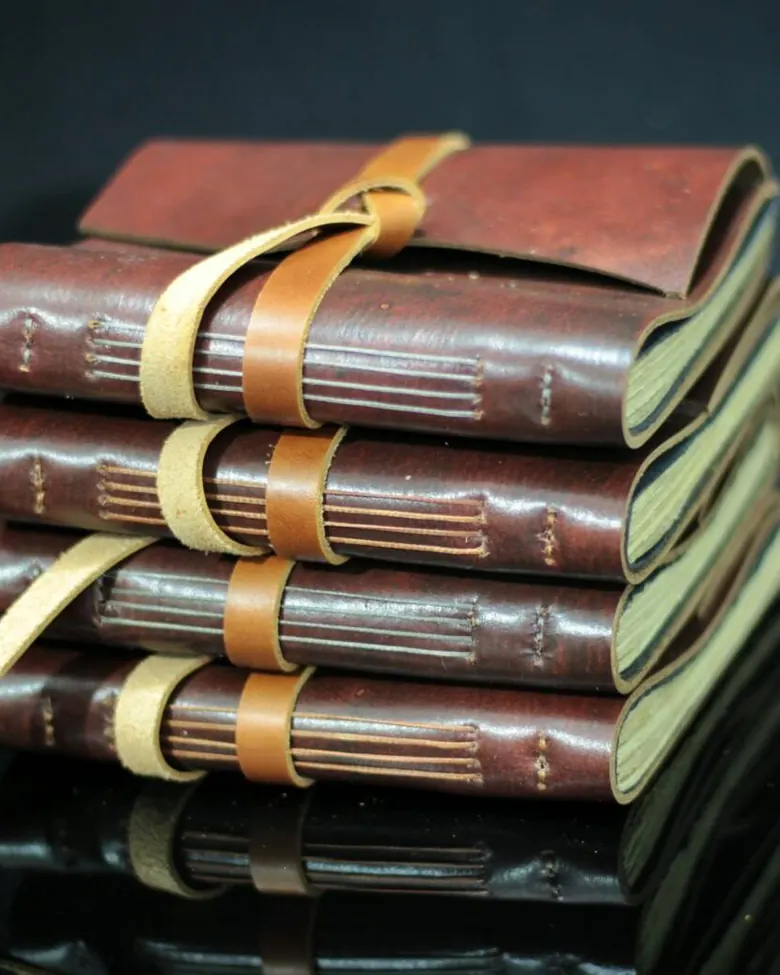
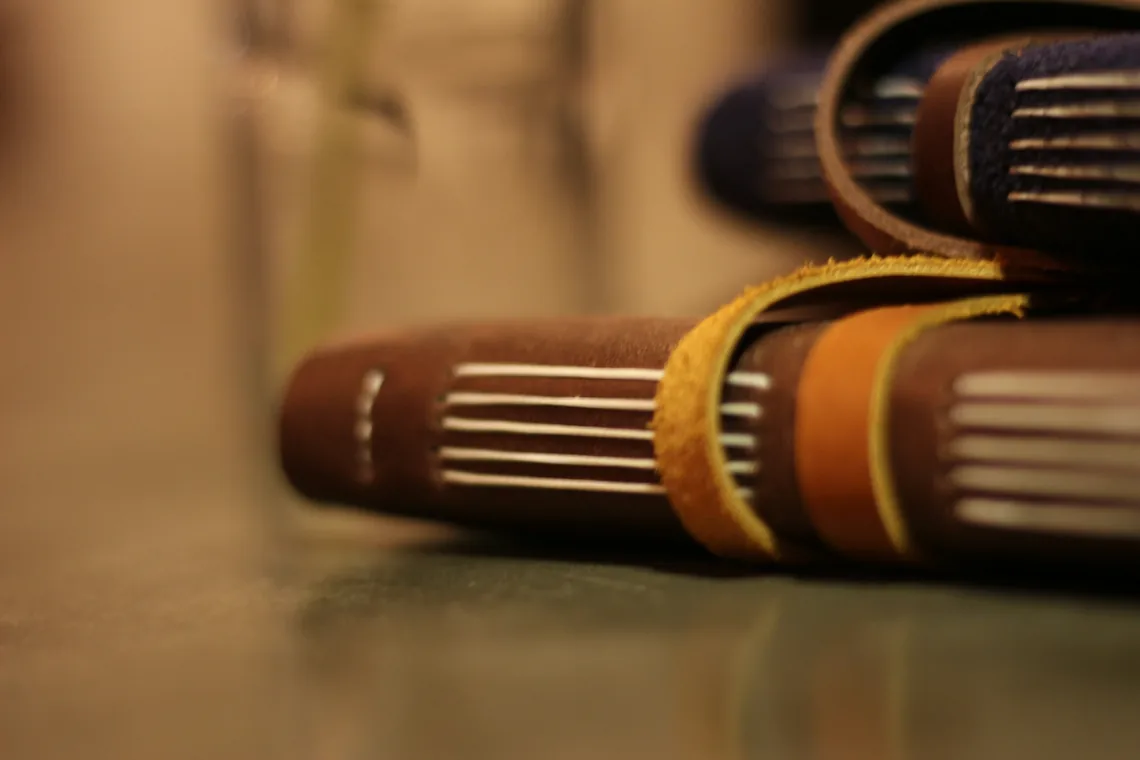
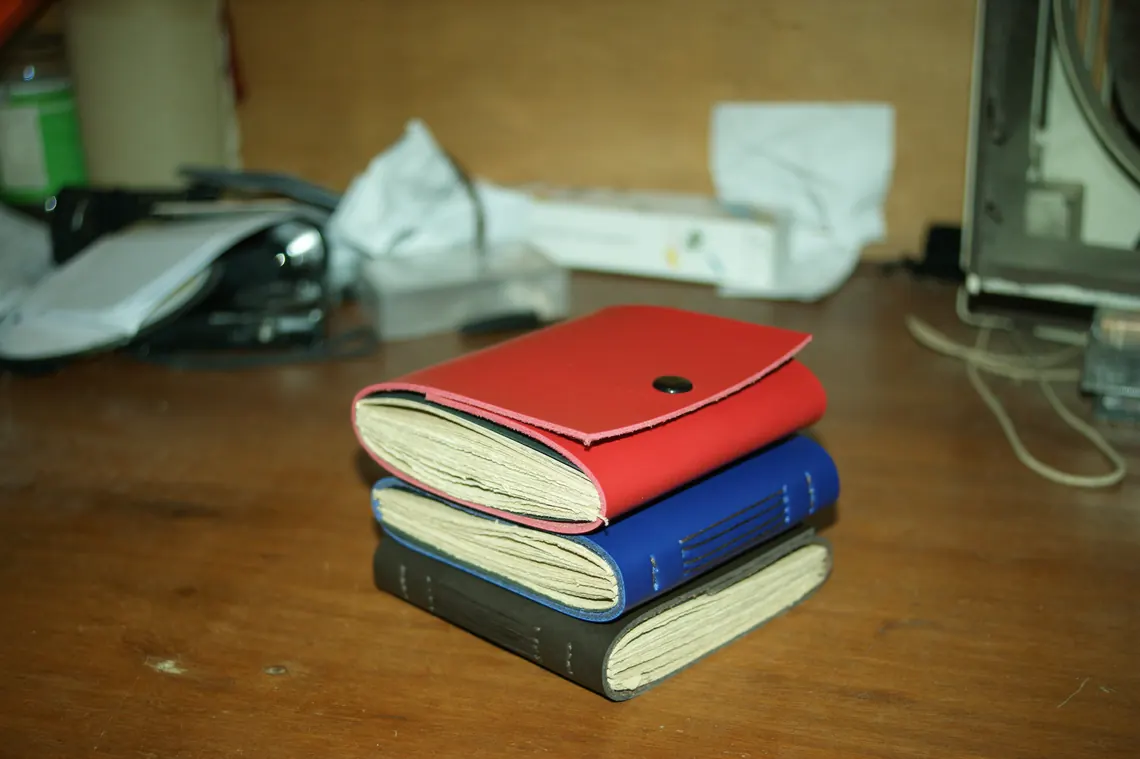
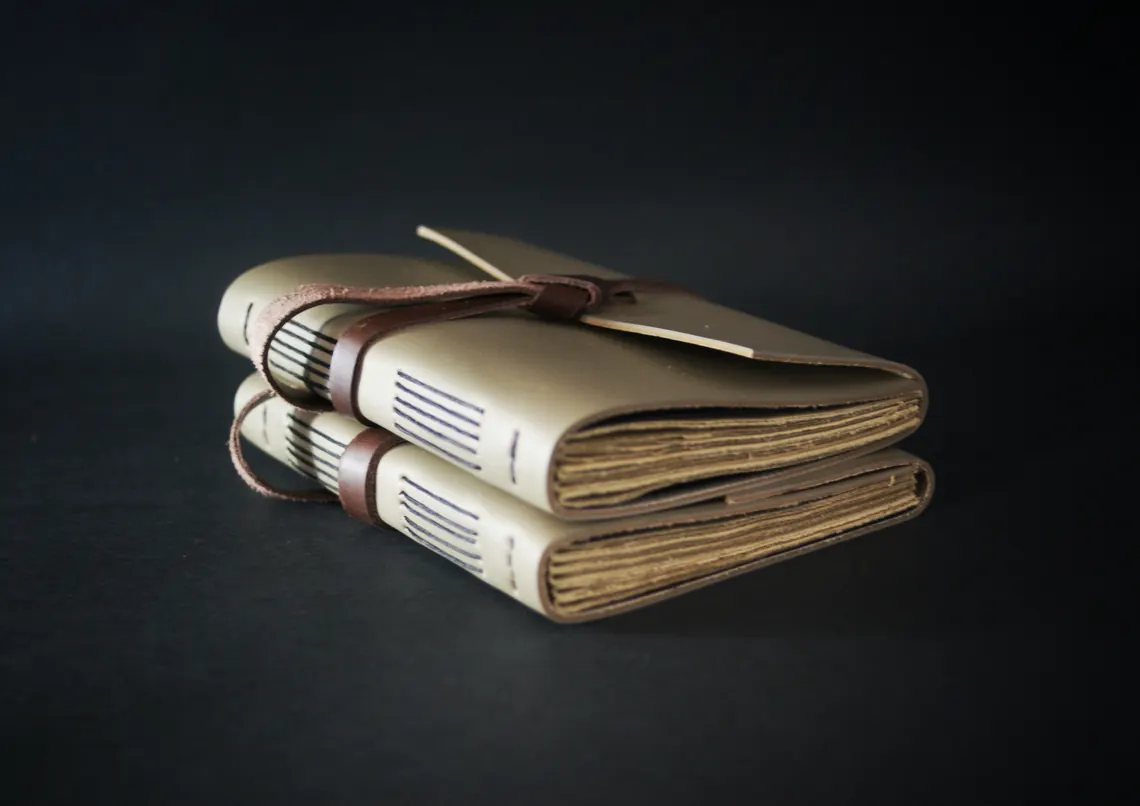
Dijahit, bukan dilem. Sewn, not glued. Paper is folded into signatures (katern), punched, and sewn one section at a time with waxed thread. Sewing costs more than gluing. Two consequences follow, and both can be checked by opening a finished unit rather than taken on trust: the book opens flat without being held, and the spine does not crack after some years.
Structures executed
| Structure | Where it is used |
|---|---|
| Saddle stitch through the folds, waxed thread | The default for custom notebooks. Opens flat and does not depend on glue. |
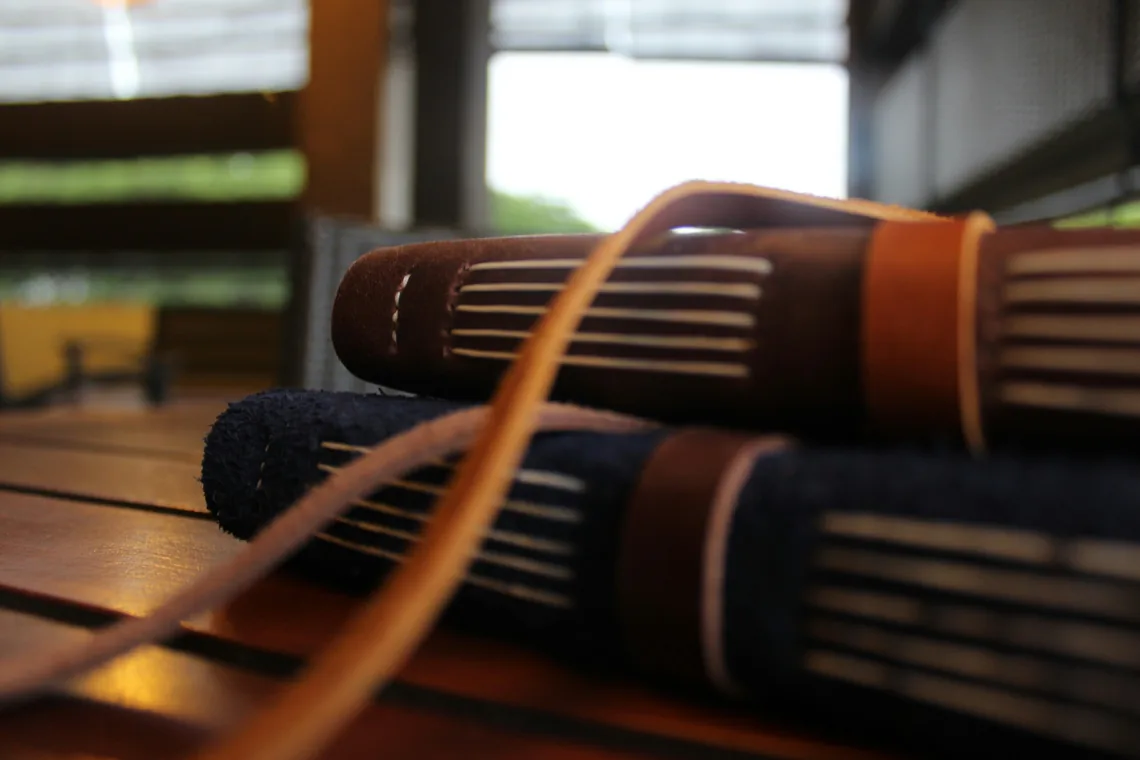
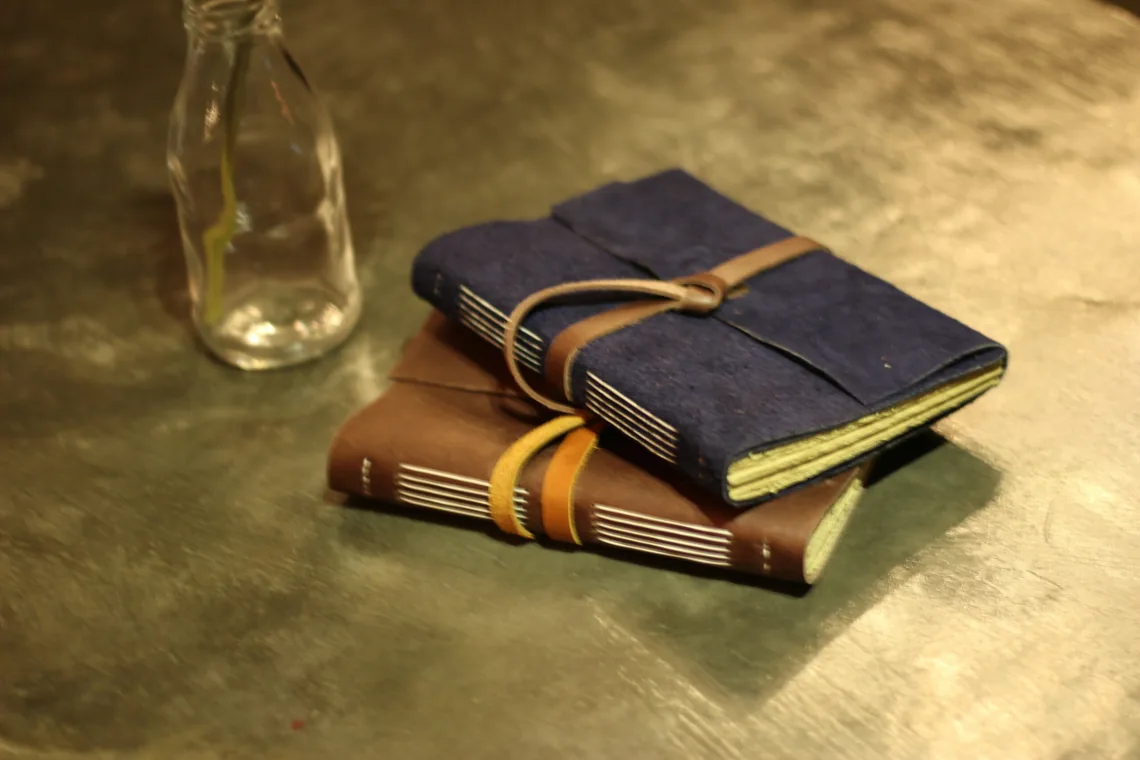
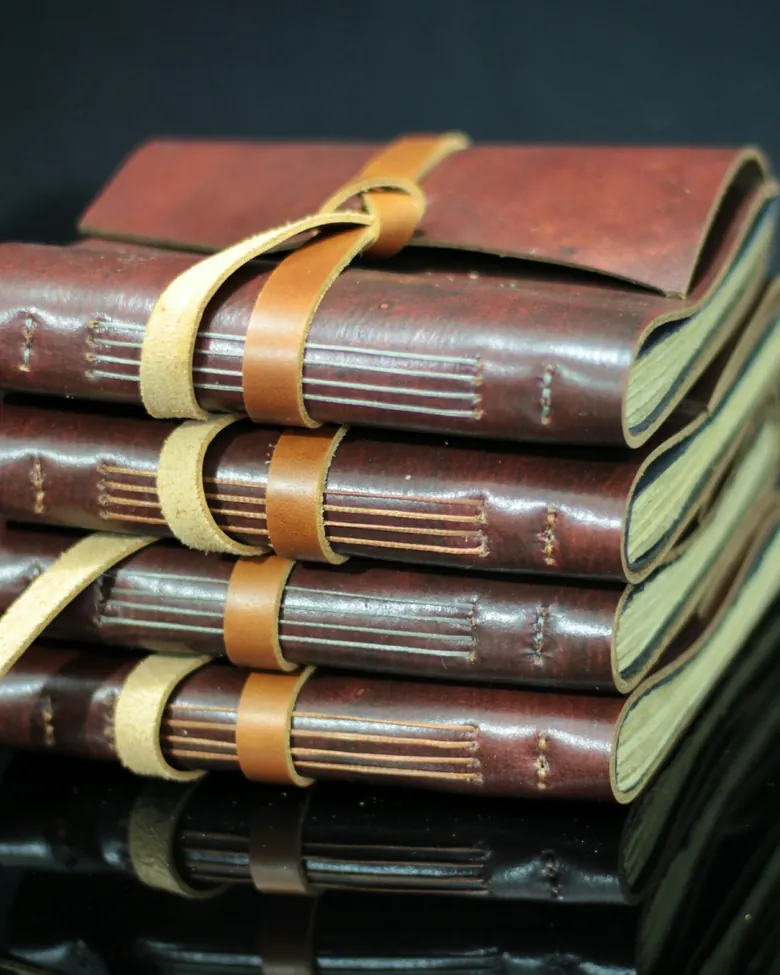
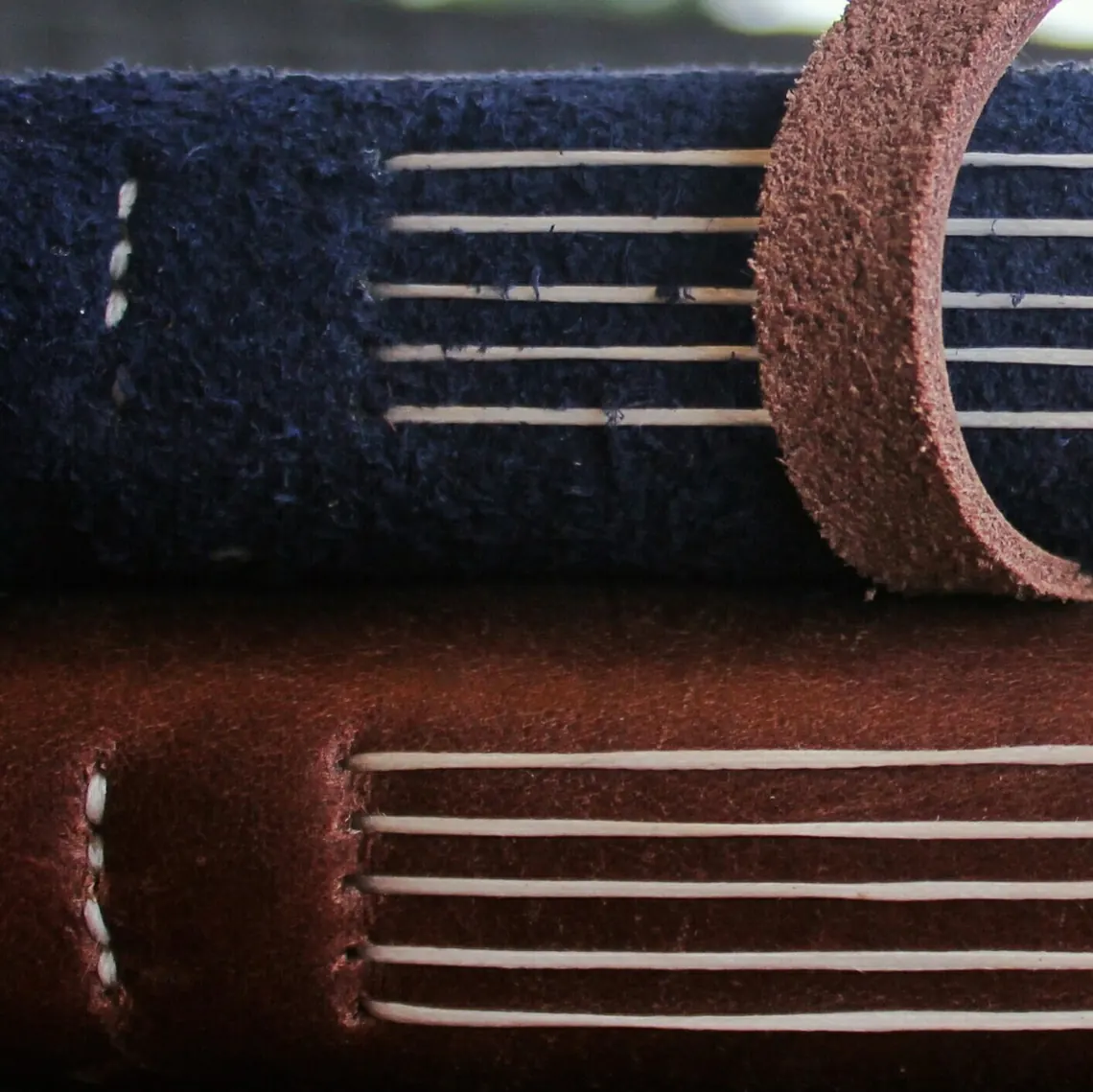
| Coptic stitch | The workshop's signature. Exposed spine sewing, shown above. |
| Case binding | Hardcover. |
| Long stitch | Sections sewn through the cover itself, so cover and text block are joined in one operation. |
| Japanese stab binding | Single leaves sewn through the binding margin rather than through folds. |
What machines do, and what hands do
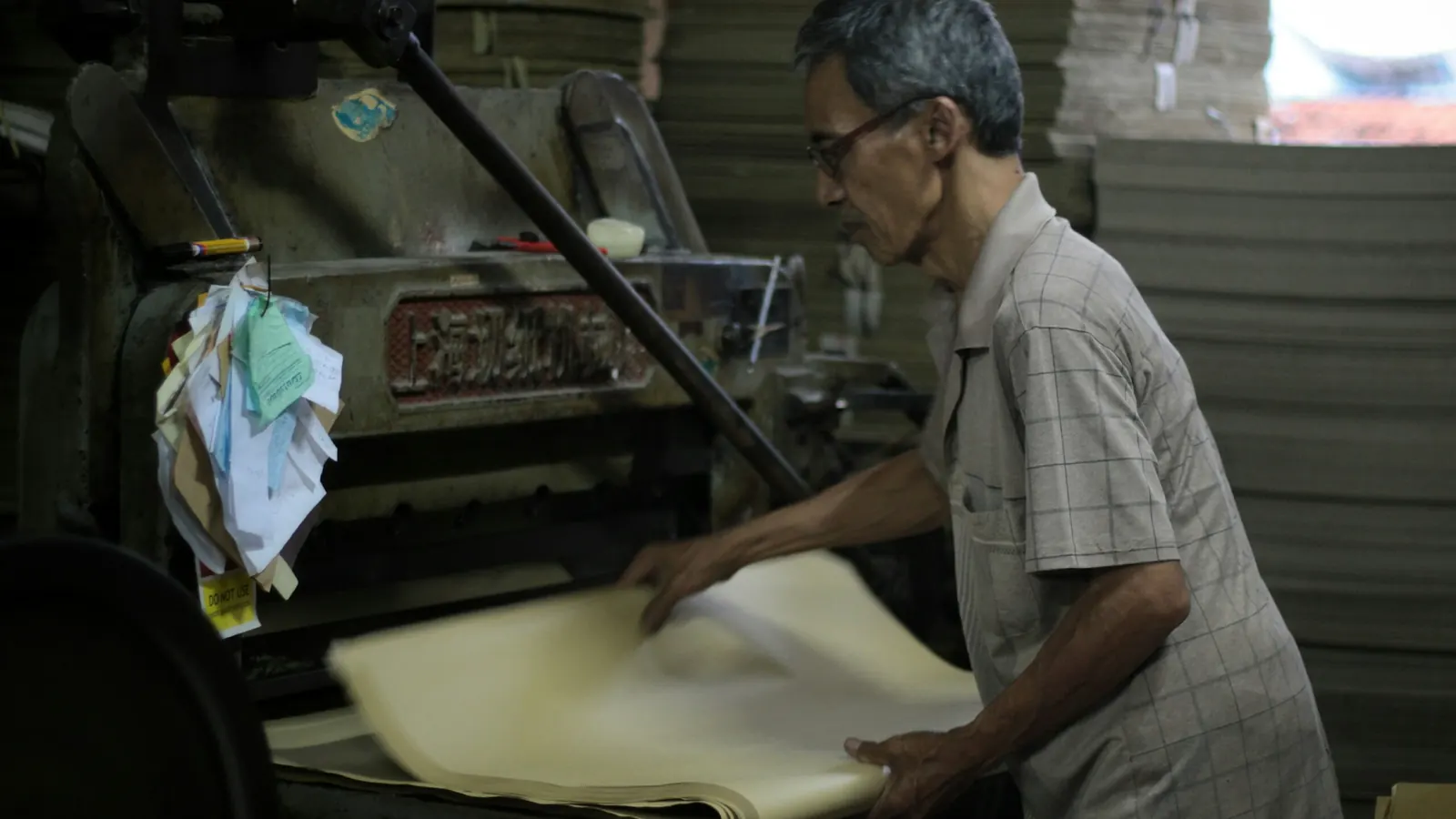
Named rather than implied. Cutting, pressing and laser engraving are machine operations. Binding, stitching and finishing are not.
That division carries one practical consequence for a buyer: because the sewing is hand work, a failure of the sewing is the workshop's own error rather than a tolerance. It is repaired at no charge for twelve months, and no receipt is required.
Specification
Materials, named
Stated as specification rather than adjective. Leather grade and paper weight are the two figures that most often decide whether a sample is approved or sent back.
Leather
| Grade | Note |
|---|---|
| Full grain | The outermost layer of the hide, with the grain intact. |
| Top grain | Sanded and finished above the grain layer. |
| Pull up | Lightens where it is flexed or creased. |
| Vegetable-tanned — kulit nabati | Tanned with plant tannins rather than mineral salts. |
| Crazy horse | A waxed pull-up surface that marks and patinates with use. |
| Chrome tanned | Mineral-tanned; the softer, more colour-stable option. |
| Premium PU | For vegan or budget specifications. Named openly rather than described as leather. |
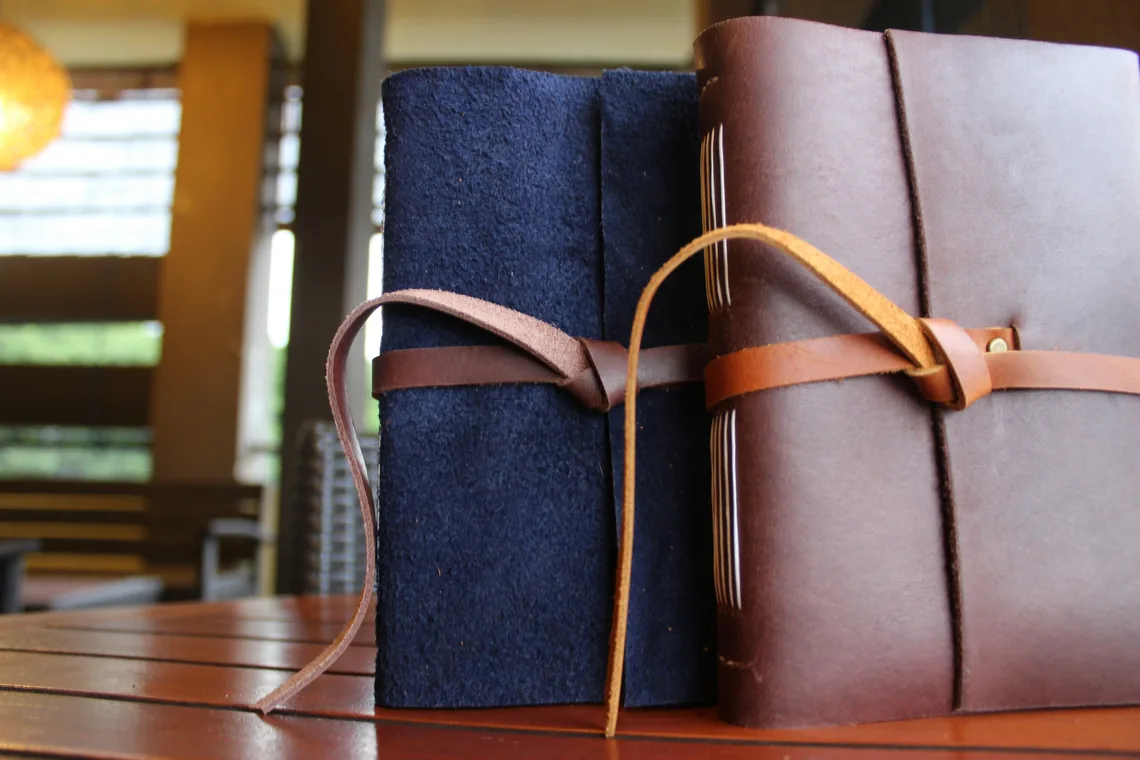
Leather is sourced from Indonesian tanneries in Magelang, Garut and Malang. Eight colours are held as stock — cognac, dark brown, black, navy blue, forest green, burgundy, tan and natural — and colour beyond that range is formulated rather than selected, which is how the Pantone match described above was reached. Clients may supply their own material, subject to prior confirmation.
Paper
| Weight | 80–120 gsm |
|---|---|
| Acid-free | Yes |
| Colours | Ivory, clean white, recycled |
| Rulings | Lined, blank, dotted, grid, or a layout you supply |
| Named stocks | HVS 90 gsm, Bookpaper 90 gsm, Ivory, Paperina |
Interiors are printed to order — calendars, letterheads, tables, or the client's own layout. Thread is waxed, in linen or dedicated bookbinding thread, and thread colour is specified by the client alongside the leather.
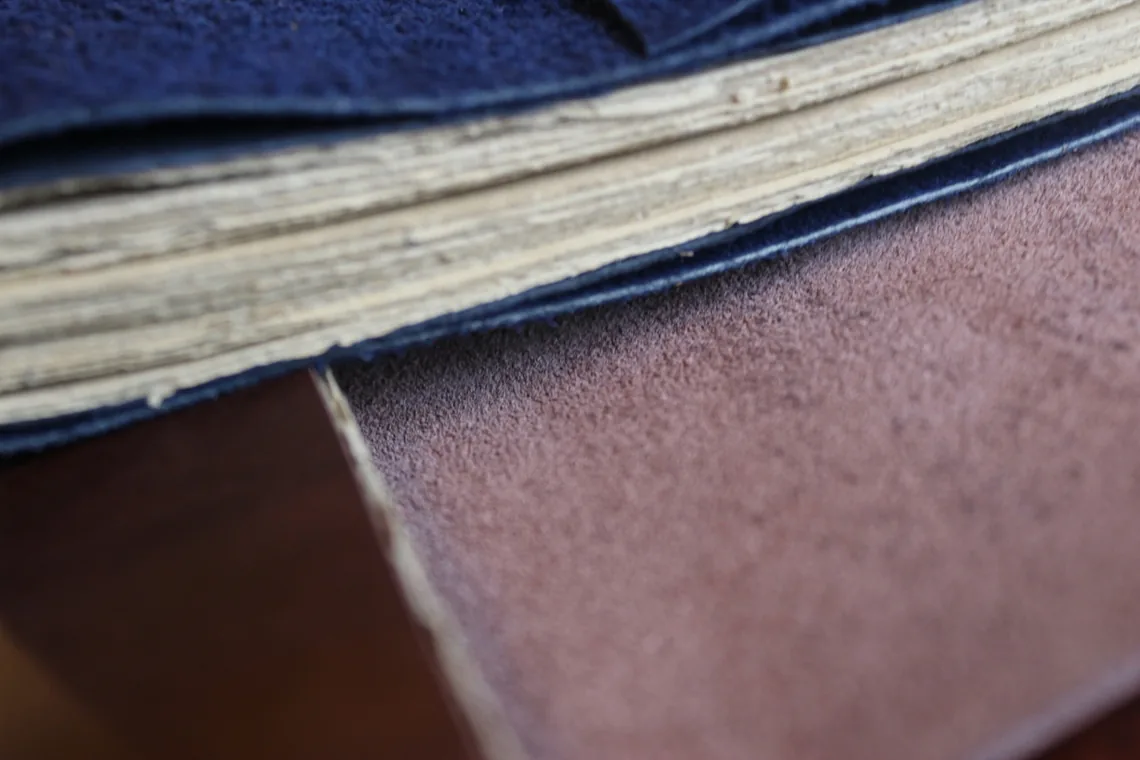
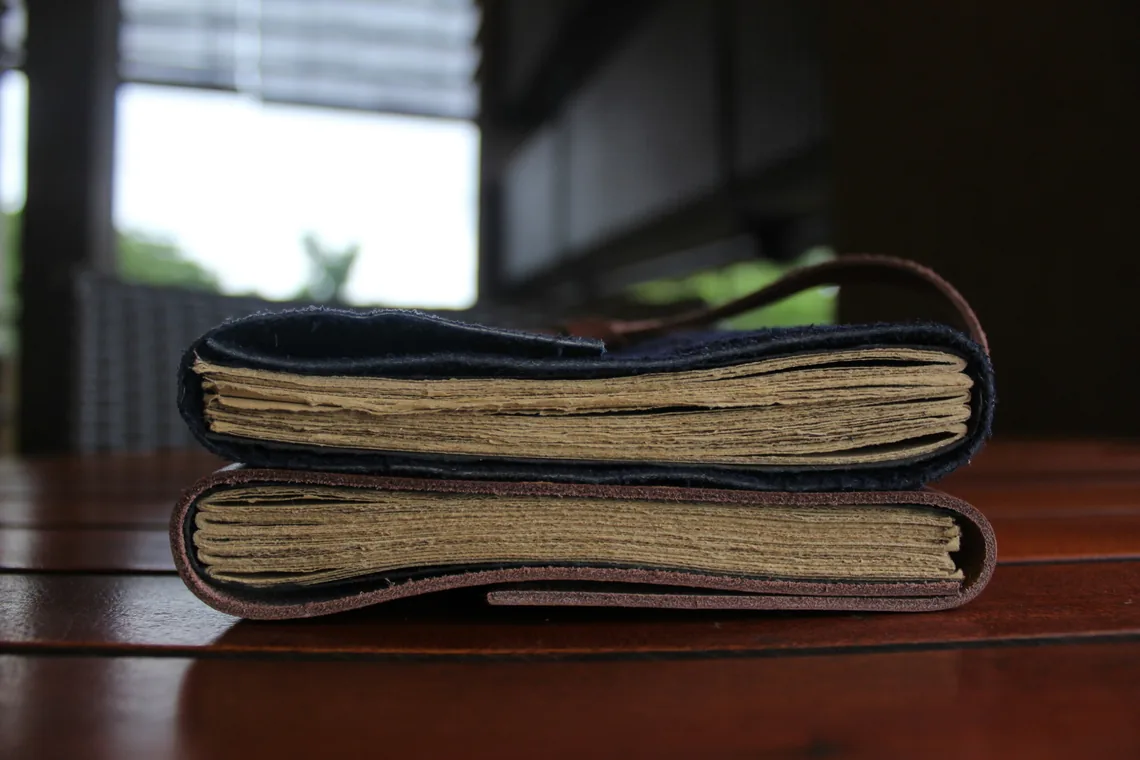
The catalogue size is A5, given as 15 × 21 cm; custom work takes any size, and the range is set out in the journal size guide.
Cost
Pricing
Baseline figures for a standard A5 genuine-leather journal. Actual pricing moves within a tier depending on the leather, marking method and packaging you choose.
- Under 12 units: $50 per unit
- 50 units: $30 per unit
- 100 units: $25 per unit
- 1,000 units: $20 per unit
- 5,000 units: $15 per unit
PU (synthetic) leather runs roughly 50% cheaper than the figures above. For fewer than 50 units, use our standard custom notebook service instead. What moves the price inside a tier is decided on its own page: material and colour, logo and branding technique, and packaging.
Sampling
$50 deposit for sample development, excluding shipping. This deposit applies toward your first production order.
Payment
- Sample
- 100% upfront, $50 minimum deposit.
- Production
- 50% deposit to begin, 50% balance before shipping.
- Methods
- Bank transfer (Indonesian banks for domestic, international wire for overseas), or PayPal.
How many
Minimum order quantity, by order type
One table, every minimum we quote. Every figure below already belongs to the page that owns it — this table only collects them in one place.
| Order type | Minimum | Note |
|---|---|---|
| Bulk order — your branding on an existing catalog design, domestic | 50 units | Where bulk pricing typically starts within Indonesia. |
| Any order shipped outside Indonesia | 100 units | Applies regardless of model — it keeps freight and export paperwork worthwhile per unit. |
| White label — a new design built to your spec | 100 units | Covers design development, sampling and setup. |
| Private label — a new design under your own brand standards | 100 units per design | Same threshold as white label: both develop a new design, so both carry the same setup. |
| Mixed bundle — several sizes, colours or SKUs in one order | 50 units total | The combined order carries the main minimum; see mixed bundles for how it's counted. |
| Corporate gift — your logo added to an existing journal | 25 units | The figure quoted for client-appreciation and onboarding gift orders. |
| Executive gifts — a small run for a handful of recipients | No fixed number | Standard minimums relax for genuinely small, high-value executive quantities; discussed per enquiry. |
| Packaging, interior layout, or a one-off custom design with no production run attached | No minimum | Priced per unit; these do not carry a bulk minimum of their own. |
One minimum per order type, and this table is the only place they are stated. Every other page in this section links here rather than repeating a figure.
Crossing the border
Shipping, export documentation and duty
Every order leaves the same workshop in Bogor, West Java. What changes between a domestic order and an export order is the carrier, the paperwork, and who pays the duty at the other end — stated here because it is usually discovered late.
| Within Indonesia | Export | |
|---|---|---|
| Carrier | JNE, J&T, SiCepat, Paxel | DHL Express |
| Export documentation | Not applicable | Prepared through a third-party logistics partner |
| Import duty and clearance | Not applicable | The buyer's responsibility, and not included in any quoted unit price |
| Minimum | From 50 units on the bulk model | 100 units, whichever model is used |
| Dispatch of ready stock | 1–3 working days from payment confirmation. Production time for a made-to-order batch is separate, and is in the stage table below. | |
The export minimum is not a pricing preference. It is the point at which freight and export paperwork stay worthwhile per unit, which is why it applies to bulk order, white label and private label alike — the same figure appears in the minimum order table above for that reason.
Before batch two
What a repeat order actually depends on
A first order tests whether a workshop can make the thing. A second tests whether it can make the same thing again. These are the three questions brands ask before they put their own name on it, answered with work that is already finished.
Colour that has to match, not approximate
BCS Logistics ordered 100 units on one absolute condition: the orange had to be their corporate Pantone, and “close” was not acceptable. It took several rounds of custom formulation. The reason it was possible is that the leather is dyed here rather than chosen from a supplier's swatch book — which is the difference between matching a brand colour and finding the nearest one in stock.
Consistency between one batch and the next
Leather is a hide, and colour varies across a single hide before it varies between orders. A batch is therefore cut from adjacent areas of the same skin rather than wherever the pattern falls most economically. This is the most common reason a second order looks different from the first, and it is a cutting decision, not a dye problem.
A delivery date that is fixed
BKKBN Sulawesi Utara ordered 200 sets — red hardcover with silver foil emboss, matching pen, custom rigid gift box — to a firm date, for delivery across islands. All 200 arrived on schedule. Full accounts of both jobs are in case studies and testimonials.
How long each stage takes
| Stage | Typical time | Note |
|---|---|---|
| Sample | About 1 week | Three revision rounds are included before any further charge. |
| 50 units | About 2 weeks | From approved sample, not from first contact. |
| 500 units | About 1 month | |
| Large orders | Raise 2–3 months ahead | Capacity is about 2,000 units a month and is booked in sequence. |
If a unit is wrong
Every unit is inspected individually before packing rather than sampled by batch. Defective units are replaced free of charge; the buyer pays only the shipping on the replacement.
What is declined, said plainly
Three kinds of enquiry are turned down rather than quoted badly: orders under 50 units, which are directed to the custom notebook service instead; buyers whose decision is lowest price alone, because this is handwork and it will not win that comparison; and turnarounds too short to sample properly.
Exclusivity, stated before it becomes a dispute
An NDA is signed where one is required. But a similar design may be produced for another client, and both parties are told if that happens. True exclusivity is a licensing discussion, not a default of the order. This is said here rather than in a contract later, because a brand building a catalogue on these books needs to know it at the quotation stage.
A finished example
What a partner's mark looks like on a finished book
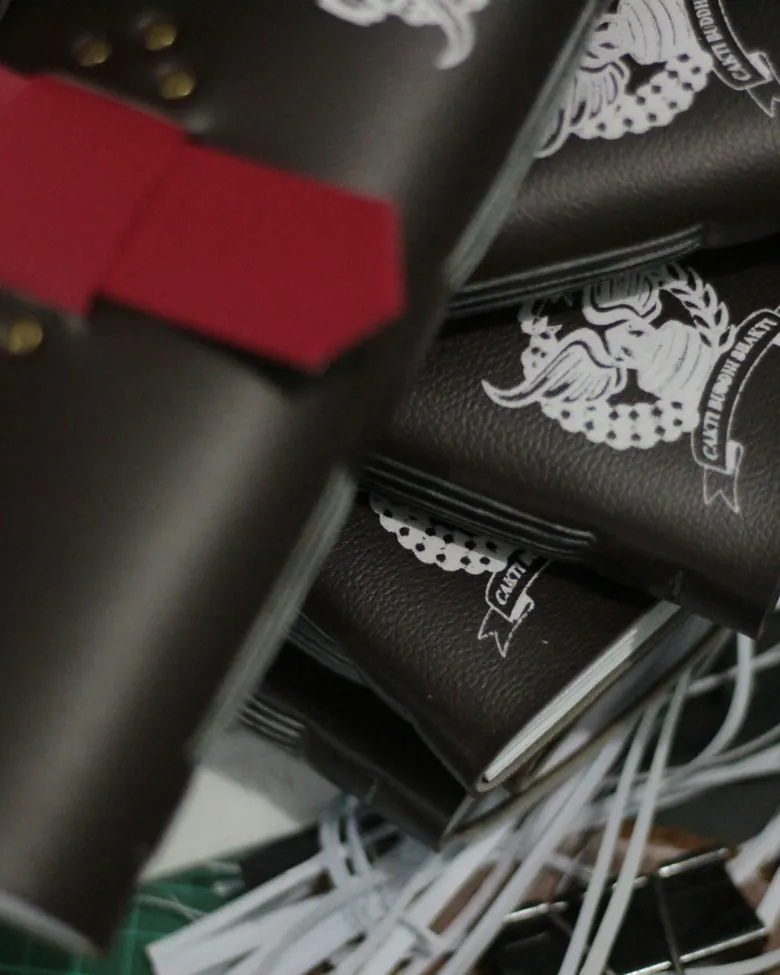
Trevi is one of the workshop's own product lines. The edition photographed here was produced with GNID and carries both marks, which makes it a co-brand rather than a white label — under the white label model in the table above, every Hibrkraft mark comes off. It is shown because it is the clearest finished evidence of the thing a brand is actually buying: a cover, a closure, a label, and an insert system a customer refills.
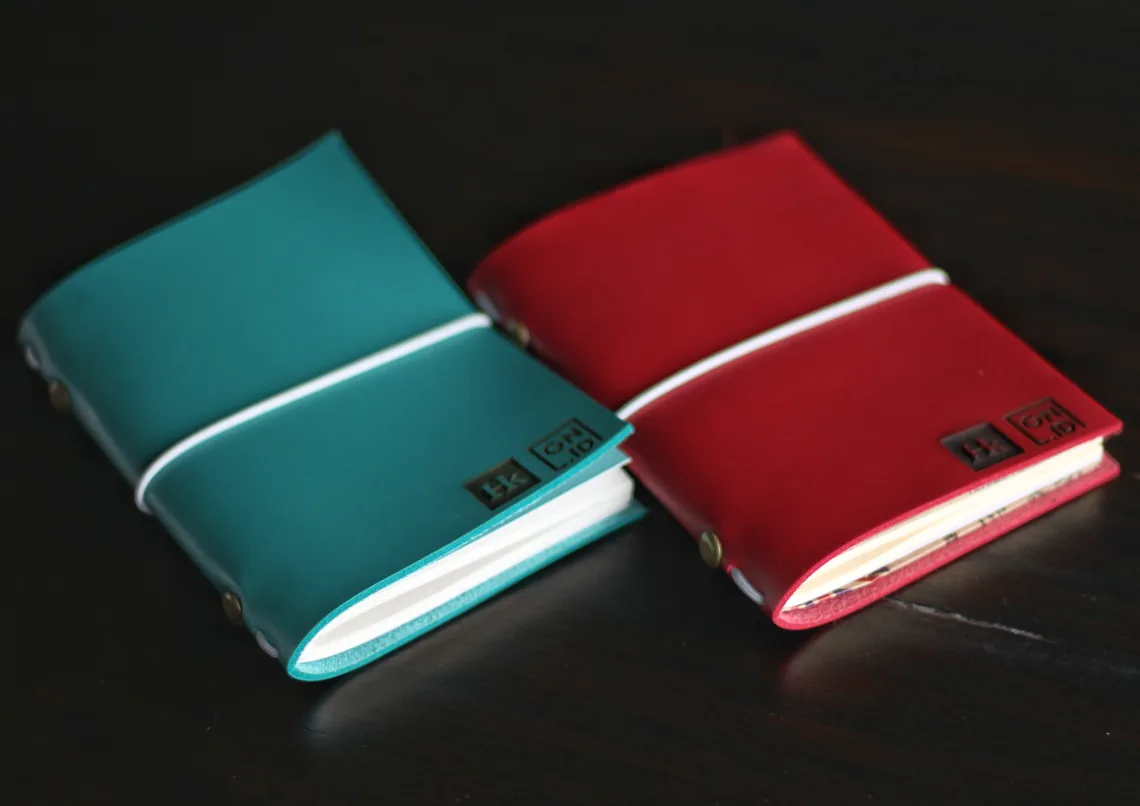
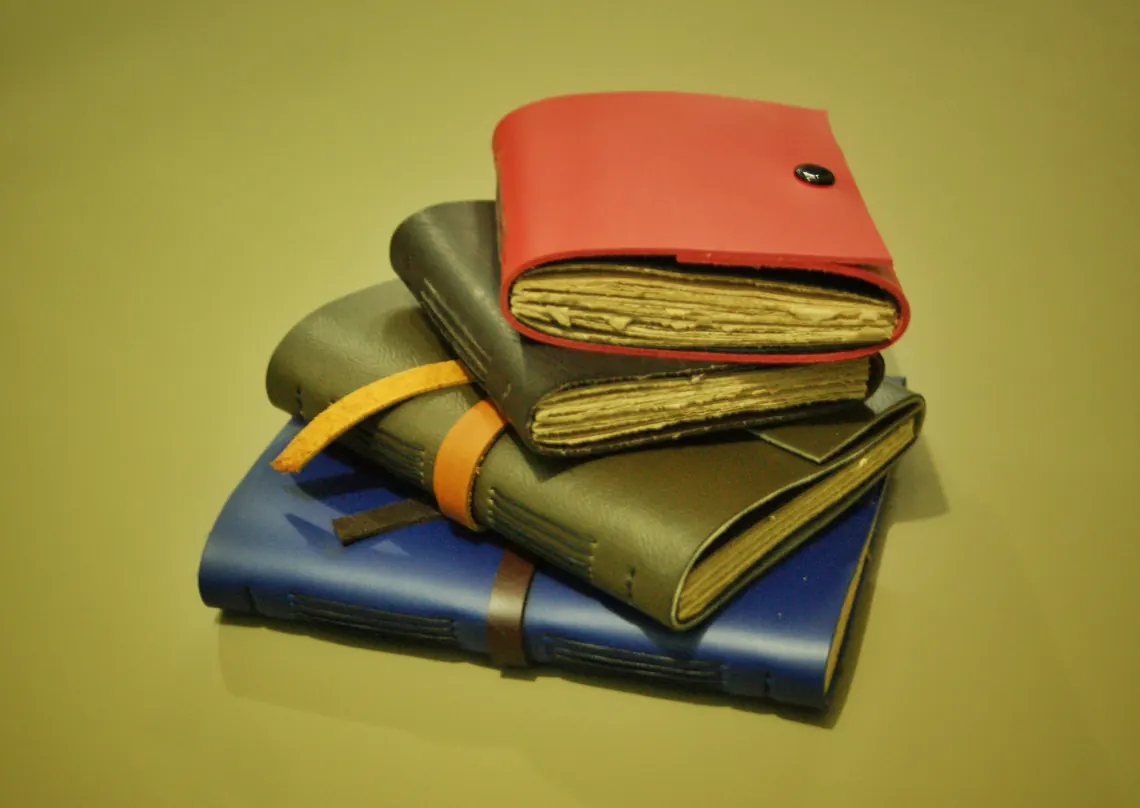
Three things in these photographs are decisions a partner makes rather than defaults: the leather colour, the closure — here an elastic rather than the leather tie shown earlier on this page — and whether the book is a fixed block or refillable. Trevi is refillable: the paper inserts sit in the cover and are replaced one at a time, so the cover is bought once and the inserts recur. For a brand, that is a different commercial shape from a book sold whole.
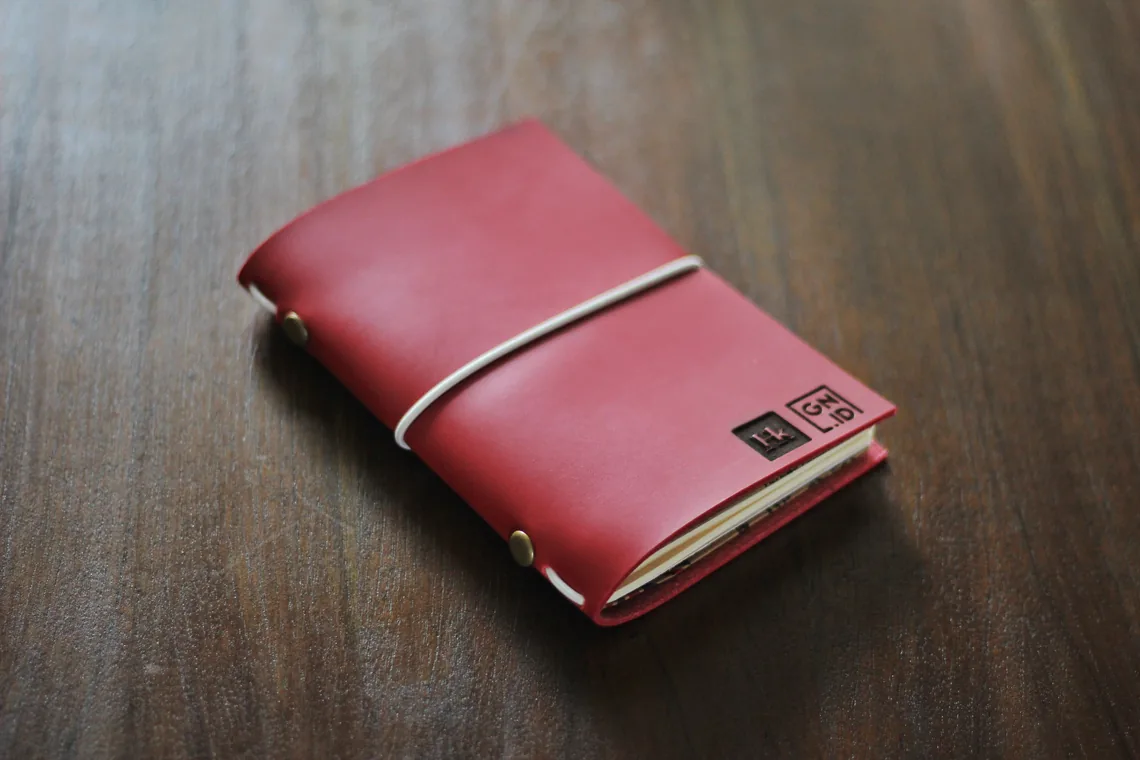
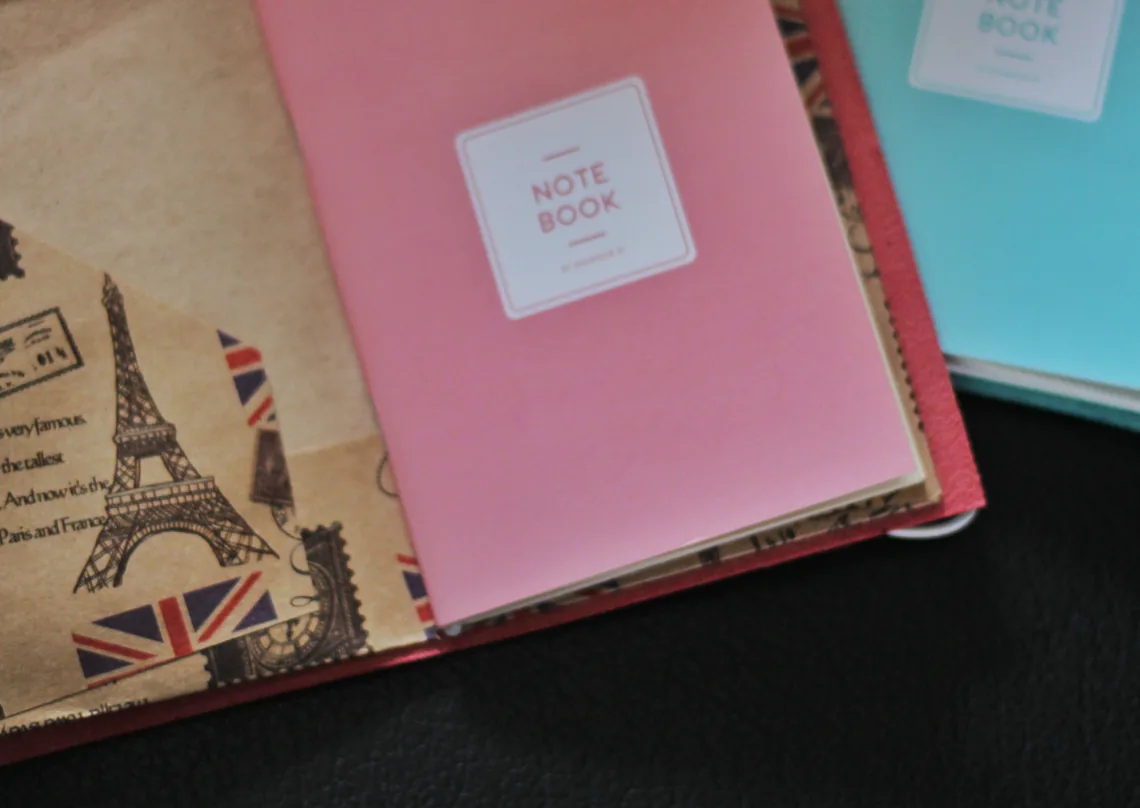
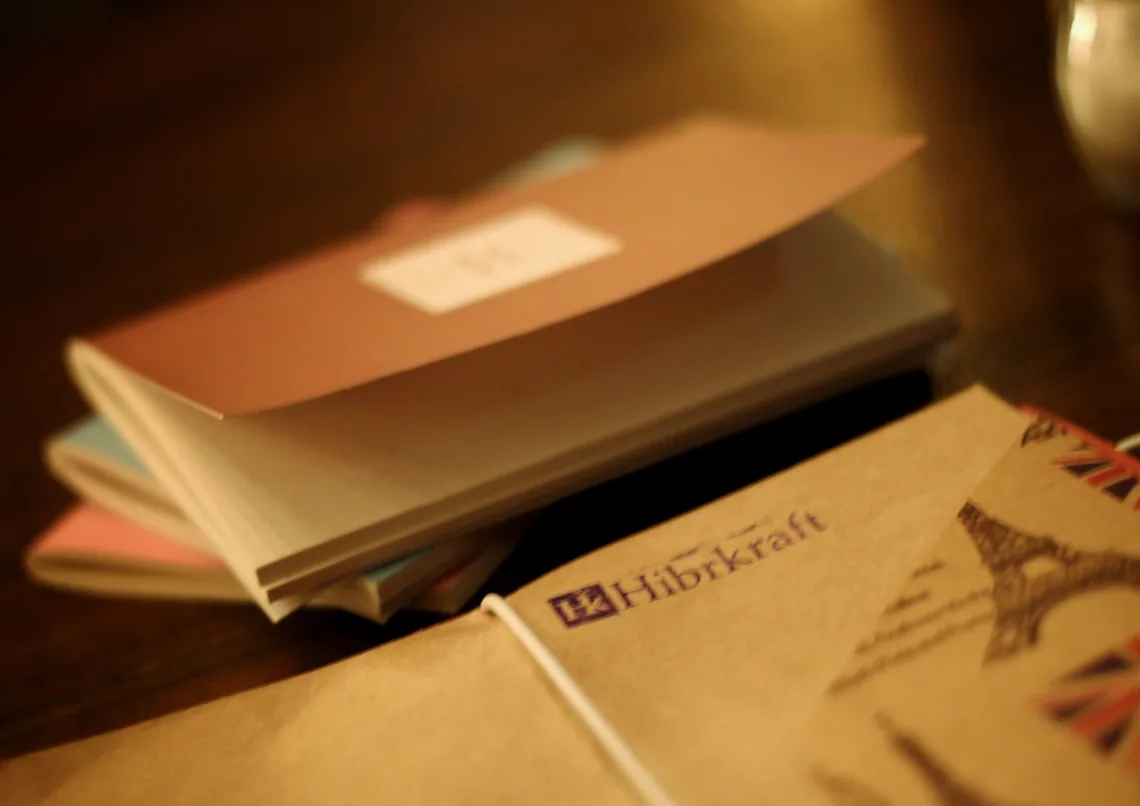
The collaboration itself is set out on programs and partnerships, which is where reseller and collaboration terms live rather than here.
Five pages
Where the detail lives
Each page below does one job. Open the one that matches what you're deciding right now.
 Process
White label process
The six steps from first message to delivered stock, and the artwork we need from you.
 Requirements
Private label requirements
Material standards, brand guidelines, IP and NDA — what has to be agreed before the first unit is cut.
 Schedule
Bulk ordering guide
Counting backward from your delivery date, and what most often delays a batch.
 Combining models
Mixed bundles
Several models in one order, and how the minimum is counted across them.
 Retail packing
Retail-ready product
Barcodes, hang tags and labelling — what a retailer receives in one box.
Material, branding technique and packaging are decided on their own pages, not here: material and colour, logo and branding options, and packaging.
Next step
Tell us the quantity and which model, and we'll quote both
We have shipped to Canada, Germany, Malaysia, the Netherlands and the United Arab Emirates, and we run about 2,000 units a month. Whichever of the three models fits, the first message is the same: what you need, roughly how many, and when.
