
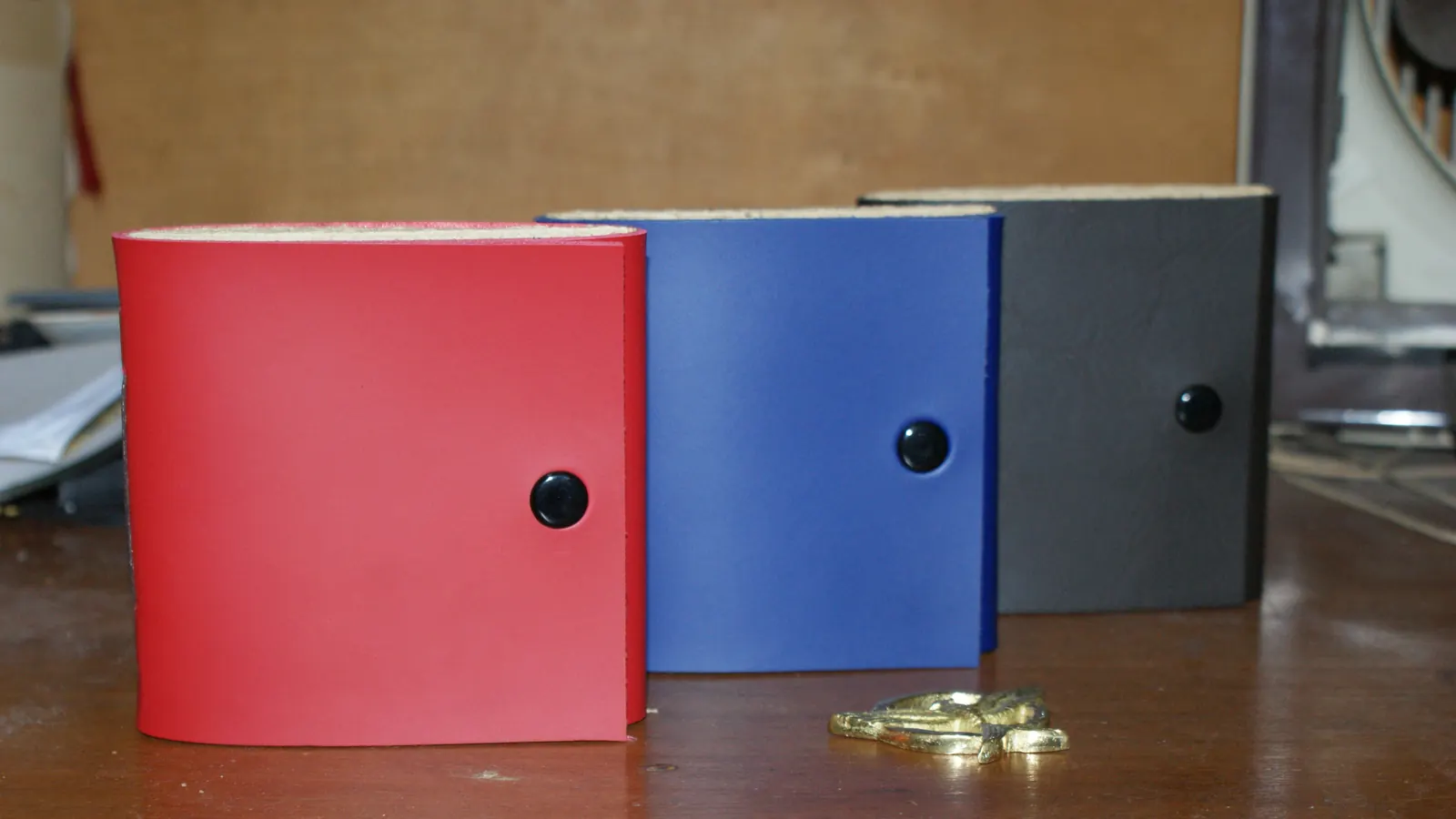
Bulk & White Label
Mixed Bundles: Several Models, One Order, One Marking
This page explains how to combine several different models, sizes or colours within one bulk order, and how the quantity is counted across models. Prices and MOQ are on the bulk & white label page.
- Across models counted as one total
- ~10 units minimum per special-material variant
- 2–3 tiers of recipient recommended
Build a varied product catalogue or a dynamic gift set, within one order and one schedule.
How it is counted
How the quantity is counted across models
The volume discount is calculated from the total units across the whole order rather than per model — order 30 units of model A and 20 of model B and the total counts as 50 units. The price tiers themselves are on the bulk & white label page.
For production efficiency, items in a special material — a custom leather colour that is not held in stock, for instance — sometimes carry their own minimum per variant, usually somewhere around 10 units per colour. That figure is an example, not a fixed rule: it depends on the material, and our team gives it during the consultation, once we know which variants are being combined.
Worked examples
Examples: how the quantity is counted across models
Three illustrative combinations, to show how several small models add up to a single order quantity.
| Requirement | Combination | Total |
|---|---|---|
| A starter retail pack | 30 A5 journals (3 colours) + 20 B5 journals (2 colours) | 50 units |
| A corporate event kit | 100 A5 notebooks + 100 card holders + 100 pen pouches | 300 units |
| Tiered year-end gifts | 80 staff planners + 20 executive journal sets | 100 units |
In the first row no single model reaches a large quantity on its own — the A5 and B5 journals complete each other into one total. That is what counting across models means.
Combination
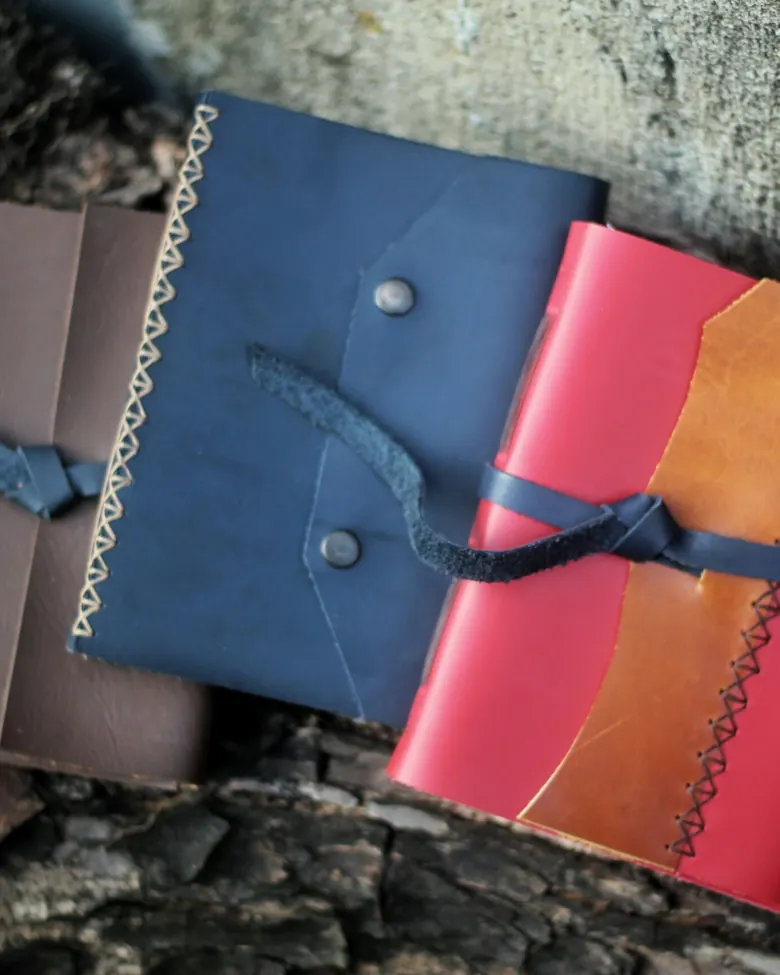
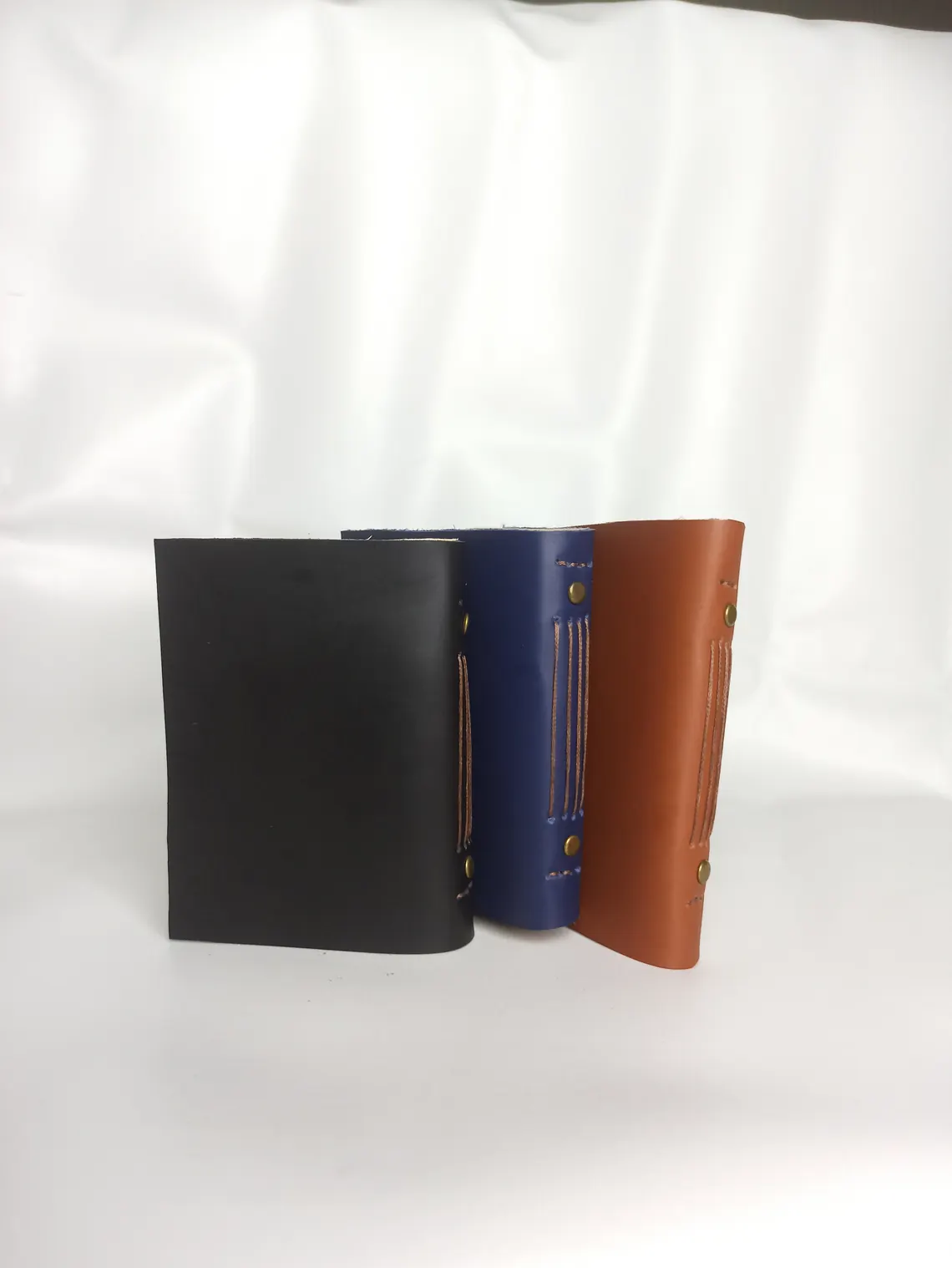
Three models, one family
Different colours, the same marking.
Product line
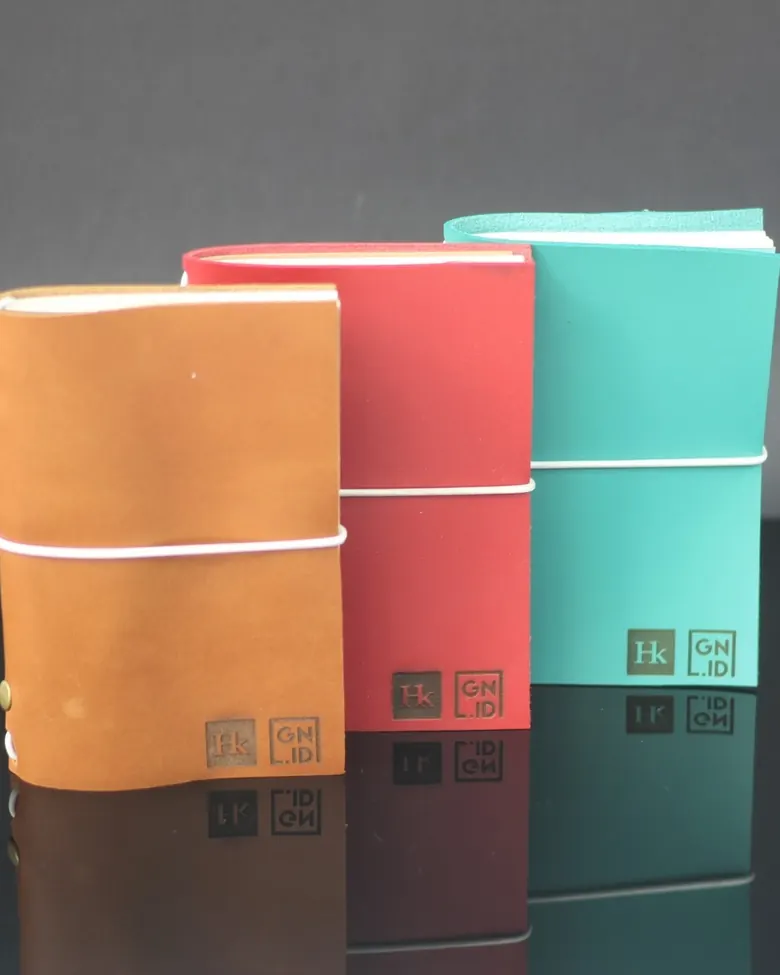
The catalogue is the reference
All three come from the same catalogue base shape.

Recipients
One for each tier
Colour can mark the recipient without changing the shape.

The result
It reads as one set
Three different models, held together by the same marking.
Why mix at all
Why one model for everybody rarely works
A uniform order treats every recipient as though they were one person. That is efficient for whoever places it and falls flat for whoever receives it — particularly where the recipients know each other and compare.
| Recipient | What actually gets used |
|---|---|
| Leadership and strategic partners | A medium-sized journal, quiet marking |
| Field staff | Pocket size, a cover that resists scuffing |
| Event attendees | A thin notebook, in quantity |
| Guests and collaborators | Small objects: bookmarks, pen holders |
A mixed bundle brings all four under one marking and one schedule, so that what differs is the object, not the identity.
Designing it
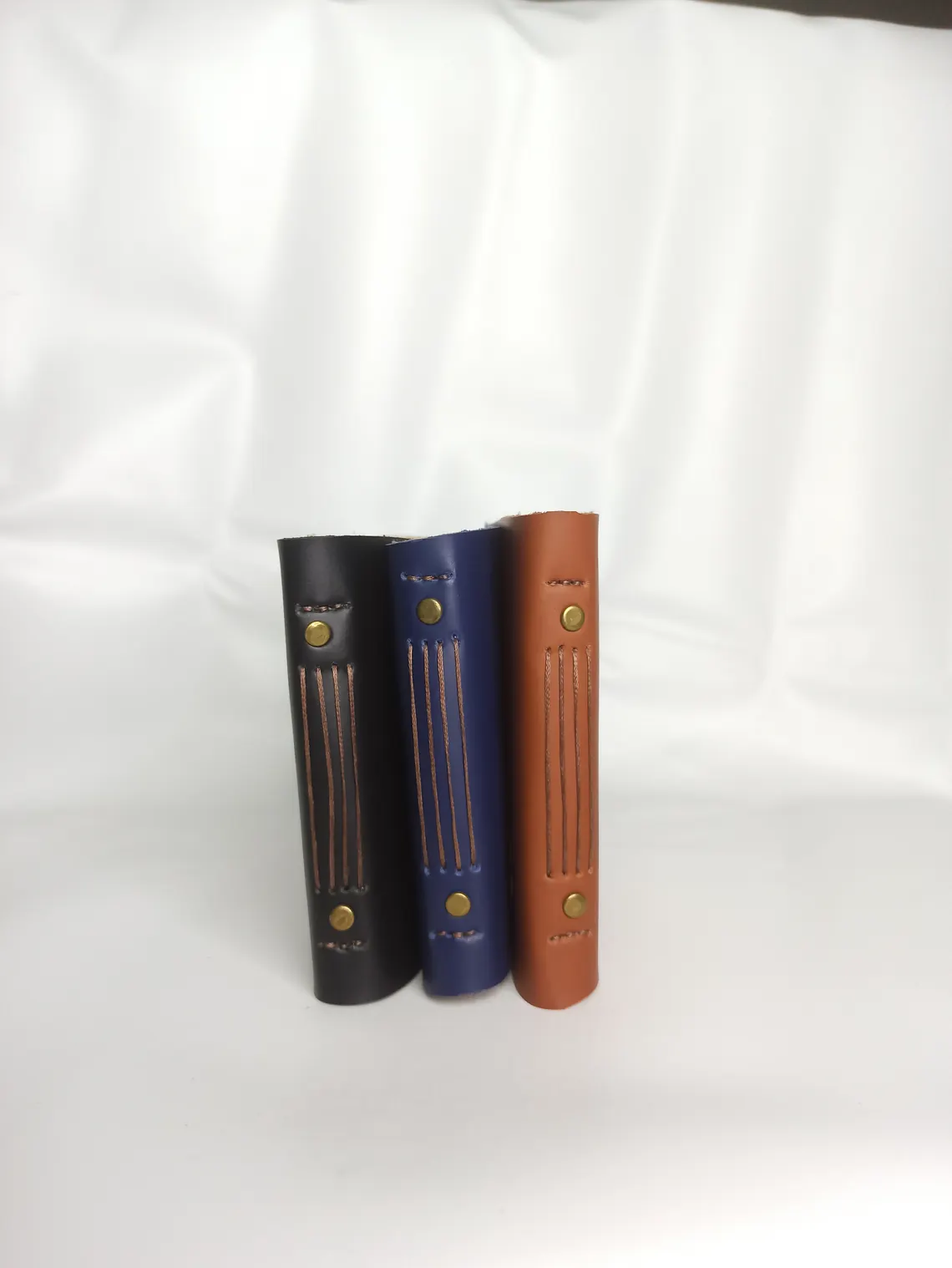
Putting together a combination that is not wasteful
Four questions that decide whether a mixed bundle feels considered or merely mixed.
1. How many tiers of recipient genuinely exist?
Two or three is almost always enough. Five tiers produce five decisions, five inspection schedules, and differences nobody notices.
2. What stays the same across the whole bundle?
The marking and the colour, ideally. Holding those two steady is what makes a bundle read as one family even though the objects differ.
3. How many of each model?
This is the decision that governs cost most, because the cutting of material is planned from these figures. Changing them after cutting means material left over and unused.
4. Packed separately, or together?
A pack per recipient is tidier to hand out but adds packing work. The options are on packaging customisation.
Recurring mistakes
The mistakes that keep recurring
| Mistake | What follows |
|---|---|
| Too many models | The longest schedule governs the whole order |
| Different marking per model | The bundle does not read as one family |
| Quantities per model decided late | Material has already been cut to the old split |
| Colour chosen per model | The natural variation of leather reads as a mismatch |
The last row is worth attention. Two models ordered in the same colour will still differ slightly, because they come from different parts of the hide — a difference invisible on a single object becomes visible the moment two are laid side by side in one box. It is set out in the leather craft category.

Questions
The questions we are asked most
Can each item in a bundle carry different customisation?
Very much so. You can ask for logo A on the journals and logo B on the planners, or a different thread colour for each item. As long as all of these specifications are clear at the design approval stage, we can produce them as you want them.
Which products can I combine?
In principle almost anything in our catalogue can be combined. The most popular choices mix journal sizes (A5, B5, A6), product types (journals, planners, portfolios) and accessories (card holders, pouches, keyrings).
Is a mixed bundle automatically cheaper?
Not in itself. What it saves is the marking work and a single schedule covering several needs — not the price per unit.
What is the maximum number of models in one bundle?
There is no technical limit, but every model adds another inspection stream. Three is the point at which most orders stop getting more complicated without getting any better.
Can every model carry a recipient’s name?
It can, and doing so moves the work into the finishing stage. The final list of names becomes the binding deadline — see the bulk ordering guide.
Can catalogue products be mixed with a new design?
They can. A new design follows a different and longer route — see full product design.
In summary
Send the requirement and the deadline
Tell us the quantity and when it has to be finished. We reply with an estimated price and a schedule.
Mixed bundles exist because the recipients of a large order are rarely uniform. A director, a new member of staff and an outside partner do not need the same object, and giving them the same object is the cheapest way to make all of it feel generic.
In 60 words: a mixed bundle combines several models within one order and one schedule. The real benefit is not saving money but fit — one visual identity across the whole bundle, with different objects for different needs. What has to be decided early is how the quantity is split between models, because that governs the cutting of the material.