
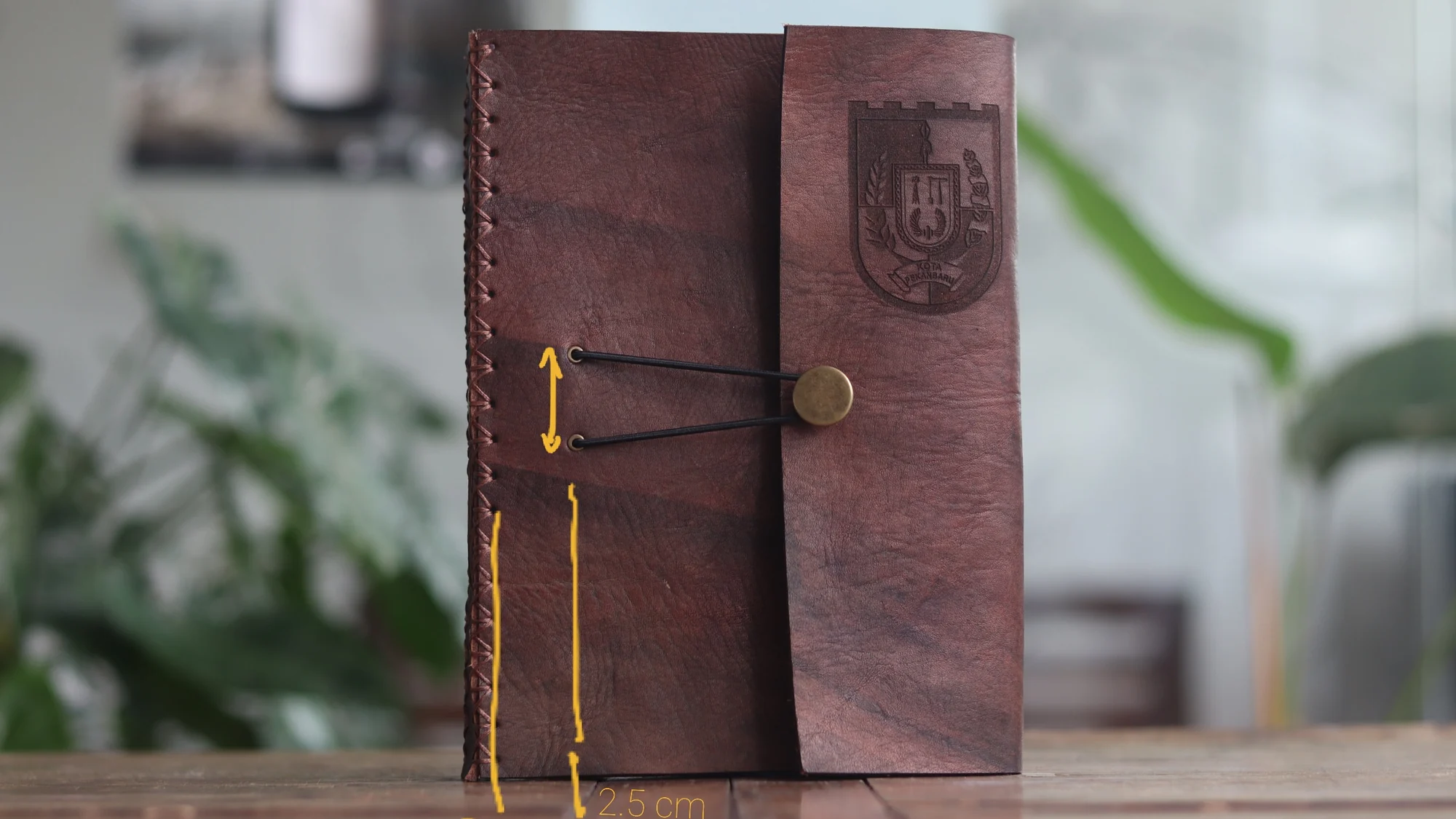
Size guide
Which size suits you.
The wrong size is a problem you only feel a month later, when the book turns out not to fit in the bag.
Track Record
- 15 Years of Work
- 100,000+ Products Made
- 4.9 Google Rating · 85 reviews
- 5 Countries UAE · MY · CA · DE · NL
- 2,000 pcs Capacity / Month
- Trusted by
- Pertamina · POLRI · PPLi · Unilever
- Covered by
- TVRI · Trans7 · MNC Home Living · iNews Radio
- In print
- Tabloid Nova · Bogor Today · Tren Bogor
- Awards
- UDUNAN 2020 Winner · Ekraf Jabar · Mitra Jabar




For vendor applications, tenders and corporate partnerships.
Four sizes
Start from your own habits
Pocket · 11×8
Fits a jacket pocket. For quick notes, not for writing at length.
A6 · 15×11
The most ordered size. Big enough for sentences, small enough to carry.
A5 · 21×15
For writing at length, for meetings, or for drawing. The one offices tend to use.
B5/A4
Desk only. For large sketches, a visitors’ book, or a planner opened in front of other people.
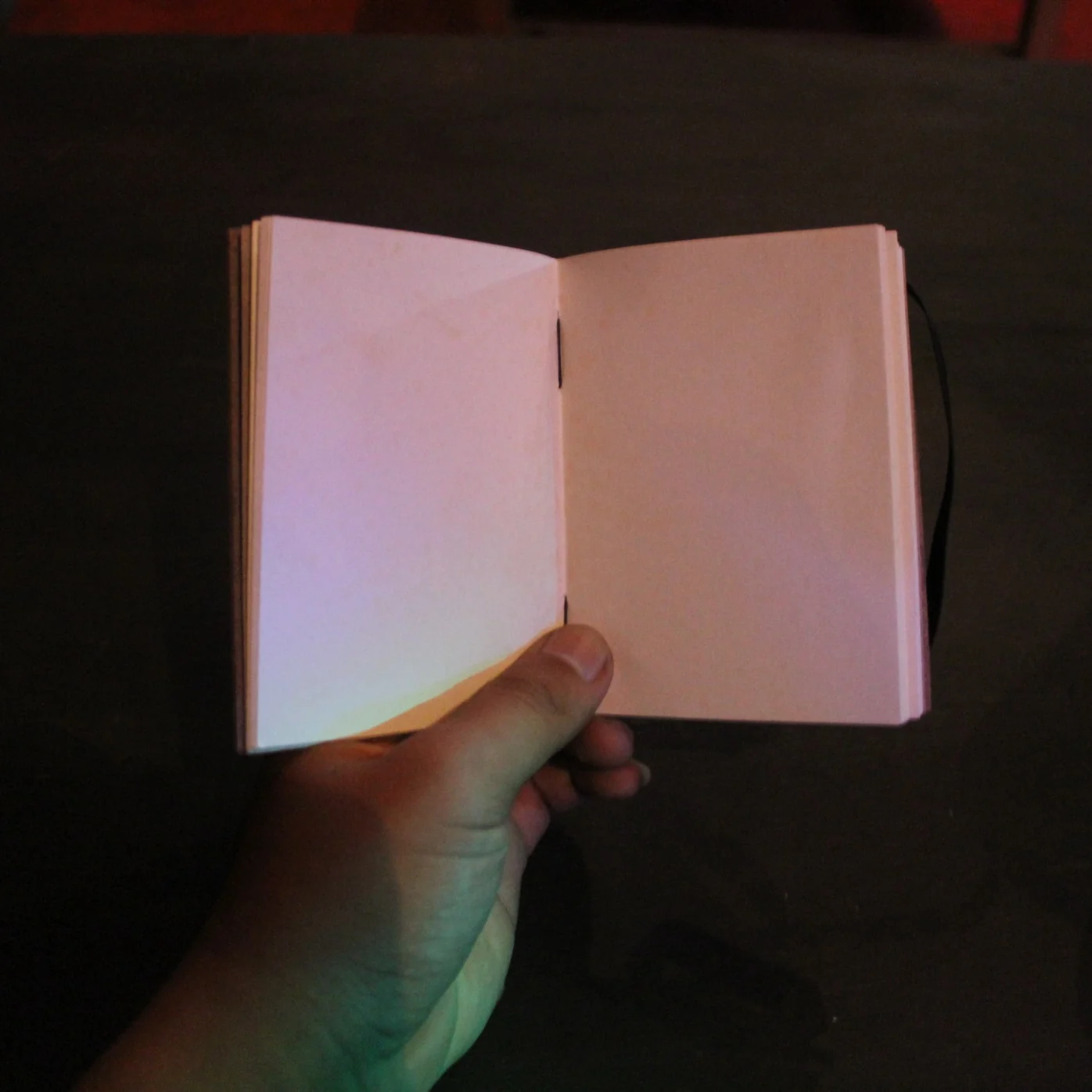
How to choose
Three questions are enough
First: will this book spend more of its time in a bag or on a desk? Second: do you write long sentences or short points? Third: is your handwriting large or small?
If the answers are bag, short points and small handwriting — Pocket. If desk, long sentences and large handwriting — A5. Everything else sits between the two.
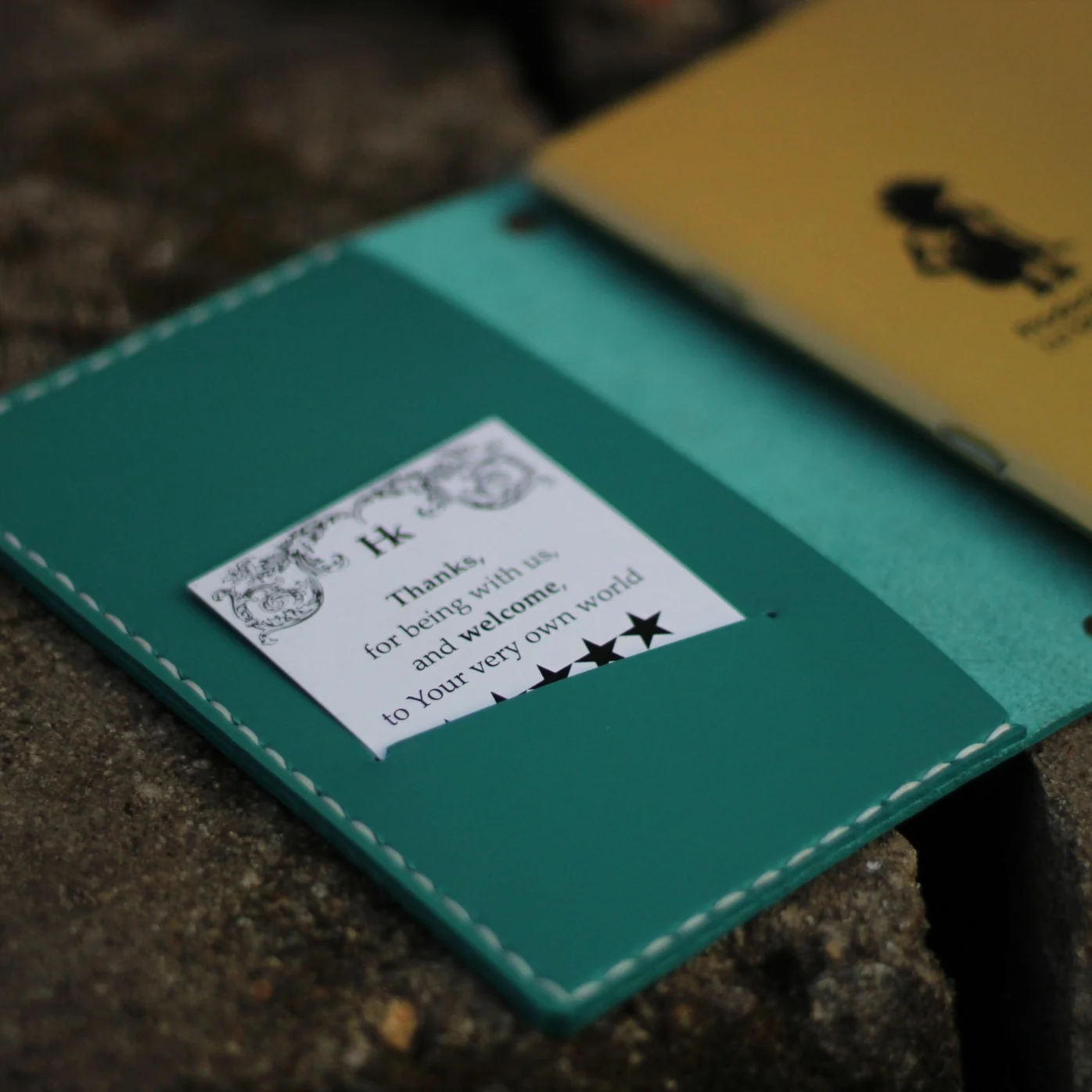
Thickness
The number of pages is a size too
A 100-page book and a 300-page book of the same width feel very different in the hand. The thick one is satisfying to hold and heavy to carry.
When in doubt, take the thinner one. Pages can be added later — that is one of the advantages of a sewn book.
Specifications
The figures we actually work to, not a list copied from a catalogue
Size is only one of four decisions. The other three — the paper, the leather and how it is marked — are what decide how the book feels and how long it lasts. Every figure below is a specification genuinely used in this workshop, not a general industry range.
Paper and grammage
Grammage decides whether ink shows through to the other side of the page. Fountain pens and watercolour demand opposite things: one needs thin, close-textured paper, the other thick and absorbent.
| Paper | Grammage | Character | Suits |
|---|---|---|---|
| HVS | 70–100 gsm | Bright white, high contrast | Quick notes, brainstorming, lists |
| Bookpaper | 80–90 gsm | Cream, high opacity, easy on the eyes | Daily journals, travel journals |
| Kraft (Samson) | varies | Brown, coarsely textured, strong | Scrapbooks, pencil or charcoal sketching |
| Canson (watercolour) | 200–300 gsm | Thick, cold-press texture, acid-free | Watercolour, gouache, mixed media |
| Tomoe River | 52 gsm | Very thin, feather-resistant, minimal bleed-through | Fountain pens, calligraphy |
Kinds of leather, and how each of them ages
The leather is chosen before the logo, because the kind of leather decides which marking techniques still read on it.
| Type | Surface | Ages into | Takes an impression |
|---|---|---|---|
| Full-grain | Original, pores visible | Darkens unevenly, softens | Very well |
| Top-grain | Lightly sanded, then coated | Changes less | Well |
| Vegetable-tanned | Dense, with body | Takes a clear patina | Very well |
| Chrome-tanned | More supple | Colour stays fairly steady | Holds a shape less well |
Nine colours are curated, and four finishes change both the colour and the durability: natural shows the true colour but stains most easily, burnished darkens the areas that are polished, waxed adds water resistance with a pull-up effect when flexed, and oil deepens the colour most dramatically while keeping the leather supple. The details are on material and colour.
Marking: four techniques, and the limit of detail for each
| Technique | How it works | Limit of detail | Resulting colour |
|---|---|---|---|
| Laser engraving | Removes the surface layer | Finest — small text, thin lines | Darker than the leather |
| Deboss | Presses the fibre inwards | Fine; the edges stay sharp | The colour of the leather |
| Emboss | Pushes the fibre outwards | Bold shapes only | The colour of the leather |
| Foil | Transfers a metal layer with heat | Medium; very thin lines break up | Gold, silver, other colours |
Two limits apply to all of them, and both are often discovered only after the file has been sent: a minimum line width of 0.5 mm — detail finer than that tends to disappear or fails to transfer — and raster files of at least 300 DPI at the actual printed size. A logo with gradients or shadows has to be simplified first. The die cost and the order of work are on logo and branding.
The figures on this page are taken from our own working pages and are not copied from anyone else’s standard: material and colour, logo and branding, and inserts and layout. For why these books are sewn rather than glued, see the glossary of terms on the custom notebook page.
Examples
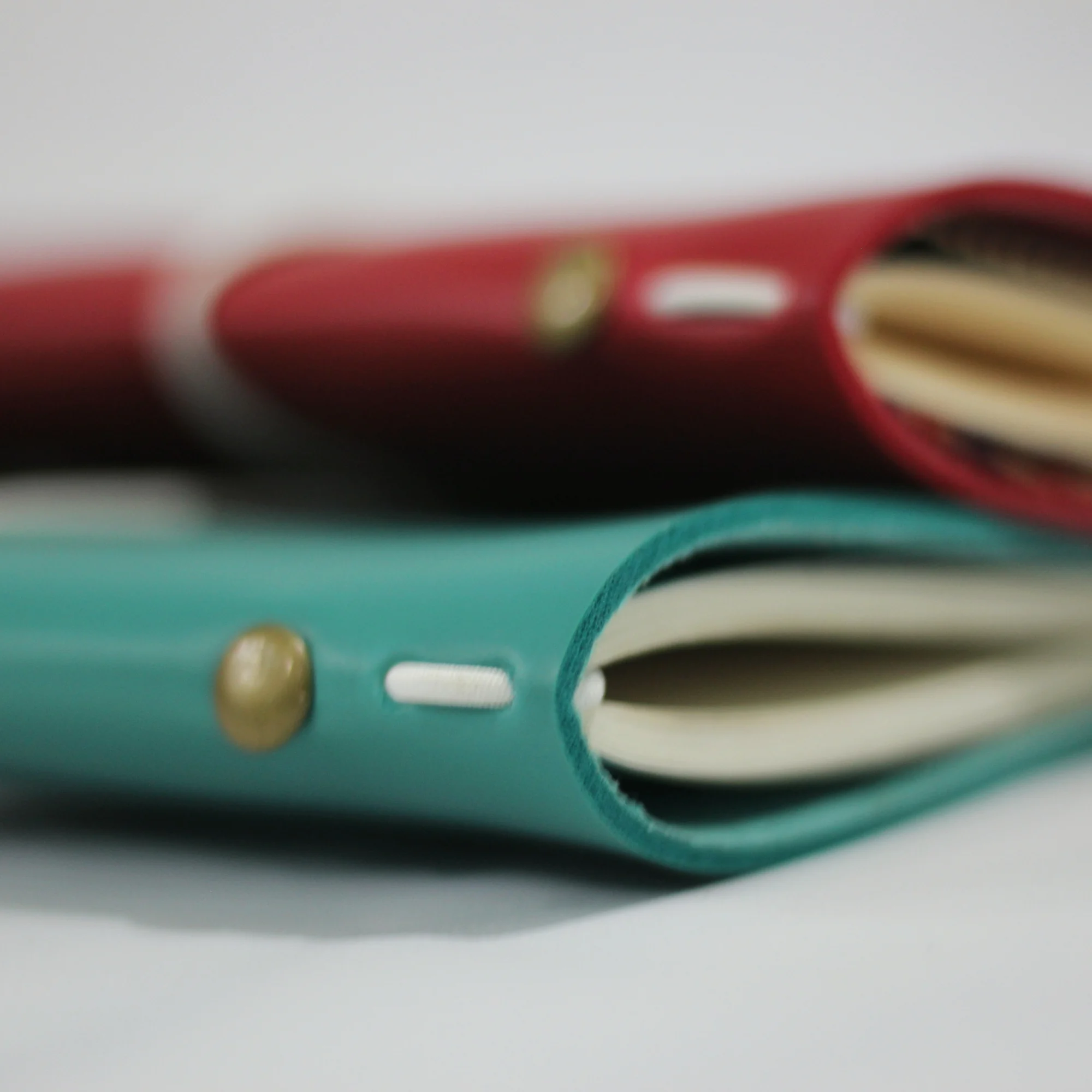
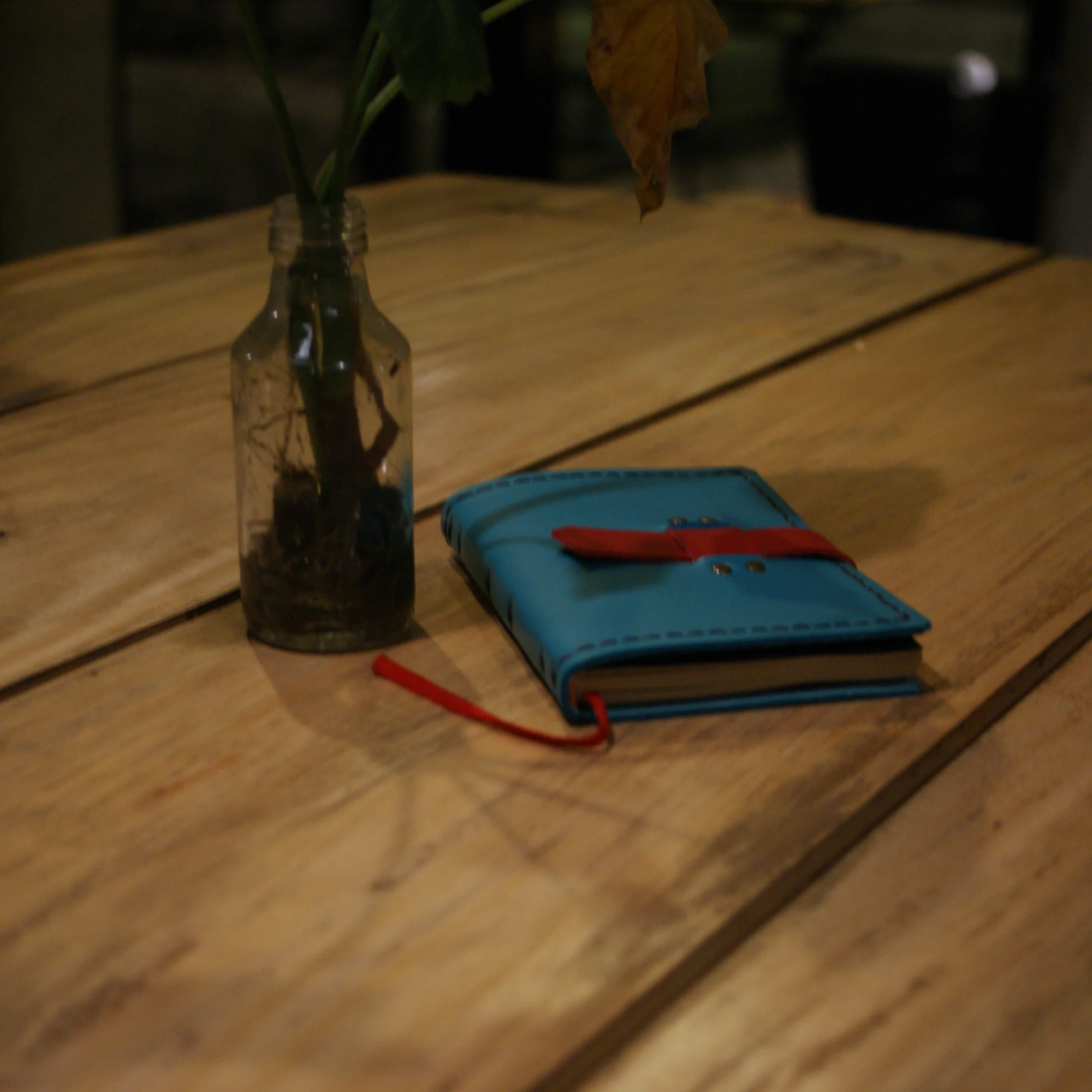
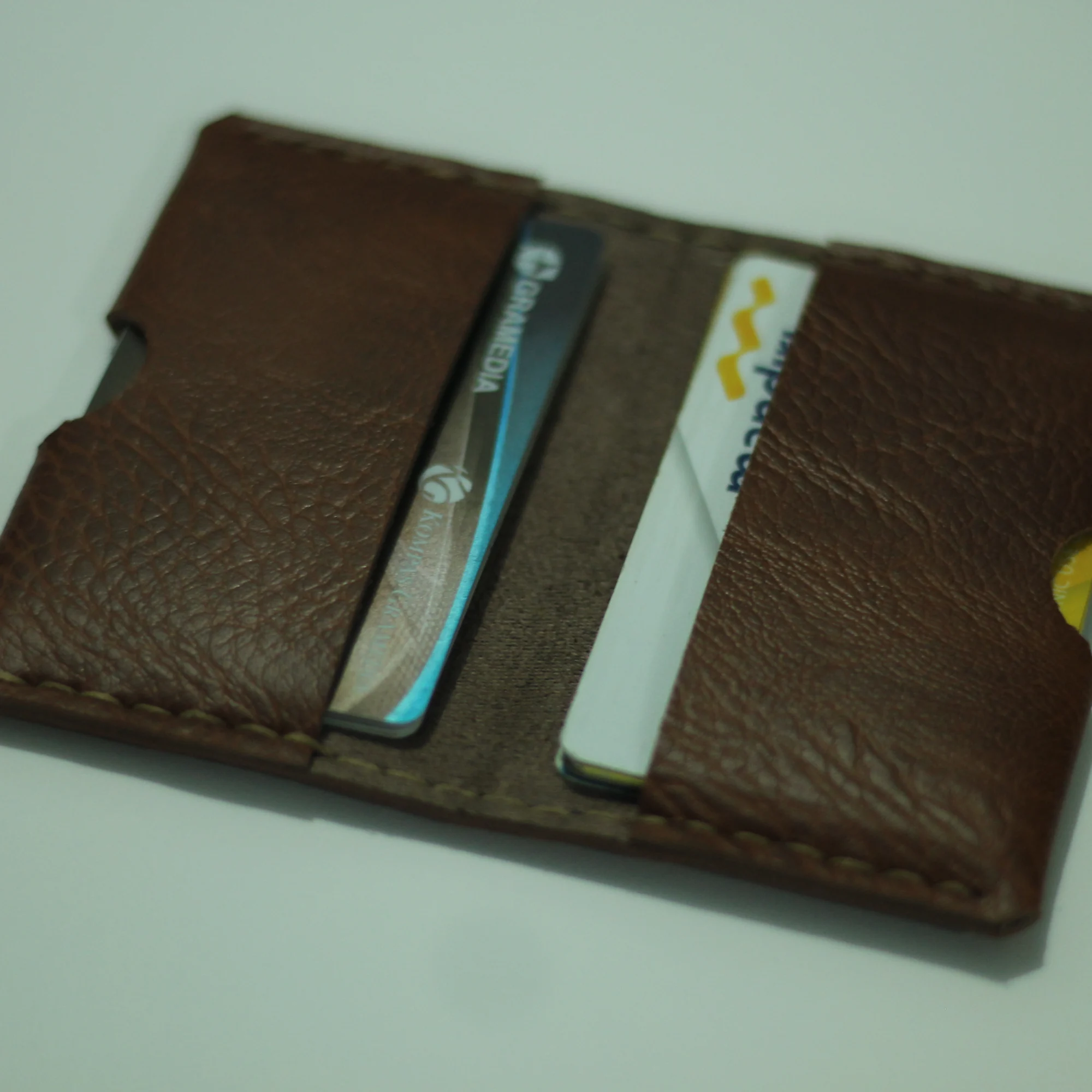
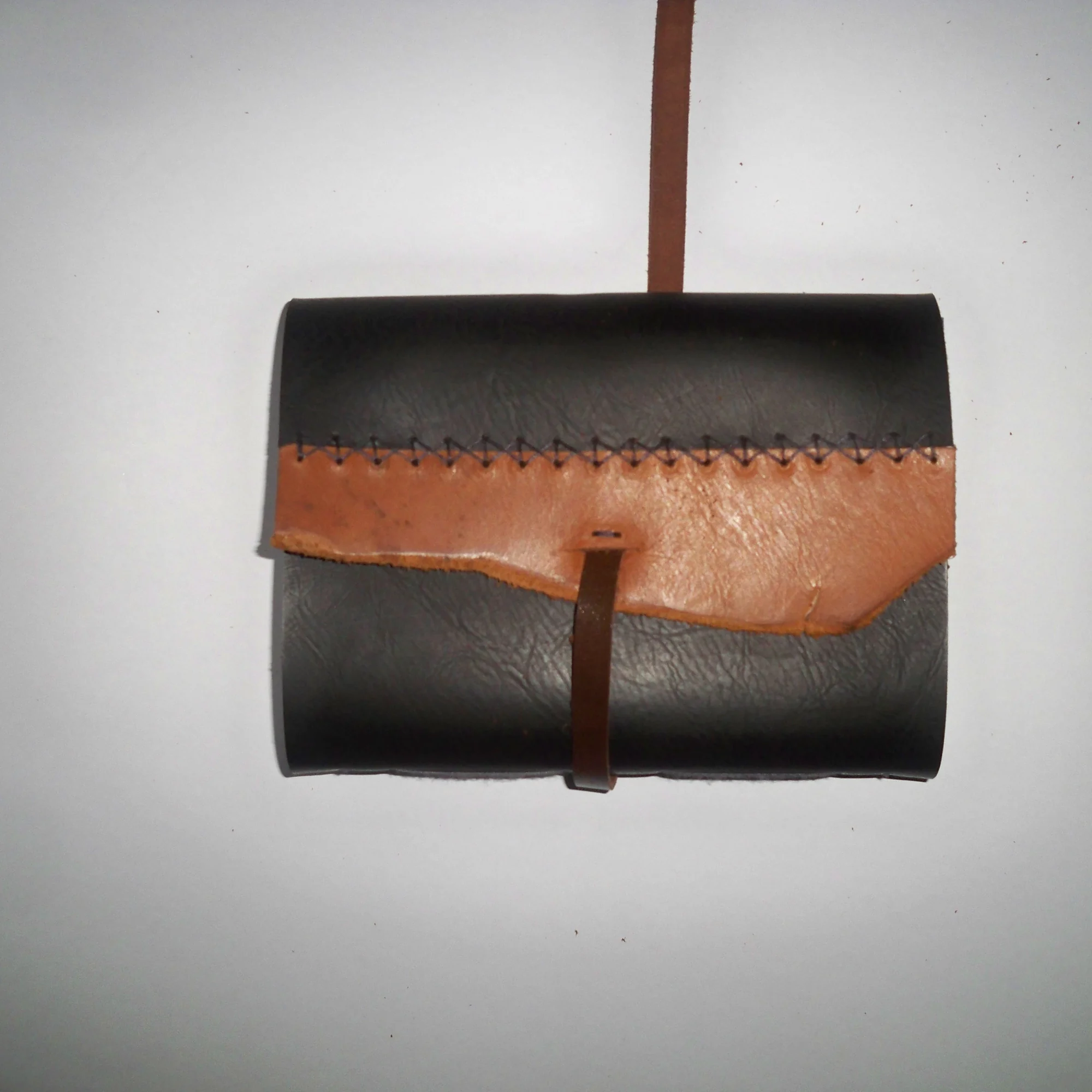
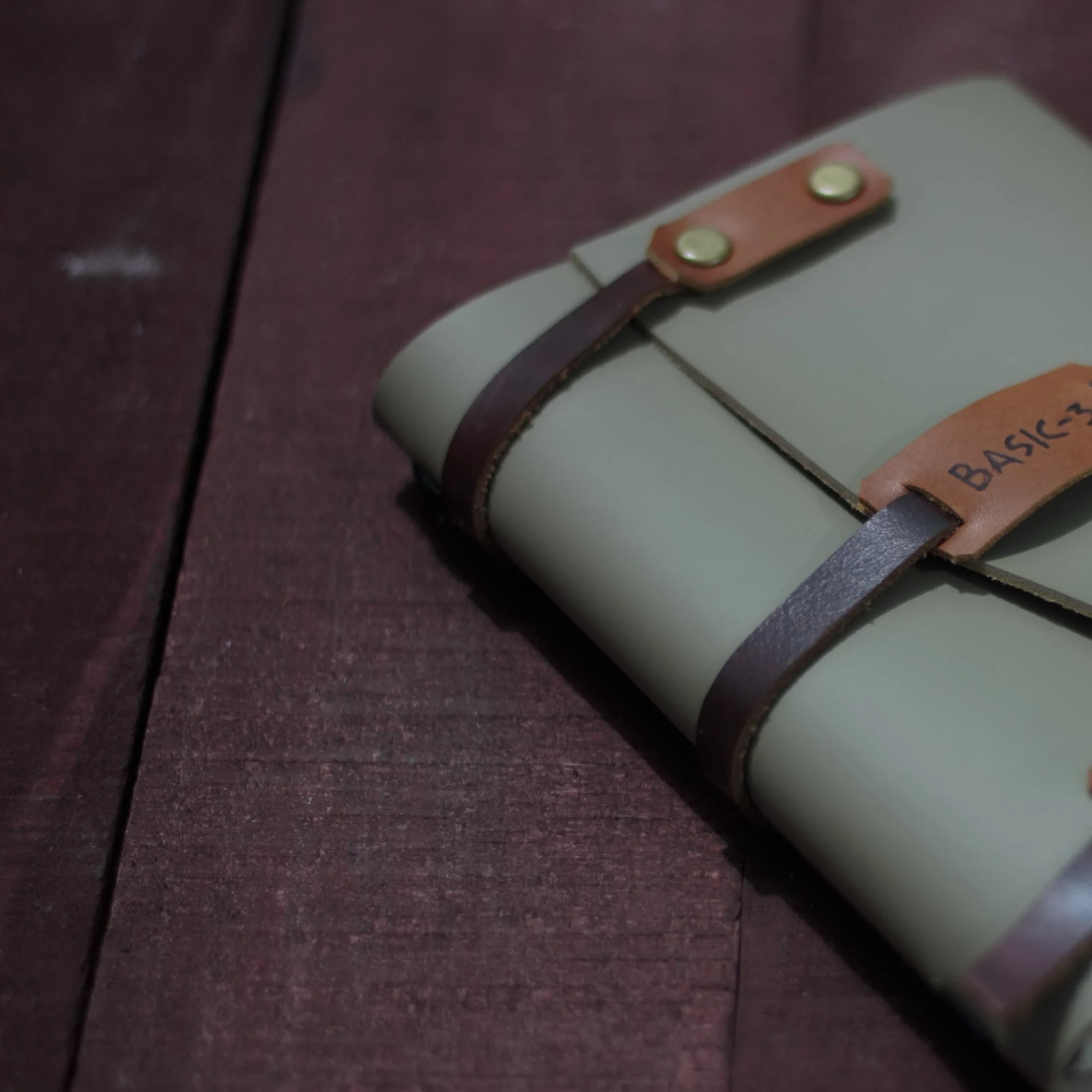
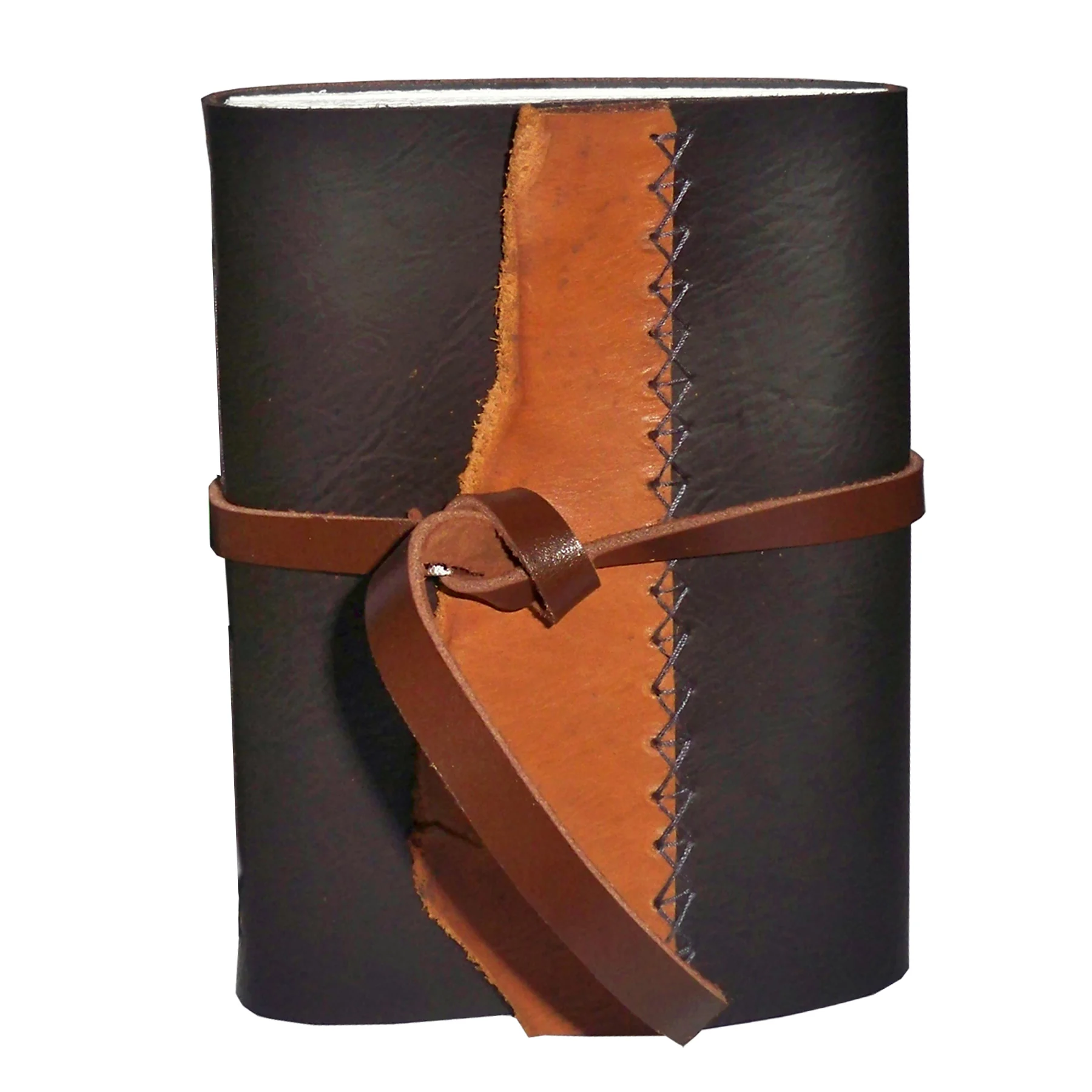
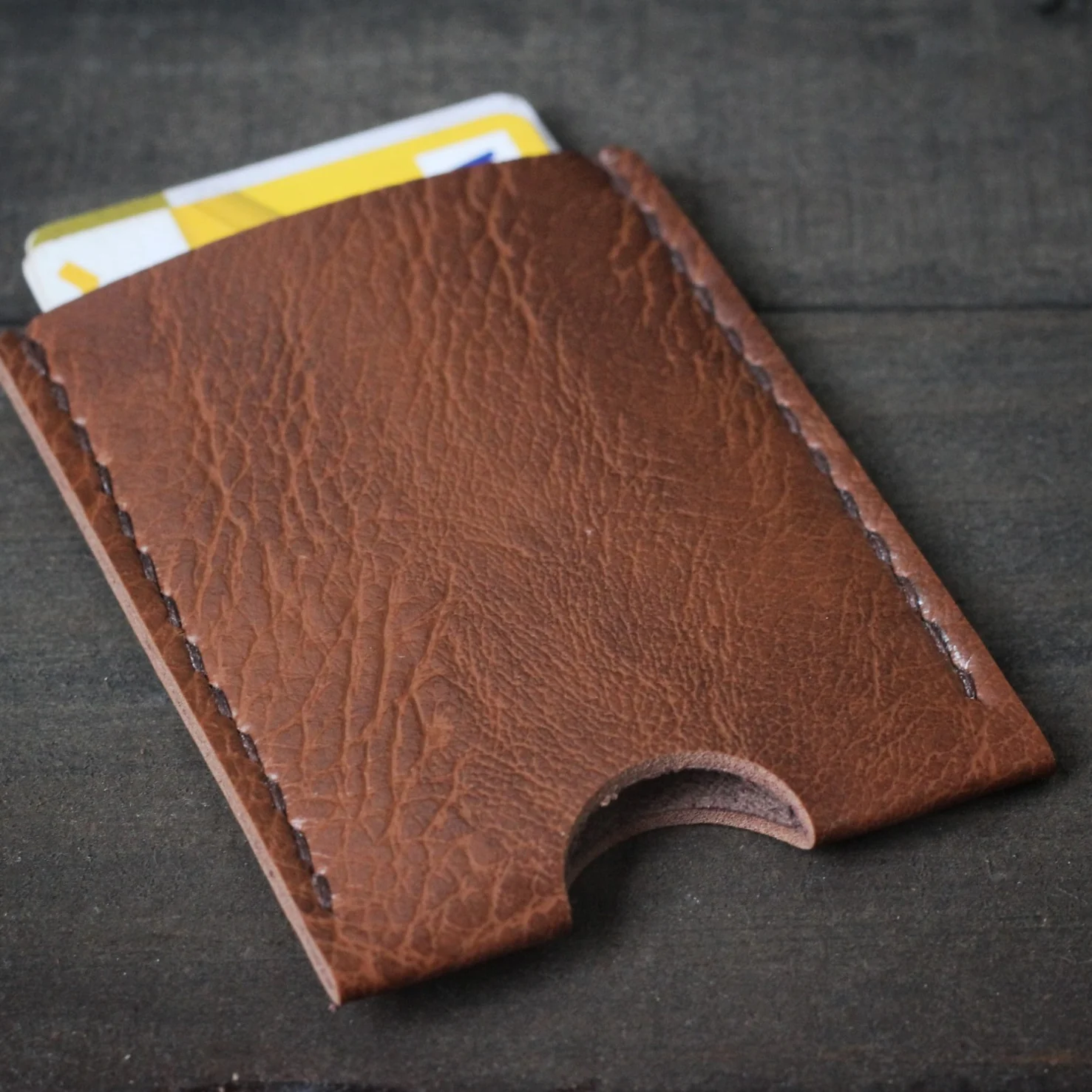
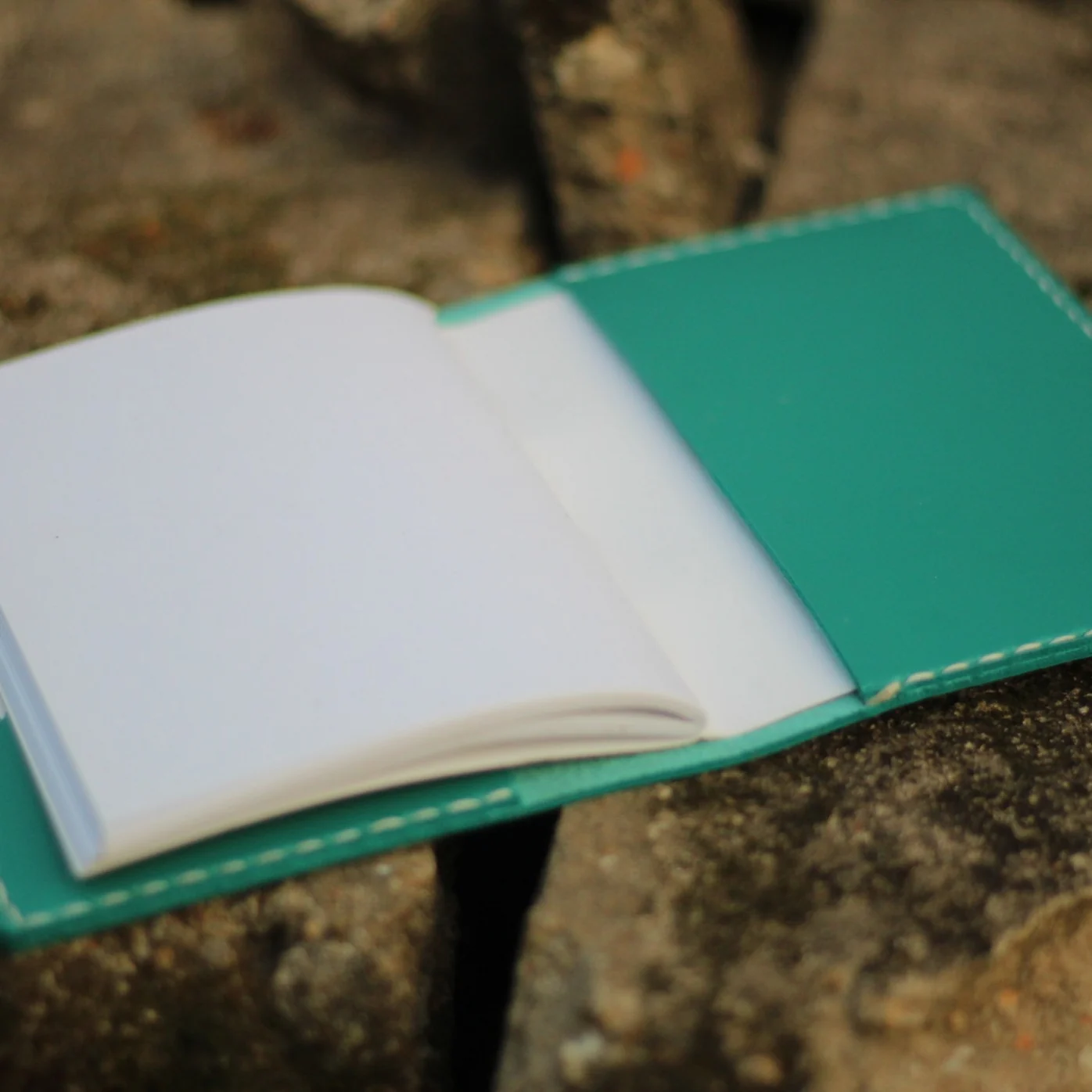
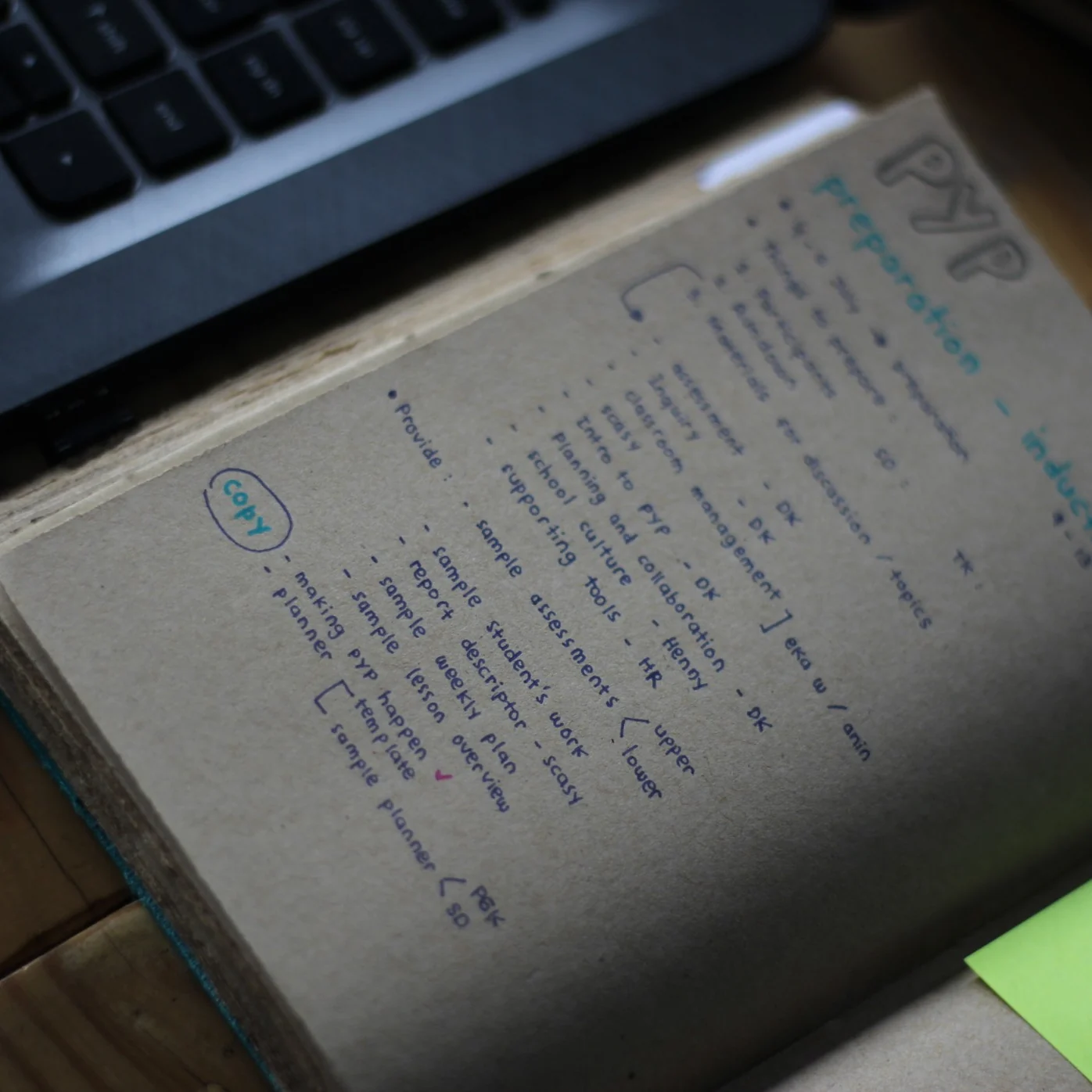
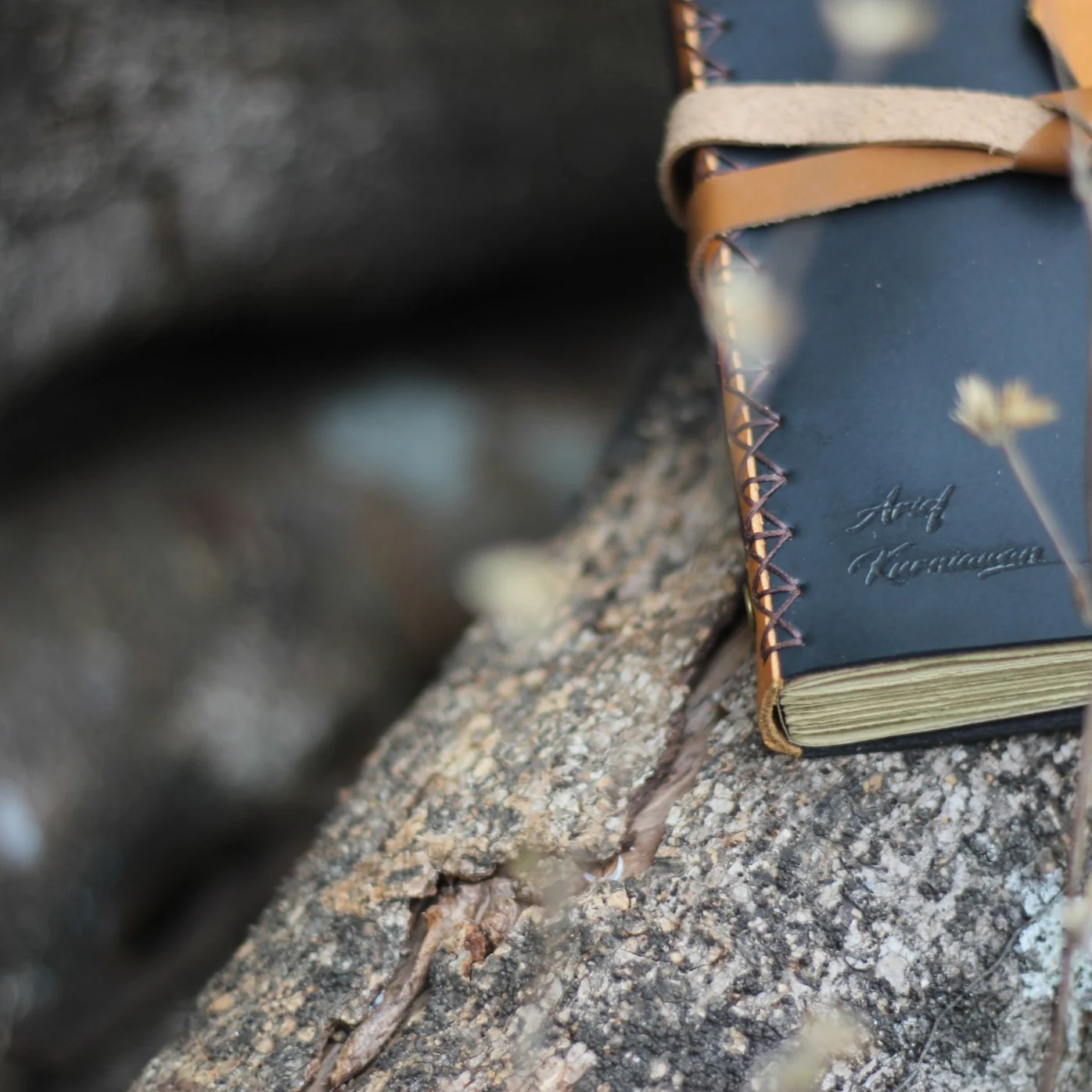
Sizes we have made
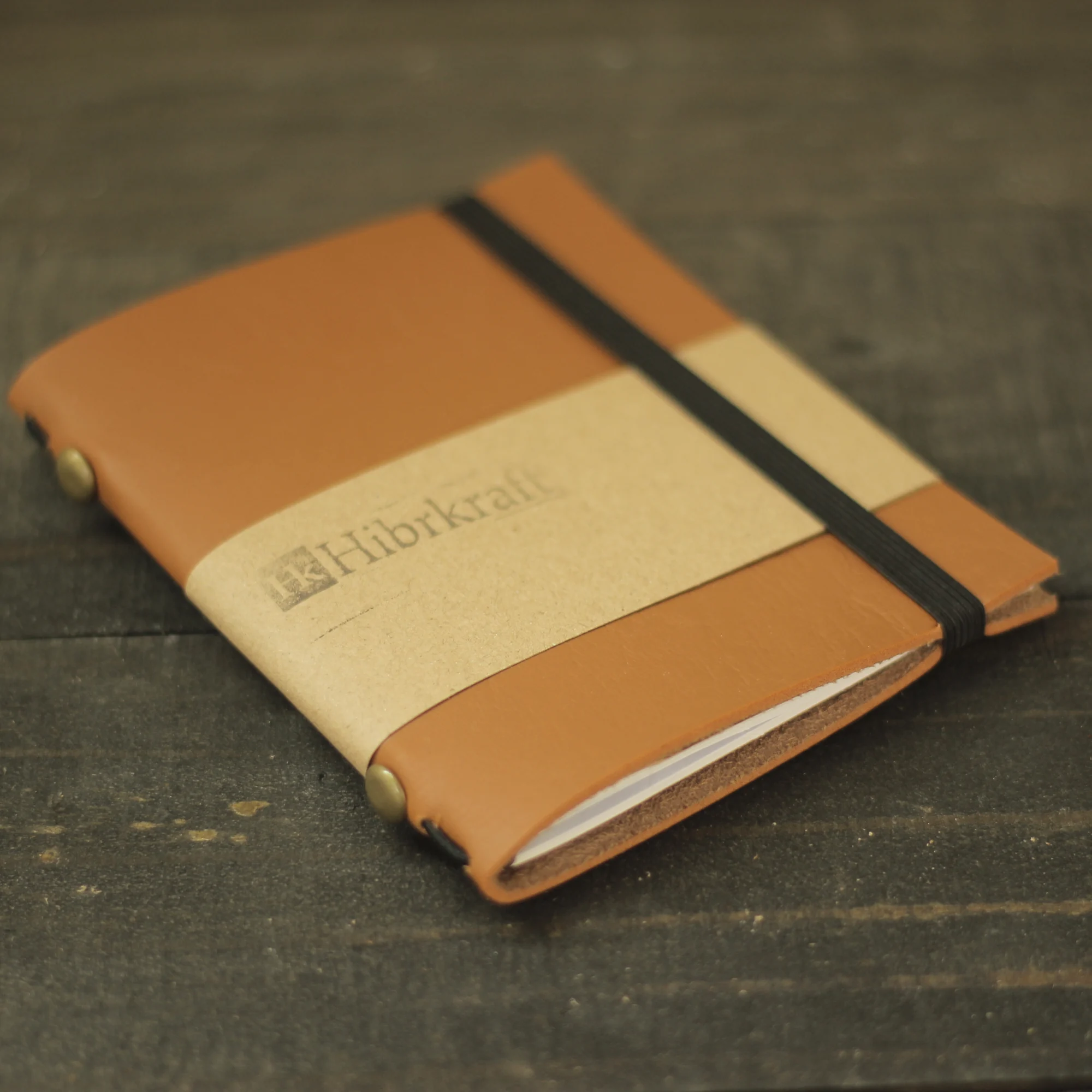
If what you want is a planner
Planner sizes follow the desk, not the bag
This page weighs size against writing habits. For a custom leather planner the considerations differ a little, because the pages are already dated and it is usually used at a desk:
- A6 — fits a suit pocket. Enough for appointments, not enough for meeting notes.
- A5 — the most ordered planner size. A page a day still feels roomy, and it fits a work bag.
- B5 — between A5 and A4. Chosen when the dates and a notes column both have to sit on the same page.
- A4 — a desk book. For visitors’ books, minute books, attendance books, and planners that never leave the room.
- Folio — taller than A4, an older format that government bodies still ask for in ledgers.
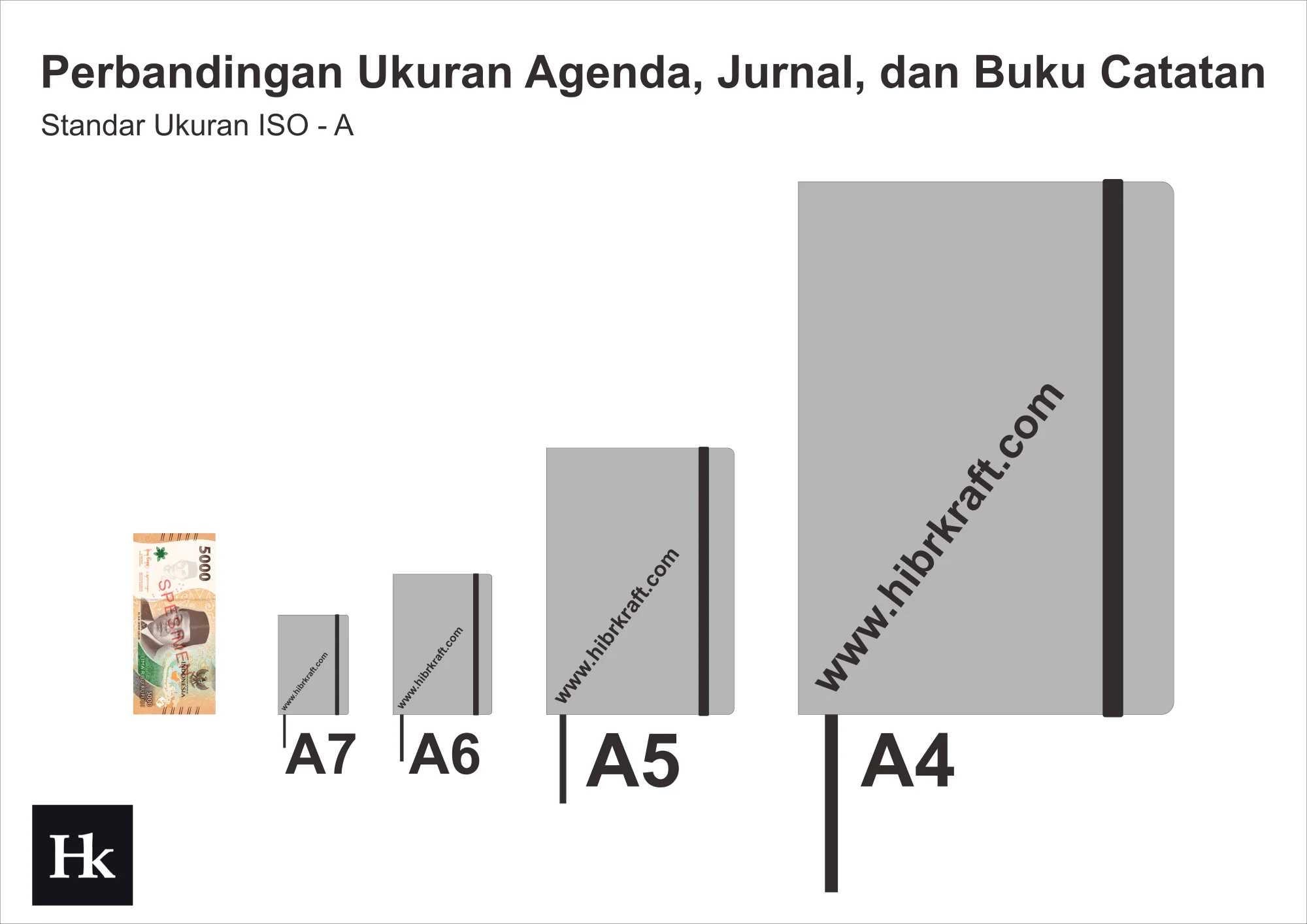
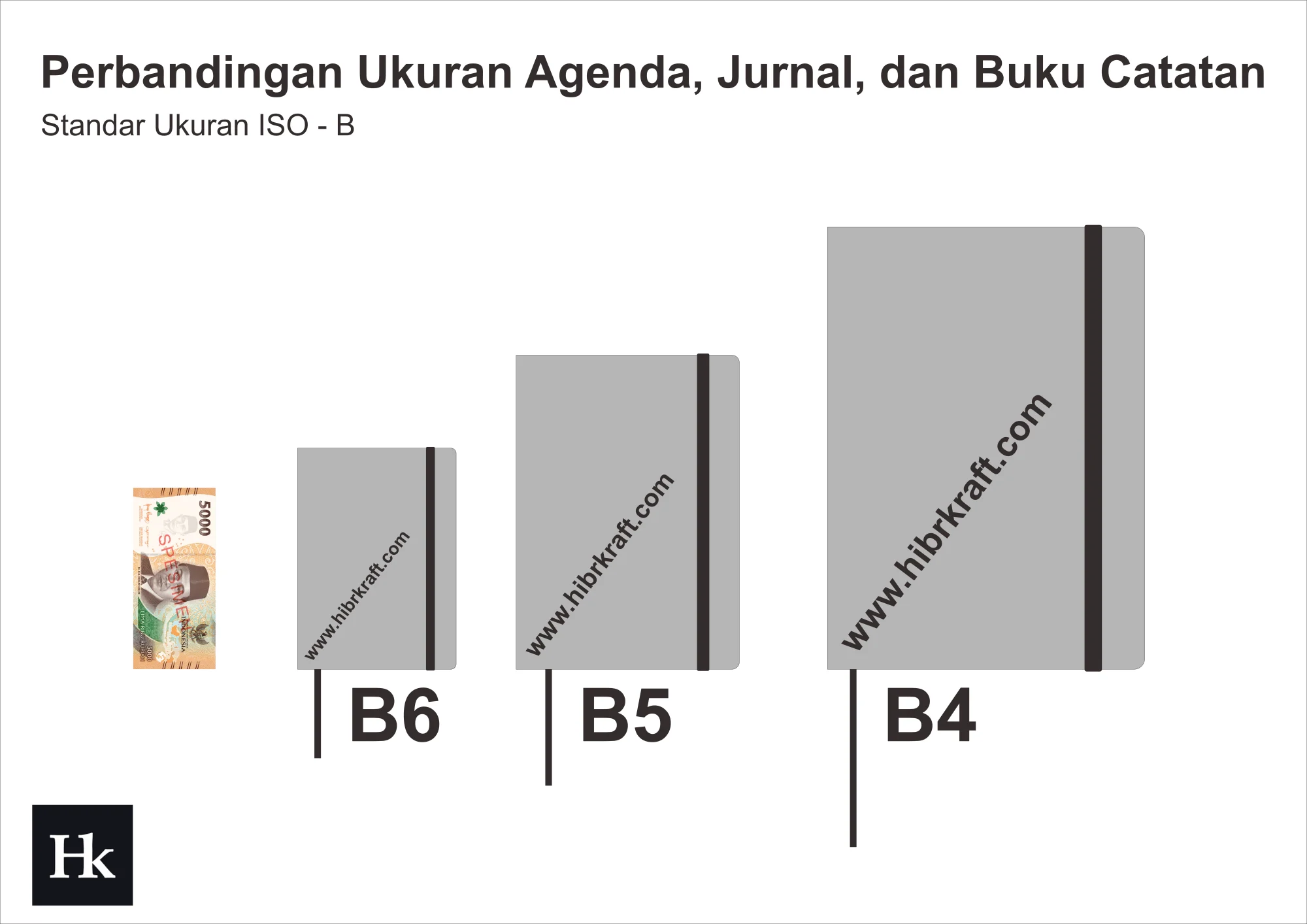
A size outside that list is still possible: a planner is cut to your measurement rather than picked off a shelf.
Still unsure about the size?
Tell us what it is for, and we will suggest the size.
Last updated
