
Customisation
Inserts & Layout: What Gets Printed Inside
The inside of a journal is the part most often thought about last, and the part that most decides whether a book is used to the final page or stops around page forty.
- 4 basic layouts
- 3 planner styles
- Signatures sewn, not loose
The order
Decided after the cover
Blank, ruled, dot grid, squared, or a planner layout — chosen according to what will genuinely be written inside.
The contents are sewn into the cover after the leather and its colour are settled — not before. If the leather is not chosen yet, start with material & colour. Changing the layout after sewing means taking the book apart, so the decision on this page is locked before the journal is sewn.
A ruled page directs; a blank page frees; a dot grid does both, with marks that disappear once they are written over. The wrong choice does not make a book fail at once — it makes the book stop being used around page forty, which is far harder to trace back to its cause.
Layouts
Four basic layouts
Ruled (lined)
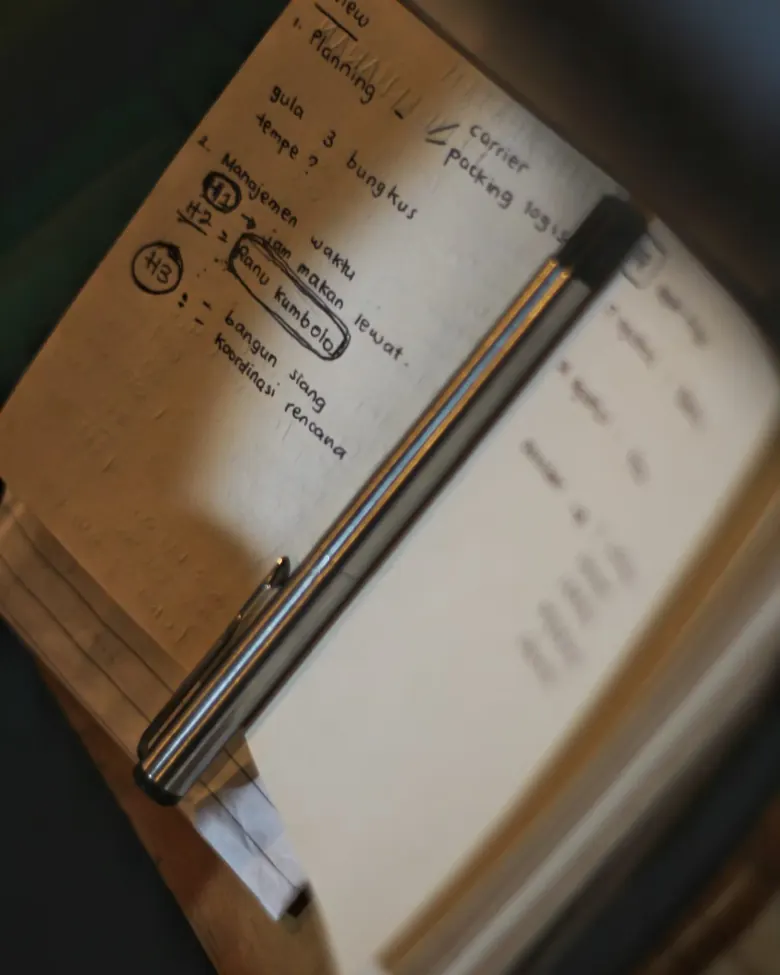
Classic and functional. For notes, a daily journal, and writing that needs to stay tidy.
Dot grid
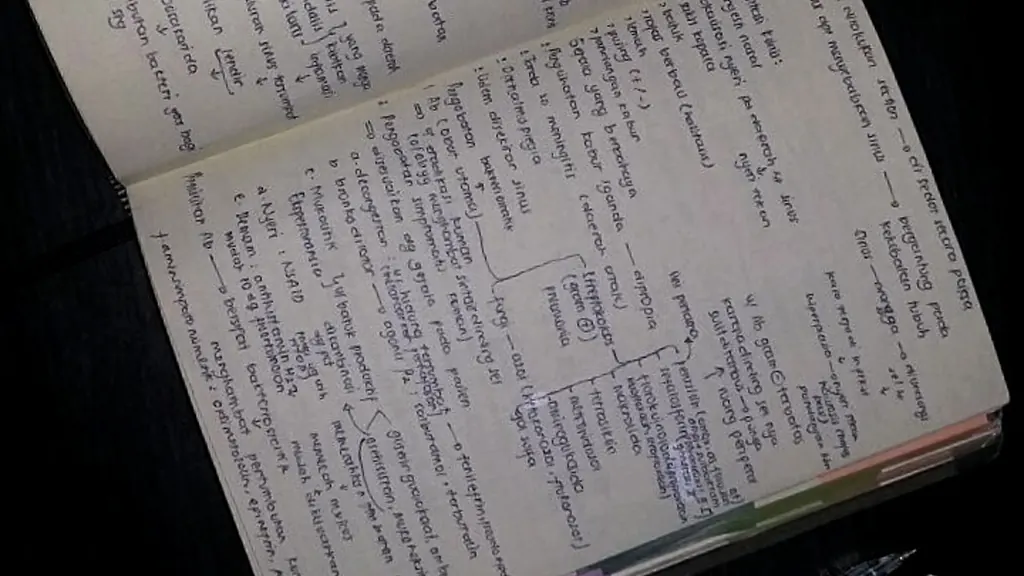
The favourite for bullet journaling. It guides without intruding, ideal for combining writing, drawing and a flexible layout.
Squared (square grid)
For technical drawing, making charts, or precise structure. Popular with designers and architects.
Blank
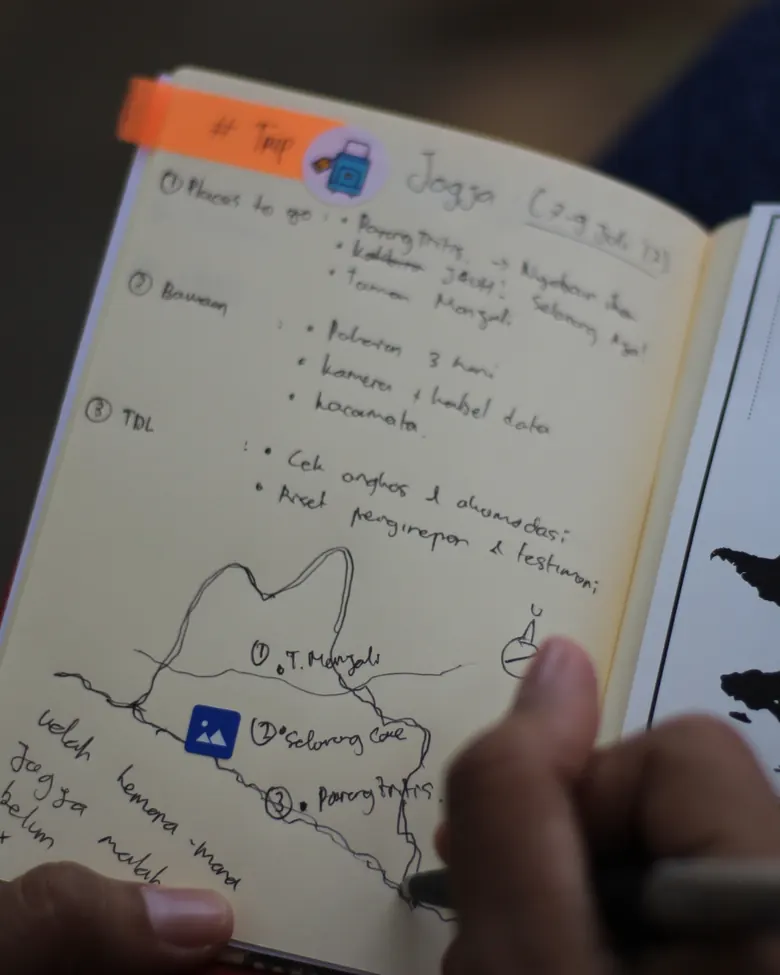
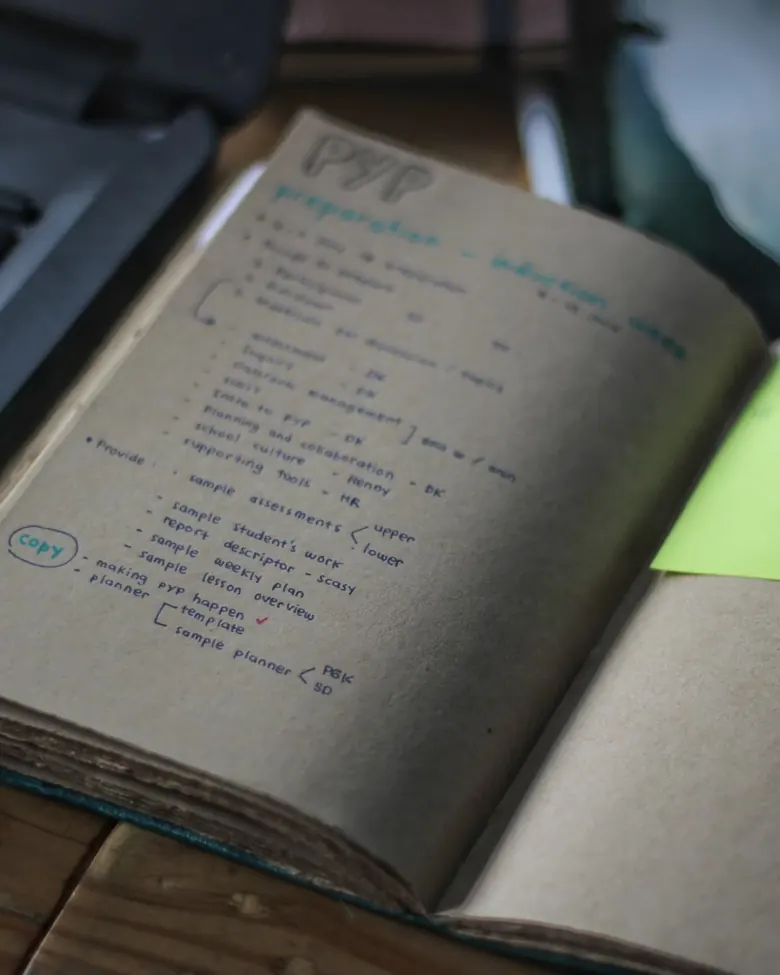
A pure canvas for sketching, drawing, and catching ideas with nothing in the way.

| Layout | Best for | Its weakness |
|---|---|---|
| Ruled | Continuous notes, minutes, lectures | Fights drawings and diagrams |
| Dot grid | A mix of writing, tables and sketches | The dots show under very thin ink |
| Squared | Calculations, tables, floor plans | Feels like an exercise book |
| Blank | Sketching, free writing, pasting in | Handwriting tends to slope down to the right |
Dot grid wins as often as it does because it is the only one that disappears: the dots are enough to guide, and faint enough not to compete with the contents — a quality a full rule does not have.
Print quality
What decides how the inner printing turns out
Paper and ink decide more than the layout design does.
A line that is too dark competes with the writing; a dot that is too pale vanishes in low light. Weight matters as well: on thin paper the lines on the reverse show through and distract.
The choice of paper and its weight is itself a decision on the material & colour page, not here — as are the other properties of paper set out in the paper category.
Print your own
Printing your own design, and mixed layouts
Have a planner, tracker or worksheet design you already like? We can print it inside a hand-sewn Hibrkraft journal.
A monthly calendar, forms, or a branded opening page — all printed to the design you send. There is no need to choose a single layout: an index page at the front, a ruled section for meeting notes, and a blank section for sketching can be combined in one book. The division is fixed before sewing, because the contents are sewn as signatures — not loose pages that can be slipped in later.

Internal branding
Internal branding elements & divider pages
A logo can be added as a custom header or footer on each page, or as a subtle watermark — and subtle is what it ought to be.
A logo plainly visible on every page makes the book feel like the office's rather than the user's. For a journal divided into sections, we make custom divider pages — with tabs, even — to separate different projects, months or topics.
Planners
Planner layouts, and their hazard
A dated planner page is the most requested layout and the quickest to fail.
The reason is simple: it locks the book to one year, and a skipped page still takes up its space.
- Fully dated — tidy, and every day left unfilled becomes permanent empty space.
- Undated — the user writes the date themselves; the book never expires, and can be put down without guilt.
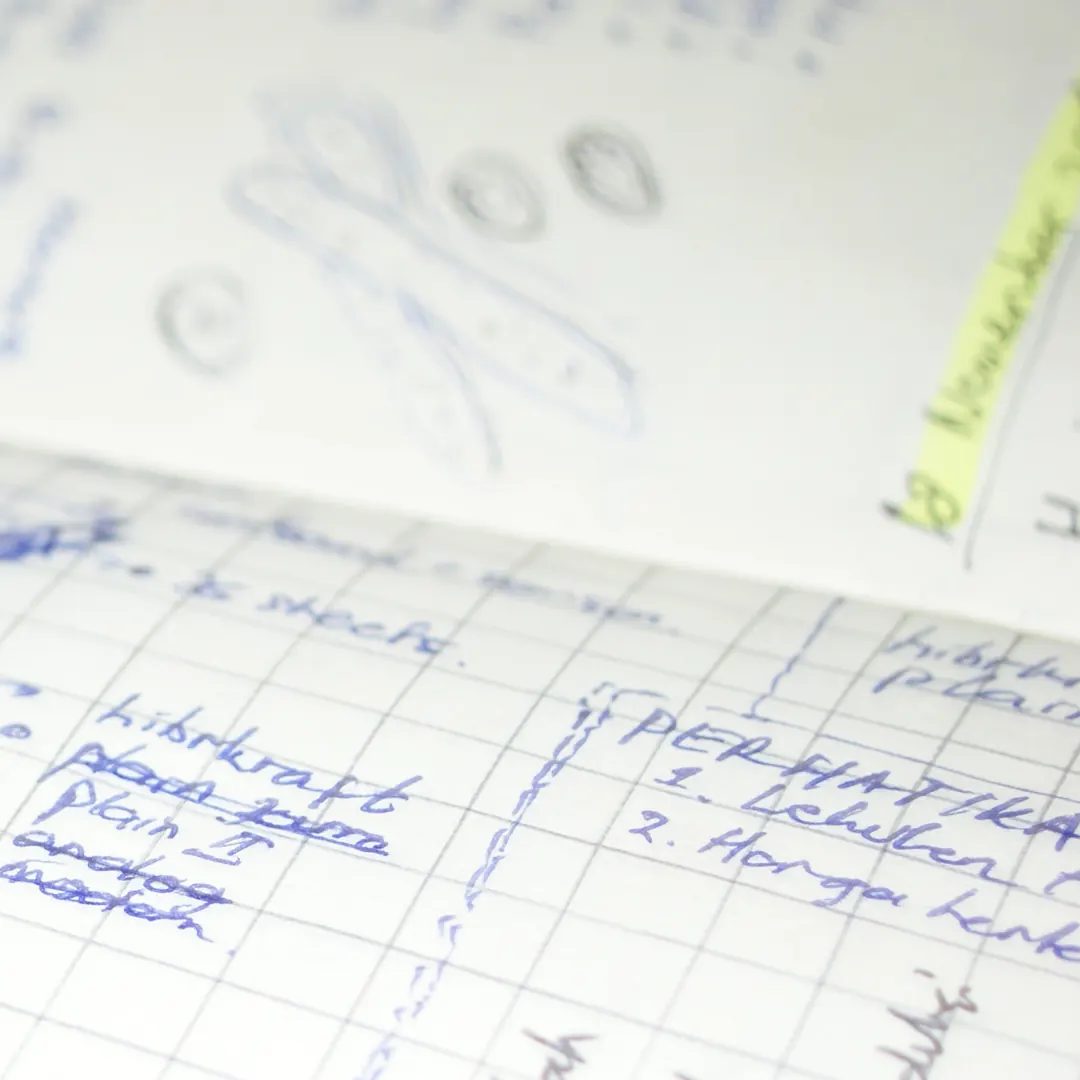
- Mixed — an undated weekly structure with free pages in between. This is the one that most often survives to the last page.
For a corporate order handed out at the start of the year, an undated layout has a practical advantage: leftover stock can still be used the following year, rather than becoming a burden in the warehouse.
Questions
The questions asked most often
Can the pages be numbered?
They can. For a book used with an index method, numbering is a requirement — see bullet journal.
Can pages be added after the book is finished?
On a sewn book, no — not without undoing the stitching. If the contents will grow over time, what you need is a refillable format — see Refillable Leather Journal.
What is the minimum order for a custom layout?
The quantity and pricing scheme for large orders is on bulk & white label — this page only explains the layout options.
Next step
Tell us what contents you want
Name the layout you want, or send your own design to be printed. We will reply with the options available. Pricing per order model is on bulk & white label.