
Customisation
Full Product Design: From Sketch to Prototype
For a leather product our workshop has never made before — not a different colour, logo, contents or packaging on something already in the catalogue. The initial consultation and concept work are free.
- 3 process stages
- ~1 week to first prototype
- Free initial consultation
When this is the right page
Not the other four customisations
A product designed from nothing: size, structure, material and function — through a prototype, not straight into production.
If what you need is only a different colour, logo, inner pages or packaging on a product already in our catalogue, that is ordinary customisation — faster and cheaper through one of these four pages:
This page is for a product whose shape we have never made. On a catalogue order the shape is already proven. On a full design it is not, so the prototype is not a formality but the place where mistakes are found while they are still cheap. Most designs change once the first prototype is held, and that is a sign the process is working — not a sign the design was poor.
Process
A three-stage process
You bring the vision; we bring years of experience working leather, to realise it.
-
Consultation & concept
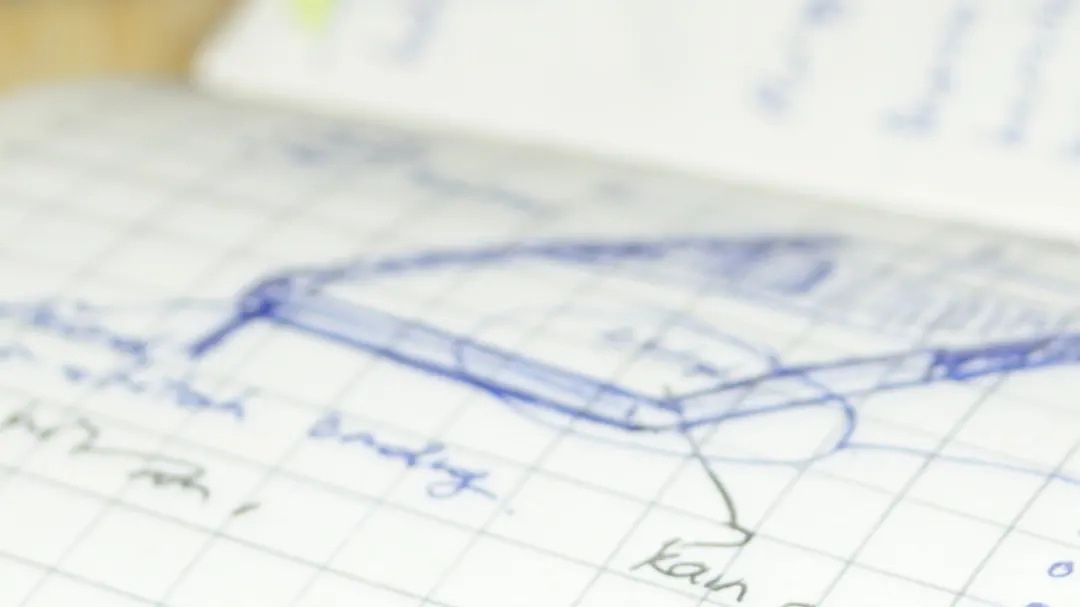
A thorough conversation to understand the vision, the purpose, and the functionality needed. From that we draw the first concept sketches — free of charge.
-
Specification & prototype
The design is refined, the materials chosen, and the first physical prototype made — usually about a week. You see it, hold it and test it before full production.
-
Production & delivery
Once the prototype is approved, our artisans make your order with strict quality control at every step.
The prototype
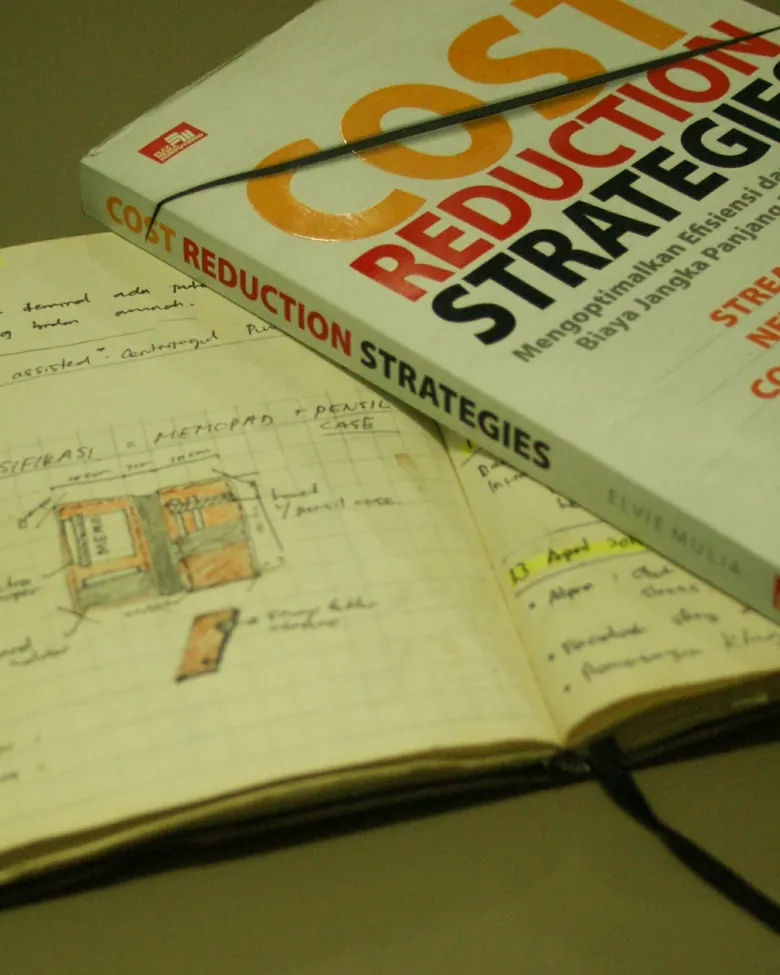
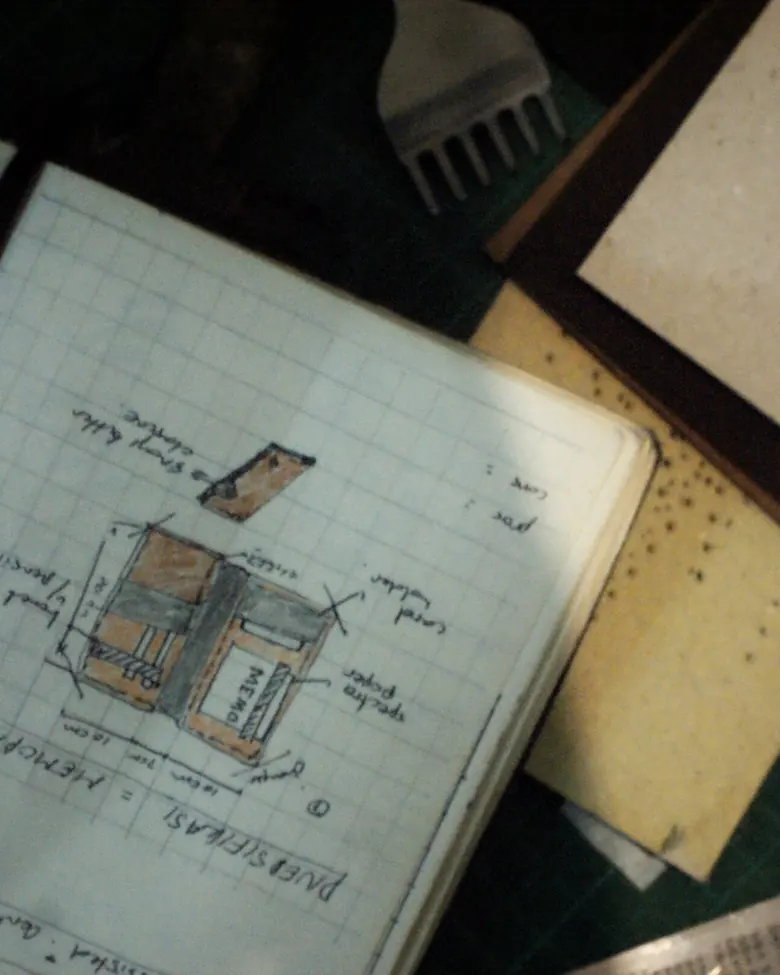
The prototype is where a design meets the material
A prototype is held, not looked at on a screen. Most of the decisions that change at this stage change because the thing feels different from how it was imagined.
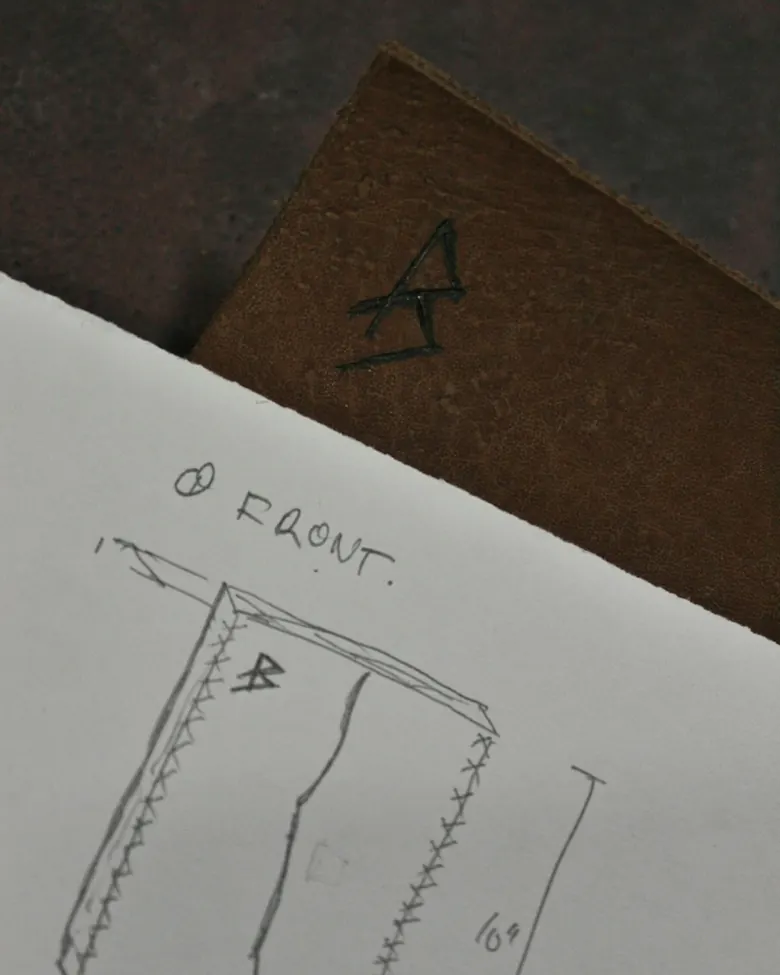
A drawing has no weight, does not bend, and does not resist. Leather does all three. A design that works on screen often fails on the first prototype for one of three reasons: too thick to close neatly, too soft to stand up, or a corner that cannot be sewn without folding the material twice.
Which is why the sequence that works is always the same: one prototype, held, judged, then corrected. Skipping this stage moves the discovery of mistakes into production, where each one multiplies by the number of units.
Cost
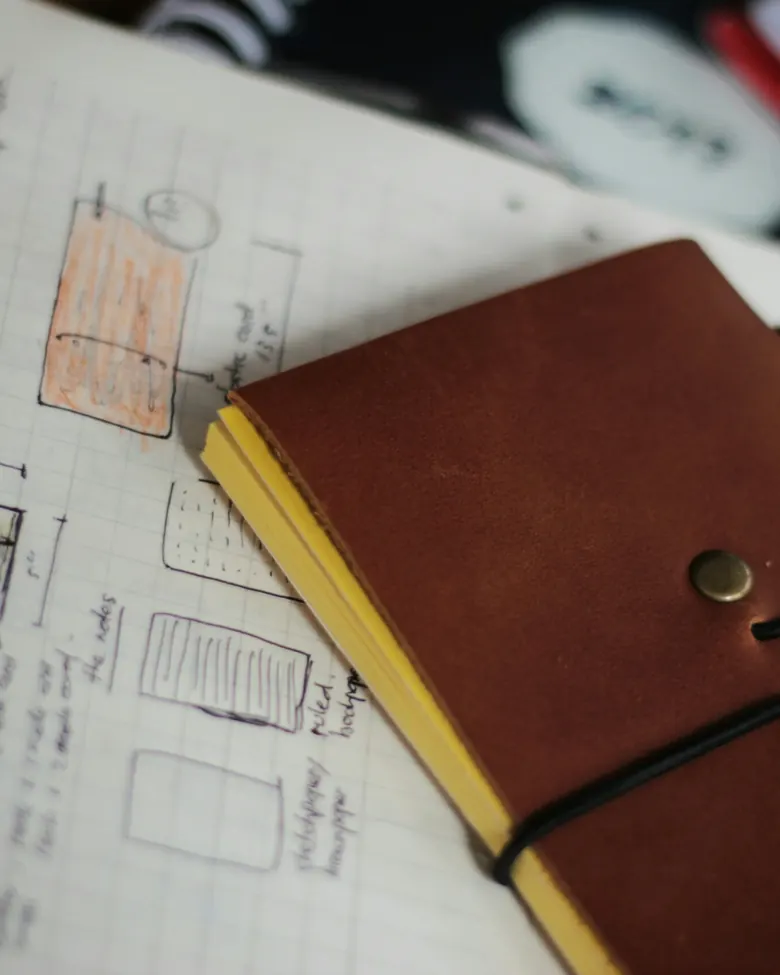
The stages, and where the cost actually sits
The right-hand column is the entire argument for prototyping.
| Stage | What it produces | Cost of changing here |
|---|---|---|
| 1. Requirements | What the object has to do | Almost nothing |
| 2. Sketch and dimensions | Basic shape, size, candidate materials | Low |
| 3. Prototype | One physical unit | Moderate — this is what it is for |
| 4. Revision | A second prototype if needed | Moderate |
| 5. Dies and templates | The logo die, the cutting template | High — cut once |
| 6. Production | The batch | Very high |
Changing a dimension at stage two costs one conversation; changing it at stage six means a new template, a new die, and a batch already cut.
Function
Functions that can be built in
The strength of a full design is being able to create features fitted to the way you actually use it, rather than simply looking handsome.
Custom pockets
For business cards, loose notes, or a small tablet.
Pen loop
Elastic or leather, built in on the inside or the outside.
A distinctive closure
From a wrapped leather tie to a brass stud or a magnetic closure.
Multi-material combinations
Combining leather with canvas, batik, or another material — provided it can be sewn, and ages in step with the leather beside it.
Limits
When a full design is not the answer
- A schedule under eight weeks. A prototype takes time that cannot be hurried, because most of that time is spent waiting for your judgement.
- A very small quantity. The cost of the template and the die is divided across the units; at five units it dominates.
- A need the catalogue already answers. If the difference is only colour and logo, the route is a bulk order, not a full design.
Questions
The questions asked most often
Who owns the design?
A design you bring remains yours. The base shape of a product that comes from our catalogue remains the catalogue's, unless agreed otherwise — the terms are in private label requirements. We only hope that, with your permission, we may use photographs of the finished work in our own marketing material.
How many prototypes are usually needed?
One to two. More than three almost always means the requirements were not fully worked out at the first stage.
Can other functions be combined in, such as a card holder?
They can, and every added function adds one more joint that has to be sewn. A joint is where an object fails, so their number is a structural decision, not simply a free extra.
How is the price decided?
Three factors: the type and quantity of material, the complexity of the design and its functionality, and the estimated time the artisans will need. A quotation follows the initial consultation.
First step
Describe the product you have in mind
Describe the product you have in mind and what it will be used for. We will reply with a prototype schedule, and with whether a full design really is the right route. For an order from the existing catalogue, pricing and MOQ are on bulk & white label.
