Full-Grain Leather
by Ibrahim Anwar · July 29, 2025
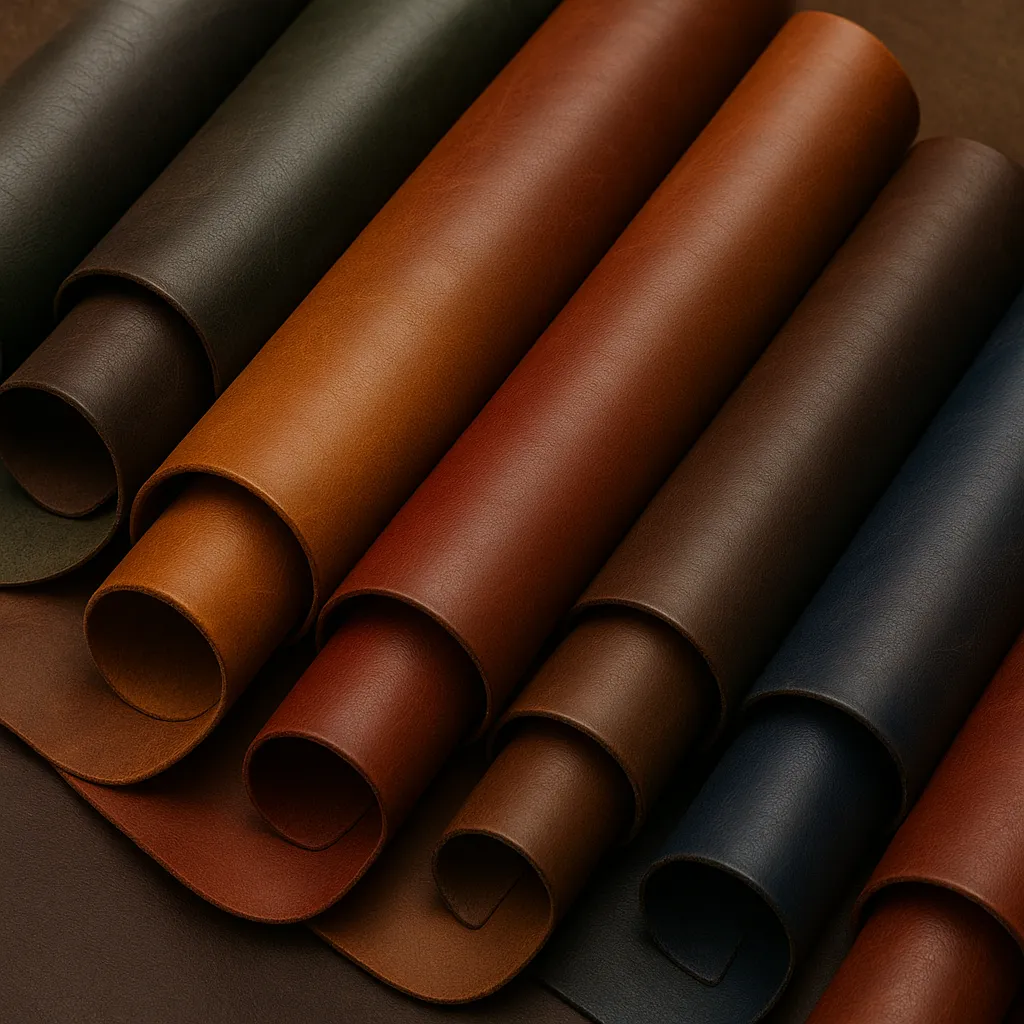
In the world of leather, not all of it is made equal. There is a clear hierarchy, and at the top of it sits full-grain. It is not simply a material but a canvas that tells a story — the story of the animal it came from, complete with every trace of its life written on the surface. Choosing full-grain is a deliberate decision to take authenticity over manufactured perfection. It is a material for people who understand that real beauty does not lie in a flawless surface, but in character formed by time and use. A full-grain leather object does not merely accompany you; it changes alongside you, a silent witness to every journey, and in the end a part of what you leave behind.
The anatomy of the thing: what full-grain leather actually is
To understand why full-grain is valued so highly, it helps to look closely at its structure. The name itself — “full grain”, the whole grain — is the key. The term refers to the outermost layer of the hide, just beneath the hair, where the collagen fibres are woven most densely and most strongly. That layer is what protected the animal during its life, and it is that strength the finished product inherits.
Nothing hidden: beauty in the imperfections
The defining characteristic of full-grain leather is that its surface is unaltered. Unlike other grades, which may be sanded or buffed to give a uniform appearance, full-grain is left as it is. That means every natural mark on the hide stays visible: scars from fighting, natural wrinkles, insect bites, even a ranch brand. In mass production these would be treated as “defects”. In premium craft they are badges of honour. They are the proof of the material's authenticity, an assurance that you are holding the purest cut of the hide. Each mark tells a story, and it makes every piece unique and impossible to repeat.
The hierarchy: understanding the grades
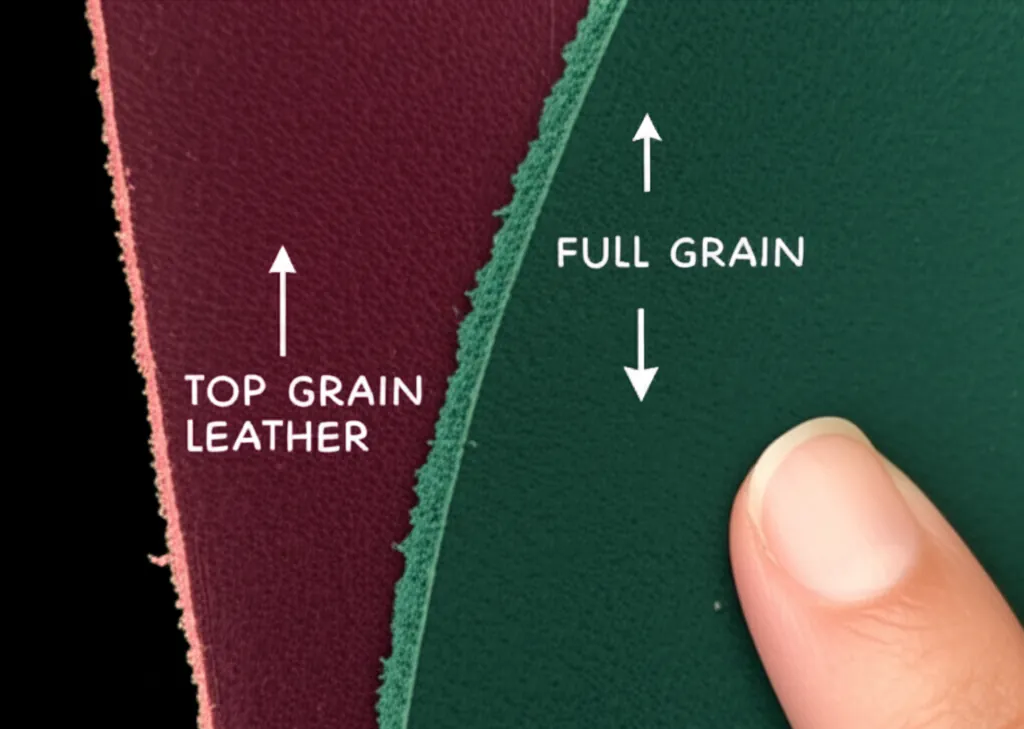
The leather market can be confusing, with terms like “top-grain”, “genuine” and “bonded”. Understanding the difference makes clear why full-grain sits at the top. Picture a thick raw hide, which can then be split into several layers.
- Full-grain leather: the topmost and most premium layer, with no part of the surface removed. The whole grain, the whole fibre structure, is still intact, which makes it the strongest and the most durable.
- Top-grain leather: the second best. It also comes from the upper layer, but the surface has been sanded or buffed a little to remove imperfections. That makes it slightly thinner and less durable than full-grain, but gives it a more uniform look and better initial stain resistance.
- Corrected-grain / genuine leather: the term “genuine leather” is often misleading. It actually refers to the layer left once the upper layers — full-grain and top-grain — have been split away. Because that surface has no natural grain of its own, it is usually buffed smooth and given an artificial embossed texture along with a heavy coat of finish, to imitate the appearance of better leather. Its durability is far below full-grain and top-grain.
- Bonded leather: the lowest grade, made from leather scraps and shavings ground down and bonded together with a polyurethane or latex adhesive onto a fabric backing. It is closer to particle board than to solid timber.
Set out this way, it is clear that investing in full-grain leather means choosing the top of the range for quality, strength and authenticity.
Full-grain leather is an honest material. It does not hide its past behind a coat of paint or a polish; it shows it, as part of an identity that is unique and cannot be matched.
Why durability is its middle name
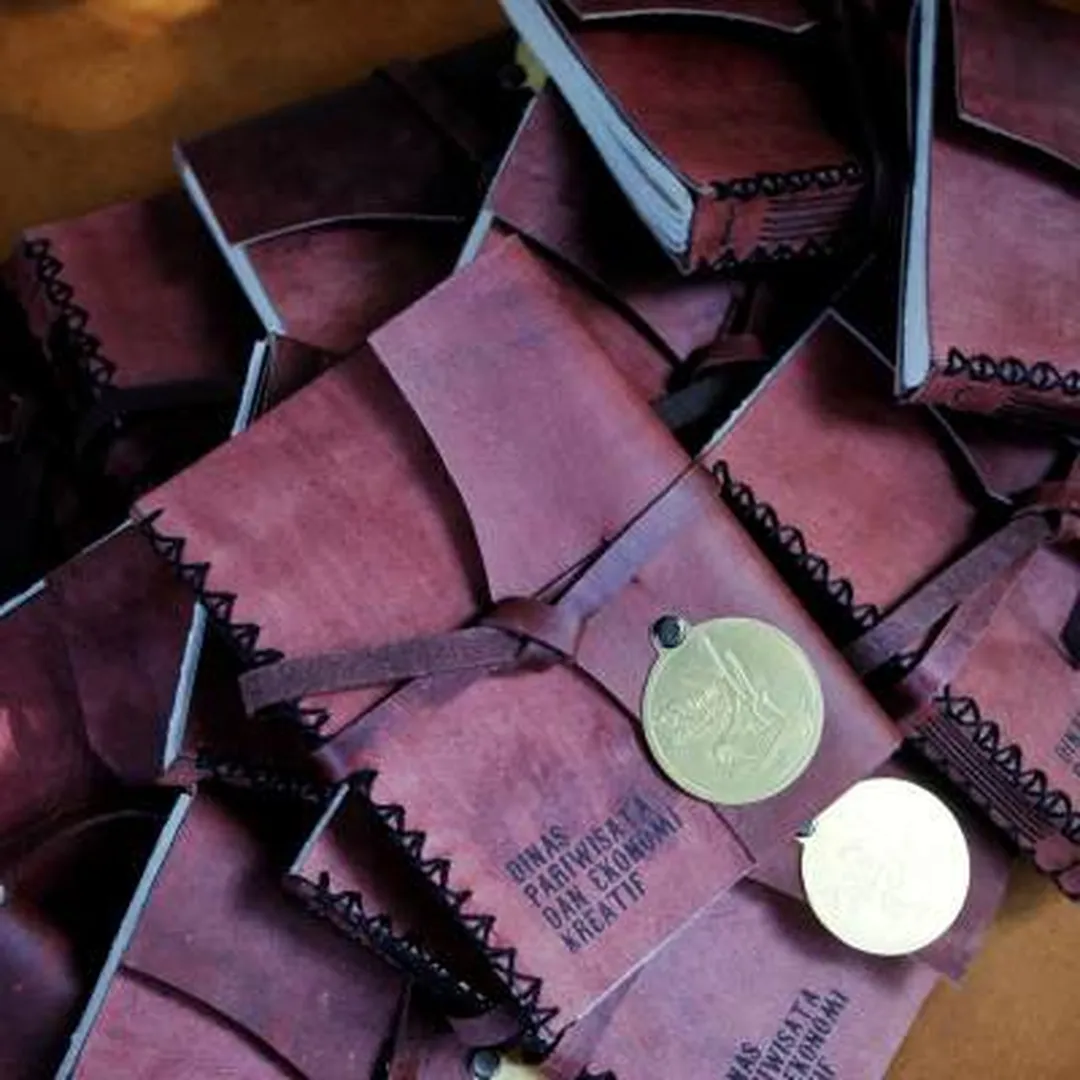
The superior strength of full-grain comes straight from its anatomy. The fibres in the outermost layer of the hide are dense and vertically interwoven. That tight structure makes it highly resistant to pulling, tearing and puncture. Because the layer is not removed or thinned by sanding, a full-grain product keeps the maximum structural strength of the original hide. It means a full-grain leather journal from Hibrkraft will not only protect what you write in it but will survive hard daily use and travel, and can be passed down a generation.
Living with it: what owning full-grain leather is like
Buying a full-grain leather object is not the end of a transaction but the start of a relationship. The material is alive and changes over time, adapting to how you live and getting better as it ages. It is a personal and satisfying thing to own.
The story of patina: ageing well
One of the most remarkable and sought-after qualities of full-grain leather is that it develops a patina. Patina is the soft sheen and rich shift in colour that forms on the surface through use and exposure. It is not damage but a kind of ripening. The oils from your hands, the rub of clothing, sunlight and humidity all feed the process. A light-tan full-grain wallet or journal cover may deepen to a rich caramel after a few years. Light scratches tend to settle back into the leather, adding visual depth. It is the patina that makes a piece genuinely yours — a unique record of where you have taken it.
How to identify real full-grain leather
With so many confusing marketing terms about, how can you be sure of getting genuine full-grain? A few practical tests:
- Look closely at the surface: search for natural imperfections. Look for the pores of the hide, fine wrinkles, even small scars. A surface that looks too perfect and too uniform, like plastic, is most likely corrected-grain.
- Feel it: full-grain leather feels substantial, dense and rich. It may be a little stiff at first, but it softens with use. The surface should not feel like plastic or like a painted coating.
- Scratch it lightly with a fingernail: on many full-grain leathers, particularly vegetable-tanned ones, a light scratch leaves a temporary mark that can be rubbed away. That shows the leather is alive and absorbing oils.
- Smell it: genuine full-grain leather has a rich, natural, slightly earthy smell. Avoid anything with a sharp chemical or plastic odour.
In premium craft: why Hibrkraft chooses it
At Hibrkraft we choose full-grain leather for our core products for straightforward reasons. For bookbinding and journal making there is no better material. Its strength and rigidity give unmatched protection to the text block inside. It gives a weight and a substance in the hand that nothing else imitates. More than that, its natural surface is the perfect ground for personalisation. Debossing into full-grain leather produces sharp, deep detail, creating a logo or a name that lasts. We believe a journal that will hold your ideas and your memories deserves a cover just as valuable and just as durable.
A simple care guide
Looking after full-grain leather is easier than you might think. The aim is not to keep it looking “new”, but to help it age well.
- Clean it regularly: a wipe with a soft dry cloth is enough to remove dust. For dirt, use a slightly damp cloth — not wet — and let it dry naturally.
- Avoid harsh chemicals: never use household cleaners, alcohol or detergent soaps on your leather.
- Condition it occasionally: every 6–12 months, work in a little good leather conditioner made from natural ingredients. It feeds the leather and stops it drying out.
- Store it properly: when not in use, keep leather goods somewhere cool and dry, out of direct sunlight. Use a breathable cloth bag rather than plastic, which traps moisture.
FAQ
Is full-grain leather waterproof?
Full-grain leather is naturally very water-resistant, thanks to its dense fibre structure and natural oil content, but it is not waterproof. It will shrug off drizzle or a small spill if you wipe it promptly. Soaked for any length of time, though, water can penetrate and cause damage. If it does get wet, let it dry naturally at room temperature.
Why does my full-grain leather product have scratches or marks? Is it faulty?
Quite the opposite. Marks such as scratches, wrinkles or colour variation are the characteristic signs of genuine full-grain leather. They show the hide has not been sanded down or covered with an artificial finish. They are part of the material's own story and should be read as a mark of the highest quality, not as a fault.
What is the main difference between full-grain and top-grain leather?
The main difference is how the surface is treated. Full-grain uses the topmost layer of the hide as it is, with all its fibres and natural markings intact. Top-grain also comes from the upper layer, but the surface has been sanded or buffed to remove imperfections, making it slightly thinner and less durable, though more uniform to look at.
References
- Leather Dictionary – Full-grain leather (the original link is dead; the reference is kept without it)
- Carlton London – Full-Grain Leather vs Top-Grain Leather: Which is Better? (the original link is dead; the reference is kept without it)
- Andar – What Is the Best Leather: Key Benefits of Full Grain (the original link is dead; the reference is kept without it)
- Satchel & Page – Leather 101: The Difference Between Full-Grain, Top-Grain, and Genuine Leather (the original link is dead; the reference is kept without it)

Own an heirloom
Order a custom journal in full-grain leather — a piece that ages with you and tells the story of where you have been.
Quality without compromise
Give a corporate gift that reflects the highest standard. A full-grain leather agenda is a statement about durability and excellence.
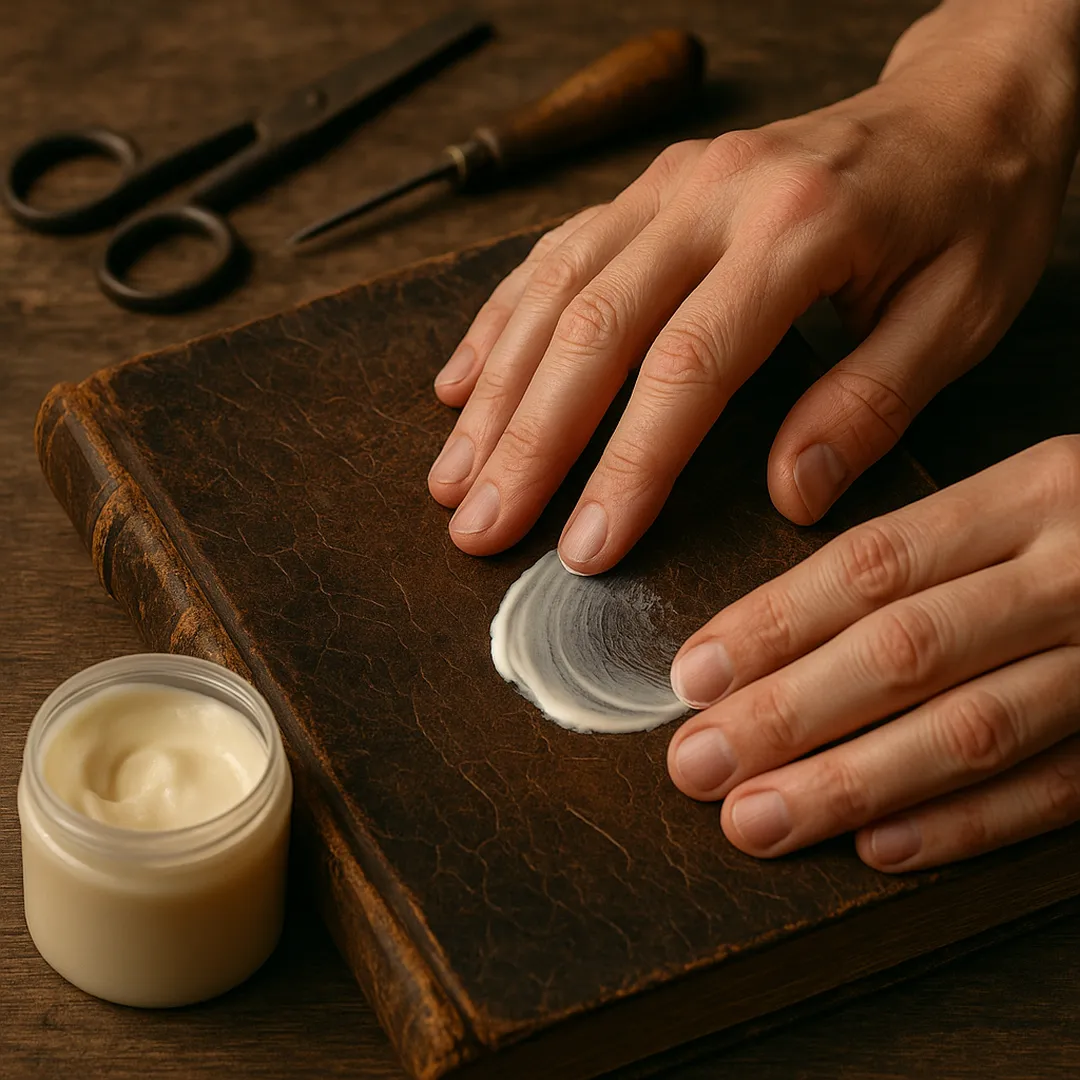
Restore a valued book
Bring a treasured book back to its best. We offer restoration using full-grain leather, for maximum durability and authenticity.