
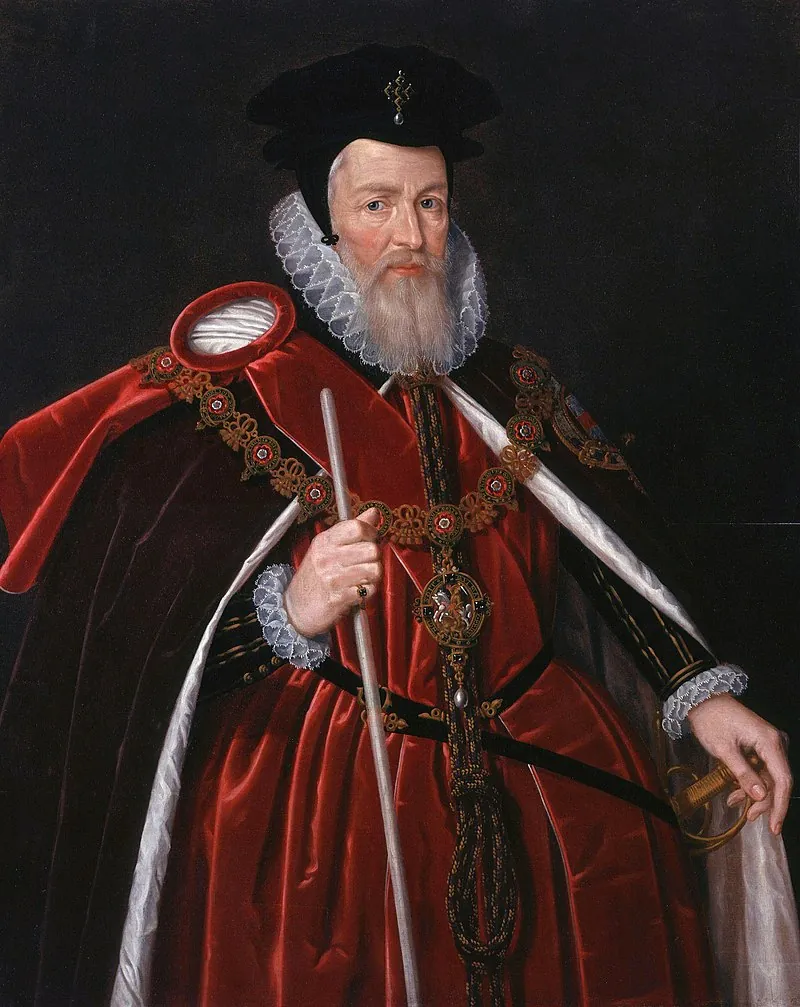
Cecil, Lord Burleigh’s, Book Stamp
by Ibrahim Anwar · July 27, 2025
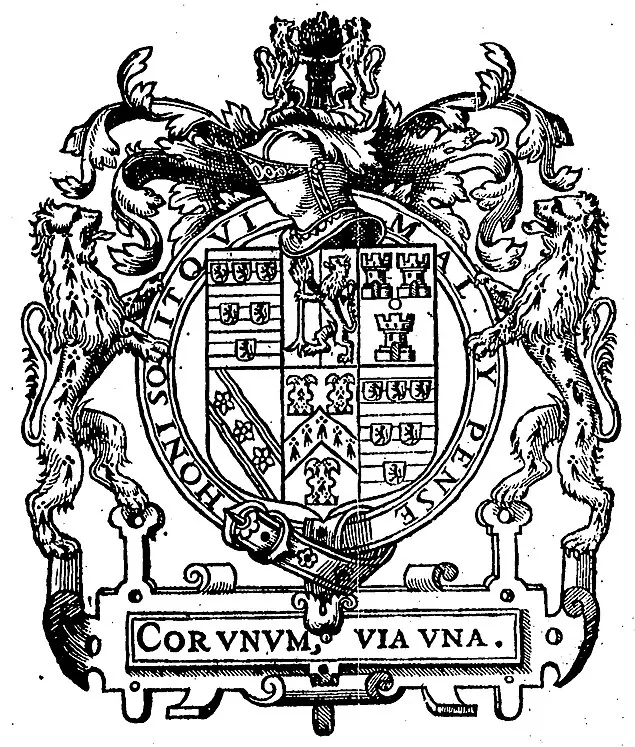
Imagine holding a book more than 400 years old. Its dark, worn leather cover keeps a faint but firm trace: a coat of arms pressed in gold. That mark is not merely decoration but a whisper of history from its owner. This is what happens when we come across a book bearing Cecil, Lord Burghley’s Book Stamp. It is not about the book itself, but about its journey through the hands of one of the most powerful figures in sixteenth-century England. The stamp is a tangible bridge connecting us directly to the private library, the ambition and the intellectual world of Queen Elizabeth I’s chief adviser.
To understand the significance of this book stamp is to enter a world in which a book was not only a source of knowledge but also a symbol of power, wealth and inheritance. The practice of marking books with the family arms (armorial binding) was the height of personalisation in its day. Unlike a mere signature or an ex-libris sticker, a heraldic stamp pressed into leather is an indelible statement of ownership, uniting the owner’s identity with the book physically. This article explores the figure behind that stamp, the art of heraldic binding in the Elizabethan era, the specific design of the Cecil arms, and why so modest an artefact carries such deep historical value.
Who Was William Cecil, Lord Burghley? The Figure Behind the Stamp
To appreciate the importance of this book stamp, we must first know its owner. William Cecil, later granted the title Baron Burghley, was a central figure in English politics for almost the whole of Queen Elizabeth I’s reign. Born in 1520, he was an accomplished statesman, politician and administrator. For 40 years he served as the Queen’s chief adviser, first as Secretary of State and then as Lord High Treasurer. His biography is all but inseparable from the history of England in that period.
Cecil was not only a shrewd politician; he was also a true Renaissance intellectual. He was an avid book collector (a bibliophile), a lover of antiquities, and deeply interested in genealogy and heraldry. His extensive library reflected his varied interests, from classical texts to contemporary political treatises. He built two great houses, Burghley House and Theobalds, filled with art and precious books. For a man of Cecil’s standing and ambition, the library was not only a private collection but also an intellectual asset and an instrument of statecraft. Marking his books with his arms was a way of asserting his identity, his inheritance and his authority.
The Heraldic Book Stamp (Armorial Stamp): A Statement of Status in the Elizabethan Era
In the sixteenth century bookbinding advanced rapidly, above all with the introduction of gilding (gold tooling) from the Islamic world by way of Italy and France. The technique allowed a binder to decorate a leather cover with intricate, glittering designs. One of its most prestigious applications was armorial binding: a binding decorated with the owner’s arms (coat of arms).
Owning an armorial binding at that time carried several important meanings:
- An Absolute Mark of Ownership: Unlike a paper label (bookplate) that can be lifted off, or a signature that can fade, a stamp pressed hot into leather is permanent. It is the surest way of claiming a book.
- A Symbol of Social Status: Only the nobility, senior churchmen and the wealthy held official arms and could afford to pay a skilled binder to cut a custom metal stamp and apply it in gold. It was a way of displaying lineage and rank.
- An Expression of Intellectual Identity: For a humanist such as Cecil, marking his books with the family arms connected the knowledge inside the book to his family’s inheritance and good name in the world outside.
The making of it was itself an art. A metal engraver (die-cutter) would cut the design of the arms in reverse into a piece of brass or another hard metal. The tool was then heated and pressed onto a thin sheet of gold leaf laid over the leather cover, leaving a precise and permanent trace in gold.
Lord Burghley’s book stamp is not merely a stamp but the lasting trace of an architect of the Elizabethan age, who marked his knowledge with the emblem of his power.
The Design of the Cecil Arms: Reading the Symbolism
Lord Burghley’s book stamp would show his family arms, which have been studied and identified from surviving books in various libraries, such as Queens’ College, Cambridge. The Cecil arms are fairly intricate and dense with family history. The heraldic description runs as follows:
- The Main Shield: The shield is divided into four (quarterly). The first and fourth quarters carry the Cecil arms: Barry of ten Argent and Azure, over all six escutcheons Sable, three, two, and one, each charged with a lion rampant Argent. That is, a field of ten horizontal bars in silver and blue, overlaid with six small black shields, each of which holds a lion rearing up in fierceness.
- The Motto: Beneath the shield there is often a ribbon carrying the Cecil family motto, “Cor unum, via una,” which means “One heart, one way.”
- An Additional Element (the Garter): After he was raised to the Order of the Garter in 1572, his arms would be encircled by the Garter belt with that order’s motto: “Honi soit qui mal y pense” (“Cursed be he who thinks evil of it”). The presence of the Garter helps historians estimate when a book was bound.
Each of these elements, from the lion that stands for courage to the bars that may refer to lands held, is part of a visual narrative Cecil wished to convey about himself and his family.
The Mystery of “Reference Number 216”
The initial information mentions “reference number 216.” In the world of rare books and provenance studies (the history of ownership), a number of this kind is highly significant. It is not part of the design of the stamp itself but a marker from outside it. Most likely the number refers to:
- An Auction Catalogue Entry: Great auction houses such as Sotheby’s or Christie’s give a lot number to every item sold. The number “216” could be the lot number for this stamp, or for a book decorated with it, in a historic sale.
- A Collection Inventory: A large library or museum (such as the British Library or The National Archives) uses an accession or reference number for every item in its collection.
- A Scholarly Catalogue: It could also be an entry number in a standard reference work on heraldic binding, such as the British Armorial Bindings database maintained by the Bibliographical Society and the University of Toronto.
The number, mysterious as it is without its original context, is an important clue for a researcher tracing the origin and the specific history of the artefact.
Legacy and Significance Today: The Hibrkraft Perspective
The tradition of marking a book with a permanent personal stamp is something we value greatly at Hibrkraft. Although we no longer live in an age of feudal aristocracy, the wish to leave a personal trace on the things we care about remains strong. Lord Burghley’s book stamp is a prime example of meaningful personalisation, a practice we bring back to life through modern craft.
When you order a custom leather journal or a business agenda from Hibrkraft, we offer a service to make a custom metal stamp (debossing plate) to your own design. It could be:
- A Monogram or Initials: The classic, elegant way to mark ownership.
- A Company Logo: Turning an agenda into a strong branding tool and a memorable corporate gift.
- A Family Crest: Continuing the heraldic tradition to create a modern family heirloom.
- A Personal Symbol: A unique design that holds a particular meaning for you.
As with Lord Burghley, using a metal stamp to mark your book is a way of saying, “This is more than a book, this is part of my identity.” It is an investment in an inheritance, creating an object that will be valued and remembered for years to come, carrying a story not only inside its pages but on its cover as well.
Finding a book with Lord Burghley’s stamp today is a rare and absorbing event for book historians. Every such book is a time capsule, giving insight not only into the reading habits of a great statesman but also into the art of binding, patronage and material culture at the height of the English Renaissance. It reminds us that a book is always more than a text; it is an object with a history of its own, shaped and marked by the hands that have held it.
Frequently Asked Questions (FAQ)
Cecil, Lord Burghley’s Book Stamp is a metal stamping tool (not an ink stamp) made specially for William Cecil (1520-1598). It was used to press his family arms hot into the leather covers of the books in his private library, a practice known as armorial binding. It was a lavish and permanent mark of ownership in the era of Elizabeth I.
In the sixteenth century a heraldic stamp (armorial stamp) on a book cover served as an indelible mark of ownership, a symbol of social status and wealth, and an expression of intellectual identity and family lineage. Only the elite could afford to pay a craftsman to make a custom stamp and apply it in gold, which made it a statement of power and pride.
The main difference lies in permanence and method. An ink stamp or a bookplate (a pasted paper label) can be removed or covered over. A heraldic stamp (tooling), by contrast, is made by pressing a hot metal tool into the leather, often with gold leaf, creating a permanent impression in the cover itself. That makes it an integral part of the binding rather than an addition to it.
Certainly. At Hibrkraft we continue this tradition by offering custom metal stamps (debossing plates) for your leather journal or agenda. You can have a stamp made with a company logo, a personal monogram, or even a family crest, which we will press into the leather cover to create an elegant and lasting personalisation, much as Lord Burghley did centuries ago.
References
- British Armorial Bindings Database – University of Toronto Libraries – A principal resource for identifying English heraldic stamps.
- Books as evidence: works from William Cecil’s lost library – Queens’ College, Cambridge (the original link is dead; the reference is kept without a link) – An article discussing the discovery of books belonging to Cecil that carry his stamp.
- William Cecil, 1st Baron Burghley – Britannica – A comprehensive biography of Lord Burghley’s life and career.
- Characteristics of Sixteenth-century Bindings – Ligatura (the original link is dead; the reference is kept without a link) – An explanation of binding technique in the sixteenth century.
- Armorial Bindings: Introduction – Yale Law School (the original link is dead; the reference is kept without a link) – An introduction to the concept and history of heraldic binding.
- Armorial bindings – Etherington & Roberts. Dictionary – A technical definition of armorial binding.

Custom Notebook
Continue a timeless tradition. Stamp your personal crest or monogram onto a handmade leather journal.
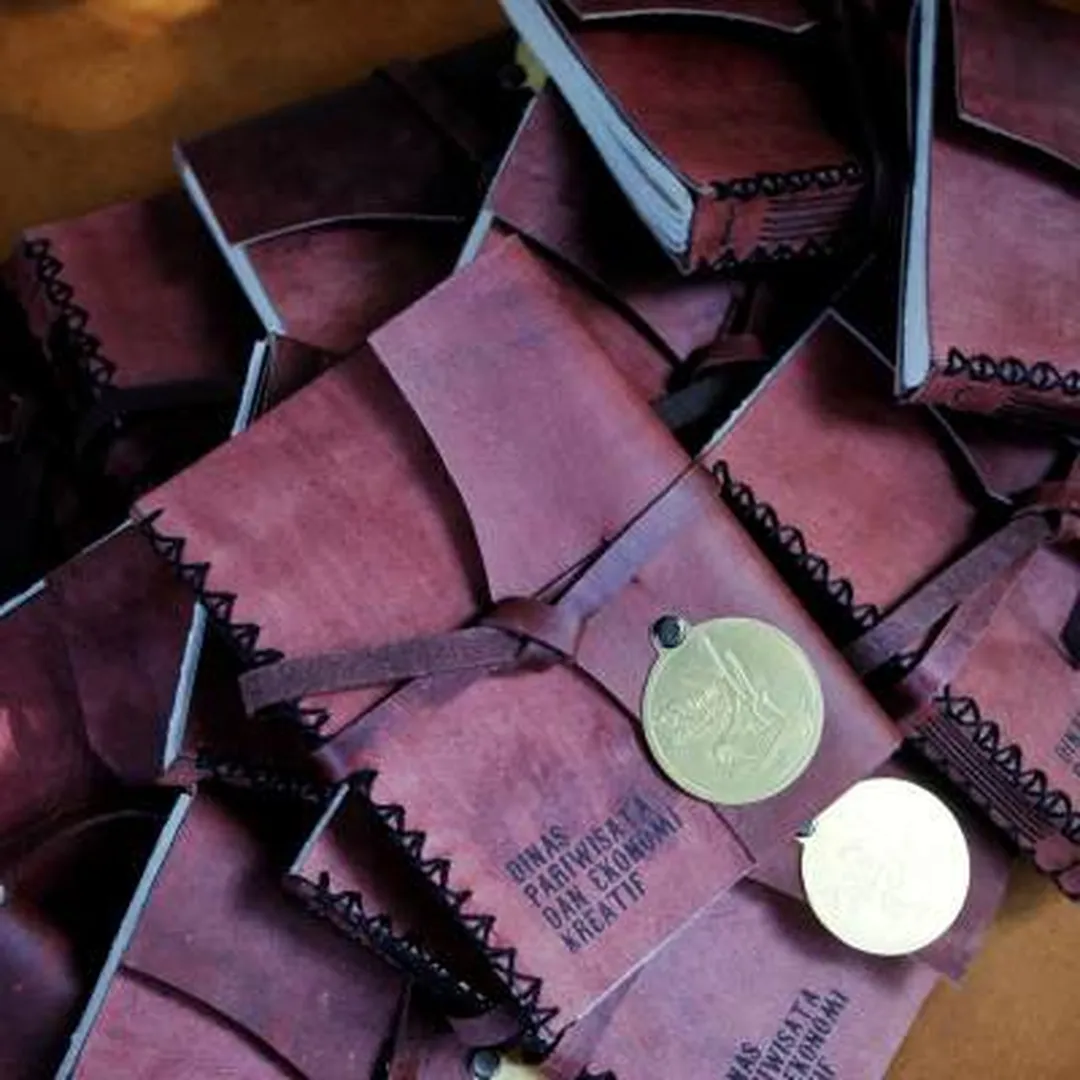
Business & Whitelabel
An armorial stamp signified power. Today, your company logo on our leather goods makes a similar statement of quality.
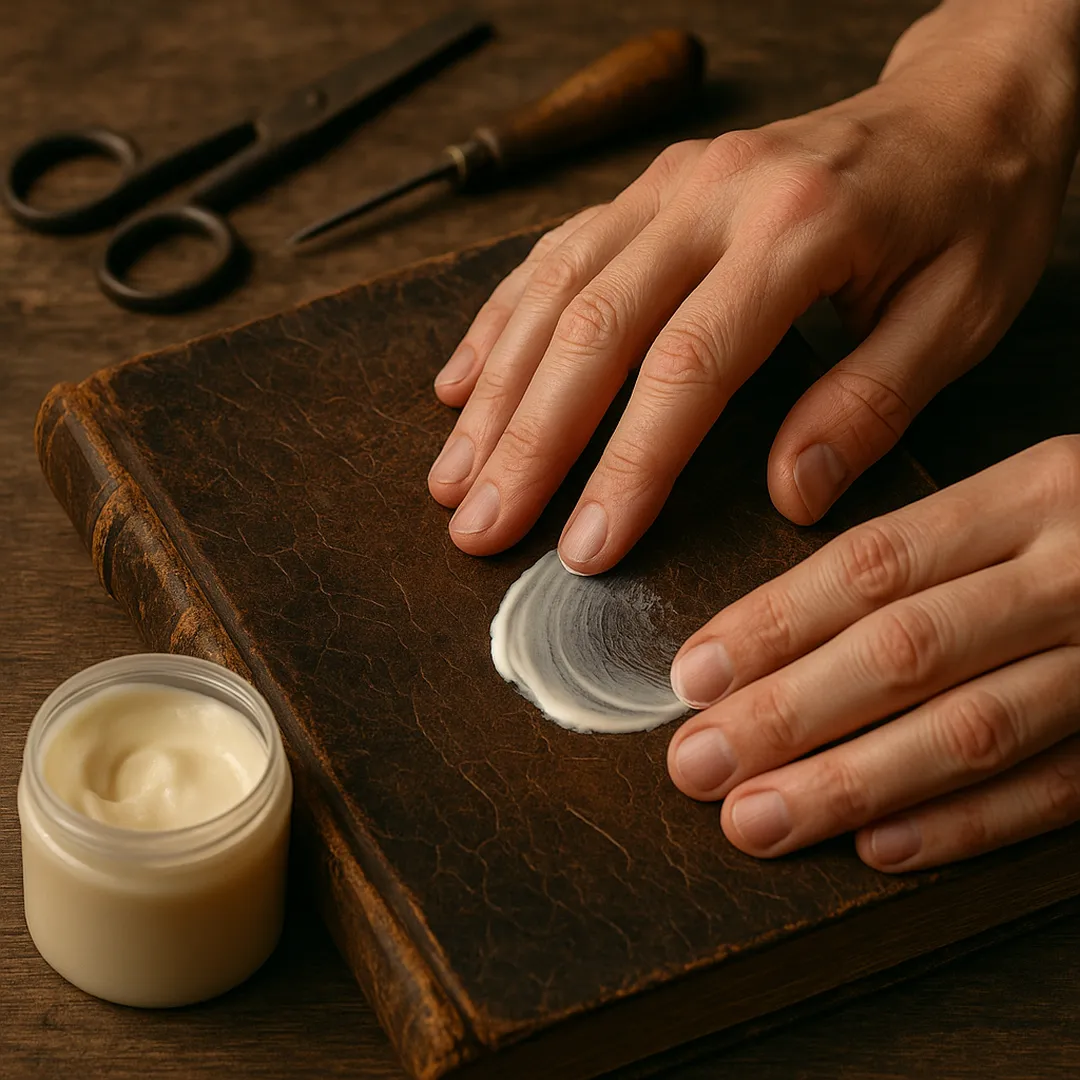
Book Repair & Conservation
We preserve history by carefully restoring antique bindings, including those with historical armorial stamps.