
Französische Form
by Ibrahim Anwar · July 28, 2025
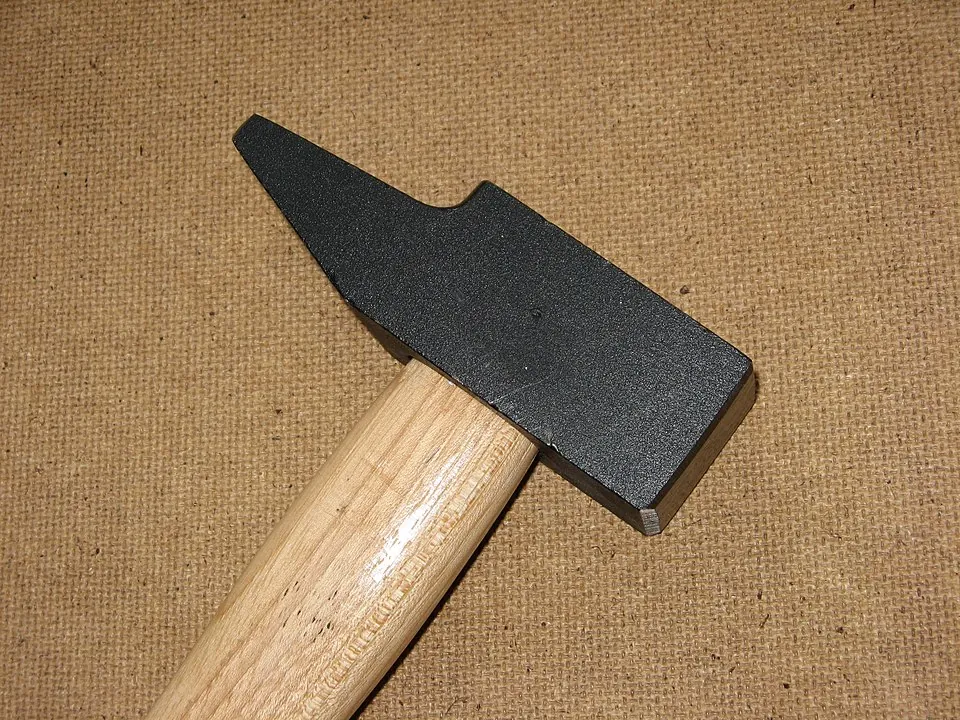
In the terminology of bookbinding and classical leather craft, Französische Form (German for “French Form”) is the name for a type of polishing tool, or polishing iron (German: Polierstahl), with a very specific design. It is marked by a narrower and often pointed tip, made specifically to create sharp, precise straight lines on a leather cover. Its distinctive shape lets the maker concentrate pressure considerably, producing a deep, clean indentation (crease) or blind decorative line (blind-tooled line) — an essential technique in classical European bookbinding, and particularly in making frames or panels on a book cover.
In the workshop of a skilled bookbinder there are various tools that may look antiquated, yet each has a function nothing else can fill. Among the hammers, the knives and the presses sits a group of steel tools that look plain but hold the key to beautiful detail: polishing irons. And among these tools, the Französische Form is the specialist. It is not a tool for rough work but a precision instrument used to “draw” with pressure and heat, turning a flat leather surface into a canvas of firm architectural lines. To understand this tool is to understand the philosophy that in high craft the shape of the tool determines the quality of the line, and every line tells a story of skill and tradition.
Precision in the Hand: A Close Look at the Französische Form
The term may sound technical and unfamiliar, but it stands for a universal idea in craft: the relationship between the right tool and a perfect result. For Hibrkraft, the spirit behind the Französische Form is the heart of what we do — creating custom products with design lines that are clean, deliberate and executed with precision. Let us look more closely at the tool that has become a symbol of refinement in bookbinding.
Etymology and Meaning: Why “French Form” in German?
The first thing to understand is that Französische Form is a technical term from German, not French. “Französische” means “French” and “Form” means “form”. The term does not automatically mean the tool was made in France; it refers to a tool form historically associated with the luxury bookbinding style that came out of France.
From the 17th to the 19th century, French bookbinders such as Nicolas-Denis Derome and Antoine Michel Padeloup pioneered book cover designs that were highly structured, elegant and often geometric. Their designs made heavy use of line frames (known as panel or encadrement) worked to high precision. Creating these sharp, clean straight lines called for a tool with a pointed tip, one that could follow a straightedge accurately and concentrate pressure. Makers in other countries, and particularly in Germany with its strong binding tradition, adopted this tool form and identified it as “French Form”, to set it apart from their own local forms, which might be rounder or broader.
Physical Characteristics: The Straight-Line Specialist
The Französische Form is one member of the large family of tools called Polierstahl (polishing steel) or Polierbein (polishing bone). What separates them is the shape of the working tip:
- Pointed or Narrow Tip: Its main feature is a tapering tip, shaped like the end of a very finely finished flat-head screwdriver. This lets it reach into tight corners and create a very sharp line.
- Smooth Surface: The working tip is polished until it is very smooth, so that it glides over the leather without scratching or damaging it.
- Material: The classic version is made of steel (Stahl), which can be heated to give the leather a darker, permanent scorched effect (burnish). There are also versions made of bone (Bein) or agate stone (agate), used cold, more often called a polishing bone or burnisher.
- Wooden Handle: Like most traditional binding tools, it is set into a wooden handle that is comfortable to hold and gives both control and the ability to apply firm pressure.
Not merely a tool, the Französische Form is an extension of the maker’s vision. Its pointed tip is the brush and the leather is the canvas; its pressure is the invisible ink.
The Main Function: Making Crease Lines (Creasing) and Polishing
The main function of this tool is to make a crease, or crease line, on a leather cover. The process is not only decorative but also useful.
- As Decoration: The lines made with this tool form frames, panels or other geometric patterns. A line can be left just as it is (known as blind tooling) or serve as the base for applying gold foil (gold tooling). A sharp, deep line catches the light differently, giving the cover dimension and elegance.
- As a Structural Function: Making a crease line near the edge of the cover or along the joint (hinge) can help the leather fold more neatly and reduce stress at vulnerable points, so the book lasts better.
When the steel version of the Polierstahl is heated properly, the process is more than pressing. Heat and pressure together compact the fibres of the leather, making it smoother, darker and slightly lustrous. This effect is called burnishing, and it is what gives those lines a professional, permanent look.
Französische Form in the Modern World: Tradition Meets Technology
Although traditional hand tools such as the Französische Form now often sit alongside more modern technology, the principle behind them is everlasting. Precision, control and the ability to create fine detail are the distinctive marks of high-quality handwork.
A Comparison with Similar Tools
To understand the unique role of the Französische Form better, let us compare it with other tools:
- Bone Folder: The standard bone folder has a rounder tip and is used mainly for folding paper, forming a fold in thin leather, or pressing down stitching. It is not made to create the very sharp, deep decorative lines wanted on a thick leather cover.
- German/Swiss Form (Deutsche/Schweizer Form): This is another type of Polierstahl, one with a broader, rounder tip. That form suits polishing wider areas, smoothing leather or making gentle curves, rather than precise straight lines.
- Electric Creaser/Fileteuse: This is the modern version of the polishing iron. It uses electricity to hold the tip at a consistent temperature, which makes it easier to use and faster for production. Many purist makers argue, though, that a traditional manual tool such as the Französische Form offers a level of control and tactile nuance that no electric tool can match.
The Principle Applied at Hibrkraft
At Hibrkraft we hold the craft heritage the Französische Form represents in high regard. When we design a custom leather journal, we think about its lines. Straight lines of stitching, tidy edges and the decorative crease lines we add all follow the same principle: use the right tool to create clean, deliberate detail.
When a customer asks for a simple frame line on their journal cover, we use a dedicated tool (manual or electric) inspired by this classical design, so that the line is straight, sharp and of consistent depth. This is how we honour the bookbinding tradition while putting it to work to create a product that is relevant and personal to you.
There is a beautiful parallel between the pointed tip of the Französische Form pressing into leather and the sharp spout of the canting tracing hot wax onto batik cloth. Both are precision tools for pouring intent into a lasting line.
A Connection with Indonesian Craft Tradition
The idea of using a specially shaped tool to create a precise line is nothing unfamiliar in the richness of Nusantara craft. There are strong parallels to draw:
- The Canting in Batik Tulis: The canting is a tool with a small pipe-like spout, used to hold hot malam (wax) and “write” it onto cloth to make a pattern. Different canting spout shapes and sizes (cecek, klowong) determine the thickness of the line, just as the various forms of polishing iron do. Both call for a steady hand, temperature control (for the wax and for hot steel) and the right pressure.
- Wood Carving Chisels: Wood carvers in Jepara or Bali use dozens of different chisels. There are chisels with a straight edge (pahat penyilat) for making firm lines and clearing the ground, and chisels with a curved edge (pahat kol) for curved detail. Choosing the right chisel shape is the key to creating a carving that is alive and detailed.
Understanding the Französische Form not only opens a view onto European bookbinding; it also gives us a new appreciation of the genius of the master makers in our own country, who have long mastered the art of creating beauty through precision tools.
FAQ
What is the difference between a Französische Form and an ordinary bone folder?
The main difference lies in the design of the tip and in what it does. An ordinary folding bone (bone folder) has a broader, rounder tip, made for folding paper and pressing material generally. The Französische Form, by contrast, is a specialist tool with a very narrow, pointed tip, made specifically to produce a decorative crease line (crease) that is very sharp and precise on a leather cover, often with the help of a straightedge.
Does this tool always have to be heated?
Not always. The term refers to the shape. If the tool is made of steel (Polierstahl), it can be heated to give the leather a burnish effect (slightly scorched and glossy), which makes the line darker and permanent. But if a tool of the same shape is made of bone, agate stone (agate) or Teflon, it is used cold, relying on pressure alone to make the indentation in the leather.
Why is it called 'French Form' when the term is in German?
The term arose from the perspective of bookbinders in Germany. They recognised that the luxury binding style from France in the 17th to 19th centuries often featured very precise straight-line frames. Imitating that style called for a tool with a pointed tip. So they named that tool form “Französische Form”, or “French Form”, to signal that the tool was ideal for creating the decorative style popular in France. It is an acknowledgement of French stylistic influence in the world of European bookbinding.
References
- Google Images search for “Polierstahl französische Form” – Gives a clear visual sense of this tool’s shape from various suppliers.
- Peachey Conservation (the original link is dead; the reference is kept without a link) – A blog by a professional book conservator who often discusses historical tools, including various types of polishing iron.
- The Encyclopedia of Diderot & d’Alembert (the original link is dead; the reference is kept without a link) – The entry on “Polishing Iron” (Fer à polir) gives 18th-century historical context for the use of heated polishing tools in French bookbinding.
- Grolier Club Exhibitions (the original link is dead; the reference is kept without a link) – Frequently mounts exhibitions on the history of bookbinding, including the implements (tools) used to create particular styles.

Precision Detail for Your Story
Every line matters. Discuss custom details such as a precise line border on your leather journal cover, for an elegant, personal touch.
Handwork for Your Business Image
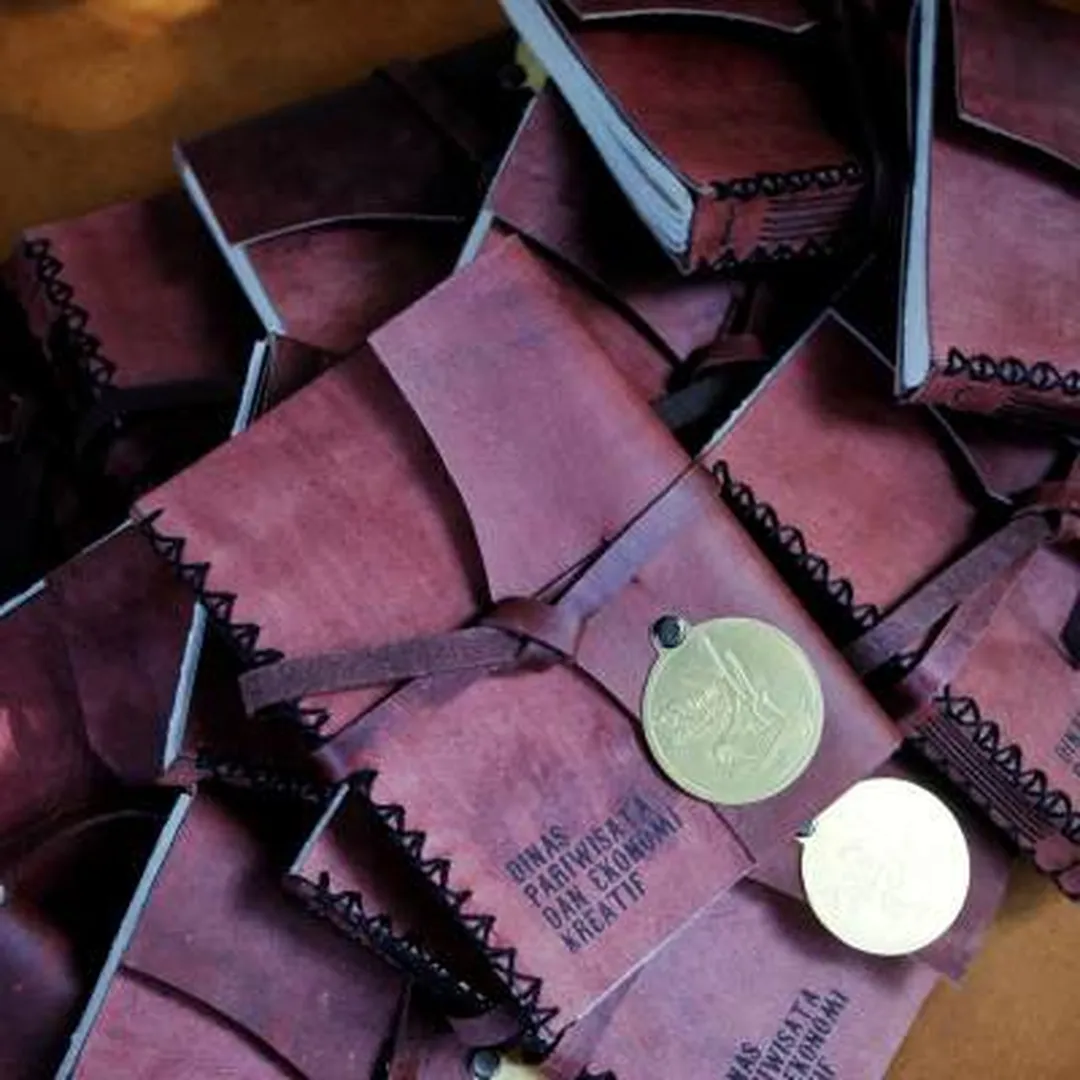
Show your company’s attention to detail. A business agenda with high-precision finishing leaves a strong, professional impression.
Expert Repair & Conservation
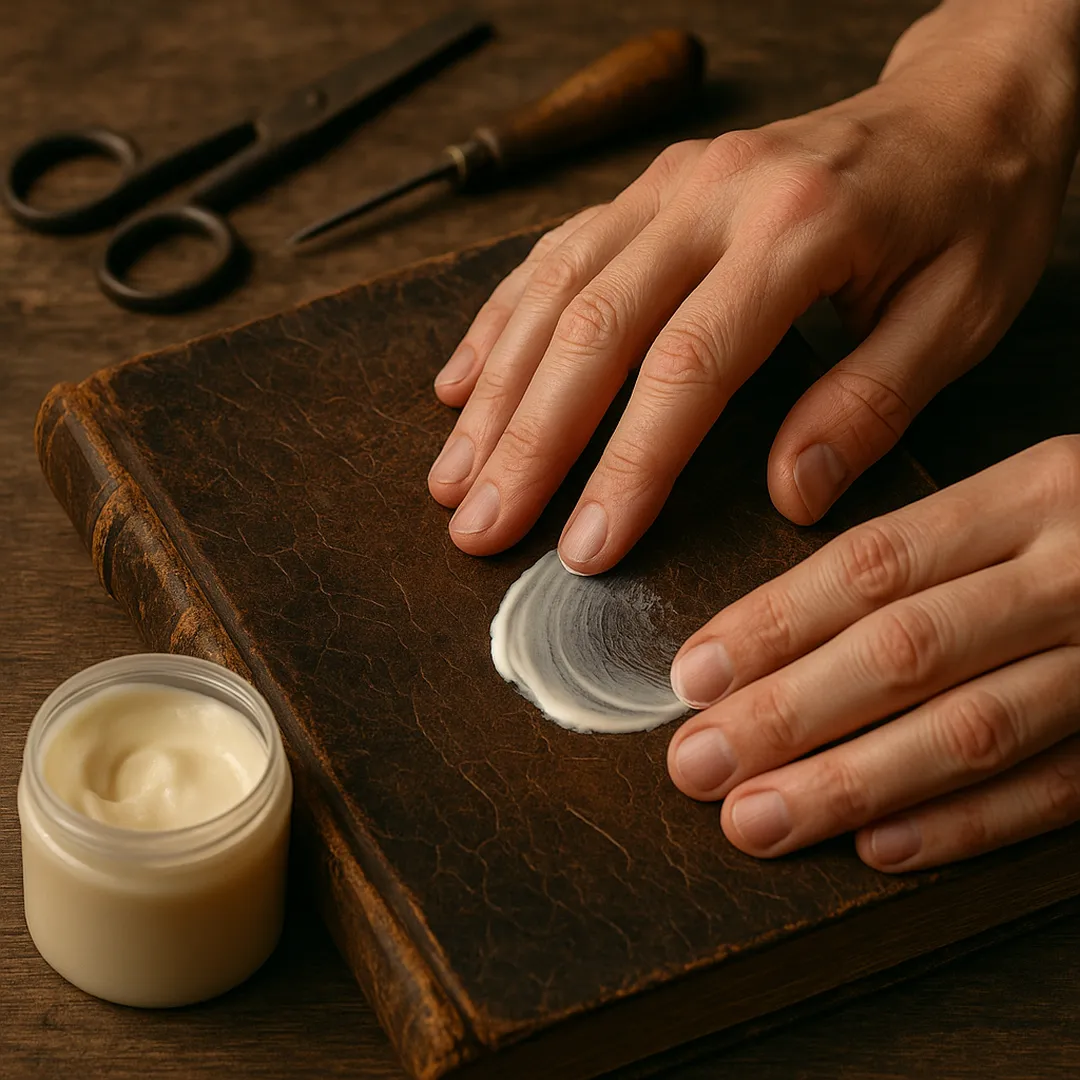
Repairing an antique book means replicating its original techniques. We understand how the classic tools work, so the restoration is authentic.