French Blue
by Ibrahim Anwar · July 28, 2025
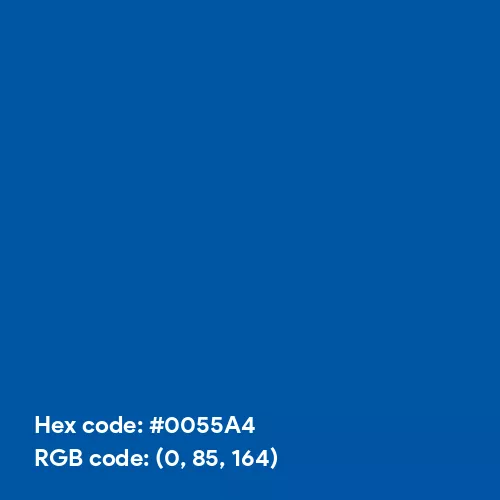
In the world of art, craft and bookbinding, French Blue (Biru Perancis) does not refer to a single colour but is a historical term for a group of bright, revolutionary blue pigments developed in France in the early nineteenth century. Specifically, the term most often refers to two great discoveries: Cobalt Blue (Biru Kobalt) and, more commonly, Synthetic Ultramarine (French Ultramarine). These pigments were created by chemical processes that were advanced for their day, producing a blue that was strong, stable and affordable, and that dramatically changed the palette available to artists and craftspeople.
For centuries a deep, rich blue was the highest luxury. It was extracted with great difficulty from the semi-precious stone Lapis Lazuli, yielding a natural Ultramarine pigment that cost more than gold. Only the wealthiest painters, or work commissioned by the church, could afford to use it. All of that changed in France in the early nineteenth century. Amid the upheaval of the industrial revolution and the spirit of the Enlightenment, chemists raced to crack the code of the colour blue. Their success did not only create a new pigment; it democratised the colour blue, releasing it from the grip of the elite and handing it to the world. The story of “French Blue” is a story of innovation, of science, and of a revolution in colour whose effects we still feel today.
Unpicking the Double Identity of ‘French Blue’
To understand “French Blue” is to understand that the term is an umbrella sheltering a legacy of French chemical innovation. When we speak of this pigment in its historical context, we are really referring to two principal heroes of the blue palette, each with its own story, characteristics and impact.
Cobalt Blue (Thénard’s Blue): The Pure, Stable Blue
The first significant discovery was Cobalt Blue, in 1802, by a French chemist named Louis Jacques Thénard. He was commissioned by Napoleon’s government to find a cheaper but still high-quality alternative to the Sèvres Blue pigment used at the famous national porcelain factory. Thénard found that by heating cobalt oxide and aluminium oxide at a very high temperature (the calcination process) he could create a blue pigment that was extremely pure, bright and remarkably stable.
- Characteristics: Cobalt Blue has a neutral to slightly cool blue hue, clean, and not as deep as Ultramarine. Its chief advantage is its resistance to light, acid and alkali, which makes it one of the most permanent pigments ever made.
- Impact: Though still relatively expensive because of the price of cobalt, it gave artists a reliable and bright blue to work with. Impressionist painters such as Auguste Renoir and Claude Monet were very fond of Cobalt Blue for capturing the light of sky and water.
French Ultramarine (Ultramarin Perancis): The Democratisation of a Luxury Blue
If Cobalt Blue was a large step forward, the discovery of Synthetic Ultramarine was a quantum leap. In 1824 the Société d’Encouragement pour l’Industrie Nationale in France offered a large prize to anyone who could find a way to produce Ultramarine pigment artificially at a price of less than 300 francs per kilogram.
The challenge was solved by an industrialist and chemist named Jean-Baptiste Guimet in 1826. He developed a complex process involving the heating of a mixture of kaolin (china clay), soda ash, sulphur and charcoal. The result was a pigment chemically identical to the natural Ultramarine from Lapis Lazuli, but at a very small production cost.
The Blue Revolution did not happen on the battlefield, but inside the chemistry laboratories of France. The discovery of French Ultramarine gave the colour of the sky to everyone, turning it from a symbol of luxury into a colour of everyday expression.
- Characteristics: French Ultramarine has a deep, dense blue that is slightly warmer (it carries a purplish/reddish hue) than Cobalt Blue. Its tinting strength is very high. A successful production process depends heavily on careful washing to remove the residual salts, as touched on in the opening definition, so that the stability and purity of the colour are assured.
- Impact: This is what truly changed the world. Suddenly the most coveted blue in history was available to everyone. Its low price made it the standard blue pigment for watercolour, oil paint, printing ink, the colouring of paper (including marbled paper and the endpapers of books), textiles, and even for washing clothes (as a brightening agent).
So when a craftsperson or a book historian speaks of “French Blue,” they are most likely referring to this ubiquitous French Ultramarine, the pigment that carried Renaissance luxury into Victorian mass production.
The Legacy of Blue: Its Impact on Art, Craft and Everyday Life
The availability of an affordable, high-quality blue pigment set off an explosion of creativity. Its effects were felt across many fields, shaping the visual aesthetics we know today.
A Revolution in Painting
The Impressionist and Post-Impressionist artists were the greatest beneficiaries. They were obsessed with light and atmosphere, and now they had unlimited access to a whole range of blues for painting sky, sea and shadow. An iconic painting such as “The Starry Night” (Malam Berbintang) by Vincent van Gogh could never have been made with so vivid a palette without Cobalt Blue and French Ultramarine. Van Gogh himself wrote to his brother Theo about how beautiful this blue was.
A Transformation in the World of Books and Paper
Before the nineteenth century, a blue element on a book was a mark of luxury. A book cover dyed blue, or marbled endpapers (kertas ujung) dominated by blue, were found only on expensive bespoke bindings. French Ultramarine changed all of this.
- Marbled Paper (Marbling): Marblers could now easily create rich patterns in a dense blue, producing beautiful sheets to be used as covers or endpapers on commercially produced books.
- Paper Colouring: Paper could be dyed blue during its manufacture (pulp-dyed), providing an affordable base material for covers, pamphlets and other printed matter.
- Printing Ink: The development of a stable, cheap blue printing ink allowed coloured illustration and text to become more common in books and magazines.
At Hibrkraft we carry this tradition on by offering a range of colour choices for the elements of your custom book, from the colour of the sewing thread and the ribbon marker to the colour of the leather itself. Choosing an elegant deep blue for the cover of your journal is a modern way of connecting with the long history of this colour in bookbinding.
Just as tarum (indigo) gives its soul to batik cloth, French Ultramarine gave a pulse of life to the pages of books and to the canvases of European painters, changing the way the world saw and used colour.
A Connection with Indonesia’s Own Blue Tradition
The story of the search for a perfect blue has a strong echo in Indonesian craft tradition. For centuries the principal source of a rich blue across the archipelago was the plant Nila or Tarum (Indigofera tinctoria). Producing indigo blue is an intricate process of fermentation and oxidation, a form of organic chemistry passed down from generation to generation.
There is an interesting philosophical difference here. Indigo blue from nature has a “soul”; its colour is alive and can vary with many factors, from the quality of the plant to the skill of the dyer. It is honoured within the culture and often carries a spiritual meaning. French Blue, by contrast, is a product of modern science; it is precise, consistent and predictable. Both are beautiful in their own way and both represent the peak of dyeing technology in their time. Understanding both gives us a richer perspective on how precious colour is in human cultural expression.
FAQ
So what is the main difference between French Blue, Cobalt Blue and Ultramarine?
French Blue is a general term, not one specific pigment. Most often it refers to French Ultramarine (Ultramarin Perancis), a cheap and hugely popular synthetic pigment discovered in 1826. Sometimes it can also refer to Cobalt Blue (Biru Kobalt), another synthetic pigment discovered in 1802, purer in colour but more expensive. Ultramarine itself can mean two things: Natural Ultramarine (from Lapis Lazuli, very expensive) or Synthetic Ultramarine (the cheap French version). In short, Cobalt Blue and French Ultramarine are the two main kinds of what is collectively called “French Blue”.
Why is the discovery of French Ultramarine considered so revolutionary?
Because of economics. Before 1826 the only way to obtain a dense ultramarine blue was to grind Lapis Lazuli, which made it more expensive than gold. The discovery of French Ultramarine produced a pigment of the same colour and quality at a very low price. That democratised the colour blue, making it affordable for artists, craftspeople, the textile industry and printers. The revolution allowed blue to be used widely in everyday life, from paint to books.
Are these 'French Blue' pigments still used today?
Yes, certainly. The chemical descendants of these discoveries are still the basis of many modern blue pigments. Both Cobalt Blue and Synthetic Ultramarine are still produced on a large scale and used in artists’ paints, industrial coatings, plastics, cosmetics and much else. They are valued for their bright colour, their tinting strength and their remarkable durability (lightfastness). When you buy an oil paint or a watercolour named “Cobalt Blue” or “French Ultramarine,” you are using a modern version of these historic discoveries.
References
- ColourLex. “Cobalt Blue.” (the original link is dead; the reference is kept without a link) – Provides in-depth technical, chemical and historical information on the Cobalt Blue pigment (PB28).
- National Gallery of Art. “A History of Color in Art: Cobalt Blue.” (the original link is dead; the reference is kept without a link) – Explains the importance of Cobalt Blue to artists such as Renoir.
- ColourLex. “Ultramarine Blue.” (the original link is dead; the reference is kept without a link) – A comprehensive resource on the history, production and characteristics of Ultramarine, both natural and synthetic.
- Winsor & Newton. “The Story of French Ultramarine.” (the original link is dead; the reference is kept without a link) – Tells the story of the discovery of Synthetic Ultramarine and its impact on the art world.
- Pigments through the Ages. “Ultramarine.” – Gives deep historical context on the search for this blue pigment.
Colours from this family are still used for edge colouring and leather accents today. Colour is one of the earliest decisions, and the hardest to change, in making a custom leather journal.

Choose the Colour of Your Story
From a calm cobalt blue to a deep sea blue. Realise your custom journal in the leather, thread or detail colours that best represent you.
Consistent Corporate Colour
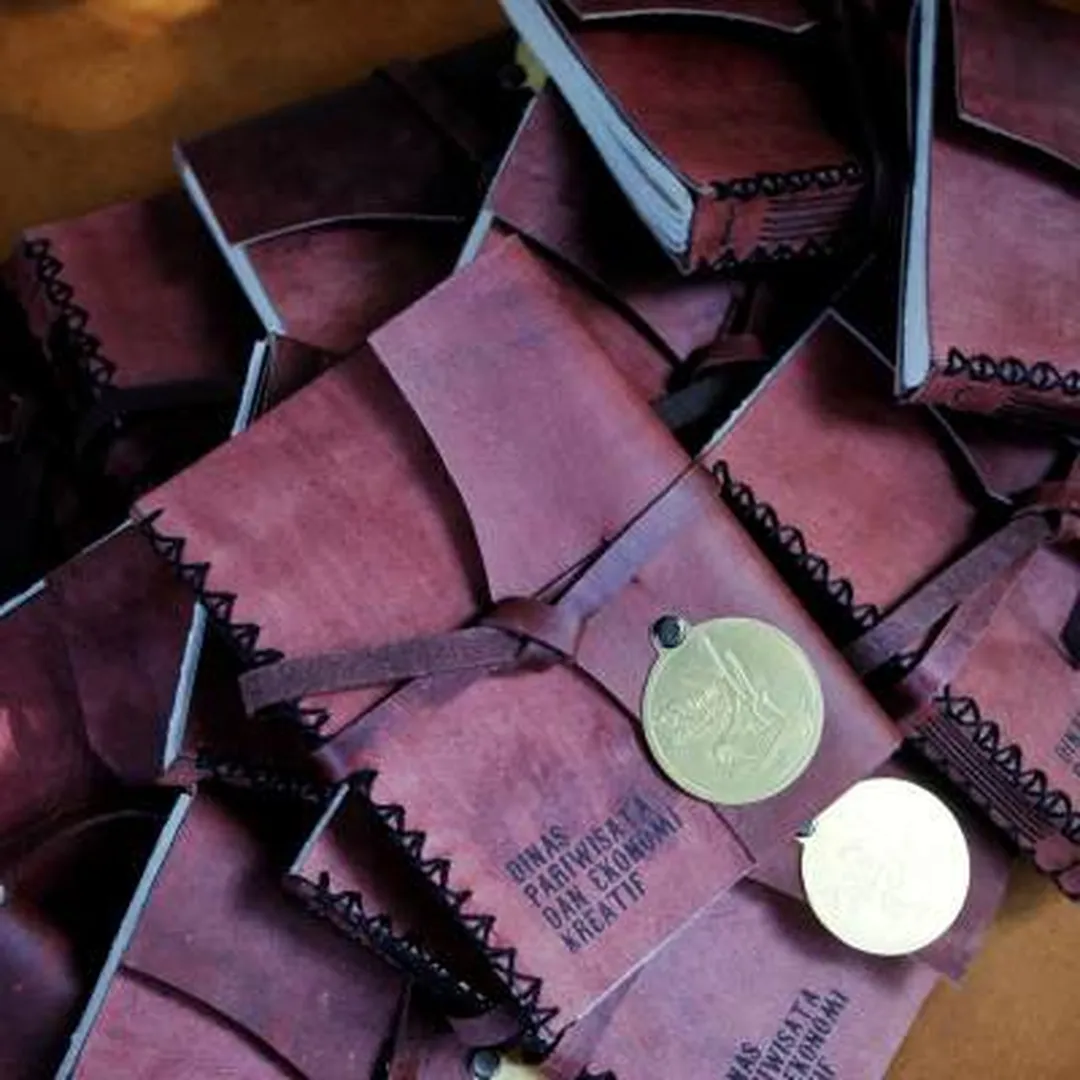
Colour is identity. We supply business agendas in precise custom colours, so that your brand image is reflected consistently.
Colour Conservation for Antique Books
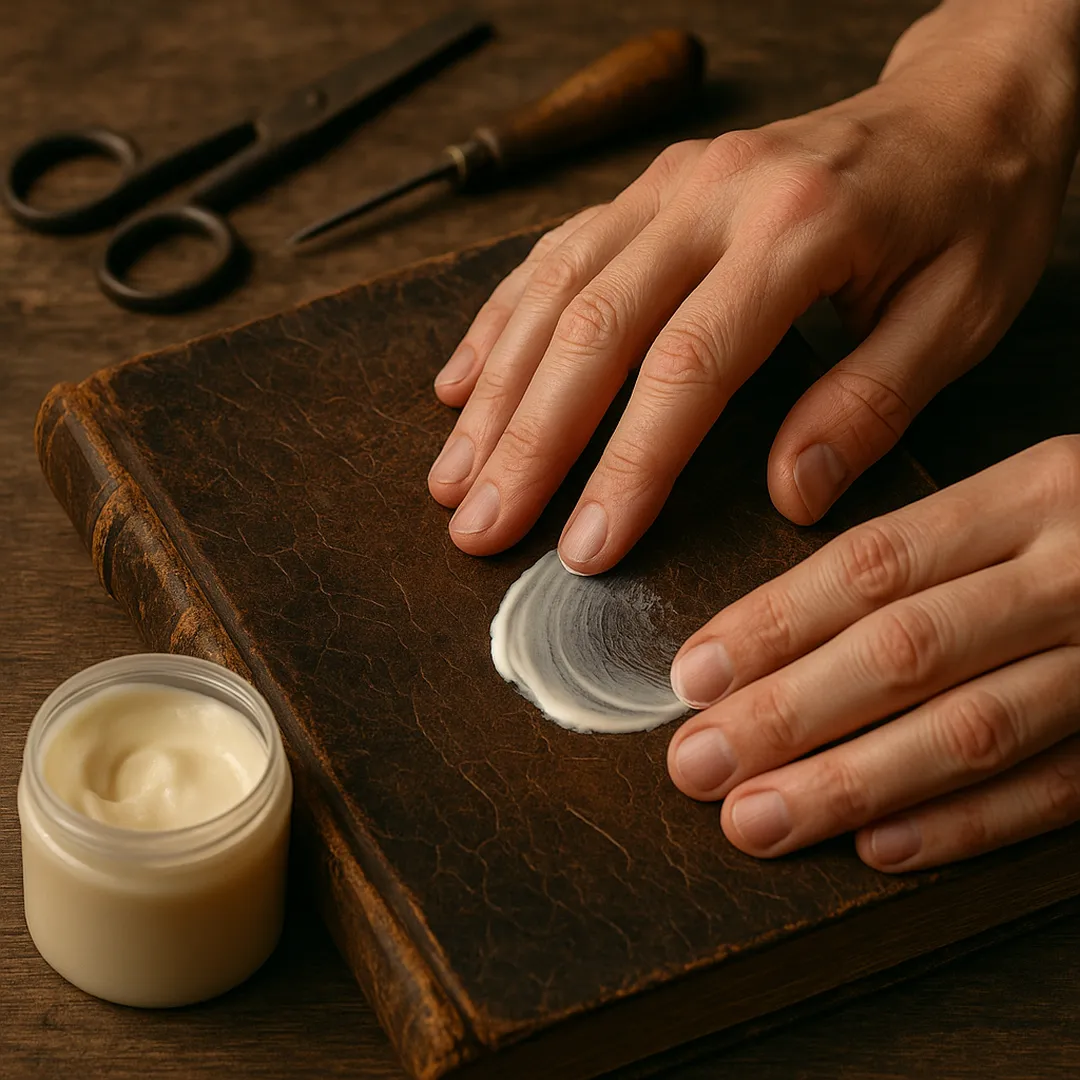
Have an antique book with a coloured cover or coloured paper that is beginning to fade? We can help care for and conserve its colour with the right techniques.