
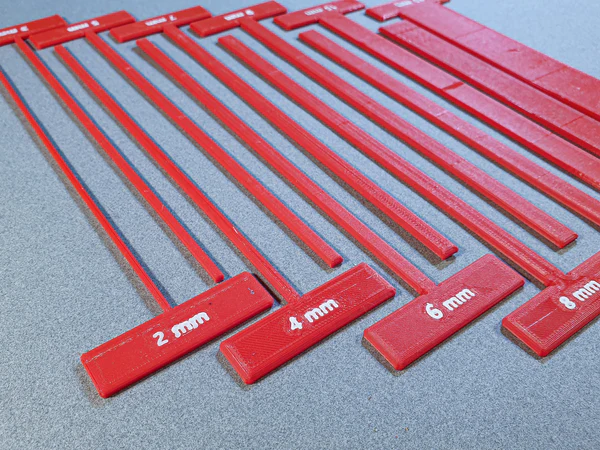
Bookbinder’s Gauges
by Ibrahim Anwar · July 24, 2025
Bookbinder’s gauges are a set of precision instruments that form the backbone of accuracy and consistency in the craft of binding. More than a ruler, these tools are built specifically to measure and replicate the dimensions that matter—the thickness of the spine, the gap between the boards (the groove), and the overhang of the case (the squares)—repeatedly and without error. From ancient dividers to modern 3D-printed jigs, a gauge makes certain that every component of a book, from the text block to its cover, comes together in harmony, creating a useful object that is balanced and aesthetically beautiful.
In the romantic world of bookbinding we often fix on the image of soft leather, strong linen thread, and a fine gold shine. We think of the art, the feeling, and the touch of the maker’s hand. Yet behind every beautifully bound book there is a hidden discipline, a world of mathematical precision that knows no compromise. This is the world of bookbinder’s gauges. They are the unsung heroes of the workshop, the instruments that turn a potentially chaotic art into a precise craft. Without them, even the most artistic book can become a structural disaster.
A book is not a flat painting; it is a small, complex kinetic machine. Every part has to relate to every other part in perfect harmony for it to work properly. One millimetre of difference in the cut of a cover board can leave a book unable to close properly. Inconsistent spacing between sewing holes can make the spine bow. Gauges are the guarantee against this disorder. They are the conductor of the orchestra, making certain that every instrument—board, paper, leather, thread—plays its part at the right time and in the right place, producing a symphony that is useful and beautiful.
An Arsenal of Precision: Knowing the Range of Gauges
The term “gauge” covers a wide variety of instruments, from the very simple to the highly specific. Each is designed to solve a unique measuring problem in the binding process. Let us take apart a few of the most important.
1. Dividers
These are the oldest gauge and perhaps the most versatile. Made of two sharp-pointed legs joined by a hinge, dividers are not a tool for measuring in inches or centimetres. They are a tool for transferring and replicating a distance. The maker sets the gap between the two points from some other measurement (the thickness of the book, say), then “walks” it along the material to mark the same distance over and over. The uses are endless:
- Marking the sewing stations along the spine.
- Setting the width of a decorative frame on the cover.
- Checking that measurements are consistent across several components.
2. Case-Making Gauge / Board-Slotting Gauge
This is one of the most transformative specific tools a bookbinder can own. Making a hard cover (a case) means three pieces of board: two cover boards (front and back) and one spine piece. The distance between a cover board and the spine piece is crucial; that gap, called the groove or french groove, is what allows the book to open and close properly.
The gauge is usually shaped like the letter ‘T’, or a block with several slots of different widths. The maker lays down the first cover board, sets the gauge beside it, then places the spine piece on the gauge’s other side. That instantly creates a gap of perfect width, consistent every time. No more guessing, and no more measuring with an ordinary ruler.
3. Corner-Cutting Tool / Mitering Tool
When you turn the covering material (cloth, paper, or thin leather) in over the inside of the board, the corner is the trickiest part. Cut away too much material and the board shows at the corner. Leave too much and the corner turns thick, lumpy and ugly.
A corner-cutting tool is a simple jig that lets you cut the corner of the material at a perfect 45 degrees, leaving a little room clear of the corner of the board (usually about 1.5 times the thickness of the board). That makes certain the material meets perfectly at the corner once it is turned in, creating a sharp, professional finish.
4. The Bookbinding Square
It may look like a carpenter’s square, but a bookbinder’s square often carries extra features. Besides guaranteeing a perfect 90-degree angle when boards are cut, it is often used to set a book’s “squares”. The squares are the small overhang of cover board that projects past the text block on three sides (top, bottom, and front). The tool helps make certain that overhang is uniform all the way round the book, which matters a great deal to a balanced appearance.
5. Punching Cradle / Hole-Punching Jig
For sewing that is strong and straight, the sewing holes in every signature (a gathering of folded sheets) have to line up perfectly. A punching cradle is a V-shaped “valley” a signature can be laid into. The jig often carries a template or a gauge along its crest to guide the awl, making certain every hole is made in exactly the same place from one signature to the next.
A ruler tells you ‘how far’. A gauge tells you ‘exactly where’—and makes certain you can come back to that same place, exactly, over and over.
The Evolution of Measurement: From Parchment to the 3D Printer
Bookbinder’s gauges have developed alongside the craft itself. Medieval makers were masters of proportion. They may have had no digital gauge, but they used carefully marked strips of parchment, or elaborate compasses, to divide space harmoniously according to the golden ratios. Consistency from one book to the next was a challenge, but each individual book was a study in deliberate proportion.
The Industrial Revolution and the Need for Standardisation
With the arrival of large-scale book production in the 19th century, the need for consistency became paramount. This is when a great many adjustable metal gauges and jigs began to appear. The aim was no longer only to make one beautiful book, but to make a hundred identical ones. Precision became synonymous with production quality.
The Digital and Maker Revolution: 3D-Printed Tools
We are now in the middle of another revolution in gauges, driven by 3D printing. Modern bookbinders and hobbyist makers can now design and print their own gauges for highly specific tasks.
- Need a jig for cutting corners on board 3.5mm thick? You can design it and print it.
- Want a gauge that marks the board spacing and the width of the squares for a leather cover at the same time? You can make it.
- Online communities, such as the one mentioned in the iBookbinding reference, share these files, democratising access to precision tools that once only an expert toolmaker could make. It is a return to the bespoke tool, but with the power of modern technology behind it.
The Key Difference: Measuring vs. Guaranteeing
A beginner might ask, “Why can’t I just use an ordinary ruler?”. You can, but you lose the main advantage of a dedicated gauge.
- A Ruler Measures Absolute Distance: It tells you that something is 5 cm.
- A Gauge Guarantees Relative Distance and Replication: A case-making gauge does not care whether the gap is 8mm or 10mm. What matters is that the gap is consistent and grounded in a physical relationship with the board beside it. It removes the need to measure, read a number and mark, all of which are potential points of human error. It creates a physical relationship that can be replicated perfectly.
Using a gauge is about removing variables, reducing the chance of error, and freeing your mind to focus on the more artistic aspects of the craft.
The Hibrkraft View: Precision as the Foundation of Creativity
At Hibrkraft we live at the crossing point between tradition and innovation, and our gauges reflect that. We use brass dividers tested by time alongside laser-cut precision jigs. Whether we are repairing a 19th-century antique book or making a custom leather journal, the principle stays the same: precision is the foundation.
For repair work, accurate measurement is essential to making a replacement component that merges seamlessly with the book’s original parts. For our custom products, gauges make certain that every book leaving our studio meets a strict quality standard—the cover flat, the sewing straight, and the function perfect. For us a gauge is not a limit on creativity, but the ground that lets creativity grow with confidence.
FAQ (Frequently Asked Questions)
1. As a beginner, which gauge matters most for me to own?
Besides a good metal ruler and a sharp knife, the most useful first investment is probably a corner-cutting (mitering) tool and a case-making gauge. Those two deal with the two trickiest areas for a beginner and will improve the quality of your hard covers dramatically.
2. Can I make my own gauges?
Of course! Many simple gauges can be made from thick card (bookboard). You can glue up a few layers of board to make a spacer for the spine gap. Making simple gauges from offcuts is an old tradition among bookbinders.
3. Are 3D-printed gauges as good as ones made of metal?
That depends on the quality of the print and the material (PLA, PETG, and so on). For many tasks they work very well and offer remarkable flexibility. For a tool that needs a very sharp edge, or durability under high pressure, metal still wins. But for jigs and spacers, a 3D-printed tool is a fantastic choice and often more affordable.
References
- iBookbinding. “3D Printed Tools Tag.” – Showing the range of tools designed and shared by the bookbinding community. (the original link is dead; the reference is kept without a link)
- Hollander’s. “Gauges & Jigs.” – A bookbinding supplier showing the range of commercial gauges available. (the original link is dead; the reference is kept without a link)
- TALAS. “Measuring Tools for Bookbinding.” – Another supplier with a wide selection of precision gauges.
- Jeff Peachey’s Blog. – The blog of a well-known toolmaker and book conservator, frequently discussing both historical and modern tools.

Custom Notebook
A handmade leather notebook you can design yourself — for a gift, for a memory, or for plans still to come.
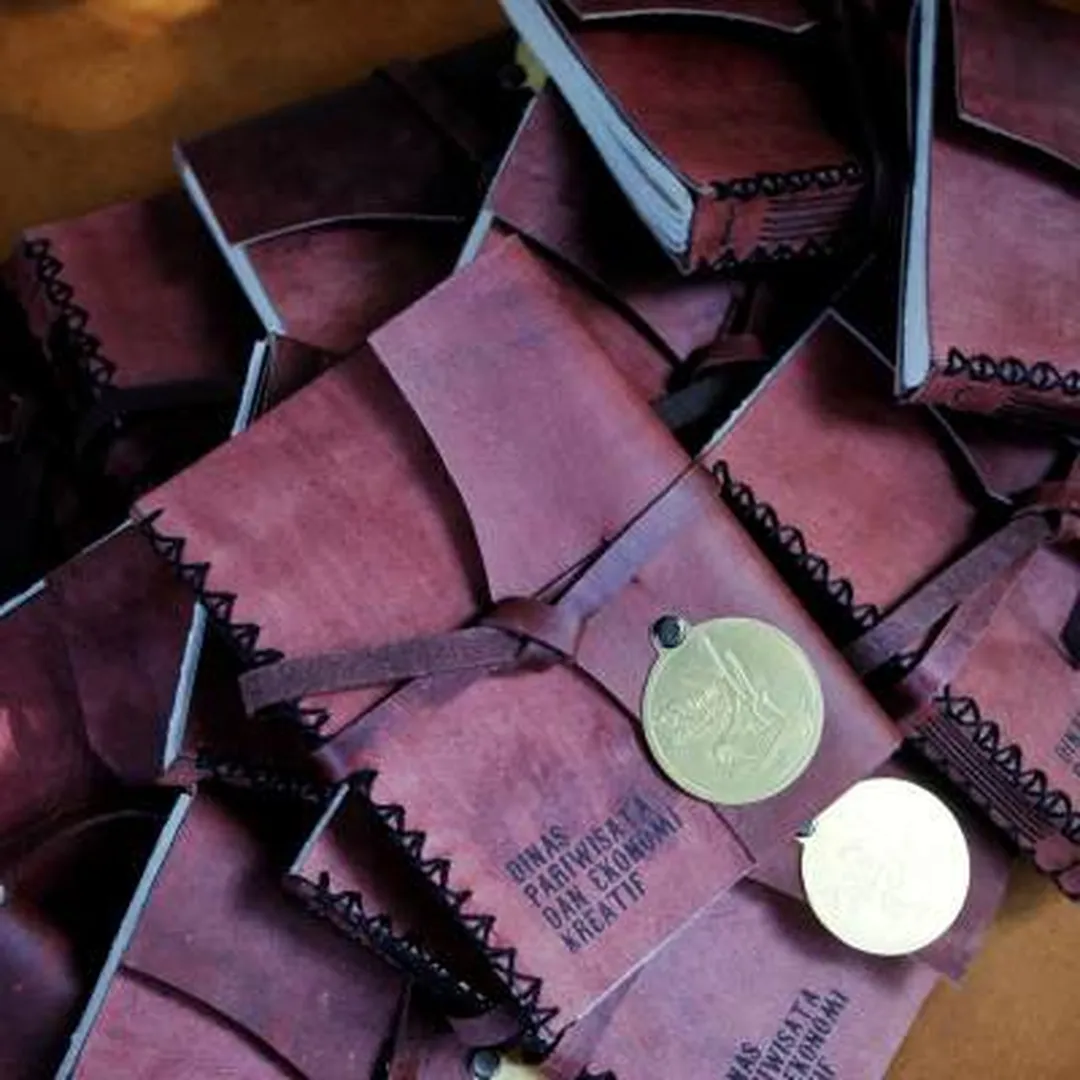
Business & Whitelabel
Business and corporate gift solutions in the form of exclusive agendas carrying your company’s logo.
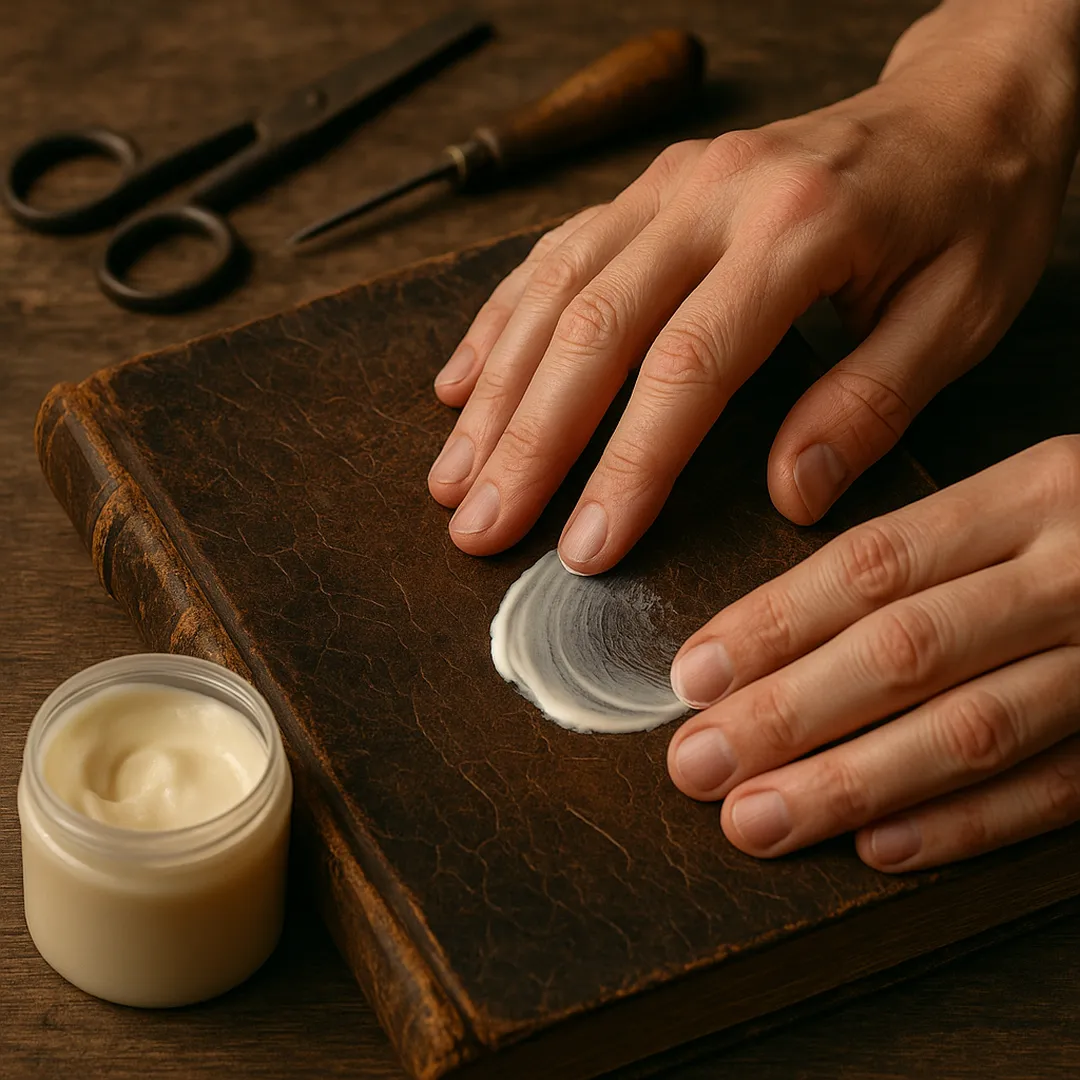
Book Repair & Conservation
Repair and conservation for antique books, family heirlooms, and private collections of historical value.