

All-Over Style of Binding
by Ibrahim Anwar · July 24, 2025
Have you ever held a book that felt dense, entirely of a piece in your hand? The cover felt continuous, with no awkward transition between spine and front board. In all likelihood you were holding a book bound in the all-over style. In bookbinding this is one of the purest and most classical forms of expression. It is a binder’s way of saying, “This book matters. What is inside deserves to be wrapped in the best, without compromise.”
It is the opposite of the modern paperback, whose cover feels separate from its contents. This style is an embrace. It is a commitment of material that wraps the book block smoothly, creating a structural and visual integrity that is hard to match. Strange, isn’t it, how a technical decision in binding can feel so emotional, so final.
Defining Unity: What Exactly Is the All-Over Style?
Technically, the “all-over style”, more commonly known as “full binding”, means that every board of the book — front, back and spine — is covered in one and the same material. If it is leather, that is a full-leather binding. If cloth, a full-cloth binding. No other material is joined in at the corners or along the spine.
To understand it properly, we need to look at what it is not. Its chief opposites are:
- Half-binding: The spine and the corners are covered in a stronger and more expensive material (usually leather), while the rest of the front and back boards use something different — cloth, say, or marbled paper.
- Quarter-binding: Only the spine is covered in the stronger material (leather), while the whole of the front and back boards use something else.
These styles came about not only for reasons of economy — saving expensive leather — but for functional reasons too. The spine and the corners are the parts of a book that take the most rubbing and knocking. Covering them in durable leather is an eminently practical move. Choosing the all-over style, though, is a decision that goes beyond practicality. It is an aesthetic choice. A choice for unity, and for luxury.
An Unbroken Canvas
One of the most interesting things about the all-over style is that it creates a perfect, unbroken canvas for decorative work. Because no join in the material interrupts the visual flow, a finisher can design a pattern that runs freely from the front board, across the spine, and on to the back.
This style does not only wrap a book. It gives that book a stage for the most intricate art there is.
This is the foundation of some of the most spectacular binding designs in history. Think of Islamic bindings with their intricate, endless geometry, or Grolier bindings from the Renaissance with their elegant interlacing of gold lines. All of it was possible because they were working on a whole “canvas”. All-over tooling can only happen on an all-over binding. Put it this way: you cannot paint a masterpiece on a canvas that has already been cut in two.
Beneath the Robe: Process and Philosophy
Making an all-over binding is a test of a binder’s skill. It calls for more material and more precision than any other style.
Choosing the material: The binder has to find a piece of leather or cloth large enough to cover the whole case in a single cut. For leather, that means finding a hide free of flaws, scars or holes across a wide area, which is of course more expensive. The thickness and suppleness of the leather also have to be right, so that it can be folded over the board edges (the turn-ins) and shaped around the joints without cracking.
Covering: This is the tense moment. The leather or cloth, already coated with adhesive (paste or PVA), has to be laid onto the assembled boards with absolute precision. There is no room for error. Lifting it again will ruin both the surface and the adhesive. The binder then carefully shapes the material around the spine and the joints and folds the edges inwards. Making a neat, sharp corner in this style is one of the marks of a skilled maker.
Structural effect: Beyond appearance, the all-over style gives uniform strength to the whole structure of the case. There is no weak point where two different materials meet. It creates a solid whole that, cared for properly, can last for centuries.
Hibrkraft and the Choice for Unity
At Hibrkraft we love every style of binding, each with its own history and its own purpose. But there is something special about the all-over style. It is the one we choose most often for our most personal and most premium work.
When someone orders a custom leather journal to record a family inheritance, or a company orders an exclusive agenda as a gift for its most important clients, the all-over style is the right choice. It conveys quality, completeness and care without needing to say a word. Our most iconic leather journals use it. We want the experience of opening the book to begin before the first page is touched — to begin with the feeling of holding an object that is whole, solid, and made without compromise.
We see it as a mark of respect for what is inside. Whether that is blank pages waiting for your best ideas, or the pages of an old book we have restored, wrapping it in one smooth robe of material is our way of saying, “The story in here is valuable, and it deserves the best home we can give it.”
Frequently Asked Questions
Is the “all-over style” the same as “full-bound”?
Yes — the terms are essentially interchangeable. “Full-bound” (full-leather, for instance) is the more common and more formal term in the antiquarian book trade, while “all-over style” is more descriptive of how it looks.
Is this style always more expensive?
Generally, yes. There are two main reasons. First, the material costs more, because it needs one large piece of good-quality stock. Second, the process can be more demanding and more time-consuming, particularly where intricate decoration is involved, so the labour costs more too.
Is it stronger than a half-binding?
This is the classic argument. In theory a full binding in good leather is very strong indeed. But a half-binding is specifically designed to reinforce the most vulnerable points, the spine and the corners. So a well-made half-binding can be just as durable in heavy daily use, or more so. In terms of overall structural integrity, though, the all-over style is often considered superior.
Does the decoration have to be “all-over” as well?
No. A book in the all-over style may carry no decoration at all — “undecorated” or “plain”. The beauty of the material, the texture of the leather, is ornament enough. But the style does allow all-over decoration where it is wanted.
References
To learn more about the various styles of binding and their beauty, these are excellent sources:
- Donhead Publishing (the original link is dead; the reference is kept without a link) – Offers a concise but clear overview of the historical binding styles, full, half and quarter among them.
- Bookbinding and the Conservation of Books by Matt T. Roberts and Don Etherington – A very comprehensive online dictionary of everything to do with bookbinding. Look up “Full binding” for a thorough explanation.
- Biblio.com (the original link is dead; the reference is kept without a link) – A guide for book collectors explaining the various binding styles with clear photographs, very helpful for identifying one by eye.
- The British Library Collection Care Blog – The blog of one of the largest libraries in the world, frequently carrying articles on the structure and history of bookbinding with examples from their own collection.

Custom Notebook
A handmade leather notebook you can design yourself — for a gift, for a memory, or for plans still to come.
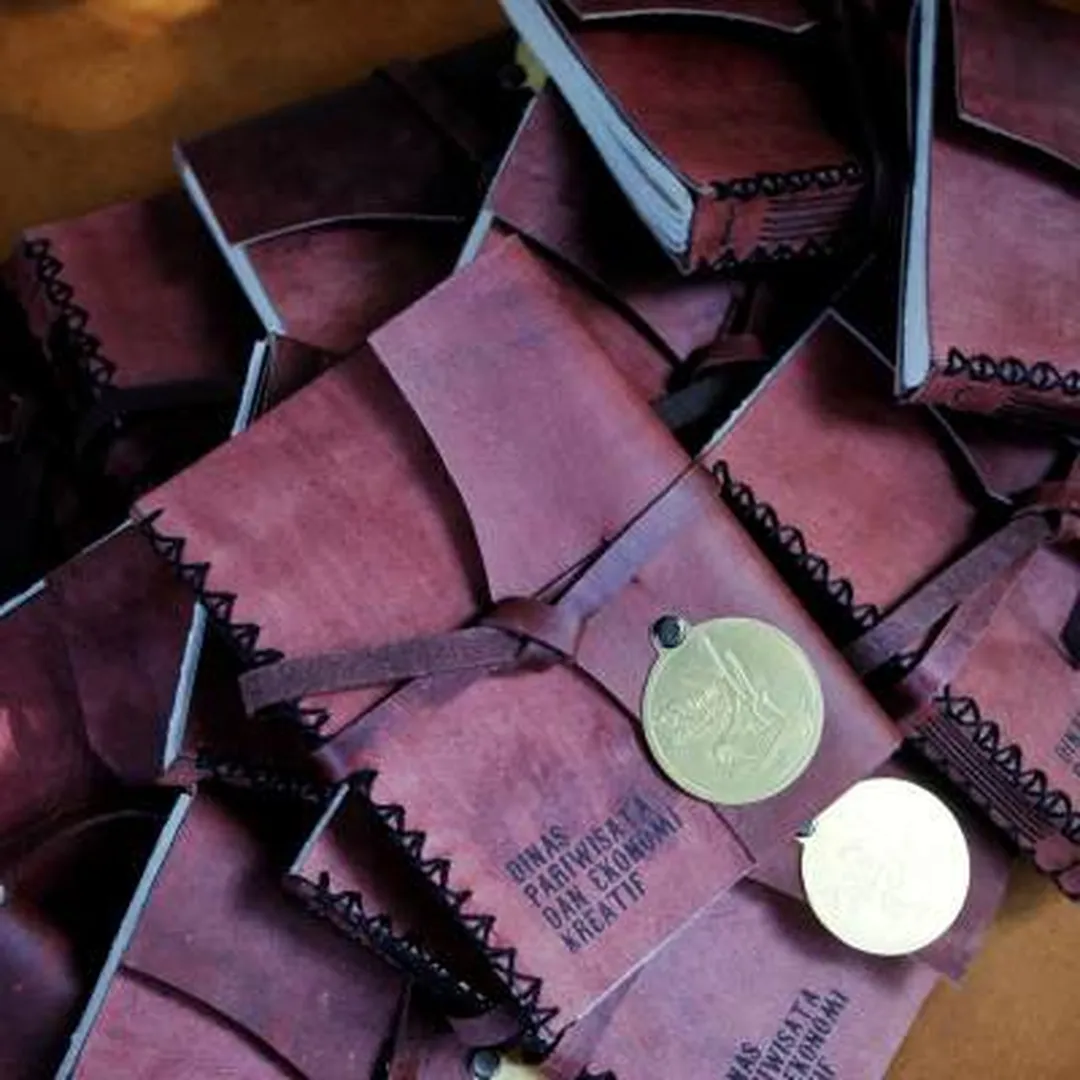
Business & Whitelabel
Business and corporate gift solutions in the form of exclusive agendas carrying your company’s logo.
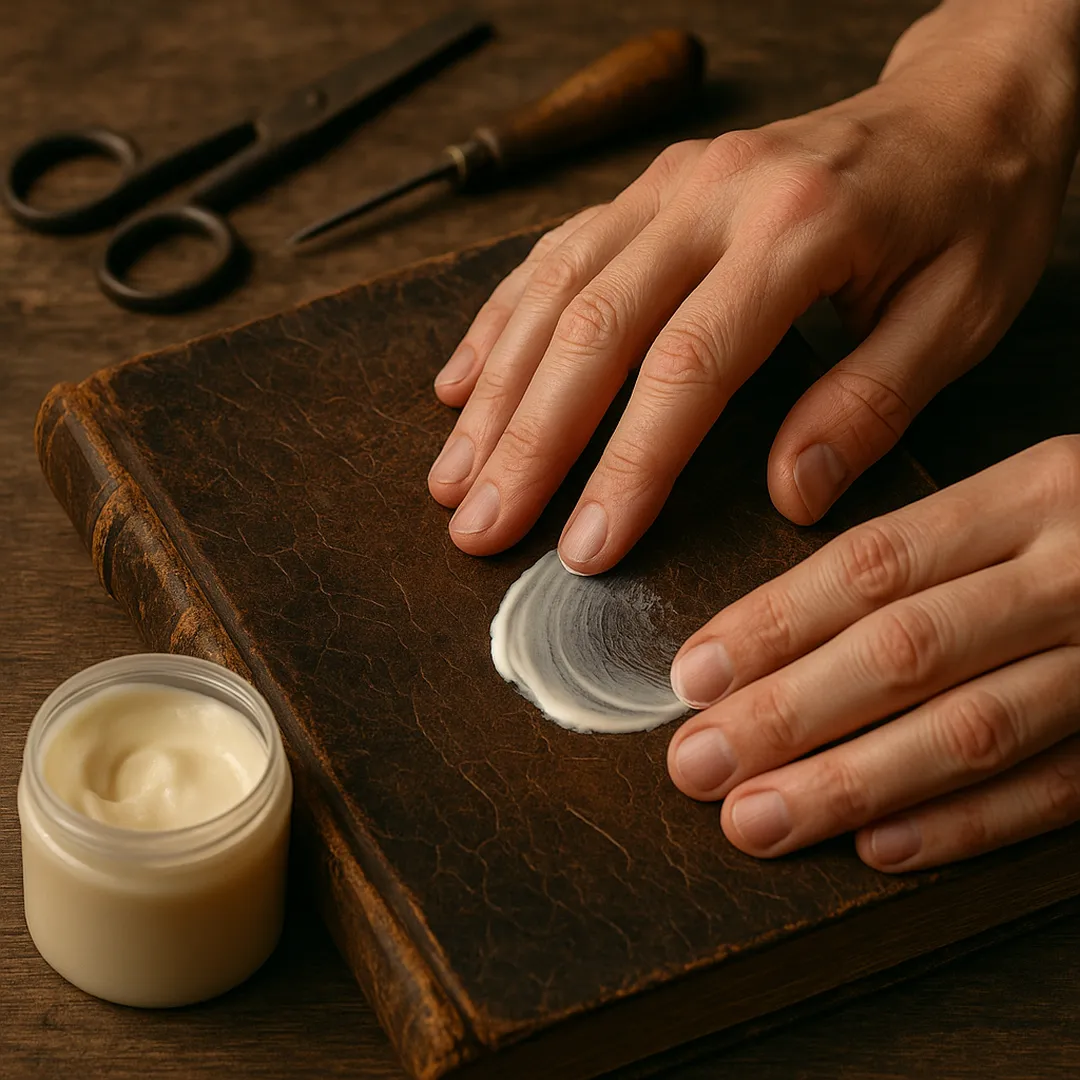
Book Repair & Conservation
Repair and conservation for antique books, family heirlooms, and private collections of historical value.