
Cabeça
by Ibrahim Anwar · July 27, 2025
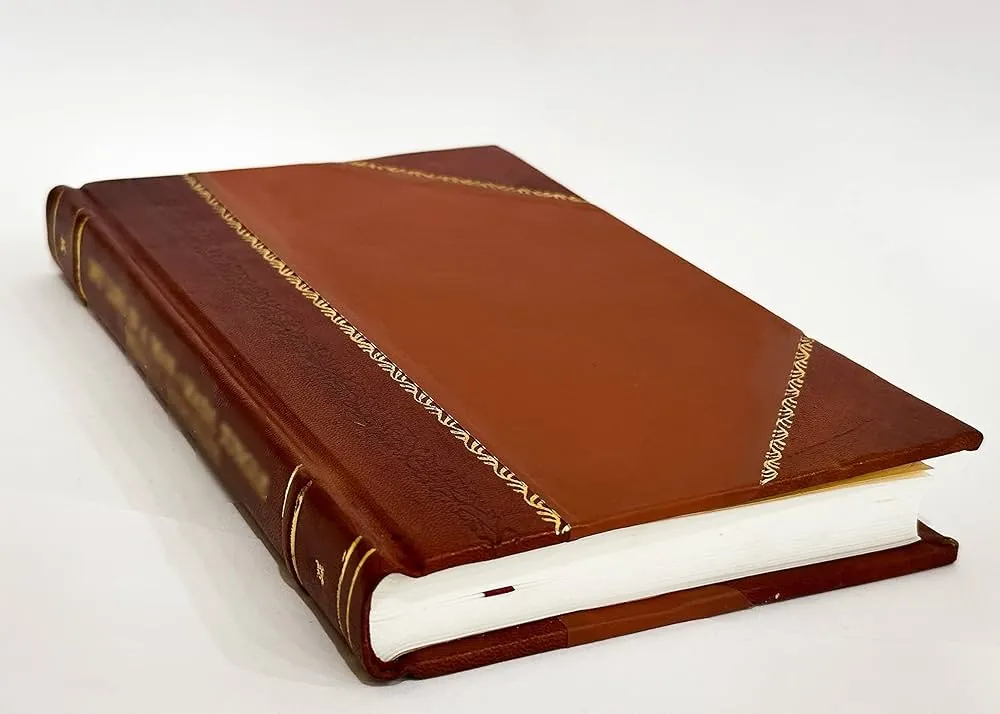
Have you ever looked closely at the very top of a thick bound book on a library shelf? That small area, so often overlooked, in fact holds a great deal of the story of a book’s skill, its history and its worth. In the bookbinding glossary this part has a name of its own: the head of the book, or Cabeça. The term points not only at the edge of the paper but also takes in a set of elements and finishing techniques that give it a protective function and beauty at once. From the fitting of a band of colour to a gleaming layer of gold, the treatment of the head of a book is the mark of a binding worked on seriously and with full attention.
Understanding the idea of the cabeça opens a window onto the deeper art of bookbinding. It is the point where usefulness and art meet. Usefully, a head worked well, complete with its headband and its headcap, protects the text block from dust and from damage as the book is drawn off the shelf. Aesthetically, it is the crown of the book, the first element to greet the eye and to give an impression of luxury and grace. This article will take you through every aspect of the head of a book, from the unique origin of its name and its detailed anatomy to the range of finishing techniques that turn an ordinary paper edge into a work of art.
Etymology and Anatomy: Taking Apart the Term “Head of the Book”
The term “head of the book” is a direct translation of the anatomical terminology for books used widely across Europe. The use of the word “head” (head in English, cabeça in Portuguese, tête in French) is part of a metaphor of the human body applied to the book. Just as a body does, a book has a “head” at the top, a “foot” or “tail” (tail/cauda) at the bottom, a “spine” (spine/lombada), and a “face” or “fore-edge” (fore-edge). The metaphor has helped bookbinders from one generation to the next speak precisely about the specific parts of a book.
The Components of the Head in Detail
The head of a book is not merely one single part but a combination of several important components that work together to create a finish that is both strong and beautiful. Here it is in detail:
- The Top Edge of the Text Block: This is the most basic component of all — the upper surface of every leaf of paper that has been bound into a single block. That surface has to be trimmed very evenly and very smoothly before it can take any further treatment.
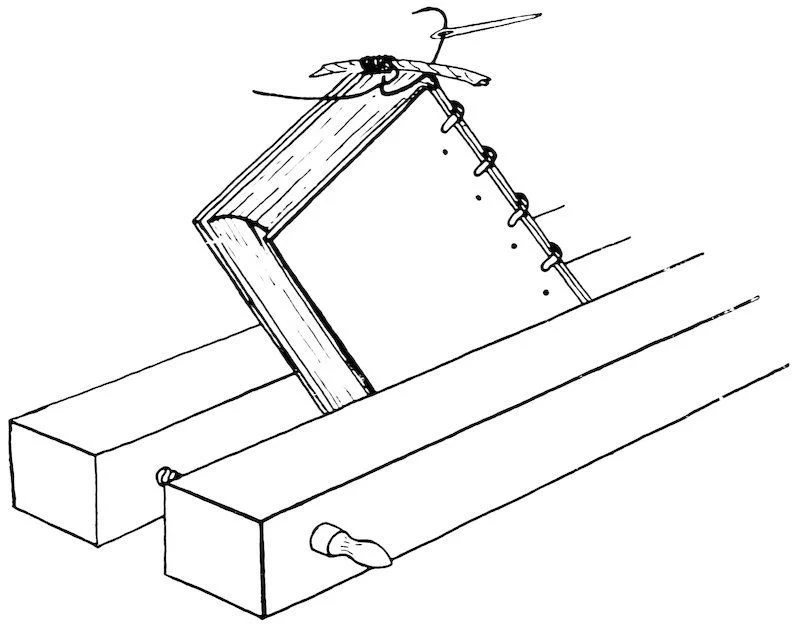
- The Headband, or Endband: Often seen as a small coloured band at the top of the spine, right between the text block and the spine of the cover. Originally the headband was sewn directly into the gathered leaves, the signatures, to give extra structural strength and to keep the spine from tearing when the book was drawn off the shelf. In modern binding, though, a false headband is often used, simply glued on as a decorative element.
- The Headcap: This is the part of the covering material — usually leather or cloth — folded with precision over the headband and the spine. Forming a neat headcap is one of the tests of a bookbinder’s skill. Its job is to protect the top end of the spine and the headband, and to give a smooth visual transition from the spine to the cover.
- The Square: This is the term for the part of a book’s cover boards that stands out a little beyond the text block on three sides (top, bottom and front). The “square” at the head works as a protective bumper, keeping the paper edge from touching the surface of the shelf directly and shielding it from knocks.
More than just a top edge, the head of a book is the crown of a binding, the first reflection of a bookbinder’s quality and attention to detail.
The History and Evolution of Treating the Head of a Book
Attention to the head of a book has grown alongside the history of the book itself. In the era of the early codex, the main focus of binding was usefulness. Edges were left as they were, or trimmed roughly. Over time, though, binders realised that the top edge is the area most exposed to a build-up of dust and dirt. That pushed the development of protective solutions.
In the Middle Ages, monastic binding introduced the hand-sewn headband, not only as an ornament but as an integral part of the sewing structure of the book. The same thread used to sew the paper also tied it to a core of leather or cord that formed the base of the headband. This strengthened the top and bottom ends of the book significantly. The practice reached its height in the luxurious binding of the Renaissance, where a multi-coloured silk headband became the standard.
From the sixteenth century, the technique of forming a headcap by folding the covering leather over the headband began to be introduced, giving extra protection. At the same time, the art of decorating the edges of a book grew rapidly. Gilding, or covering the edges of a book with gold leaf, became very popular for religious books and for the collections of the nobility. A burnished gold edge does not only look luxurious; it also creates a dense, smooth surface that is highly effective at protecting the paper from damp and dust.
With the arrival of mass book production in the nineteenth and twentieth centuries, many of these traditional techniques were simplified. The hand-sewn headband was replaced by a decorative band stuck on with glue, and gilding was often replaced by colouring the edges with spray paint. Even so, in the world of fine binding and book restoration, these historic techniques are still kept up and are held to be the highest standard of quality.
The Art of Finishing the Head: Technique and Aesthetics
Finishing the head of a book is a multi-step process that calls for precision and an artistic sensitivity. The choice of technique strongly affects the final appearance, the durability and the worth of a book. Here are some of the most common finishing methods, from the simplest to the most intricate.
1. The Plain Trimmed Edge
This is the most basic form of finishing. Once the text block has been sewn, its three edges (head, tail and fore-edge) are trimmed with a special knife, the plough, or with a cutting machine, the guillotine, to produce a flat, clean surface. The result is a plain and useful look, often found on paperback books or on journals in a minimalist style.
2. Edge Colouring and Staining
One step up from a plain trim, this technique involves putting colour on the edge of the text block. The edges are clamped tightly, then sprayed or painted with a brush using a special ink or paint. The colour can be solid, following the colour of the cover, or contrasting, to create an interesting visual effect. The technique does not only add aesthetic worth; it also helps disguise the yellowing of the paper over time.
3. Sprinkled and Spattered Edges
This decorative technique was popular in the seventeenth and eighteenth centuries. Once the edges of a book have been trimmed smooth, colour is sprayed or flicked onto the surface with a stiff brush. The result is a random pattern of fine speckles, giving each book a unique character. Sometimes several colours are used to create a more complex effect.
4. Gilding
This is the summit of luxury in the finishing of a book’s edges. Gilding is the process of covering the edges of a book with the leaf of a precious metal, usually 23 carat gold. The process is a very intricate one:
- Preparation: The edge of the text block has to be sanded until it is as smooth as a mirror. Every imperfection will show in the finished result.
- The Base Coat: The surface is covered with a mixture of clay and adhesive called bole, usually red or yellow, to give warmth to the colour of the gold.
- Laying the Gold: A special adhesive is applied — traditionally beaten egg white, known as glaire — and an extremely thin sheet of gold leaf is laid carefully over it.
- Burnishing: Once dry, the gold surface is rubbed with a special tool made of agate, the agate burnisher, until it gleams brilliantly.
The result is a gleaming, dense and durable gold surface that protects the paper effectively.
5. Gauffered Edges
This technique is a development of gilding. Once the edges of a book have been gilded, heated metal finishing tools are used to press a pattern or a design into the gold surface. It creates a relief texture that is beautiful and intricate, often showing floral, geometric or arabesque patterns. It is a technique that calls for skill of a high order and is found only on the most luxurious bindings.
From a simple trim to intricate gilding, the way the head of a book is finished reveals the purpose, the worth and the soul of the book itself.
Why Does the Head of a Book Matter Today? The Hibrkraft Perspective
At Hibrkraft we believe that the essence of handwork lies in the detail. The head of a book is one of the details that separates a mass-produced item from a personal piece made with heart. For us, attention to the cabeça is not only about aesthetics; it is about honouring the tradition of binding and giving our customers the best work we have.
When you order a custom leather journal from Hibrkraft, we weigh the finishing of the head as part of the design as a whole.
- For a rustic travel journal, we might keep a neatly trimmed edge with a simple cotton headband, to bring out the natural quality of the material.
- For a premium business agenda, a solid edge colour in keeping with the company logo, blended with a silk headband, can give a professional and exclusive touch.
- For a wedding guest book or a Bible under restoration, gilding the head becomes the choice that stands for the glory and the everlasting worth of the moment, or of the text held inside.
These choices are a dialogue between what you want and the skill we have, making sure every book is not only useful but also has a strong character.
Care and Preservation
Understanding why the head of a book matters also means knowing how to care for it. This part, and the headcap in particular, is one of the parts of a book most easily damaged. The most common cause of that damage is a bad habit when taking a book off the shelf.
- Do Not Pull From the Top: Never draw a book off the shelf by hooking your finger over the headcap or the top of the spine. Doing so tears the material — leather especially — or pulls it away from the text block.
- The Right Way: Push back the books on either side of the one you want a little, then hold its spine at the middle to draw it out.
- Cleaning: To clear the dust, hold the book closed firmly and use a soft brush to sweep the dust from the spine towards the fore-edge. This keeps the dust from working its way in between the pages.
With the right care, the crown of your book will stay beautiful and useful for several generations.
Frequently Asked Questions (FAQ)
The head of a book, or cabeça, is the bookbinding term for the top edge of a book’s text block. It takes in the upper surface of the leaves as well as added elements such as the headband and the headcap, which serve to protect the book and to make it more beautiful.
The headband has two main jobs. Historically and structurally, a hand-sewn headband strengthens the top and bottom ends of a book’s sewing and protects them from damage. In modern binding its role is often more decorative — to add a touch of colour and to give the book a more professional finish.
Colouring or gilding the top edge of a book serves a double purpose. Aesthetically, it gives a luxurious and beautiful appearance. Usefully, a dense layer of gold or paint creates a smooth, sealed surface that is highly effective at protecting the paper edge from dust, damp and staining, and so helps preserve the book for longer.
The best way to care for the head of a book is to avoid drawing it off the shelf with a finger hooked over the top of the spine (the headcap). Better to push back the books beside it and hold the middle of the spine to draw it out. Beyond that, clear the dust regularly with a soft brush, sweeping from the spine towards the fore-edge to keep dirt from getting in between the pages.
References
- Anatomia do Livro – iBookBinding (the original link is dead; the reference is kept without a link)
- The Fragility of Headcaps and the Safe Handling of Books – The Metropolitan Museum of Art (the original link is dead; the reference is kept without a link)
- Etherington & Roberts. Dictionary–headcap
- An Introduction to the Art of Book Edge Gilding – Charles Douglas Gilding Studio (the original link is dead; the reference is kept without a link)
- Guide to Gilding | Edge Gilding | History and Method – Downey (the original link is dead; the reference is kept without a link)
- Bookbinding 101: Headbands or Endbands – Badger and Chirp
- Conservation of Book Edges – KU Leuven Libraries (the original link is dead; the reference is kept without a link)

Custom Notebook
Define every detail, from the leather cover to the finish of the head of the book, to create a journal that is wholly your own.
Business & Whitelabel
Show your brand’s commitment to quality through a custom agenda with premium detailing and edge finishing.
Book Repair & Conservation
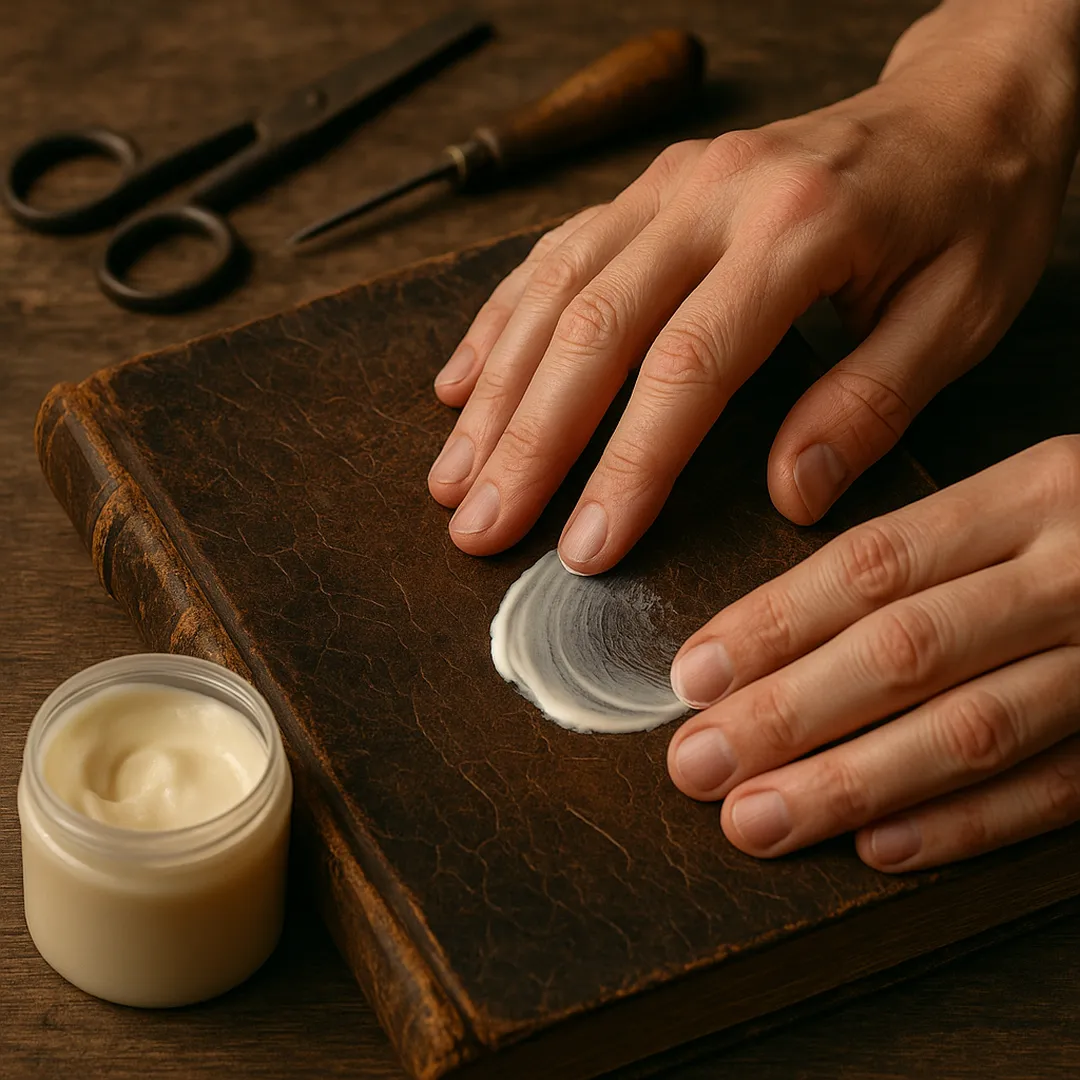
We restore damaged headcaps and book edges, keeping the integrity and the beauty of your precious books.