

Bibles
by Ibrahim Anwar · July 26, 2025
“Bibles”, in the particular context of bookmaking and above all of the Bible, refers to the various decorative and finishing techniques applied to the edges of a book's text block. The practice is carried out to improve the visual aspect, to give protection, and often to mark the status or the value of the book. These treatments can range from simple methods such as edge colouring through to more intricate processes such as the laying of gold leaf (gilding) and the art of marbling. The term “Bibles” itself is probably not a standard technical term standing on its own, but rather a shorthand or brief reference used in historical literature or trade catalogues for a specific set of edge-finishing processes, particularly those associated with the Bible because of its religious significance and the tradition of beauty that accompanies it.
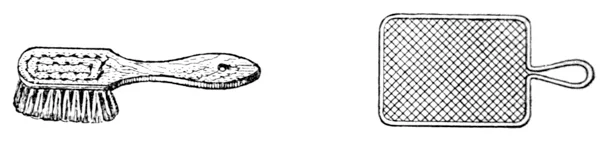
“Bibles” in Bookbinding: The Art of Edge Decoration for Scripture and Works of Value
In the world of bookbinding, rich in tradition and artistic detail, the edges of a book's text block—the three exposed sides of the stack of leaves—are often a canvas for decoration and finishing. The term “Bibles” in this context refers to the wide range of treatments given to those edges, which historically were very often applied to Bibles and other important books. The practice aims not only to improve the aesthetics of the book, making it more appealing to the eye, but also to increase its durability and protect it from dust and damp. This article sets out the meaning and the history behind the edge finishing so often associated with the Bible, along with the various techniques involved.
Origins and Significance of the Term
The term “Bibles” in the context of edge finishing is not the name of a technique in general, but rather a contextual reference. Most likely it comes from the fact that the Bible, as a text held in high honour and often at the centre of religious and family life, was one of the first kinds of book to receive the most lavish and intricate edge finishing. Over time, as binders and booksellers discussed the various kinds of edge decoration, a reference to “Bibles” could serve as shorthand for the group of edge treatments commonly found on those scriptures. A reference such as “122” mentioned in the original context may point to an item number in an old catalogue, an inventory list, or a chapter in a bookbinding manual setting out methods of edge decoration, with the Bible as the principal example of their application.
The history of book-edge decoration can be traced back to the Middle Ages, when a raw book edge was often cut flush and sometimes given a coat of wax or size to lend it a little durability and shine. The golden age of book-edge decoration, however, truly began in the fifteenth and sixteenth centuries in Europe. Binders, especially in centres such as Italy, France and Germany, began to experiment with a range of techniques for beautifying the edges of the text block. The Bible, often a family inheritance, an object of private worship and a symbol of status, became one of the principal recipients of these innovations.
Edge-Decoration Techniques Associated with “Bibles”
A range of techniques has been developed and refined over the centuries for decorating book edges. Among the most common, and those most often linked with the Bible, are:
- Trimmed Edges: This is the most basic first step, in which the edges of the text block are levelled with a knife or a book-cutting machine to create a clean and uniform surface.
- Sizing: Before gold leaf is laid or colour applied, the edge is usually coated with “size” (glair), a mixture of egg white and water, or another binding agent such as gelatine. The size creates the smooth, slightly tacky surface needed for the gold leaf to adhere well and for the colour to lie evenly.
- Gilded Edges: This is one of the most popular and most lavish of the edge-decoration techniques. Thin gold leaf is laid on an edge that has already been sized, then polished with a burnisher (usually of agate or steel) until it shines. A gilded edge is not only beautiful but also helps protect the paper from dust, damp and mould. A gilt-edged Bible was often regarded as a symbol of piety and prosperity.
- Gilt-to-Tool: This technique involves laying gold leaf on the book edge and, before it is polished to a full shine, impressing a decorative pattern into the layer of gold with engraved binding tools, hot or cold. It gives the book edge texture and an artistic design, often forming geometric patterns, flowers, or even figurative motifs.
- Marbled Edges: Marbling creates a unique and abstract pattern of colour on the book edge. Pigments (often oil- or water-based) are floated on the surface of a viscous liquid called “kake” (usually from a seaweed extract such as carrageenan). A pattern is formed on that surface before the book is dipped to transfer the design. Every marbled book edge is a single work of art.
- Coloured Edges: This is a simpler form of decoration, in which the book edge is dipped or coloured in a single colour. It can be done with a water- or alcohol-based dye. A coloured edge gives a neat and aesthetic appearance without the complication of gilding or marbling.
- Combined Colouring and Gilding: Sometimes the book edge is coloured first and then given a layer of gold leaf on top. This creates a unique effect, with the gleam of the gold standing out over a ground of colour.
The choice of edge-decoration technique was often influenced by the historical period, the availability of materials, the binder's skill and, of course, the value of the book itself. The Bible, because of its sacred status, was often the subject of the most beautiful edge treatments, reflecting a wish to make scripture as compelling as possible, spiritually as much as visually.
“Edge treatments such as gilding and marbling have historically often been applied to Bibles to heighten their beauty, to give protection, and to mark the status of a sacred book.”
The existence of this range of techniques shows the high regard for detail in the art of bookbinding. A well-decorated book edge not only adds aesthetic value to a book but can also serve as a protection. A layer of gold, for instance, can act as a barrier against dust and damp, helping keep the paper clean and preventing damage from mould or ageing. It is an example of how beauty and usefulness complement one another in traditional handcraft.

A Complete Guide to Book-Edge Decoration Techniques and Their Relevance
Understanding the various techniques of book-edge decoration, so often associated with the finishing of Bibles or other precious books, gives an insight into the skill involved in traditional bookbinding. Each method has its own visual character, its own materials and its own challenges, all of which contribute to the final value of a book.
Materials and Tools Used
Creating a decorated book edge calls for a combination of high-quality materials and precise tools:
- Cutting Tools: A sharp knife, a book plane or a book-cutting machine is used to make certain the edges of the text block are truly flat and smooth before decoration begins. Accuracy in the cut is crucial.
- Sizing Agents: Egg white (glair) is the traditional sizing agent most commonly used for gilding, because it gives an ideal surface for the gold leaf to be laid on. Other agents such as gelatine, gum arabic or tragacanth can also be used depending on the technique and the materials applied.
- Gold Leaf: Pure gold in very thin sheets, usually 22-24 carat, is used for gilding. Gold is a durable metal that does not tarnish easily, which makes it an ideal choice for edge decoration.
- Burnishers: Made of agate, steel or bone, these tools are used to polish the gold leaf that has been laid on the book edge. It is this burnishing that gives a gilded edge its brilliant shine.
- Pigments and Dyes: For edge colouring or marbling, various kinds of pigment (mineral or synthetic) and dyes soluble in water or alcohol are used.
- Marbling Materials: Edge marbling calls for a thickening agent such as a seaweed extract (carrageenan, for example) to make the viscous liquid on which the pigments are floated, along with dyes and a wetting agent.
- Marbling Tools: Combs, forks or special pens are used to create the pattern on the marbling liquid before it is transferred to the book edge.
- Tools for Tooling: For the gilt-to-tool technique, a set of heated binding tools or cold engraving tools is used to work the pattern into the layer of gold.
Its Place in the Life of Journals and Personal Books
Although the term “Bibles” refers specifically to the Bible, the principle of book-edge decoration is relevant to an appreciation of high-quality books and journals in general. In the modern era, as many people return to forms of personal writing and reflection such as a custom leather journal, a unique notebook or a memory album, attention to small details such as the edge finishing can significantly raise both the aesthetic value and the experience of use.
At Hibrkraft we hold artisanal skill and material quality in high regard. Although we may not routinely offer book-edge decoration as intricate as the gilding of a Bible, our philosophy is to create products that have lasting value and beauty. Our custom leather journals are made with careful attention to every detail, including the choice of high-quality materials and sturdy construction. The ability to order a personalised product lets a customer choose the various aspects that reflect their own taste, and while a specific edge decoration would be a special request, the principle of making every book a useful work of art is at the heart of what we do.
The presence of beautifully decorated books, including Bibles with gilded or marbled edges, reminds us of a rich heritage of handcraft. It is a reminder that a book can be more than a collection of leaves; it can be an object of art valued for its beauty and for the skill of its making.
Implications for Preservation and Value
Good book-edge finishing, gilding above all, has a practical benefit in terms of preservation. An edge sealed with gold acts as an effective shield against dust, dirt and damp. This can help prevent the pages of a book from becoming stained or damaged over time, keeping the text block clean and intact. Edge decoration therefore not only adds beauty but also contributes to the durability of the book.
In historical terms, books with beautifully decorated edges, and Bibles in particular, often carried a higher value. They reflect an investment in skilled craftsmen and lavish materials, marking the social standing and wealth of their owners as well as their piety and their reverence for scripture. The quality of the edge finishing is often an important indicator in judging the rarity and the value of an antique book.
Modern Trends and the Appreciation of Craft
In this digital age there is a revival of interest in handcraft and in physical objects made with care. Journalists, writers, artists and even business professionals look for quality stationery that is not only useful but also a pleasure to the eye and to the hand. The demand for well-made notebooks, journals and agendas, often in genuine leather and sewn with strong thread, keeps rising. Although edge-decoration techniques such as the gilding of a Bible may not commonly be met with on an everyday modern notebook, the appreciation of material quality and skill remains high.
Contemporary makers such as Hibrkraft continue to work at bringing this high standard of quality into their products. By offering customisation, we let a customer take part in the process of creation, making sure the finished product truly reflects their preferences and their values. Attention to detail, the use of premium materials and a dedication to skill are the principles that connect traditional bookbinding practice with modern artisanal book creation.
Conclusion: The Legacy of the Art of Book Edges
“Bibles” in bookbinding terminology is a reminder of the long tradition of decorating and protecting the edges of a book, a practice that reached its height in the lavish and precious finishing of Bibles. Techniques such as gilding, marbling and edge tooling are not only beautiful artistic skills but an integral part of the history and the preservation of the book. In an increasingly digitised world, regard for the physical book, beautifully made and durable, remains strong, and the legacy of the art of book edges continues to inspire modern makers to create work that carries meaning.

Custom Notebook
A handmade notebook made to express your story, made with genuine leather and lasting quality.
A handmade leather journal you can design yourself — for a gift, for a memory, or for plans still to come.

Business & Whitelabel
Raise your business with premium custom agendas and notebooks under your own label.
Business and corporate gift solutions in the form of exclusive agendas carrying your company’s logo.
Get in Touch
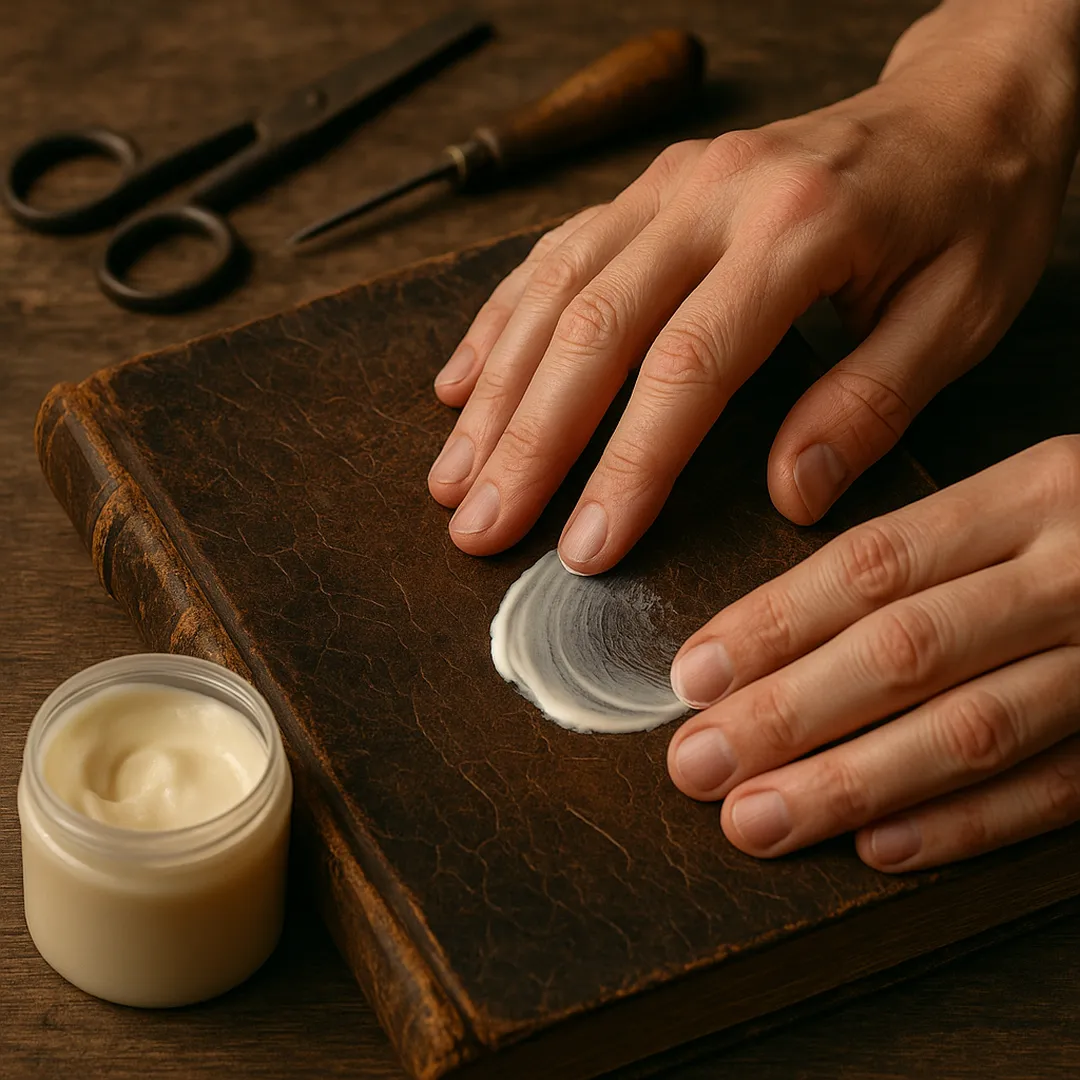
Book Repair & Conservation
Restore precious books with care, skill and archival techniques that last across generations.
Repair and conservation for antique books, family heirlooms, and private collections of historical value.
Free Consultation
References
- Bookbinding Lessons – Glossary of Book Edges (the original link is dead; the reference is kept without a link)
- Talas Online – Book Edges, Foiling & Colorings
- British Library – Decorated Book Edges
- Rare Book Room – Decorated Book Edges (the original link is dead; the reference is kept without a link)
- Book & Paper – Book Edge Decoration (the original link is dead; the reference is kept without a link)
- Bookbinding.com – Edges (the original link is dead; the reference is kept without a link)
- Gilded Leaf – Gilding History (the original link is dead; the reference is kept without a link)
- Kerbside – The History of Marbling (the original link is dead; the reference is kept without a link)
- Atlas Obscura – The Ancient Art of Marbling Book Edges (the original link is dead; the reference is kept without a link)
- Flickr Group – Book Edges Discussion
- Wikipedia – Bookbinding
- Wikipedia – Gilding
- Wikipedia – Marbling (paper) (the original link is dead; the reference is kept without a link)