

Abglätten
by Ibrahim Anwar · August 13, 2025
In the bookbinder’s lexicon there are words that are more than a definition; those words are a philosophy. “Abglätten” is one of them. Rooted in the rich tradition of European bookbinding, the term sums up a dedication to perfection at the final stage of making a book. This is not merely an ordinary act of polishing but a transformative process that asks for patience, sensitivity and a deep understanding of the material. Through controlled pressure and repeated movement, a craftsman turns a surface that was once plain or dull into a plane that is dense, smooth and lustrous, changing a book from a useful object into a work of art of high value.
The Origins and the Precise Meaning of ‘Abglätten’
Etymologically, the word “Abglätten” comes from two German components: the prefix “ab-”, which often marks the completion, the separation or the intensification of an action, and the verb “glätten”, which means “to smooth”. Together they create a meaning stronger than smoothing alone; it implies a process of smoothing that is thorough and definitive, carried through to the final condition wanted. The term captures the essence of a final act that perfects all the work done before it, giving a finishing touch that locks in the beauty and the quality of a book.
The roots of the technique can be traced back to the tradition of manuscript illumination in the Middle Ages. The monks and craftsmen who decorated sacred books with gold leaf used a similar technique to make that gold gleam under dim candlelight. They found that by pressing and rubbing the gold surface with a very smooth tool, such as an animal tooth or a precious stone, they could reach an extraordinary shine. As the historians at the Victoria and Albert Museum explain, this burnishing process is the key to creating the effect of divine light on the parchment pages. The tradition was later adapted and refined by bookbinders for use on book edges, an innovation that reached its height in the eighteenth and nineteenth centuries.
More than aesthetics, Abglätten also has a vital protective function. Applied to the edge of a text block that has been gilded, this compacting process seals the edge of the paper, creating a surface that is almost watertight and highly resistant to dust and dirt. That significantly extends the life of the book and keeps its pages clean. In the same way, applied to a leather cover, Abglätten closes the pores of the leather, making it more resistant to moisture and to wear, while drawing the deep natural lustre out of the material. Abglätten is, in that sense, a perfect blend of artistic beauty and technical intelligence.
The Central Role of Agate: The Tool Behind a Perfect Shine
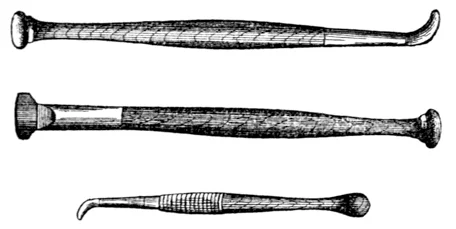
At the heart of the Abglätten process is the tool it uses, and nothing here is more iconic than the Achat-Polierstein, or agate burnisher. The choice of agate is no accident but the result of centuries of observation and experience. Agate, a form of chalcedony, has a microcrystalline structure that makes it very dense and gives it a naturally, extraordinarily smooth surface. Its hardness, around 6.5 to 7 on the Mohs scale, is hard enough to compact a soft metal such as gold without scratching or damaging it. Its surface, cool to the touch, also helps prevent the build-up of frictional heat that would ruin the fragile gold leaf.
Agate burnishers come in a range of shapes and sizes, each designed for a particular task. The most common shape is the Polierzahn (“polishing tooth”), which resembles the tooth of a wolf or a dog and is set into a wooden handle. Its pointed tip is ideal for reaching difficult detail, such as the corners of the panels of a book or the area around the raised bands. Other shapes include the wide flat burnisher for large surface areas and the curved burnisher designed specifically to follow the contour of a rounded spine. Every serious bookbinder will own a collection of these burnishers, choosing whichever best suits each aspect of the work.
Using an agate burnisher is an art in itself. The craftsman has to apply exactly the right pressure, consistently; too little pressure produces no shine, while too much can tear the gold leaf or damage the surface beneath. The movement must be quick, light and in one direction. As the burnisher glides over what was a matte gold surface, a magical transformation takes place. A soft hiss is heard as the surface is compacted, and gradually the dull sheen turns into a brilliant mirror. The process is plain evidence of how the right tool in a skilled hand can create an extraordinary result, a principle held in high regard in traditional German bookbinding.
Abglätten is not mere friction but a dialogue between the craftsman’s hand and the material; a dance of pressure and movement that turns a dull surface into a gleaming mirror.
The Main Applications of Abglätten in Bookbinding
Although the principle is the same — smoothing under pressure — the Abglätten technique is applied differently depending on which part of the book is being worked on. The best known and most striking application is on the edges of the book, but the technique is also very important in work on leather covers and on other decorative elements, which shows both its flexibility and its importance in reaching a perfect finish.
Burnishing Gilt Edges: The Height of Luxury
Creating a mirror-polished gilt edge (all-edge-gilt, or AEG) is one of the most intricate and most satisfying techniques in bookbinding. The Abglätten process is the climax of a careful sequence of preparation. First, the edge of the text block has to be trimmed perfectly and sanded until it is as smooth as marble. A ground layer called “bole” is then applied. Bole is a mixture of fine clay — often red or yellow, to give warmth to the colour of the gold — and a binder such as gelatine or egg white (glair). The bole layer serves as a slightly yielding cushion and as an adhesive for the gold leaf.
Once the bole layer has dried, the craftsman reactivates it with a little moisture from the breath or from a wet brush, making it slightly tacky. Extremely thin sheets of 22 or 23 carat gold leaf are then laid carefully onto this tacky surface. At this stage the gold surface looks dull and fragile. This is where the magic of Abglätten happens. Once the gold has been left to dry completely, the craftsman takes up the agate burnisher and, with quick movements and controlled pressure, begins to rub the gold surface. Gradually the particles of gold are compacted and levelled, microscopic imperfections disappear, and a surface is created that reflects light perfectly.
The result is a book edge that gleams like a solid bar of gold. The process is not only very beautiful but also very useful. An edge that has been through Abglätten becomes extremely dense and closed, protecting the pages from moisture and dust. It is a mark of the highest quality, commonly found on Bibles, prayer books and limited collector’s editions, a visible proof of an extraordinary investment of time and skill, as documented in the book conservation guides of experts such as Don Etherington.
Smoothing a Leather Cover: Density and Natural Lustre
Abglätten is also a crucial technique in work on leather covers. Once the leather has been dampened and formed over the boards, the smoothing process is used to compact the fibres of the leather, to close its pores and to produce the natural lustre called ‘glaze’. The technique can be carried out with a range of tools, including the agate burnisher, a bone folder, or even a specially heated iron used with great care. The process increases the density of the leather, making it more resistant to scratches and to dirt.
The process becomes especially important after decorative work such as ‘blind tooling’ (decoration without foil) or ‘gold tooling’ (decoration with gold foil). Once a design has been impressed into the leather, the area around it can be smoothed with a burnisher to bring out the relief of that design and to create a fine contrast of texture. The craftsman rubs the leather panel carefully, making sure the lustre is even and bringing out the natural beauty of the grain of the leather. The process asks for a deep understanding of the type of leather in use, because different leathers — cowhide, goatskin or sheepskin — respond to pressure and to heat in different ways.
By compacting the surface of the leather, Abglätten not only creates a beautiful finish but also increases the lifespan of the cover of the book. A denser, non-porous surface is less likely to absorb oil from the hands or dirt from the surroundings. This is one of the fine details that separates a high-quality handmade book from mass production. The principle of creating a dense, lustrous and protective surface is something that inspires the finishing process on quality leather goods to this day.
Frequently Asked Questions (FAQ)
What is the difference between Abglätten (burnishing) and simply polishing?
Abglätten is a very specific form of polishing that uses pressure to compact and level a surface physically, above all on soft materials such as gold leaf or leather. Its aim is to create a deep, hard shine. ‘Polishing’, meanwhile, is a more general term that can involve chemicals, cloth or a mild abrasive to clean a surface or to give it a shine without significantly changing its underlying structure.
Why is agate the tool of choice for Abglätten?
Agate is chosen for a unique combination of properties. Its surface is microscopically very smooth, its hardness is ideal for pressing soft metal without scratching it, and it does not heat up easily. Those properties make it the perfect tool for compacting fragile gold leaf or for smoothing leather without damaging it, producing a mirror shine that cannot be reached with any other tool.
Can every kind of book go through the Abglätten process?
No. Abglätten is a luxurious, labour-intensive finishing technique reserved for books of high quality. It is most commonly used on edges that have been gilded with real gold, or on covers made of genuine leather, in the context of fine binding or the restoration of antique books.
Is the technique still relevant, and does Hibrkraft use it?
Very relevant. Although we may not make gilt edges every day, the core principle behind Abglätten—creating a finish that is smooth, dense, lustrous and protective—matters a great deal in our leather work. When we finish the edges or the surfaces of our custom leather journals, we use burnishing techniques with special tools to close the fibres of the leather and create a smooth, glossy edge, making sure every product not only looks premium but also has extraordinary durability.
How does Abglätten affect the durability of a book?
Significantly. By compacting and sealing the gilded edge of the paper, Abglätten creates an effective barrier against dust and moisture, which are the chief enemies of paper. On a leather cover the process closes the pores, making the leather more resistant to dirt, to oil and to wear. As a result, a book that has been through the Abglätten process is not only more beautiful but also longer-lasting.
- The Making of a Medieval Manuscript – Victoria and Albert Museum
- Gilding – Bookbinding and the Conservation of Books by Don Etherington
- Bund Deutscher Buchbinder (Association of German Bookbinders)
- A Brief History of Edge Gilding – Eden Workshops
- Gilding and Edge Decoration – Druckert und Spener Bookbinding

Custom Notebook
Achieve a perfectly smooth writing experience. Our custom notebooks are crafted with meticulous attention to detail, ensuring every page offers a pristine, ‘abglättet’ surface for your thoughts and creations.
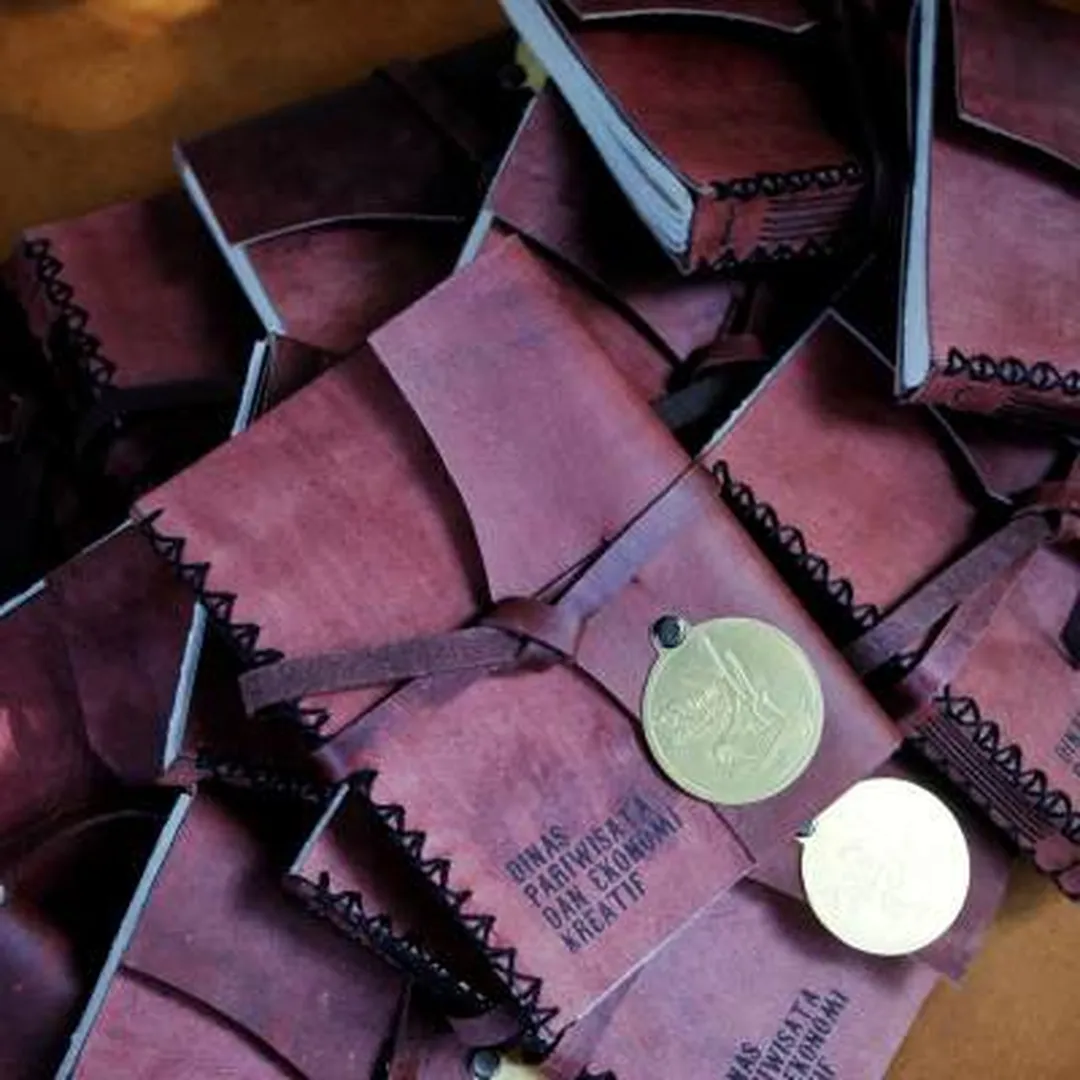
Business & Whitelabel
Present your brand with a flawless finish. We provide expertly ‘abglättet’ business stationery and whitelabel products, ensuring a smooth, professional, and polished impression that elevates your brand identity.
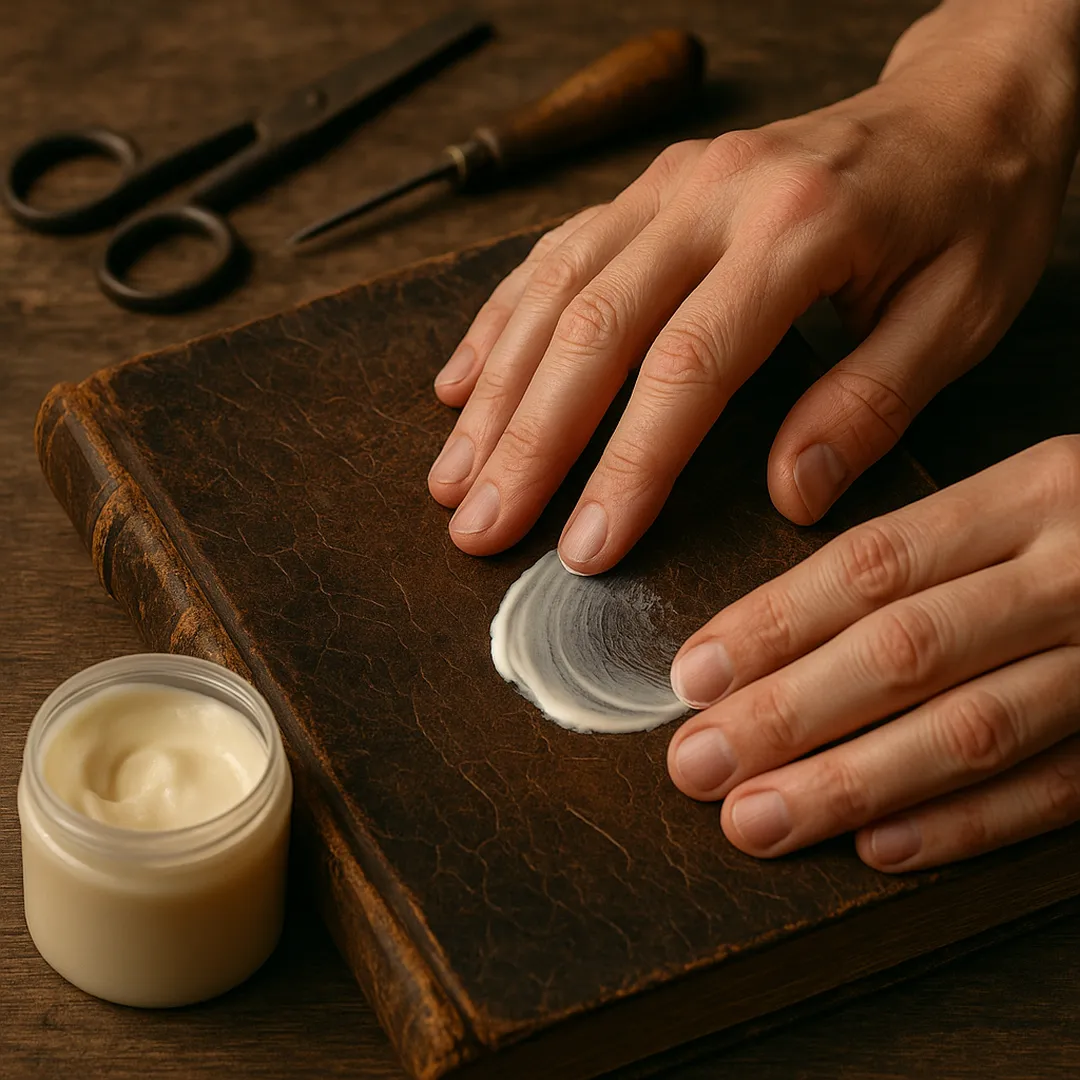
Book Repair & Conservation
Restore the beauty and integrity of your books. Our repair services skilfully ‘abglättet’ and flatten pages, smooth damaged covers, and rejuvenate your treasured volumes with expert care.