
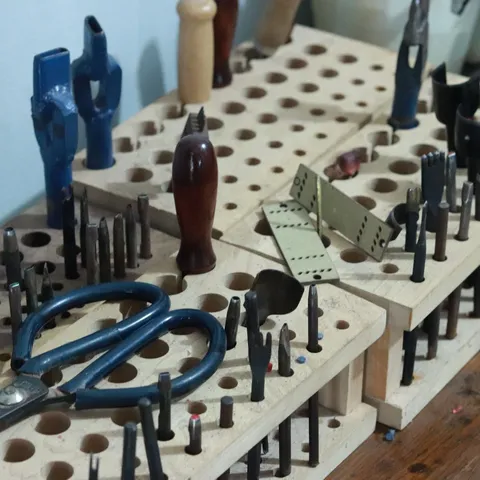
Leathercraft Tools
by Ibrahim Anwar · July 24, 2025
“Leathercraft tools” is an umbrella term covering the whole ecosystem of instruments used to turn a sheet of raw leather into a finished object that is both useful and beautiful. This is not merely a toolbox; it is an extension of the maker’s hand and intent. The range is wide, from fundamental hand tools that have existed for centuries — the cutting knife, the awl, the sewing needle — to modern machines that offer precision and efficiency. Every tool, from a simple stitching groover to a complex saddle-stitching machine, has a specific purpose in the work of cutting, shaping, assembling and refining leather. A maker’s collection of tools is a reflection of their style, their experience and their philosophy towards the craft.
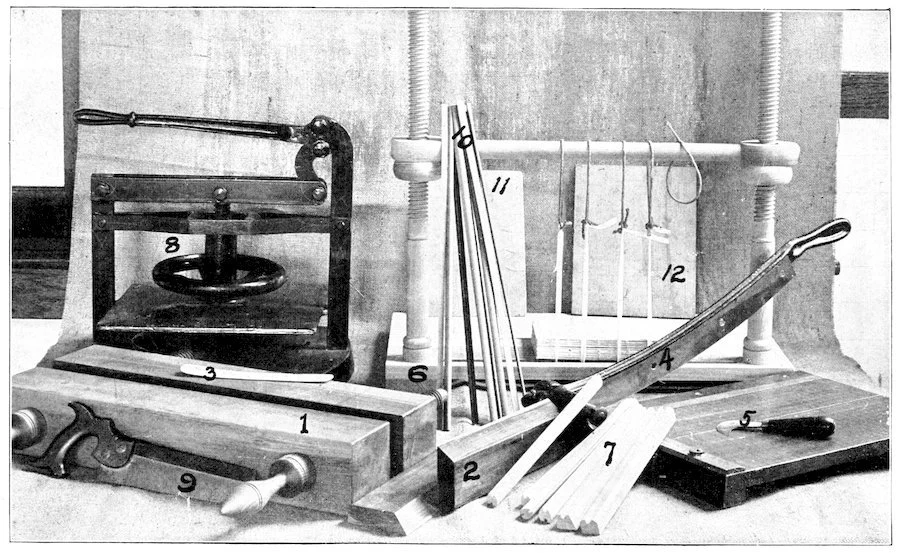
Entering the world of leathercraft is like learning a new language. The material, leather, has a vocabulary and a grammar of its own. It can be stiff or supple, thick or thin, smooth or textured. To be able to “speak” with this material — to persuade it to bend, to join, and to take the shape you want — a maker needs a translator. That translator is the tools. From the sharp flash of the cutting knife that separates a pattern from a whole hide, to the soft whisper of the edge burnisher that turns a rough edge glass-smooth, every tool is a verb in the sentence of making.
A leatherworker’s set of tools is more than a collection of inert objects. It is a narrative. A simple beginner’s kit tells the story of an eager start and of first projects. A master’s worn but well-kept collection tells the story of a thousand hours of practice, of wooden handles that have shaped themselves to their owner’s grip. Understanding these tools is not only a matter of knowing their names and functions, but of appreciating how each instrument opens a new possibility, allowing the human hand to bring an idea into being as something real, durable and full of character.
The Foundation of the Craft: Measuring, Marking and Cutting Tools
Every great leathercraft project begins with one principle that is not negotiable: precision. A mistake of a single millimetre at the start multiplies into a large problem at the end. The tools for measuring, marking and cutting are therefore the foundation of everything else.
Measuring and Marking Accurately
- Steel Ruler: This is the backbone of measurement. A sturdy steel ruler will not be scored by the knife and gives a straight, dependable edge to cut against.
- Scratch Awl: A sharp-pointed awl used not to make holes but to score a fine cutting line on the surface of the leather. It is more precise than a pencil or a pen, which can leave a mark behind.
- Wing Divider: This tool, which looks like a pair of compasses, is essential for marking a consistent stitching line from the edge of the leather. By setting the distance between its two legs, the maker can score a perfect guideline for the stitching.
The Art of Cutting: Knives and Surfaces
Cutting leather cleanly is the first skill to master. The choice of knife has a great deal to do with the quality of the cut.
- Utility/Craft Knife: A good starting point for beginners. A knife such as an X-Acto or a Stanley, with replaceable blades, is very versatile. The blades do blunt quickly on thick leather, however.
- Round Knife/Head Knife: This is the iconic tool of the professional leatherworker. Its curved shape allows long straight cuts, precise curves, and even skiving. It takes a great deal of practice to master but is highly efficient in skilled hands.
- Strap Cutter: An ingenious tool used to cut straps or belts of a uniform width from a large piece of leather. It is a remarkable saver of time on repetitive work.
- Cutting Mat/Poundo Board: Cutting straight onto a table will ruin the table and blunt your knife. A self-healing cutting mat, or a thicker polyurethane poundo board, is essential to protect both.
Preparation and Assembly: Shaping and Joining
Once the pieces are cut accurately, the next step is to prepare them for stitching and assembly. This stage is often invisible in the finished product, but it determines its quality and its longevity.
Shaping Edges and Grooves
- Edge Beveler: This tool pares away a little of the sharp ninety-degree corner at the edge of the leather, rounding it so that it is more comfortable to hold and looks more professional.
- Stitching Groover: This tool cuts a shallow groove in the surface of the leather for the stitching thread to sit in. It helps protect the thread from abrasion and wear, and gives a tidy appearance at the same time.
- Creaser: Similar to a groover but without cutting the leather, a creaser — heated or not — makes a decorative line parallel to the edge, adding a touch of elegance.
Making Holes for Stitching and Hardware
Unlike cloth, you cannot simply push a needle through leather. The holes must be made first.
- Stitching Chisel/Pricking Iron: This is the most important tool for tidy hand stitching. Shaped like a flat fork, it is struck with a mallet to make perfectly angled stitching holes. The spacing between its teeth determines the stitches per inch (SPI), which is a signature of a maker’s style.
- Mallet or Maul: It is important to use a mallet made of a material softer than your metal tools — wood, polycarbonate, or rawhide. Using a steel hammer will damage the handles of your chisels and stamps.
- Hole Punch: Used to make the larger round holes needed for snaps, rivets or belt buckles.
The right tool in a patient hand does not only shape leather; it turns time and effort into an inheritance.
The Heart of the Craft: Stitching and Finishing
Once all the preparation is done, it is time to bring everything together. Stitching and finishing are where a project truly comes alive and shows the marks of real skill.
Hand-Stitching Equipment
- Stitching Pony/Stitching Clamp: This is a clamp, operated with the knee or sat on at a bench, which holds the pieces of leather firmly while you stitch. It frees both of your hands for the saddle stitch, which is the strongest and most durable of hand stitches.
- Harness Needles: These needles have a blunt tip rather than a sharp one. Because the holes have already been made, the needle only has to pass through them, with no risk of piercing the thread or the leather itself.
- Waxed Thread: Waxed polyester or linen thread is the industry standard. The wax helps lubricate the thread as it passes through the leather and locks the stitches in place.
The Finishing Touch: The Maker’s Signature
How a maker finishes an edge is one of the greatest marks of the quality of the work.
- Edge Slicker/Burnisher: Usually made of wood or plastic, this tool has grooves of various sizes. Once the edge has been dampened with water or a special solution — gum tragacanth or Tokonole — the tool is rubbed briskly along it. The friction and the heat that result compact the fibres of the leather, creating an edge that is smooth, glossy and sealed.
- Edge Paint: For a more modern, luxury-goods appearance, some makers apply a special edge paint. This takes several rounds of sanding and application to achieve a finish as smooth as glass.
Powered Tools: Increasing Efficiency
For larger production runs, or for particular tasks, machines can be a great help.
- Leather Sewing Machine: Unlike a domestic sewing machine, this has a more powerful motor, a “walking foot” mechanism to feed thick leather evenly, and is built to handle heavy thread.
- Bell Skiver: A machine that thins the edge of the leather precisely and at speed, something that takes a great deal of time and skill to do by hand.
- Clicker Press: Using steel dies, this machine can cut the same shape perfectly over and over, which is essential for volume production.
The Hibrkraft Perspective: Tradition and Precision Together
In the Hibrkraft workshop, our collection of tools is a deliberate blend of the old and the modern. For the fine detail on a custom leather journal, or an intricate book repair, we rely on the accuracy of the hand knife, the stitching chisel, and the sensitivity of the hand as it burnishes an edge. These hand tools let us “feel” the material and make the micro-adjustments no machine can.
For consistency and strength in structural components, however, we use the precision of machines. An accurate cutter ensures every cover is exactly the right size, and a specialist sewing machine gives strength to the seams that bear load. This combination allows us to honour the spirit of traditional handwork while delivering a finished product that meets modern standards of quality and durability. For us, every tool, manual or powered, is a partner in our commitment to doing the work well.
FAQ (Frequently Asked Questions)
1. I am a beginner — which tools do I absolutely have to have to start?
You can begin with a basic kit: a steel ruler, a good utility knife, a cutting mat, a stitching chisel (one size, 4mm for instance), a mallet, two sewing needles, and a spool of thread. That is enough to make simple projects such as a card wallet or a keyring.
2. Do I have to buy expensive tools?
Not at the beginning. There are many affordable starter kits. As you progress, though, you will feel the difference in quality. Better tools — knives and stitching chisels especially — are made of better steel, stay sharp for longer, and produce cleaner work. Investing in good cutting and punching tools is a sensible step.
3. What is the difference between a Stitching Chisel and a Diamond Stitching Punch?
Functionally the two do the same thing: they make diamond-shaped stitching holes. Traditionally, however, a “pricking iron” only marked the position of the stitches on the surface, and the maker then used an awl to make the hole all the way through. A “stitching chisel” is designed to punch straight through the leather. These days the terms are often used interchangeably.
References
- Tandy Leather. “Getting Started – Basic Tools.” (the original link is dead; the reference is kept without a link)
- Weaver Leather Supply. “Hand Tools.” (the original link is dead; the reference is kept without a link)
- MakeSupply. “Essential Leather Working Tools: The Ultimate Guide.” (the original link is dead; the reference is kept without a link)
- Corter Leather. “The Tools I Use to Make Leather Goods.” (the original link is dead; the reference is kept without a link)

Custom Notebook
A handmade leather notebook you can design yourself — for a gift, for a memory, or for plans still to come.
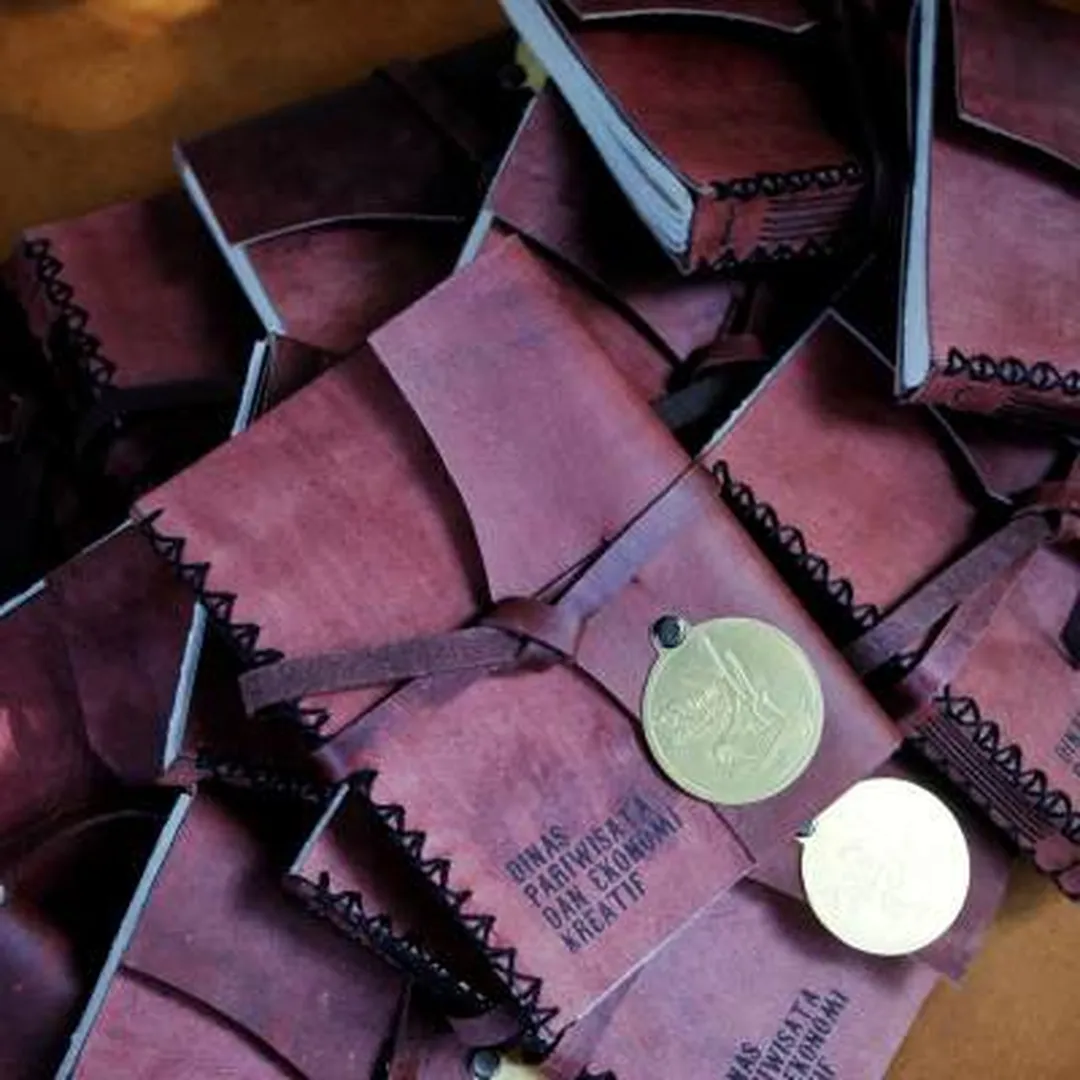
Business & Whitelabel
Business and corporate gift solutions in the form of exclusive agendas carrying your company’s logo.
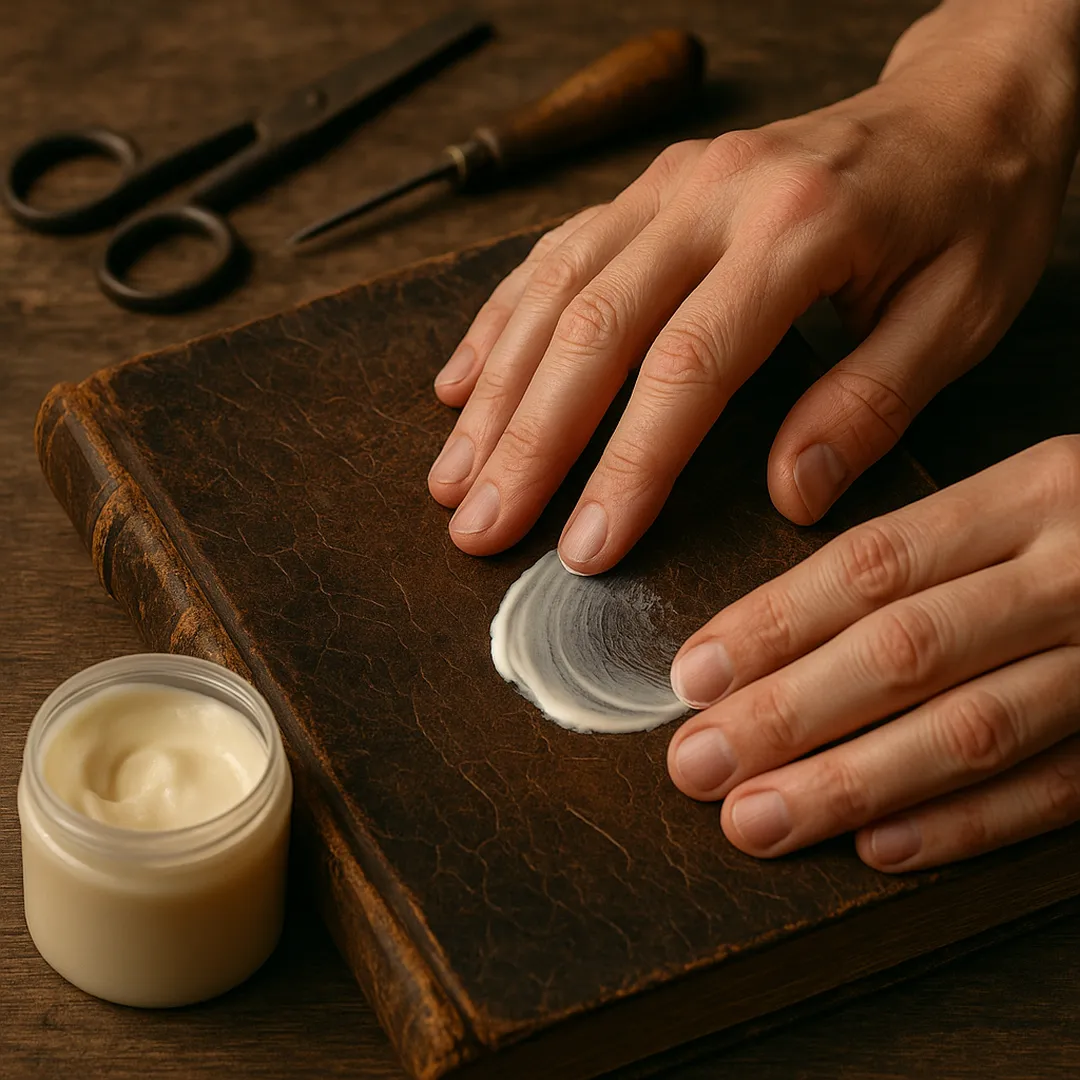
Book Repair & Conservation
Repair and conservation for antique books, family heirlooms, and private collections of historical value.