Handmade Leather Journal
by Ibrahim Anwar · July 28, 2025
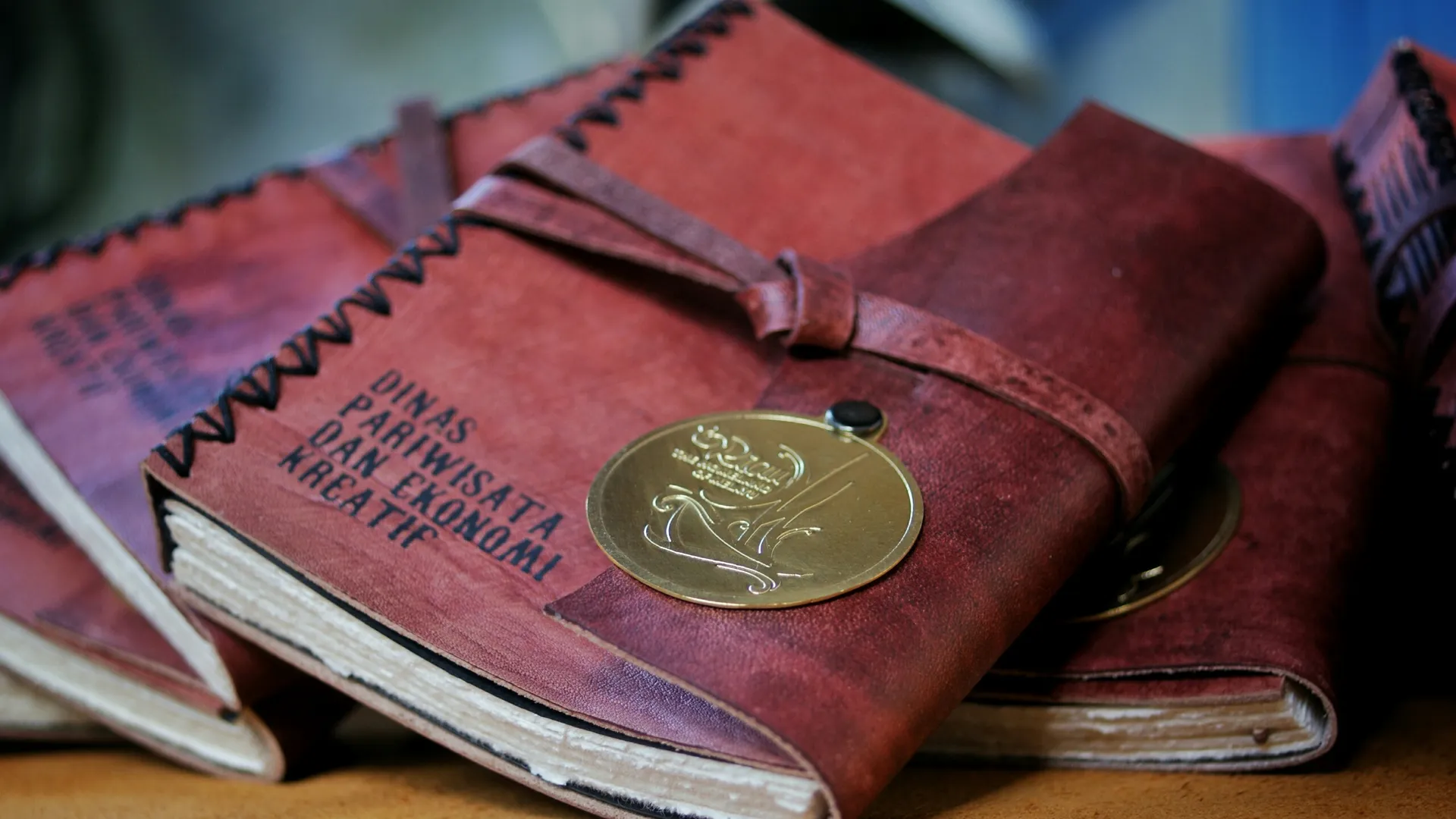
A handmade leather journal is a notebook in which every aspect — from cutting the leather cover, through folding and sewing the paper, to the final binding — is done by hand by a craftsman. Unlike a mass-produced book, every handmade leather journal has a unique character that comes from the maker’s personal touch, from the uniqueness of the natural leather used, and from traditional binding technique. It is not only a writing instrument but a personal artefact, a travelling companion designed to age and grow alongside its owner, recording the passage of time in the scratches and the patina on its leather cover.
In a world given over to speed and to screens, there is a deep longing for something real, something that can be touched and felt. A handmade leather journal answers that longing. When you hold one, your fingers feel the rich texture of the leather, your nose catches the distinctive, calming scent, and your eyes see the perfect imperfection of hand stitching. This is not merely a notebook. It is an experience, a ritual. It is a sacred space in which to pour out thoughts, dreams and memories, wrapped in a material that will last a lifetime. It is a statement that some of the best things in life are not produced on an assembly line but shaped patiently by a pair of human hands.
The Soul in Every Stitch: Unpacking the Essence of the Handmade Leather Journal
To appreciate a handmade leather journal properly, we need to look beyond its function as a place to write. We have to go into the process, the materials and the philosophy behind it. This is a journey towards understanding why so simple an object can have a “soul” and come to mean so much to its owner.
The Anatomy of Handcraft: What Makes It “Handmade”?
The term “handmade” is used often, but what does it mean in the context of a leather journal? It is a series of deliberate processes that demand skill, in which every step is carried out by hand:
- Selecting and cutting the leather: The process begins with choosing the hide. A craftsman examines the whole surface of the leather, identifying the best areas and avoiding unwanted scars or natural blemishes. The leather is then cut to size with a special knife rather than a hydraulic cutting machine. The precision of hand and eye decides the finished result.
- Preparing the paper: The paper for the inner pages (known as the text block, gathered into signatures) is counted, cut and folded one sheet at a time by hand, using a simple tool such as a bone folder to make sure every fold is sharp and clean.
- Sewing and binding: This is the heart of the making. The leather cover and the gathered paper are joined with a needle and waxed thread. Various hand-sewing techniques are used, each giving a different aesthetic and a different strength:
- Coptic stitch: An ancient technique that lets the book open a full 180 degrees (lay-flat), ideal for writing or drawing. The stitching is plainly visible along the spine and becomes a beautiful decorative element.
- Long stitch: A technique in which the thread is sewn straight through the leather cover, creating a pattern of long lines down the spine. It is strong and has a rustic look.
- Saddle stitch: A very strong hand-sewing technique using two needles at once, often used to join the leather parts of a traveler’s notebook-style journal.
- Finishing and detail: Once it is bound, the maker adds the final touches. The leather edges may be burnished (rubbed until smooth and slightly glossy), the corners shaped, and the wrap strap fitted. Any personalisation, such as debossing a name or a logo, is also done by hand with a heat press.
Every one of these steps leaves the trace of the maker’s hand. A slight variation in the pull of the thread or in the way the leather folds is not a fault but a mark of authenticity—evidence that the book was made by a human being and not a machine.
Materials That Tell a Story: Understanding the Language of Leather
The character of a leather journal is largely decided by the kind of leather used. At Hibrkraft we believe the best leather is leather that can age beautifully and tell its own story.
- Full-grain leather: This is the finest grade of leather. Taken from the topmost layer of the hide, it is neither sanded nor buffed, so it keeps all of its texture, its pores and even its natural scars. It is very strong, and over time it develops a patina—a rich and beautiful sheen—that cannot be imitated.
- “Crazy Horse” or pull-up leather: A full-grain leather impregnated with special oils and waxes. When it is bent or scratched the oil spreads and creates a lighter shade in that area, giving a dynamic vintage look full of character. Light scratches can often be removed simply by rubbing them with a finger.
- Vegetable-tanned leather: Leather tanned with tannins from natural materials such as tree bark. It tends to be stiffer at first but softens with use. It has a distinctive natural scent and takes carving and stamping (tooling) very well.
A handmade leather journal is not a static object. It is a companion for life that records two stories at once: the story you write on its pages, and the story of your own journey, engraved on its cover.
A Personal Journey: Why You Need One
Choosing a handmade leather journal is a decision that is emotional more than it is practical. It is an investment in an experience that goes beyond recording information.
Reasons to Choose Uniqueness and Quality
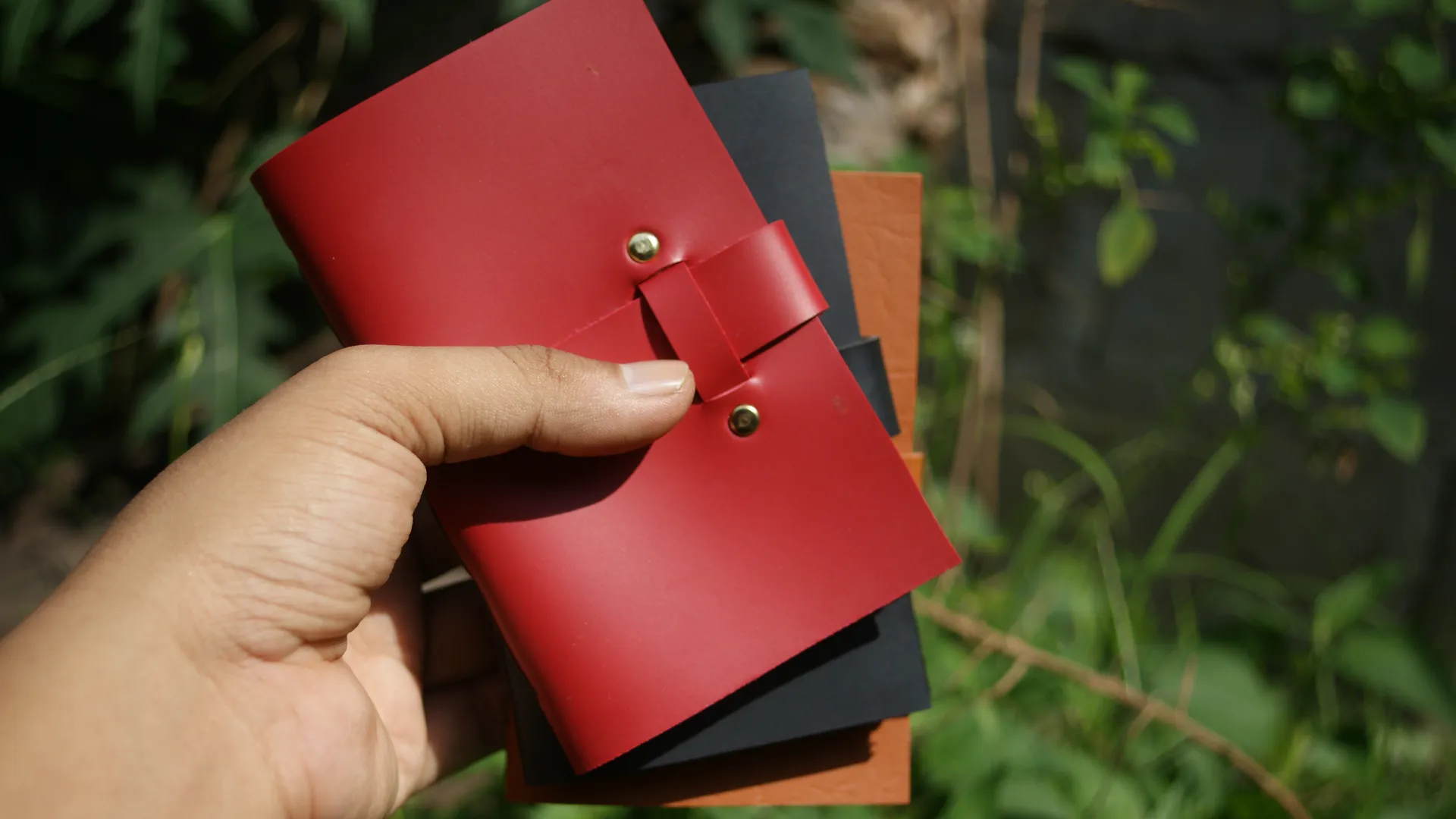
- Unmatched uniqueness: No two handmade leather journals are 100% identical. The natural variation in the leather and the touch of the maker’s hand ensure that the journal you own is the only one in the world.
- A lifetime of durability: With genuine leather and strong hand stitching, this journal is built to last a very long time. When the paper inside runs out, many models allow the insert to be replaced (refillable), so the leather cover stays in use and becomes a personal heirloom.
- A rich sensory experience: Writing becomes a ritual that pampers the senses. The distinctive scent of the leather, the feel of a cover that is supple yet sturdy, and the soft sound of a page opening—all of it creates a deeper relationship between you and the act of writing.
- Supporting local and sustainable craft: Buying a handmade product means you directly support a craftsman’s skill and livelihood. It is a more ethical and more sustainable choice than supporting the mass-production industry.
Custom Journals at Hibrkraft: A Canvas for Self-Expression
We at Hibrkraft understand that a journal is an extension of its owner. So we do not only make journals; we help you create your travelling companion. The customisation process lets you:
- Choose the type and colour of leather: Do you prefer the classic look of dark brown leather, or the cheerful energy of a bright colour?
- Decide the thread colour: A small detail such as a contrasting thread colour can make your journal stand out.
- Personalise a name or initials: With debossing, we can press a name, initials or even a simple logo into the cover, making it truly yours.
- Choose the paper: Do you need ruled paper for writing, plain paper for sketching, or dotted paper for bullet journaling? We can prepare it.
A Connection to Indonesia’s Leather Craft Tradition
The spirit behind the handmade leather journal is closely aligned with Indonesia’s leather craft heritage. For centuries, makers in various regions such as Garut, Yogyakarta (above all for wayang kulit) and Manding have mastered the art of working leather into useful and artistic objects. Traditional tanning technique, the skill of carving (tatah sungging on wayang) and hand-sewing expertise are a rich cultural heritage. In choosing a handmade leather journal we not only get a quality product, we also take part in preserving and honouring the long tradition of leather craft across the Nusantara.
FAQ
What is the main difference between full-grain leather and 'genuine leather'?
The difference in quality is very large indeed. Full-grain leather is the topmost layer of the hide, the strongest and the highest grade, with all of its natural texture still intact. Genuine leather, by contrast, is often a marketing term for a lower grade. It is usually a lower layer of the hide that has been buffed smooth and coated with polymer to give a uniform appearance. Full-grain leather ages beautifully and develops a patina, while genuine leather tends to wear out faster and does not have the same durability.
How do I care for my handmade leather journal?
Care is simple enough. First, avoid water and excess damp. If it does get wet, dry it at once with a soft cloth. Second, keep it out of direct sunlight for long stretches so the colour does not fade. Third, for light scratches on pull-up or crazy horse leather it is often enough to rub them gently with a finger. For the long term you can apply a thin coat of leather conditioner (leather conditioner) every 6-12 months to keep it supple.
Is a handmade leather journal environmentally friendly?
The answer is complex, but in general it can be called more sustainable than a mass-produced synthetic product. First, leather is a by-product of the meat industry. Second, a handmade journal is designed to last a lifetime, cutting waste and the “buy and throw away” culture. Many makers, Hibrkraft among them, also choose leather from vegetable tanning (vegetable-tanned), which uses natural materials and is a more environmentally friendly process than chrome tanning. By buying one high-quality journal that lasts, you make a better choice for this planet.
References
- Sea Lemon. “DIY KETTLE STITCH BOOKBINDING TUTORIAL | Sea Lemon.” – A video tutorial showing the hand book-sewing process (Kettle Stitch).
- The Spruce Crafts. “Learn the Ancient Art of Coptic Stitch Bookbinding.” (the original link is dead and there is no archive of it; we keep the reference without a link) – An article explaining the Coptic stitch technique.
- Michigan State University Libraries. “A Brief History of Bookbinding.” (the original link is dead; the reference is kept without a link) – Gives historical context on the evolution of binding techniques.
- Popov Leather. “Full-Grain vs. Genuine Leather: A Guide to Understanding Leather Grades.” (the original link is dead; the reference is kept without a link) – An article explaining the differences in leather grade in detail.

Create Your Travelling Companion
A journal that is truly yours. Design your own handmade leather journal, from the choice of leather to a personal name engraving.
Corporate Gifts That Leave a Mark
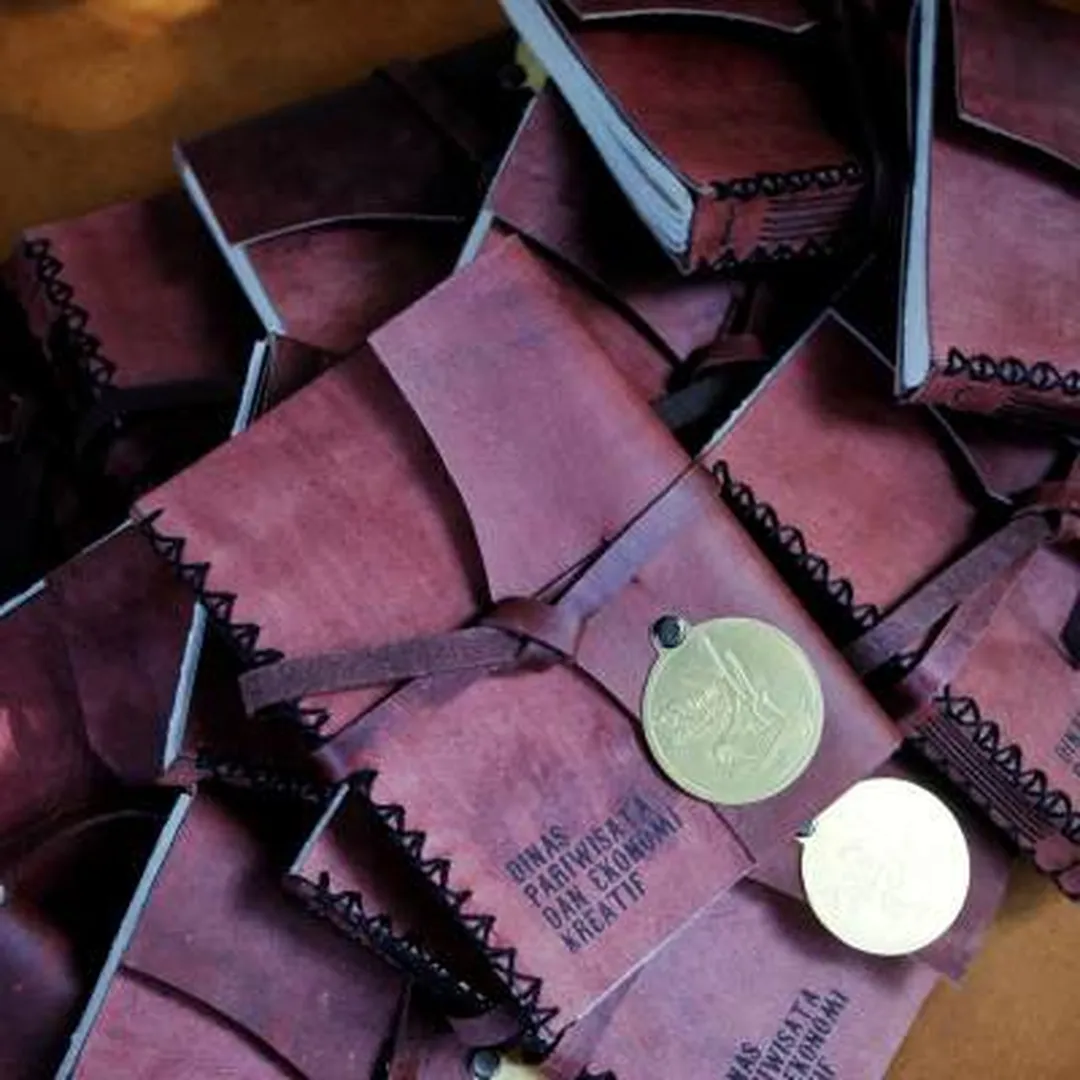
Leave a deep impression with a gift that has a personal touch. A handmade leather agenda carrying your company logo is an elegant and classy choice.
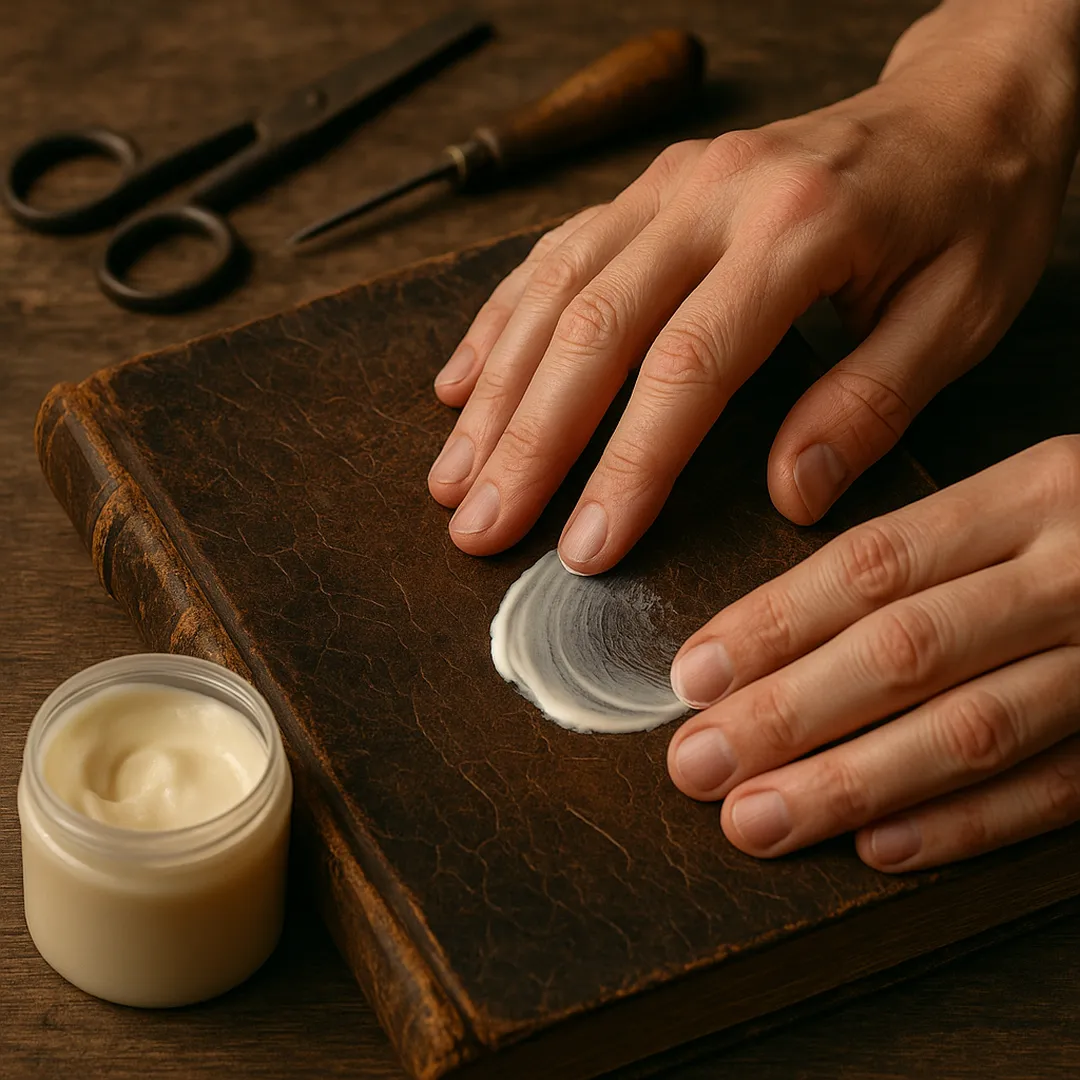
Leather Book Repair & Care
Do you have a damaged leather-bound family heirloom? We can help repair and care for it so its beauty is preserved.