Genuine Leather
by Ibrahim Anwar · August 23, 2026
What the word “genuine” actually guarantees
Only where the material came from. A cover sold as genuine leather may be full grain — the outermost layer, the strongest, and the only one that develops a patina — or it may be bonded leather, which is leather scraps ground down, mixed with adhesive and pressed into a sheet. Both are equally “genuine”. Their working lives are nothing alike.
That is why we try to name the grade rather than only the authenticity.
The grades, from the most intact down
- Full grain — the top layer, pores left as they are, not sanded. The strongest, and the only one that develops a patina.
- Top grain — the surface sanded flat to remove flaws, then given a finish. More uniform, which suits corporate orders that need every unit to match exactly.
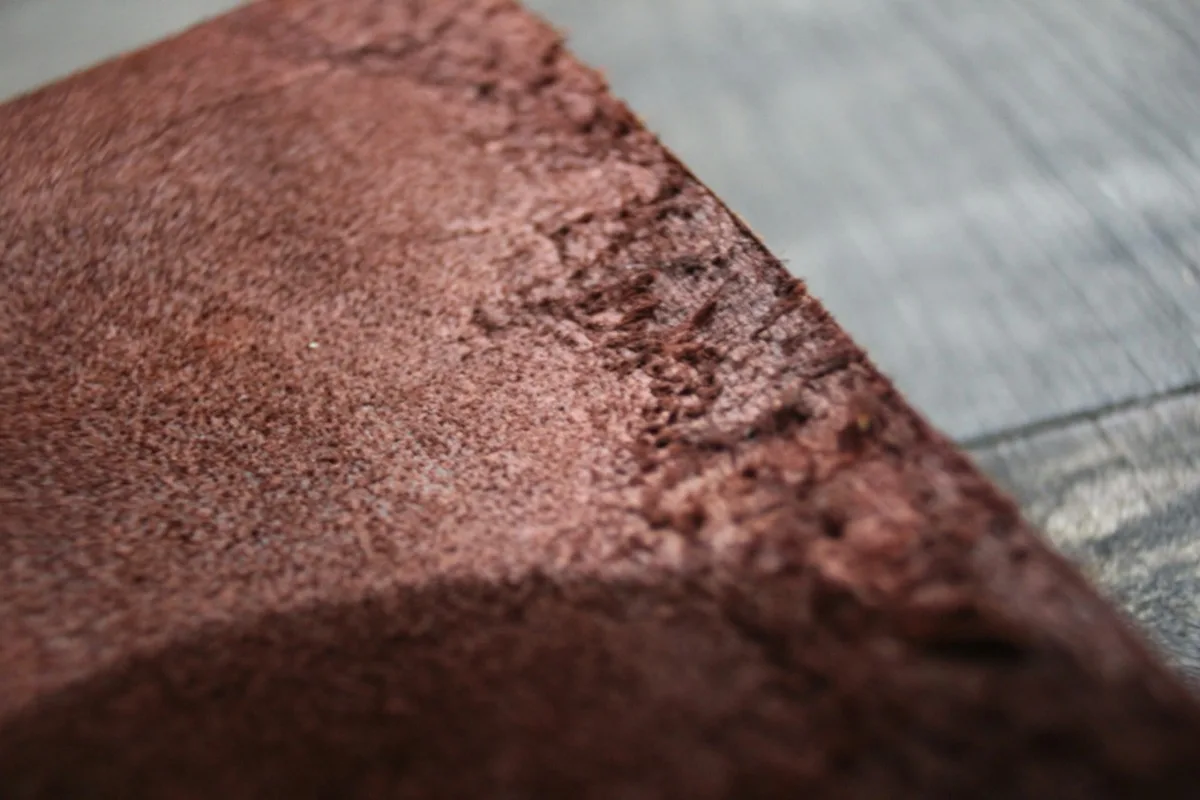
- Split / suede — the lower layer left after the hide is split. Soft and fibrous, but not as strong as the upper layers.
- Bonded leather — leather scraps glued and pressed. It may still legally be described as containing leather; in use it behaves like an entirely different material.
Genuine, vegetable-tanned and vegan are three different things
These three terms are swapped more often than any others, and the difference matters:
- Genuine leather — from an animal. This is about where the material came from.
- Vegetable-tanned leather — animal hide tanned using tannins from plants. This is about how it was tanned, not where it came from. Vegetable-tanned leather is still genuine leather.
- Plant-based vegan leather — no animal material at all. Not genuine leather.
So “vegetable-tanned” and “vegan” sound alike and mean opposite things. One is cowhide; the other is not leather at all.
How to check for yourself
A few simple checks you can make before buying:
- Look at the pores. Genuine leather has irregular pores. A printed material repeats its pattern — if the motif repeats exactly, it is printed.
- Look at the cut edge. Genuine leather is fibrous at the edge. A laminated material will show a layer of fabric or foam beneath the surface.
- Press the surface. Genuine leather forms fine wrinkles and then returns. A synthetic surface tends to crease stiffly.
- Smell it. The smell of vegetable-tanned leather is distinctive and not sharp. A sharp chemical smell usually indicates a heavy surface finish.
How Hibrkraft uses it
Most of our covers use genuine leather, and what we name on the product page is the grade: full grain, pull up, vegtan, crazy horse or chrome tanned. Part of the catalogue uses synthetic leather, and that we call synthetic. For anything that uses no animal material, there is Plant-based vegan leather.
If a product page says only “genuine leather” without naming the grade, ask. It is a reasonable question and we will answer it.
FAQ
Does “genuine leather” mean high quality?
Not in itself. The term only states that the material came from an animal. Bonded leather contains leather too, and lasts far less time than full grain. What determines quality is the grade and the tanning.
Is genuine leather always better than synthetic?
For a book used over many years and expected to age well, yes. For an order on a tight budget, in large volume, or one that has to be waterproof without maintenance, synthetic leather can be the more sensible choice. Both are legitimate — as long as each is called what it is.
Can genuine leather be repaired if it is damaged?
Generally yes. A genuine leather cover can be cleaned, reconditioned, resewn, and even partly replaced. That is part of our book repair service.
Leather with its grade named, not only its authenticity.