
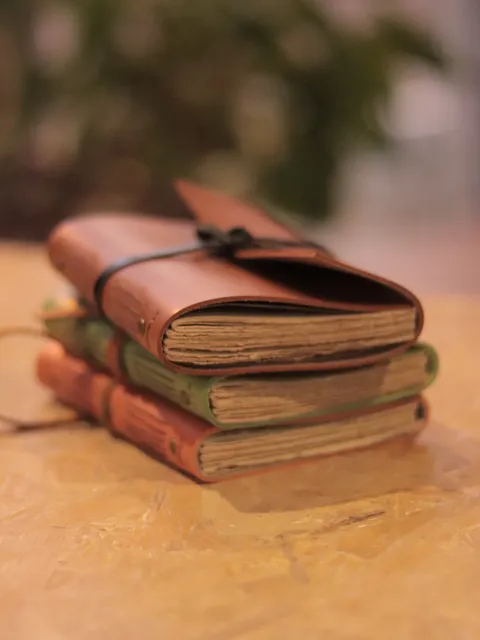
Handmade Journal
by Ibrahim Anwar · July 28, 2025
In a world given over to efficiency and the uniformity of mass production, a handmade journal stands as an ode to patience, to skill, and to the value of the process itself. It is not merely an object but an artefact that carries a story: of the time the maker invested, of materials chosen with care, and of a bookbinding tradition centuries old. Choosing a handmade journal means choosing quality over quantity, singularity over uniformity, and a deeper connection with the things we use every day.
Every stitch, every fold and every texture on the cover of a handmade journal is a dialogue between material and maker. No two journals are a hundred per cent identical. The fine differences in the pull of the thread, in the cut of the leather, or in the way the paper folds are what set it apart from the cold, soulless factory product. That is what makes it the perfect vessel not only for writing, but for the essence of its owner's creativity and character.
Inside the process: what “handmade” actually means
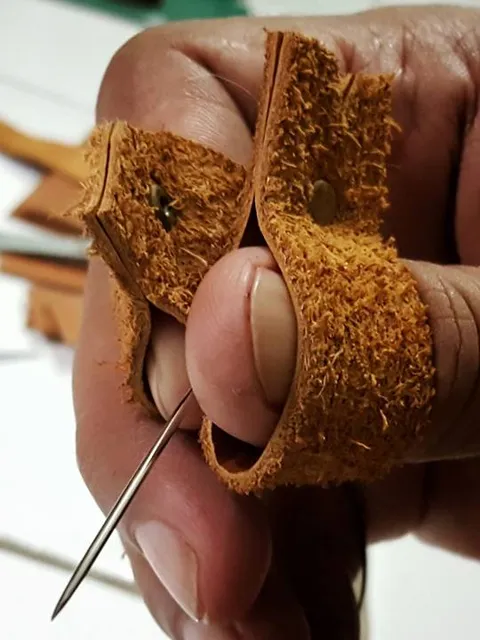
The word “handmade” is often used loosely, but in the context of bookbinding and leather craft at Hibrkraft it refers to a sequence of manual processes that demand skill, precision and time. Understanding these steps gives a deeper appreciation of what a handmade journal is worth.
1. Selecting and preparing the material by feel
The process begins long before a needle touches paper. A craftsman chooses the material carefully. For a leather cover, he will go over the whole hide, feel its texture, and look for the best part — free of fatal flaws, yet still holding its natural character. For paper, he weighs up the grammage, the texture and the colour, making sure it suits what the journal is for: writing, sketching, or even watercolour. The process is tactile and intuitive, and it is not something a machine can do.
2. Cutting and folding by hand
Each sheet for the text block is cut one at a time with a sharp knife and a straight edge, not by an industrial guillotine. The sheets are then folded by hand with a tool called a bone folder, to give a crisp and precise crease. A group of folded sheets is called a signature, and these are the building blocks of the book.
3. The art of hand sewing: the heart of a book
This is where the magic happens, and it is what most separates a handmade journal from a machine-made one. Instead of being glued in bulk (as in perfect binding), the signatures are joined with needle and thread. Among the popular hand-sewing techniques are:
- Coptic stitch: an ancient technique that lets the book open a full 180 degrees at any page (lay-flat). The chain stitch visible along the spine is its decorative signature. It suits artists and writers particularly well.
- Longstitch: sewing the signatures directly into a flexible leather cover, creating a vertical stitch pattern along the spine that is both handsome and strong.
- Saddle stitch: a technique often used in leather craft, where two needles work at once to create an interlocking stitch. This stitch is fundamentally stronger and will not unravel easily even if one thread breaks. It is the gold standard for strength and durability.
Hand sewing takes time, but the result is a binding that is not only handsome but far superior in durability to a factory glue binding.
In every hand stitch and every burnished edge there is a trace of a craftsman's time and dedication. That is real luxury in an instant age.
4. Making the cover, and a careful finish
The cover, whether leather, cloth or another material, is also made by hand. For a leather cover the work includes precise cutting, thinning the edges (skiving) so they fold cleanly, and punching the holes for the stitching. The finish is a crucial stage. Leather edges are often burnished by hand with a special tool and beeswax to give a smooth, glossy, sealed edge that protects against moisture and wear.
Beauty in imperfection
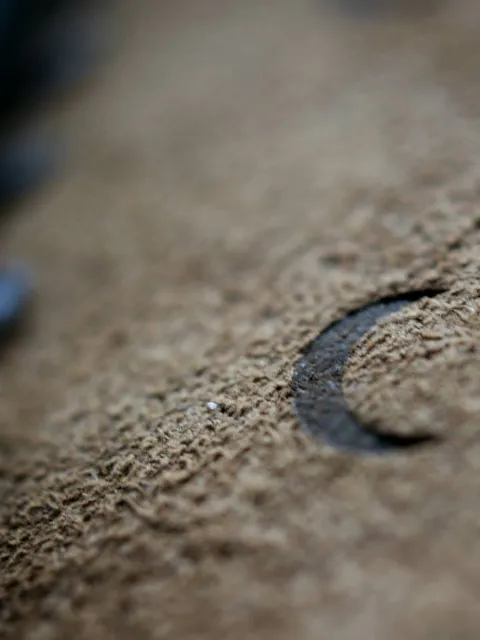
One of the most poetic aspects of a handmade object is its perfect “imperfection”. A slight variation in stitch spacing, a faint mark left by a tool, or the unique character of a piece of leather is not a defect. It is the maker's signature, evidence that the thing was created by human hands and not by a computer program. This is the idea known in Japanese aesthetics as wabi-sabi — finding beauty in what is impermanent, imperfect and incomplete.
Handmade against machine-made: quality and character
To understand what a handmade journal is worth, it helps to compare it directly with the machine-made products that dominate the market. The difference lies not only in appearance, but in durability, in the experience of using it, and in the character of the product itself.
1. Durability and long life
Handmade: using techniques such as hand sewing (saddle stitch, for instance), a handmade journal has a very solid structure. The thread will not come loose easily and will take heavy use for years, even decades. The materials chosen are often of higher quality too — full-grain leather, for example.
Machine-made: most mass-produced notebooks use glue binding (perfect binding). With time and use the glue can dry out and turn brittle, and pages come loose. The materials are often a compromise with cost as well: bonded leather, or a thin card cover.
2. Character and singularity
Handmade: every journal is unique. Even made to the same design, there will be minor variations that make it the only one of its kind. It has character, a “soul” that comes from the human touch.
Machine-made: every unit is identical, precise to the last micrometre. Efficient, but it removes all character and singularity. You own the same product as thousands or millions of other people.
Choosing something handmade is a deliberate act. It is a way of refusing a throwaway culture and embracing objects built to last and to tell a story.
3. The experience of using it
Handmade: a handmade journal is often designed with the user's experience closely in mind. A binding such as Coptic lets the book lie flat, which makes it comfortable to write or draw in. Holding good material and seeing the detail of the handwork can prompt creativity.
Machine-made: the focus is basic function at the lowest possible cost. The book may not lie flat, which makes part of the page hard to use. The sensory side — touch, smell — is rarely a priority.
4. Value and impact
Handmade: the initial price may be higher, but the value is long-term. You are buying a functional work of art that lasts, and supporting a craftsman's skill and the local economy. It is a form of “slow consumerism”.
Machine-made: cheap, but often effectively disposable. It carries no sentimental or inherited value, and its production usually has a greater environmental impact because of its industrial scale.
The handmade philosophy at Hibrkraft
At Hibrkraft, “handmade” is not a marketing label. It is the core of our philosophy. We believe the manual process lets us build a relationship with every product we create. We see each piece of leather and each sheet of paper as a canvas. Our hands are the tool that turns your vision into something physical. We combine time-tested bookbinding technique with modern design to create journals that are not only functional but heirlooms you can pass on.
FAQ (frequently asked questions)
What is the difference between 'handmade' and 'hand-assembled'?
“Handmade” implies that most of the making — from cutting the material through to the finish — is done manually with hand tools. “Hand-assembled” usually means components produced by machine are then put together into a finished product by hand. A genuinely handmade journal involves a far higher level of skill and manual process than assembly alone.
Is a handmade journal really more durable?
Yes, generally so, particularly where hand-sewing techniques such as saddle stitch or Coptic stitch are used. Sewn thread creates a mechanical bond that is far stronger and more flexible than industrial glue, which can turn brittle over time. Add higher-quality materials — real leather rather than thin synthetic — and a handmade journal is built to take years of hard use.
Why are handmade journals usually more expensive?
The price reflects three things: time, skill and material quality. The manual process takes far longer than machine production. It takes a craftsman years to master the technique. The materials used are often the best available. So you are paying not only for the finished object, but for the maker's time, skill and dedication.
How do you look after a handmade journal, particularly a leather-bound one?
Care is simple. Keep a leather cover away from excess moisture and direct sunlight. Dust it with a soft cloth. Every 6–12 months you can work in a little leather conditioner to keep it supple. Treat the inside as you would any good book. Most importantly, use it. The marks of use will add character and story to your handmade journal.
References
- Why the handmade object is so hot right now (the original link is dead; the reference is kept without it) – The Guardian.
- What is Bookbinding? (the original link is dead; the reference is kept without it) – Bookbinders Guild.
- What Is Saddle Stitching? (the original link is dead; the reference is kept without it) – Instructables.
- The Joy of Craft: Why Make? (the original link is dead; the reference is kept without it) – Victoria and Albert Museum.

Feel the handmade difference
Order a journal made just for you, with a human touch in every detail. A unique piece designed to accompany your journey of ideas and stories.
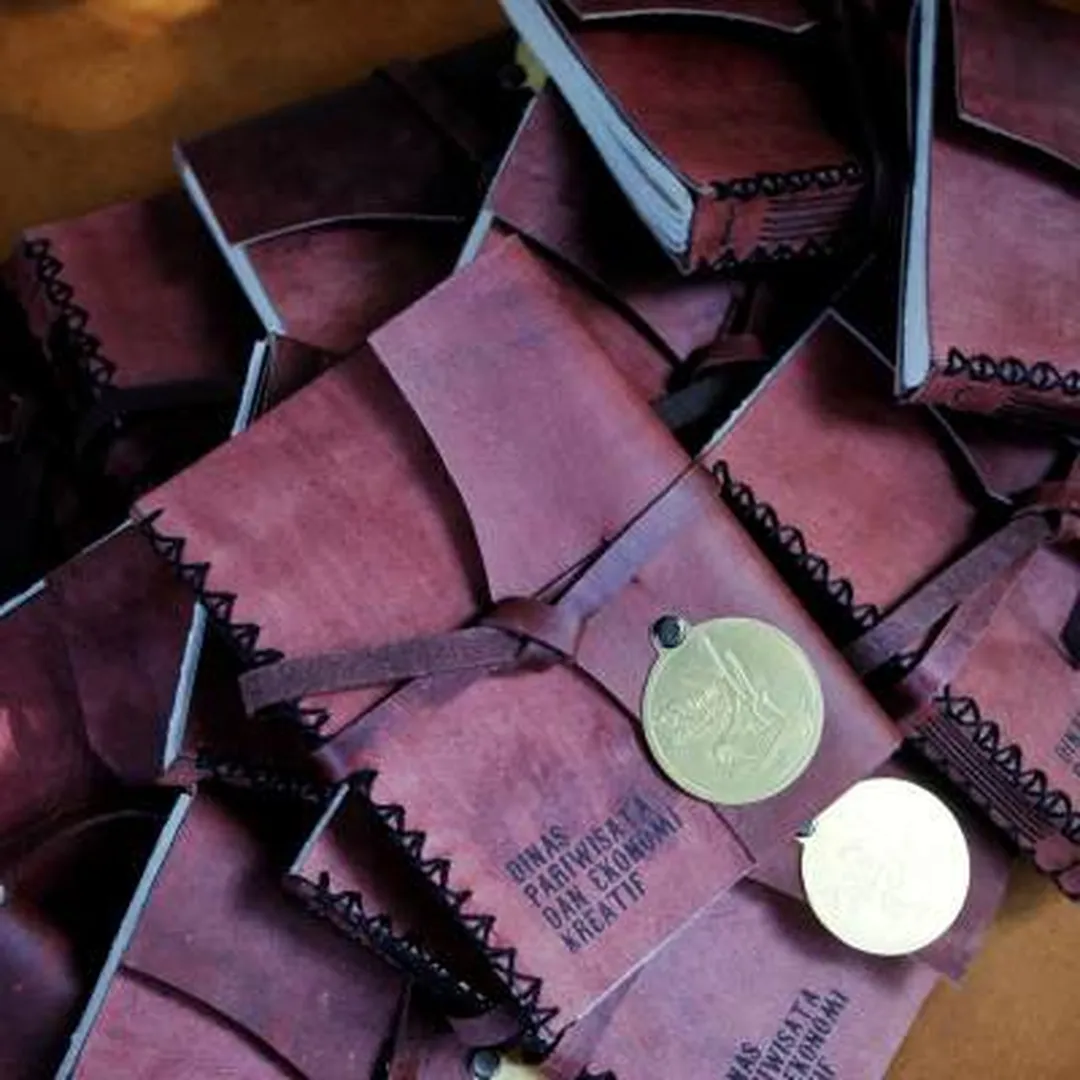
Corporate gifts with a personal touch
Make a lasting impression with a handmade business gift. A custom leather agenda shows that your brand values real quality and craftsmanship.
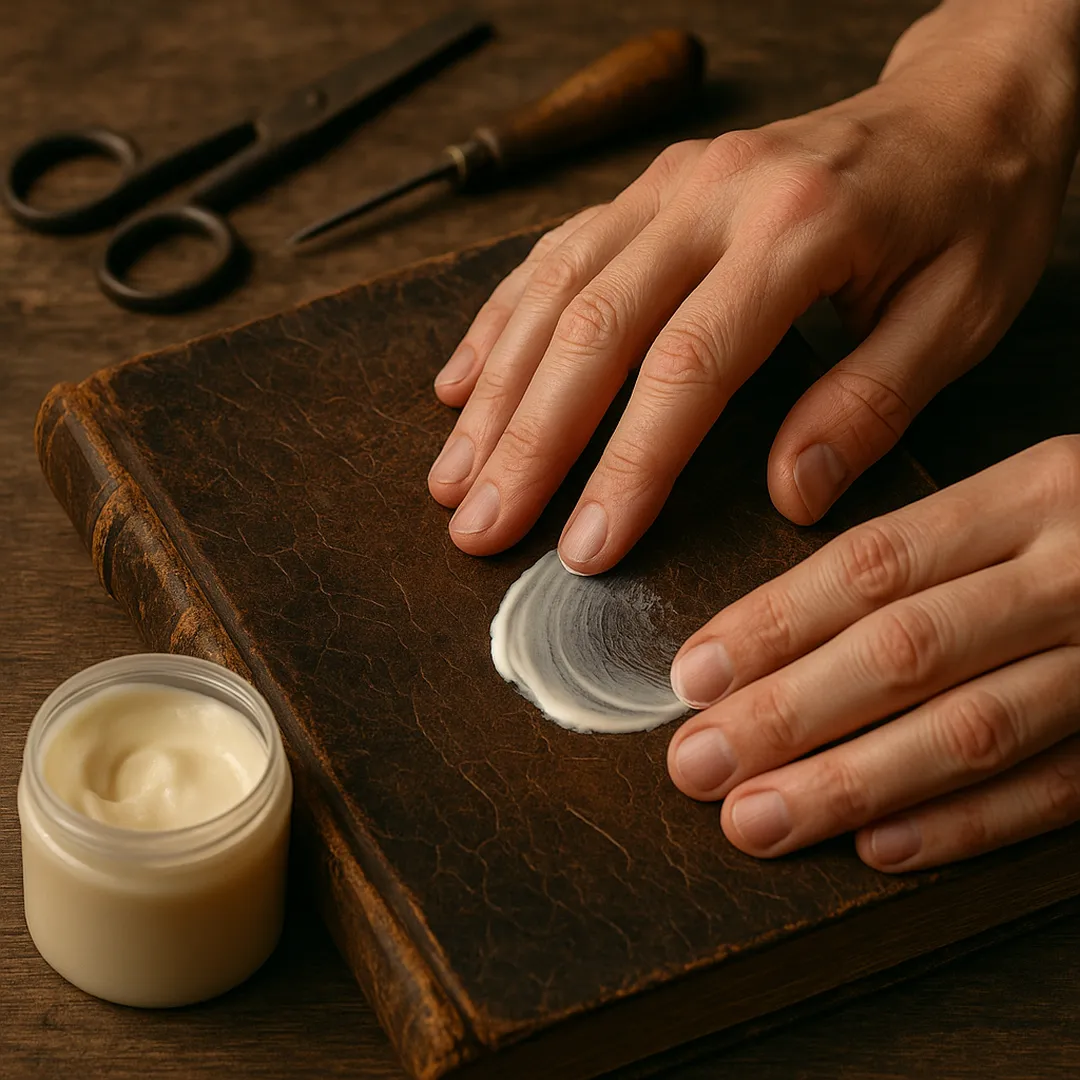
Preserved by expert hands
Our hands do not only make new things, they care for old ones too. Entrust the repair of your valued books to us for preservation.