Engraved Leather Journal
by Hibrkraft · August 2, 2025
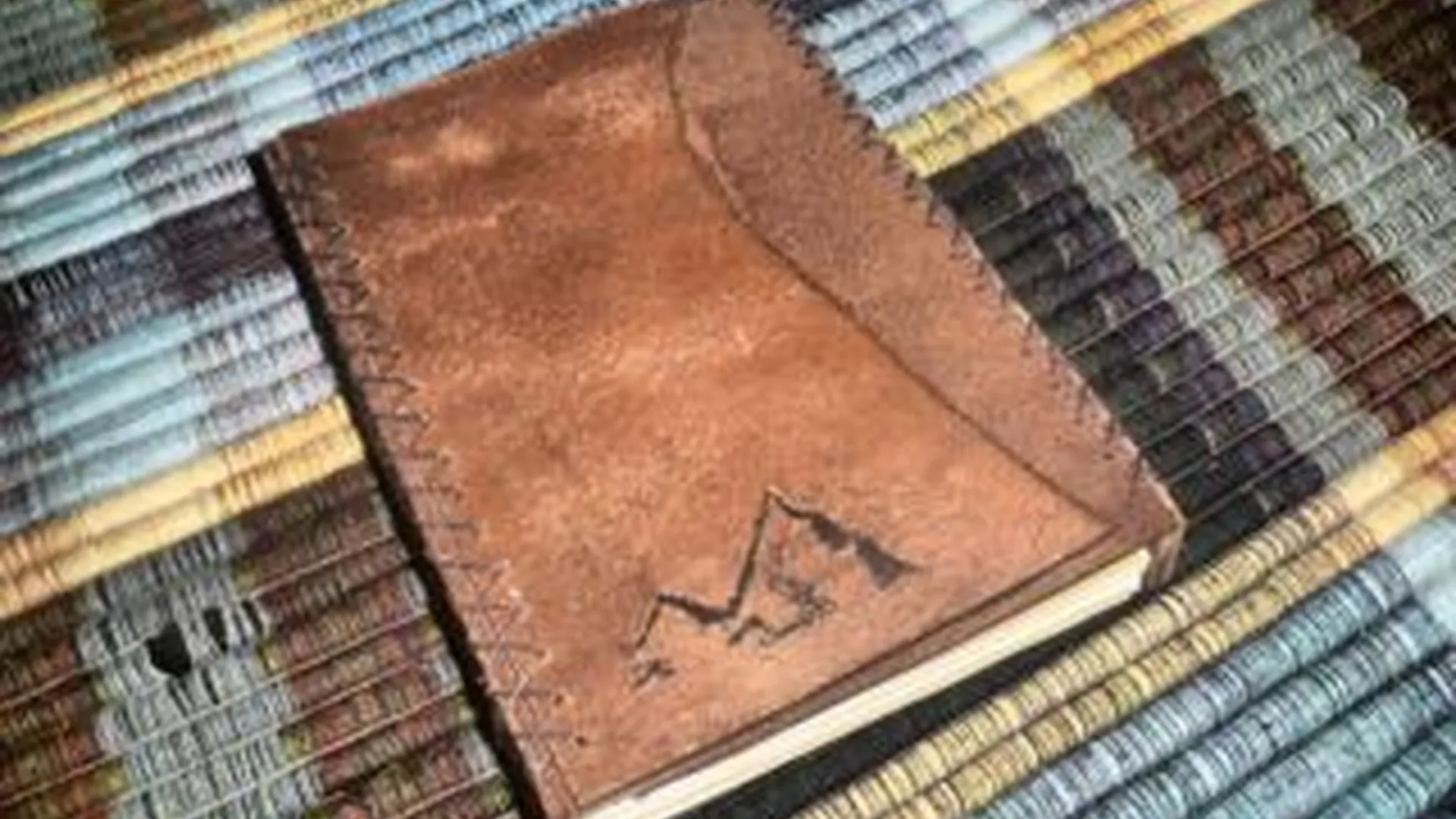
If personalisation is about making an object ours, laser engraving is a way of putting a soul into it. An engraved leather journal goes beyond ownership. It is a lasting canvas for memory, for ideas and for art. Imagine setting the portrait of someone you love, an architectural sketch of a building you dream about, or the handwriting from an old letter, directly into a surface you will touch every day. Laser engraving allows a level of intricacy and detail that no other method of personalisation can reach. That is what makes it special. The detail is no small thing: every line, dot and shadow carries its own story.
The process changes how we relate to a notebook. Before a pen touches the first page, the cover has already spoken. It speaks of identity, of passion, of a relationship. Whether an intricate business logo, a world map for a traveller, or a drawing of a beloved puppy, laser engraving turns a leather journal from a premium product into a personal heirloom. The beauty of the technique lies in the meeting of advanced technology and a warm organic material, creating an object that is modern and yet feels classic and deeply felt.
How leather engraving evolved
Historical roots: marking leather as expression
Decorating leather is among the oldest crafts in human civilisation. Long before lasers, people found ways to carve and mark leather for decoration, for ceremony and for identification. Around the world, traditional leather-carving techniques developed their own styles. In the American West there is the intricate floral carving on saddles and cowboy belts, made with a range of swivel knives and stamping tools. Every curve of a flower and a leaf is cut carefully by a skilled hand.
In Indonesia, and particularly in Java, there is the art of tatah sungging in wayang kulit, the shadow puppet tradition. The medium is different — dried buffalo hide — but the principle is the same: creating detail and character by carving and piercing. Craftsmen use small chisels to create intricate patterns that are not only beautiful but determine the character of the puppet itself. These traditions are the spiritual foundation of what we call carving leather. It is about giving narrative and identity to a simple piece of material.
Precision at the tip of a beam
Towards the end of the twentieth century, laser engraving began to change the landscape of craft industry. What had taken hours or even days by hand could now be reproduced with microscopic precision in minutes. Laser engraving on leather works in a remarkable way. A tightly focused CO2 laser beam, controlled by a computer, travels across the surface of the leather. The heat energy does not burn the leather in the conventional sense; it vaporises the topmost layer of the material.
That vaporisation permanently changes the colour and the texture of the leather where the laser has passed. On most leathers, and particularly on vegetable-tanned leather, the result is a darker, richer, slightly recessed mark. The real magic is in the precision. A computer can direct the beam to create an image at very high resolution, reproducing fine gradations, thin lines and very small text that no hand could manage. The technology opens the door to a level of customisation that simply did not exist before, letting anyone turn a digital image into a lasting physical engraving.
Laser engraving is not simply decoration. It is a process of transferring a digital memory into a permanent physical trace, turning your journal into a personal time capsule.
Why laser engraving suits a leather journal so well
Of all the methods of personalisation, laser engraving has several distinct advantages that make it especially suited to something like a leather journal:
- It can reproduce complex detail. This is its chief advantage. Want a wedding photograph engraved, a portrait sketch, or a map of your favourite city? The laser can do it. Its ability to translate raster images (.jpg, .png) and vectors (.svg, .ai) onto leather makes it ideal for designs that are personal and intricate.
- It is permanent and durable. Unlike printed ink, which sits on the surface and can scratch or fade, an engraving is part of the leather itself. The design will not peel or disappear. It ages with the leather, developing a patina of its own over time and use.
- The contrast is beautiful and natural. Engraving adds no foreign material. It works by changing the leather itself. The result is a contrast that feels organic and belongs to the character of the material. On pale leather the engraving looks dark and decisive; on dark leather the result can be subtler, giving an elegant tone-on-tone effect.
- It is quick and consistent. Once the design is prepared, engraving is relatively fast and can be reproduced perfectly time after time. That makes it ideal for large orders, such as corporate gifts or merchandise, where every item must be of uniform quality.
A practical guide to your engraved journal
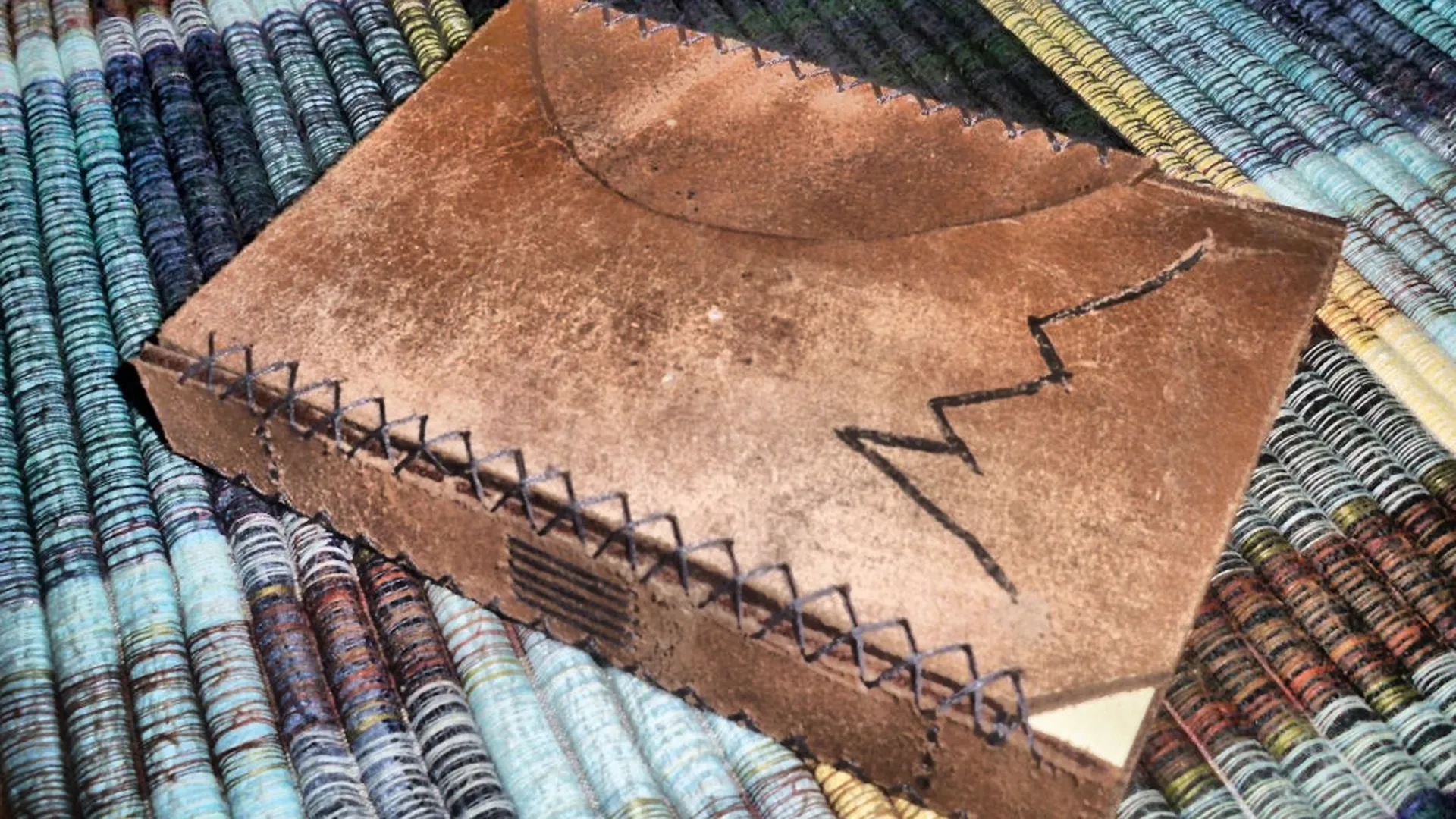
Ordering an engraved leather journal is an enjoyable process. But to get the best result there are a few things to consider, from the choice of leather to the preparation of the design. Understanding them will make sure the idea in your head translates perfectly onto the cover of your journal.
Choosing the right canvas: leather types and what they do
Not all leathers are alike, and how they react to laser heat varies greatly. Choosing the right type is the key to a sharp, handsome engraving.
- The clear winner: vegetable-tanned leather. This is the best choice for laser engraving. Tanned with natural plant tannins, it is denser and more natural. Under the laser it produces a dark, rich, consistent mark. Pale vegetable-tanned leather — natural, tan or light brown — gives the most dramatic and satisfying contrast.
- More difficult: chrome-tanned leather. Most commercial leather is tanned with chromium salts. It is softer and more water-resistant, but engraving it can be trickier. Some chrome leathers do not give good contrast and, more importantly, heating them can release fumes that are not environmentally friendly. Testing is needed to be sure the result is good and the process is safe.
- Best avoided: synthetic leather (PU / faux leather). Do not engrave synthetic leather. The material is essentially plastic — polyurethane — coated onto fabric. Under a laser it melts rather than vaporising, producing an ugly mark and releasing toxic fumes.
At Hibrkraft we select leathers that are not only of premium quality but that also give the best engraving results. We favour vegetable-tanned leather for its natural beauty and its ability to age gracefully, which means your engraving will only gain character over time.
Comparing methods: laser engraving, debossing and printing
To understand the strength of laser engraving, it helps to set it against the other popular methods of customisation:
- Laser engraving against debossing / stamping: debossing presses a design into the leather with a heated metal die, creating a recessed effect. It is excellent for bold text, simple logos and monograms. Laser engraving instead removes surface material to create an image. Debossing is about depth and shadow; laser engraving is about fine detail and contrast in colour. You cannot get a photorealistic image by debossing, but you can with a laser.
- Laser engraving against UV printing: UV printing adds a layer of ink on top of the leather and can reproduce a colour image. Its advantage is colour. But because the ink sits on top, it is vulnerable to scratching and peeling over time. Laser engraving is monochromatic — one colour, the colour of the burn — but the result is permanent and part of the leather. Choose UV printing if colour is the priority; choose laser engraving if permanence and fine detail matter more.
Tips for a perfect engraving design
To get the best result, prepare your design file properly.
- Resolution is the key. For photographic (raster) images, use the highest resolution you can — 300 DPI at minimum. A blurred image produces a blurred engraving.
- Black and white is better. Although a laser can interpret grey gradations, a high-contrast design — deep black and clean white — usually gives the sharpest and clearest result.
- Vectors for graphics. For logos, text and line illustration, a vector file (.svg, .ai, .eps) is best. It can be scaled to any size without losing quality.
- Avoid detail that is too small. Precise though a laser is, lines thinner than a hair, or very small text, may be hard to read against the texture of leather.
When you order a custom engraved journal from Hibrkraft, our team will help you review your design and advise on how to make sure the finished result meets your expectations — or exceeds them.
FAQ
What is the difference between laser engraving and debossing (stamping)?
The main difference is in the process and the result. Laser engraving uses a heat beam to remove or burn the leather surface, creating a design with fine detail and a contrast in colour, usually darker. Debossing uses pressure and heat with a metal die to press a design into the leather, creating an elegant recessed effect. Laser engraving excels at complex images and photographs, while debossing is very good for logos and bold text.
What kind of images can be engraved on a leather journal?
Almost any image. You can engrave photographs (portraits, landscapes), hand sketches, a company logo, handwriting, maps, a favourite quotation, or intricate patterns such as a mandala. For the best result, use a high-resolution image with good contrast between light and dark areas.
Can a laser engraving disappear or fade?
No. A laser engraving is essentially permanent. Because the process removes a small part of the leather surface, the design becomes an integral part of the material. It will not peel like a sticker or fade like ink. Over time it will age with the leather, perhaps softening slightly in colour, but the design will remain for good.
Can every kind of leather be laser engraved?
Not every leather gives an equally good result. The best leather for laser engraving is vegetable-tanned, particularly in a pale colour, because it produces a sharp, dark contrast. Some chrome-tanned leathers can be engraved, but results vary. Synthetic (PU) leather is strongly discouraged: it melts and releases harmful fumes.
References
- Instructables. “An Introduction to Laser Cutting and Engraving.” (the original link is dead; the reference is kept without it)
- Trotec Laser. “Engraving and Cutting Leather with a Laser.”
- Maker's Leather Supply. “Choosing the Right Leather for Laser Engraving.” (the original link is dead; the reference is kept without it)
- Tandy Leather. “A Guide to Leather Carving.” (the original link is dead; the reference is kept without it)
- Wikipedia. “Laser engraving.”

Custom Engraved Journal
Etch your favorite photo, quote, or artwork onto a leather journal. A deeply personal gift that lasts a lifetime.
Business & Whitelabel
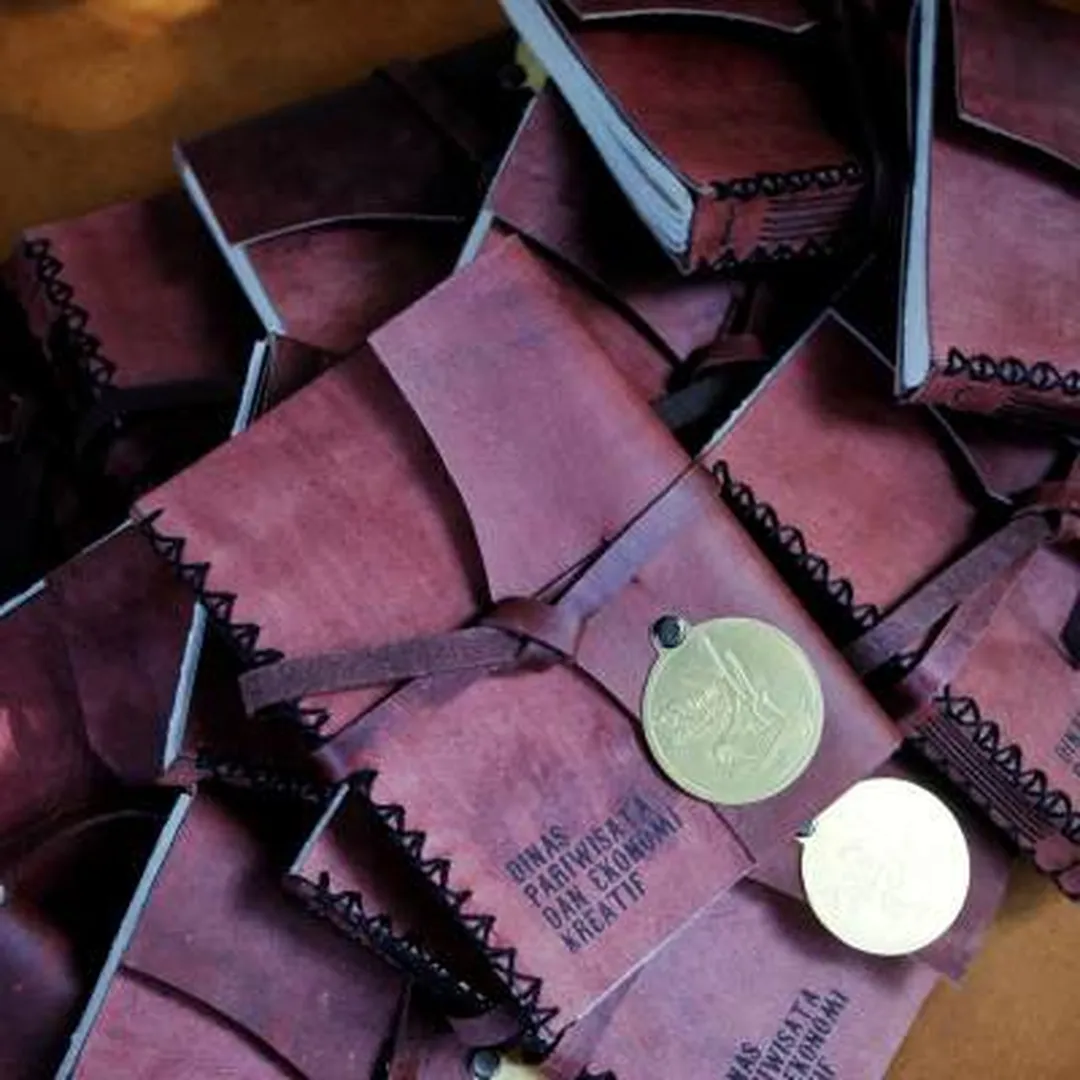
Impress clients and employees with notebooks featuring your company's logo engraved with perfect precision.
Book Repair & Conservation
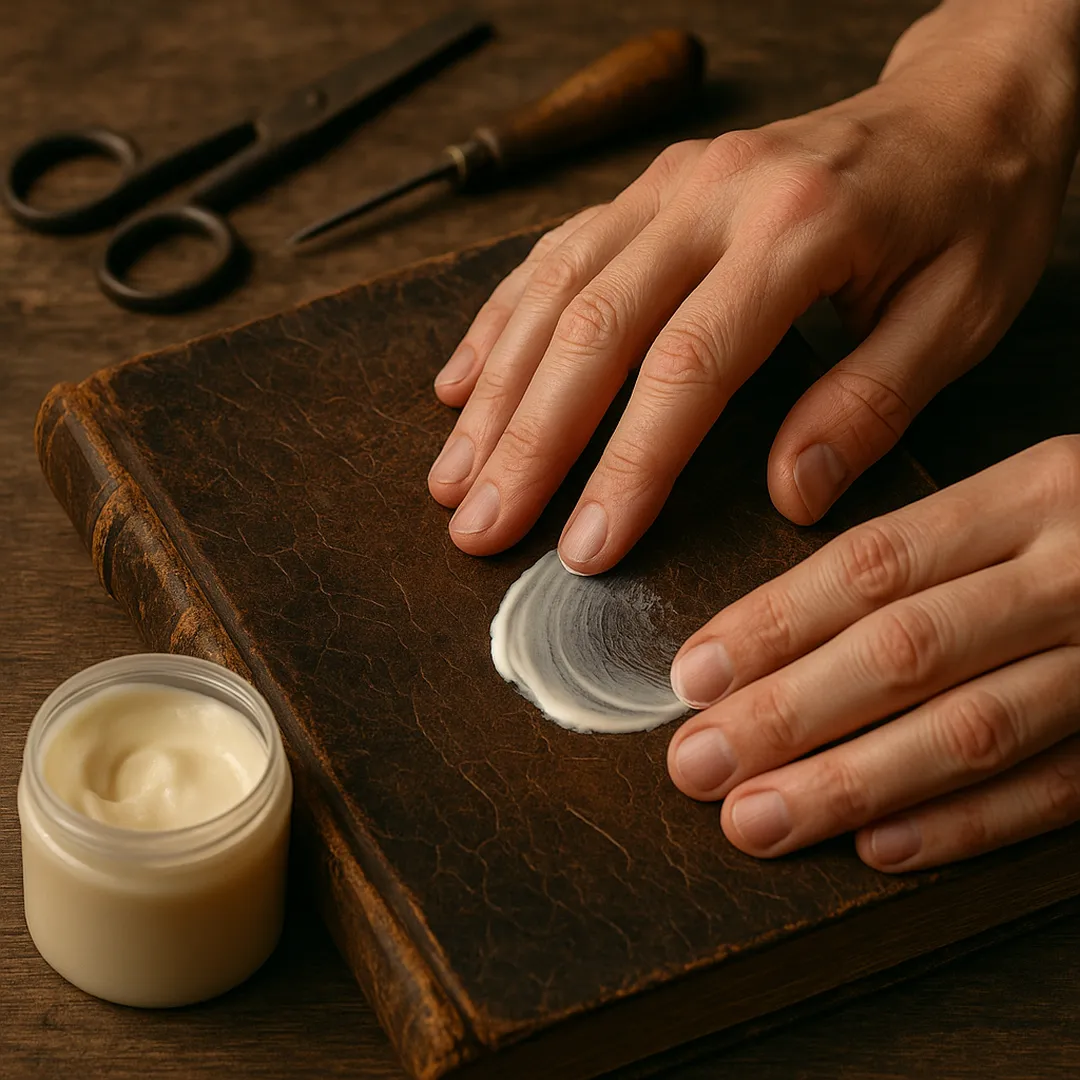
Preserve the legacy of old books, whether they feature traditional tooling or modern engravings.