
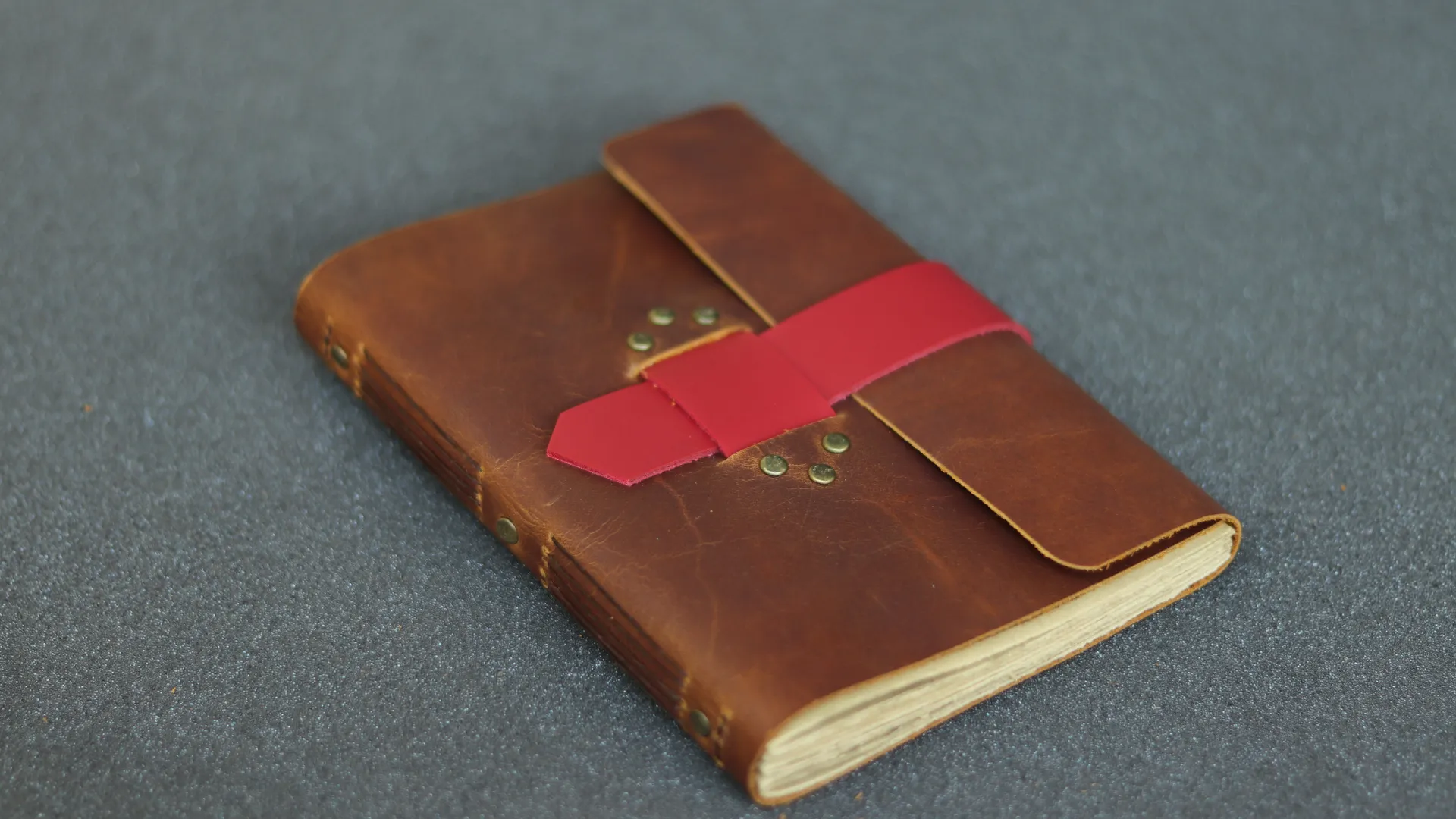
Leather Strap Closure
by Hibrkraft · August 1, 2025
In design, it is often the smallest details that make the greatest difference. A leather strap is a perfect example. This apparently simple feature has a remarkable ability to turn an ordinary notebook into an artefact that feels luxurious and personal. It is a focal point, an interactive element you touch every time you open and close your journal. Unlike an elastic closure, which is purely functional, or a magnet, which is invisible, a leather strap is a deliberate design statement. It communicates durability, tradition, and a respect for careful work.
Choosing a journal with a leather strap is choosing a more tactile and more considered experience. There is a quiet satisfaction in securing the strap around a brass stud, or slipping it through a snug leather loop. Small though it is, the act works as a ritual. It marks the end of a writing session or the beginning of a moment of reflection. It is a physical way of saying, “My thoughts are safe now.” For the craftsmen at Hibrkraft, adding a leather strap is not only about adding function but about putting character and a lasting elegance into every piece we make.
Function beyond function: the psychology and aesthetics of the strap
A leather strap may be designed for one practical purpose: keeping a book closed. But its influence reaches well beyond that basic function. It touches on history, on psychology, and on fundamental design principles that together lift the standing of an object.
An echo of history in a strap
Leather straps and belts have been used to fasten things for thousands of years. From securing a saddlebag to closing a courier's mailbag, a leather strap is bound up with security, with travel, and with things of value. Applied to a book, it brings that inheritance with it. A journal with a leather strap feels, without our quite noticing, more important — as though it holds more than ordinary notes: plans, secrets, or ideas worth protecting in a way that has been proven by time.
In the Middle Ages some books even had elaborate closures, sometimes with locks, to protect contents of great value. Simple though a modern strap is by comparison, it still keeps the essence of that idea: security and privacy. It creates a more intimate relationship between owner and journal, making it a genuinely private space that closes.
A deliberate design statement
Visually, a leather strap is a strong element. It creates a horizontal or vertical line that breaks up a broad cover surface, adding interest and balance to the composition. It can work as contrast — a darker strap on a lighter cover, or the reverse — or as a harmonious element that merges with the cover colour.
More than that, it adds a layer of texture and depth. Eye and hand are drawn to the interplay between the leather of the strap, the leather of the cover, and the metal hardware where there is any. Small details such as the stitching on the strap, the burnished edges, or the shape of the stud that holds it all contribute to the character of the book. That is what separates hand craft from a mass-produced object: careful attention to every functional detail as an opportunity for artistic expression.
A simple leather strap does more than close a book; it frames the contents, promises security, and signals the importance of what is kept inside.
The psychology of the act: fastening with attention
How we interact with an object shapes how we perceive it. An elastic closure is quick and efficient. A magnetic closure happens automatically. But a leather strap demands a deliberate act. You have to slip, fasten or tie it. That micro-process, which takes only a second or two, forces a pause. The pause reinforces the value of the act. You are not only closing the book; you are securing it. The physical act sends a signal to the brain that what is inside matters and is worth protecting. It builds a respect for the journal and, more importantly, for our own thoughts and ideas written in it.
Anatomy and variations: the strap closure mechanism
Simple though the concept is, there are many variations in strap closure design. Each offers a slightly different aesthetic, level of security and user experience. Understanding them can help you choose the style that best suits your needs and your taste.
The common types
Here are the most popular implementations of the feature:
- Sam Browne stud closure: one of the most common and most elegant styles. A leather strap with a small hole or slot at the end wraps around a metal stud, usually brass, fitted to the front cover. The mechanism is secure, easy to use one-handed, and has a clean classic look.
- Loop closure: here a wider strap is slipped through a leather loop or “keeper” fitted to the front cover. It is a very minimal and secure design, because friction between the two leather surfaces holds the strap in place. There is no metal hardware at all, giving an entirely organic appearance.
- Buckle closure: like a miniature belt, this style uses a metal buckle to secure the strap. It is the most secure option and offers a high degree of adjustment. The look tends to be more formal and more solid, and is often found on portfolios and high-end business diaries.
- Wrap closure: a category of its own, in which the strap is very long and designed to wind several times around the journal. It is a kind of leather strap closure, but its aesthetic leans rustic, adventurous and ritualistic. It is more about the experience of wrapping than simply about securing.
Compared with other closures
To appreciate a leather strap, it helps to set it against the alternatives:
- vs. an elastic band: elastic is very practical and cheap, but it is often the first sign of wear on a journal. It stretches and loses its strength over time. Aesthetically it feels less premium and more casual than leather.
- vs. a magnetic catch: a magnet offers quick, silent convenience. But its strength is limited and it may open if the journal is overfull. It also gives none of the tactile satisfaction or the visual charm of a leather strap.
- vs. no closure at all: a journal without a closure has a very minimal look, but offers no protection for the page edges and cannot hold loose papers or notes you may tuck inside.
The craft behind the simplicity
Making an effective leather strap closure takes skill. The craftsman has to choose the right leather: strong enough to take repeated pulling but supple enough to handle easily. The strap has to be cut precisely. Its edges are usually smoothed and sealed — burnished — to stop them fraying and to give a professional finish. Fixing the strap and the hardware to the cover has to be done very securely, often with a rivet or reinforced hand stitching, to be sure it will not come away after hundreds of uses.
The Hibrkraft view: the detail that defines quality
For us at Hibrkraft, the leather strap closure is a favourite feature to offer. It embodies our philosophy: a perfect meeting of form and function, in which even the most practical element is executed with beauty and skill. We believe that how a book feels in the hand, and how you interact with it every day, matters as much as how it looks. A leather strap is a small detail that consistently delivers satisfaction, security, and a quiet note of elegance. It is a subtle way of saying that this object was made with thought and attention, designed not only to be used but to be valued.
FAQ
What are the main types of leather strap closure?
The most common are: 1) the Sam Browne stud, where the strap hooks over a metal stud; 2) the loop closure, where the strap slips through a leather loop; 3) the buckle closure, which works like a miniature belt; and 4) the wrap closure, which uses a very long strap wound several times around.
Is a leather strap better than an elastic closure?
“Better” depends on preference, but a leather strap is generally considered superior for durability and appearance. Leather lasts far longer than elastic, which stretches over time. Visually, a leather strap gives a more premium, professional and classical look than the more casual elastic band.
How do I care for a leather strap so it does not wear out quickly?
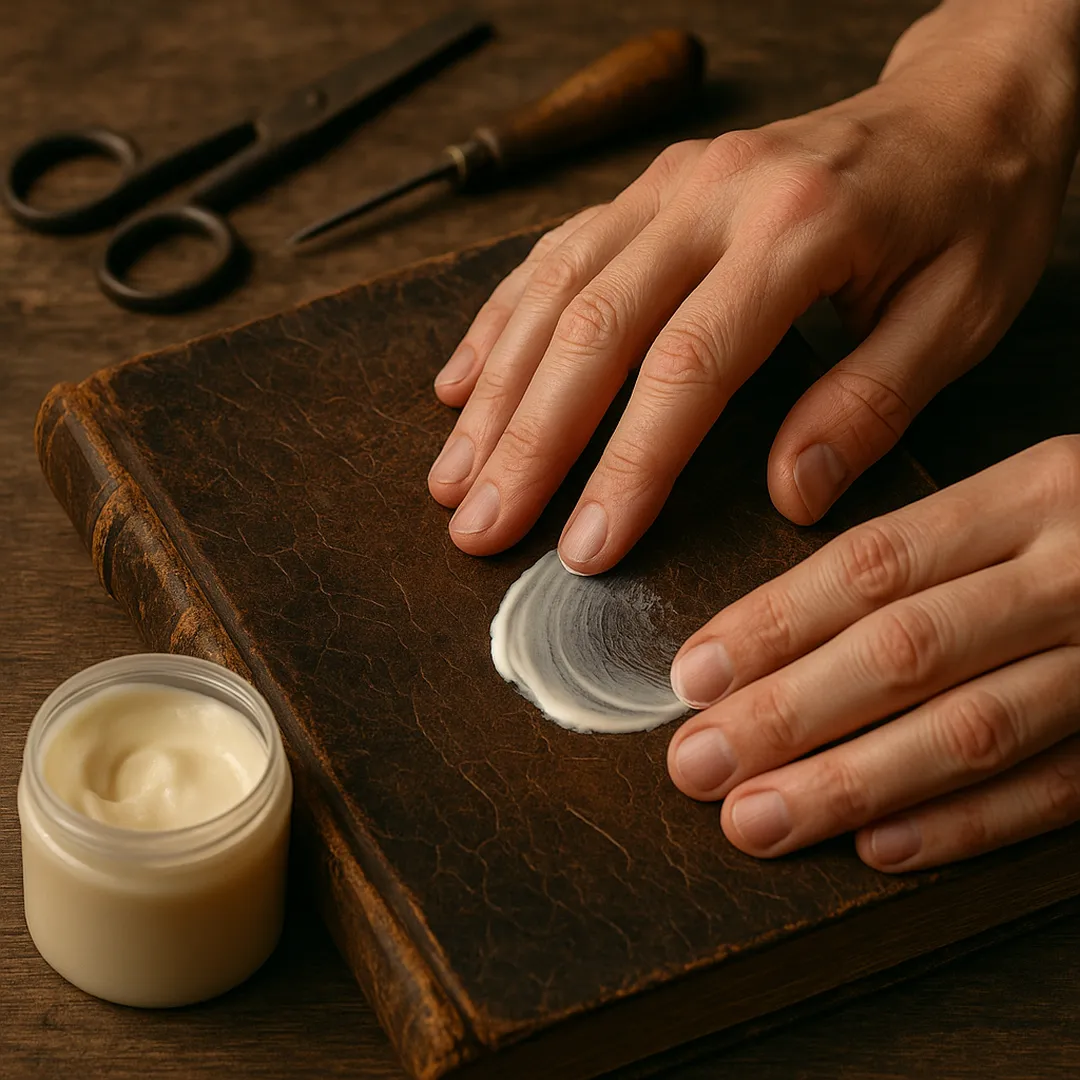
Care is simple. Avoid pulling or bending it excessively. Keep it dry and out of prolonged direct sunlight. If it feels a little stiff over time, you can work in a small amount of leather conditioner with a finger or a cloth to keep it supple.
Can a leather strap accommodate a book that grows thicker?
It depends on the design. Buckle and wrap styles are very good at accommodating extra thickness, because they adjust. Stud and loop styles have less tolerance, although a good craftsman usually designs in a little slack to allow for a fully loaded book.
References
- Fine Leatherworking – All About Leather Straps (the original link is dead; the reference is kept without it)
- YouTube – Making a Leather Journal with a “Sam Browne” Stud Closure (Video Tutorial)
- Gold Bark Leather – Burnishing Leather Edges (the original link is dead; the reference is kept without it)
- Wikipedia – Sam Browne belt (for historical context of the stud)

Finish it with the detail
Add an elegant leather strap to your custom journal. Choose a stud, a buckle or a loop for a final touch that is both functional and refined.
Professionalism in every detail
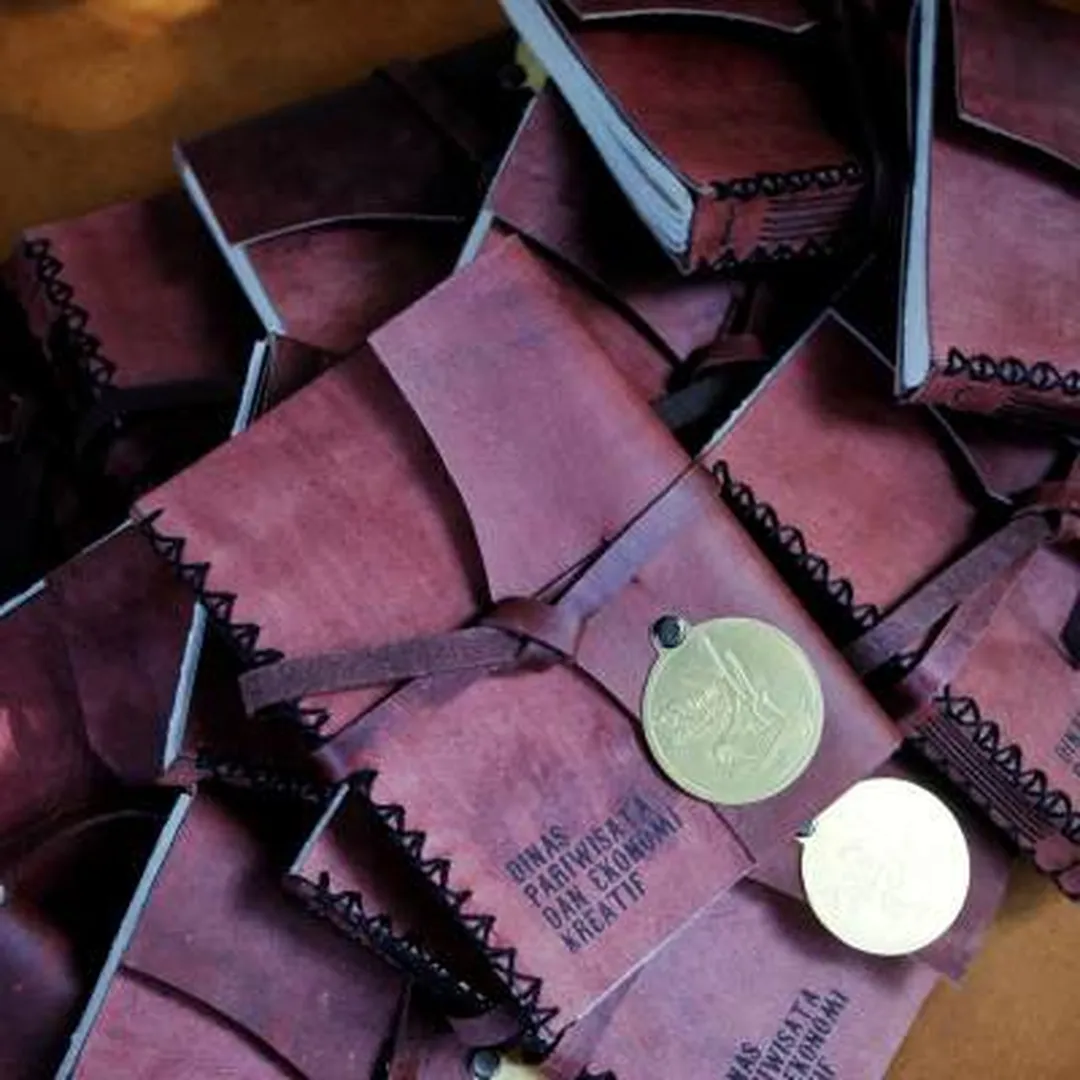
Lift your corporate gifts with a strap-closed diary. A small detail that communicates quality, security and careful attention.
Repair a broken closure
Has the strap on a book or diary you value broken or come away? We can repair or replace it, restoring both its function and its looks.