
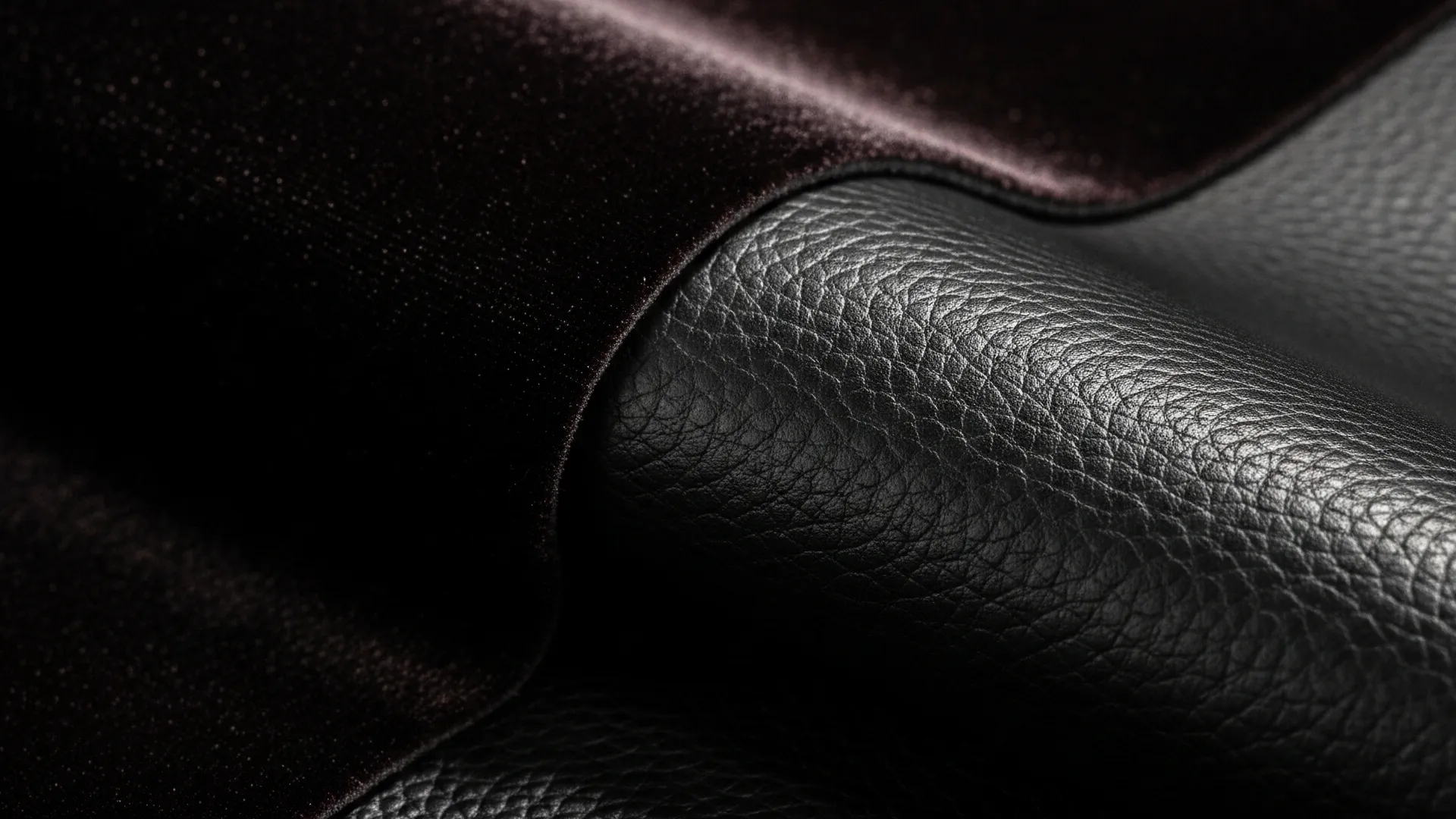
Velvet
by Ibrahim Anwar · July 26, 2025
Velvet, a luxurious cloth characterised by a short, dense pile, played an important part in bookmaking, above all in the Tudor period, though its use extended into the eras that followed. Its rich texture and lustrous appearance made it a sought-after material for decorative elements such as covers and headbands, often used alongside other materials such as leather or paper. Examples include the bindings of illuminated manuscripts and important historical texts, where the luxury of velvet served to mark out the value of the book and the standing of its owner. The use of velvet was not uniform; its cost and its availability shaped how it was applied, with simpler bindings using velvet sparingly or only in certain areas, such as the spine or the corners. Variation in the density and the colour of the pile contributed further to the aesthetic range of velvet bindings, reflecting the artistic expression of the craft and the evolving taste of the period.

In the world of bookbinding, rich in history and in aesthetics, velvet holds a place of its own as a material laden with luxury and prestige. Known for its distinctive texture — a short, dense, soft pile standing upright — velvet gives a lustrous appearance and a luxurious feel. The use of velvet in bookbinding has deep historical roots, seen above all in particular periods such as the Tudor era in England, though its influence carried on into the centuries that followed, becoming a symbol of status and of beauty in a book cover.
The distinctive characteristics of velvet — a lustre that catches the light, and the depth of its colour — make it an ideal choice for a book cover meant to mark out the importance or the grandeur of what it holds. Velvet is often blended with other materials such as high-quality leather, brocade, or even patterned paper, to create an appealing contrast of texture and of appearance. Not infrequently, a binding that uses velvet is enriched with further ornament such as metal clasps, buckles, or edge ornament made of precious metal, strengthening still further its air of luxury and exclusivity.
In illuminated manuscripts (manuscripts enriched with coloured illustration and ornament), velvet became a common choice of cover, above all for religious texts or other important works presented to the nobility or to the church. The luxury of velvet served not only as a decorative element but also as a marker of the social standing and the wealth of its owner. Precious books of this kind were often kept with care, guarded so that the beauty of the velvet would last.
It is worth noting, however, that the use of velvet in bookbinding was never even. The cost of producing velvet, relatively high beside other materials such as leather or ordinary cloth, together with its availability, shaped how it was applied. We therefore find velvet used to varying degrees. Some bindings may be covered entirely in velvet, while others use it only sparingly — on the spine, say, or at the cover’s corner protectors — as an attractive accent.
Variation in the making of the velvet itself also shapes the result. Pile density, pile height, the kind of fibre used (silk, cotton, synthetic) and the dyeing technique all contribute to the aesthetic range of velvet-covered books. Each of these variations reflects the artistic skill of the makers and a taste that kept developing from age to age. Velvet is not merely a covering for the boards; it is an artistic statement that adds another dimension to the art of bookbinding.
Etymology and Meaning
The term “velvet” comes from the Old French “velours“, which most likely has its root in the Latin “vellus”, meaning “sheep’s wool” or “fine hair”. That meaning suits the character of velvet cloth well, with its surface of fine, soft pile. In bookbinding, velvet is used to create a luxurious, textured appearance, adding aesthetic value to a book cover.
Historical Background
Velvet has been used in bookbinding for centuries. Records show that velvet was used for book covers as early as the fourteenth century, though its popularity rose sharply in the fifteenth and sixteenth, above all under Tudor rule in England. Books made in this period were often presented to the royal family, to the nobility, or to important religious institutions, so luxurious materials such as velvet were frequently chosen to reflect status and prestige.
The making of velvet has itself developed over time. Velvet is thought to have originated in the Middle East and to have spread to Europe along the trade routes. Its quality and its price varied widely depending on the base material (silk being the most luxurious of all), the intricacy of the weave, and the dyeing technique. Velvet-covered books from that era were often copies of the Bible, prayer books, or other important works of literature.
During the Renaissance, velvet became extremely popular among the elite. This is reflected in fashion, in interior decoration and, of course, in the art of bookbinding. Velvet-covered books were often dressed with additions such as silk ribbon, embroidery in gold or silver thread, and intricate metal fastenings. This was not only about protecting the contents of the book, but also about making the book itself a precious object of art.
Cultural Significance and Craftsmanship
In bookbinding culture, the use of velvet shows an appreciation of the beauty of the material and of handwork. Velvet is not merely a covering material; it is an element that actively contributes to the aesthetics and the value of a book. Choosing velvet often signals that the book carries a special importance, whether private or public.
Skill in working velvet for a book cover matters just as much. Velvet is a somewhat difficult material to handle. It creases easily, it is prone to scratching, and it needs particular technique to be cut, sewn and glued if it is to stay neat and luxurious. A binder skilled in velvet can create a cover that is smooth, free of wrinkles and precise in its detail, showing a command of many materials and techniques.
Material Origins and Evolution
Historically, high-quality velvet was often made from silk fibre, which made it very fine, lustrous and expensive. As textile technology developed, velvet also began to be produced using other fibres such as cotton, linen, rayon, and synthetics such as polyester or nylon. These fibres made velvet cheaper and easier to obtain, though its quality and appearance may differ from true silk velvet.
In bookbinding, this evolution of the material also shapes how velvet is used. True silk velvet remains the first choice for antique book restoration or for making replicas of historic bindings. Velvet in other fibres, meanwhile, is used more often on contemporary books that want a touch of luxury without a very expensive material. Choosing the right velvet depends very much on the purpose of the book, the budget, and the intended aesthetic.
Technique and Craft Skill
Covering a book in velvet takes great precision. First the velvet is cut to the size required, allowing for the turn-ins and the detail of the folds at the corners. The velvet is then usually glued to the boards with a bookbinding adhesive. The gluing technique has to keep the surface of the velvet smooth, with no air bubbles and no wrinkles. The corners of the cover are often the hardest part, calling for precise cutting and a neat fold to create a seamless appearance.
In some cases velvet may be used only as an accent — covering the spine, say, or as a panel in the middle of the board. Here the binder must make sure the join between the velvet and the other covering material (leather or paper, for instance) looks neat and harmonious. A headband made of velvet or silk is another common finishing touch on a luxury binding.
Variations and Related Terms
There are various kinds of velvet that can be used in bookbinding, each with characteristics of its own:
- Silk Velvet: the most luxurious, the finest and the most lustrous.
- Cotton Velvet: cheaper, heavier, and with a slightly duller lustre.
- Rayon Velvet: imitates the look of silk velvet but is more durable and less expensive.
- Synthetic Velvet: made from polyester or nylon, the cheapest and hard-wearing, though it may breathe less well.
- Panne Velvet: velvet whose pile is pressed in one direction, giving a very high lustre.
- Crushed Velvet: velvet that looks “pressed” or artistically crumpled, giving a distinctive texture.
- Devoré Velvet (Burnout Velvet): part of the pattern is removed chemically, creating a transparent effect in the design.
Related terms in bookbinding include the velvet binding, the velvet cover, and the velvet headband.
Symbolism and Personal Meaning
The use of velvet on a book cover is often laden with symbolism. It stands for luxury, wealth, spirituality (above all on religious books) and authority. For a private owner, choosing a velvet cover can be an expression of appreciation for the art of binding, or a way of marking the books that carry a high sentimental or intellectual value.
In some traditions the colour of the velvet carries a symbolic meaning too. Deep red may stand for strength or passion, deep blue for wisdom or peace, and green for growth or hope. Choosing a particular colour of velvet can add a layer of personal meaning to a book.
Common Misconceptions
One common misconception is that velvet is always very expensive and only used on the most luxurious books. Silk velvet is indeed expensive, but velvet in other fibres puts it within reach of a far wider range of people. Another is that velvet does not last. With the right care velvet can last a very long time, although it is admittedly more vulnerable to physical damage than leather.
Why This Matters Today
In the digital age, appreciation for beautiful physical things made by hand keeps growing. Velvet, with its distinctive texture and lustre, offers a tactile and visual experience that digital media cannot imitate. In custom bookbinding, velvet continues to be used to create books that stand out — as a gift, as a collector’s volume, or as a luxurious personal journal.
The use of velvet also sits with the quiet luxury trend, or with a deep appreciation of quality and skill. A velvet-bound book becomes a statement about regard for detail, for the beauty of the material, and for the value of handcraft.
How It Is Used in Bookbinding
Velvet is usually used as the main covering material for the boards. The cloth is cut larger than the board, then turned in and glued down on the inside of the cover. At the corners the velvet is cut and folded with precision to create a clean appearance. Velvet can also be used to make a headband, set at the head and the tail of the spine to give a neater and more attractive finish and to protect the edge of the book.
A Real Example from Hibrkraft
At Hibrkraft we have a deep appreciation for the beauty of the many materials in the art of bookbinding. Our main focus is high-quality leather for custom journals and agendas, but we are always open to exploring other materials that can add to the uniqueness and the luxury of our work — velvet among them, where a customer asks for it on a more unusual custom order. We believe every material has the potential to create something remarkable, and velvet is plainly one of the most striking of all, visually and to the touch.
When to Choose It (and Why)
Velvet is the right choice when you want to create a book that truly stands out and feels luxurious. It suits:
- A memory book or a special photo album.
- A personal journal you want to make special.
- A gift for an important moment, such as a wedding anniversary or a graduation.
- Collector’s volumes or limited editions.
- A book intended for a ceremony or a formal occasion.
The reason is that velvet gives an unmatched visual and tactile touch, conveying at once an impression of luxury and of care in the making.
Visual Characteristics
A velvet-bound book is easy to recognise by the texture of its short pile, dense and soft. The surface has a distinctive lustre that shifts with the direction of the light. Its colours tend to be deeper and richer than ordinary cloth. To the touch, velvet feels very smooth and luxurious. The corners of the cover usually show a neat fold of the cloth, and where a headband is fitted it adds an elegant finishing touch.
How to Identify It
To identify a velvet-bound book, look at the texture of the surface. Touch the cloth; if it feels very smooth with a short, dense pile, it is most likely velvet. Look at the lustre as well; velvet catches the light in a way of its own. Compare it with other kinds of cloth; velvet is plainly different from cotton, linen or even leather.
Best Practice in Application
When covering boards in velvet, use an adhesive suited to cloth and paper. Avoid using too much glue, which can soak through and stain the velvet. Cut the corners carefully with a sharp knife or a pair of fabric shears to get a neat fold. If you are using velvet for a headband, sew it firmly to the spine. Care for a velvet cover by storing it somewhere dry and free of dust, and keep it out of the direct sunlight that will fade its colour.
Tools and Materials Involved
To make a velvet cover you will need:
- Velvet cloth (choose the kind that suits the job).
- Bookboard of a suitable thickness.
- A high-quality bookbinding adhesive (a water-based glue such as PVA, for instance).
- A sharp knife or fabric shears for cutting the velvet.
- A ruler and measuring tools.
- A brush or a roller for applying the glue.
- A headband, if wanted.
- The book or paper to be bound.
DIY Tips and Cautions
If you are trying a velvet cover yourself, start with a small project to practise cutting and gluing the corners. Make sure you are working in a clean, dust-free area. Take care with a sharp knife. Avoid touching the surface of the velvet with oily or dirty hands. If you are using true silk velvet, take extra care: the material is finer and more expensive.
Comparison with Similar Concepts
Velvet is often compared with other luxurious materials such as silk, satin or even leather. The main difference lies in the texture of the surface; velvet has a pile you can feel, while silk and satin are smoother and slicker. Leather gives a different impression, stronger and more durable in some respects, but velvet offers a lustre and a softness of its own. Each material gives a book a different aesthetic and a different mood.
Influence in Other Fields
The use of velvet is not confined to bookbinding. The cloth is also popular in fashion (dresses, jackets, shoes), in interior decoration (curtains, furniture upholstery, cushions) and in theatre (staging, costume). The influence of velvet as a symbol of luxury and elegance is visible across all of these, reflecting its universal appeal.
The Expert Perspective
Professional binders often hold the use of velvet in high regard. They acknowledge how difficult it is to work, but they also admire the finish that can be reached with it. In their view velvet is the right choice when the aim is to create a book that is genuinely luxurious and unforgettable — a work of art whose beauty can be touched and felt.
Frequently Asked Questions (FAQ)
Q: Is velvet easily damaged?
A: Velvet can be prone to creasing, scratching and fading if it is not looked after. With the right care, though, it lasts a long time.
Q: Is all velvet the same?
A: No. There are many different kinds of velvet depending on the fibre, the density of the pile and the method of making, each producing a different look and feel.
Q: Can velvet be cleaned?
A: Yes, but it usually calls for professional cleaning or a method meant for delicate cloth. Dry cleaning is often recommended.
How Hibrkraft Sees It
At Hibrkraft we see velvet as a remarkable material for giving a book a touch of luxury and uniqueness. We value the range of materials that the art of bookbinding can draw on, and we recognise the potential of velvet to create something genuinely special. Where there is a specific request for a velvet cover, we are ready to explore the options available to meet our customers’ wish for beauty and uniqueness.
How to Request This in a Custom Order
If you would like a book or journal from Hibrkraft with a velvet cover, you can say so when you place a custom order. Our team will gladly discuss the choice of colour, the kinds of velvet available, and an estimate of the cost and the working time needed to bring the velvet cover you have in mind into being.
Preservation and Care
To keep the velvet cover of your book beautiful, store the book somewhere dry and cool, out of the direct sunlight that causes colour to fade. Avoid stacking too many books on top of it, which will crease or crush the pile. If the cover looks dusty, clean it with a very soft brush or a vacuum on its very lowest setting. For a stain, it is best to consult a professional book cleaner or a specialist in delicate materials.
The Story Behind the Term
The term “velvet” itself carries connotations of luxury and fineness that have clung to it for centuries, out of its own luxurious origins in textile production. In the world of books, using velvet as a covering signals an intention to create something more than a container for information; it is an object of art, a marker of status and, often, a thing guarded with real affection.
What It Says About You
Choosing velvet for your book cover, whether for a personal journal or for a book given as a gift, can reflect a refined taste, an appreciation of the beauty of materials, and a wish to own something special. It suggests that you value aesthetics and may lean towards a classic or a luxurious style.
Modern Trends and Interpretations
In the modern era velvet is used in bookbinding in a variety of ways. Beyond the traditional applications, designers may combine velvet with modern elements such as foil printing, laser cutting, or a pairing with other contrasting materials. Current trends also show a rising interest in books that offer a rich tactile experience, and velvet has an important part to play in that.
Customer Reflections and Testimonials
Customers who choose a velvet-bound book often speak of their satisfaction with the uniqueness and the luxury it offers. A testimonial may describe how special a velvet cover feels to the touch, how the rich colour gives a stunning visual depth, and how the book becomes the centre of attention among the rest of a collection.
Connections with Indonesian Craft Tradition
Velvet may not traditionally be a principal material in Indonesian bookbinding in the way batik or weaving are, but the cloth has its place in many aspects of Indonesian culture, above all in traditional dress, in bridal costume and in the performing arts. Its presence in those contexts shows an understanding and an appreciation of its luxury and the beauty of its texture, and that can carry over into the art of bookbinding as an enriching artistic touch.
The Glossary Term in Popular Culture and Literature
In historical novels and fantasy stories, precious books or magical artefacts are often described with richly coloured velvet covers, sometimes with carving or gemstones. The image strengthens the association of velvet with something important, rare and of great value, both material and symbolic.
SEO and Market Use
To improve visibility online, relevant search terms include “velvet book cover”, “custom velvet journal”, “luxury bookbinding”, “velvet handcraft” or “premium book gift”. The market for velvet-bound books usually sits in the custom book, art and luxury goods segments, whether through specialist bookshops, art galleries, or online platforms serving the handcraft market.
Relevance to Personal Journaling Practice
For those who keep a personal journal, choosing a velvet cover can turn the journal into something more personal and more emotionally satisfying. The soft texture of velvet in the hand can make the act of writing calmer and more inspiring. A velvet-bound journal can also be a visual reminder of the important moments recorded inside it, making it more than a notebook — a personal legacy.
Reference Sources
- Velvet – Wikipedia
- Velvet – Britannica
- A History of Velvet – Victoria and Albert Museum
- Velvet Fabric for Bookbinding – Bookbinding Tools
- Tudor Book Binding – British Library

Custom Notebook
A handmade leather notebook you can design yourself — for a gift, for a memory, or for the plans ahead.

Business & Whitelabel
Business solutions and corporate gifts in the form of exclusive agendas carrying your own company logo.

Book Repair & Conservation
Repair and conservation for antique books, family heirlooms, or private collections of historical value.