Morocco Leather (Technical Definition)
by Ibrahim Anwar · July 24, 2025
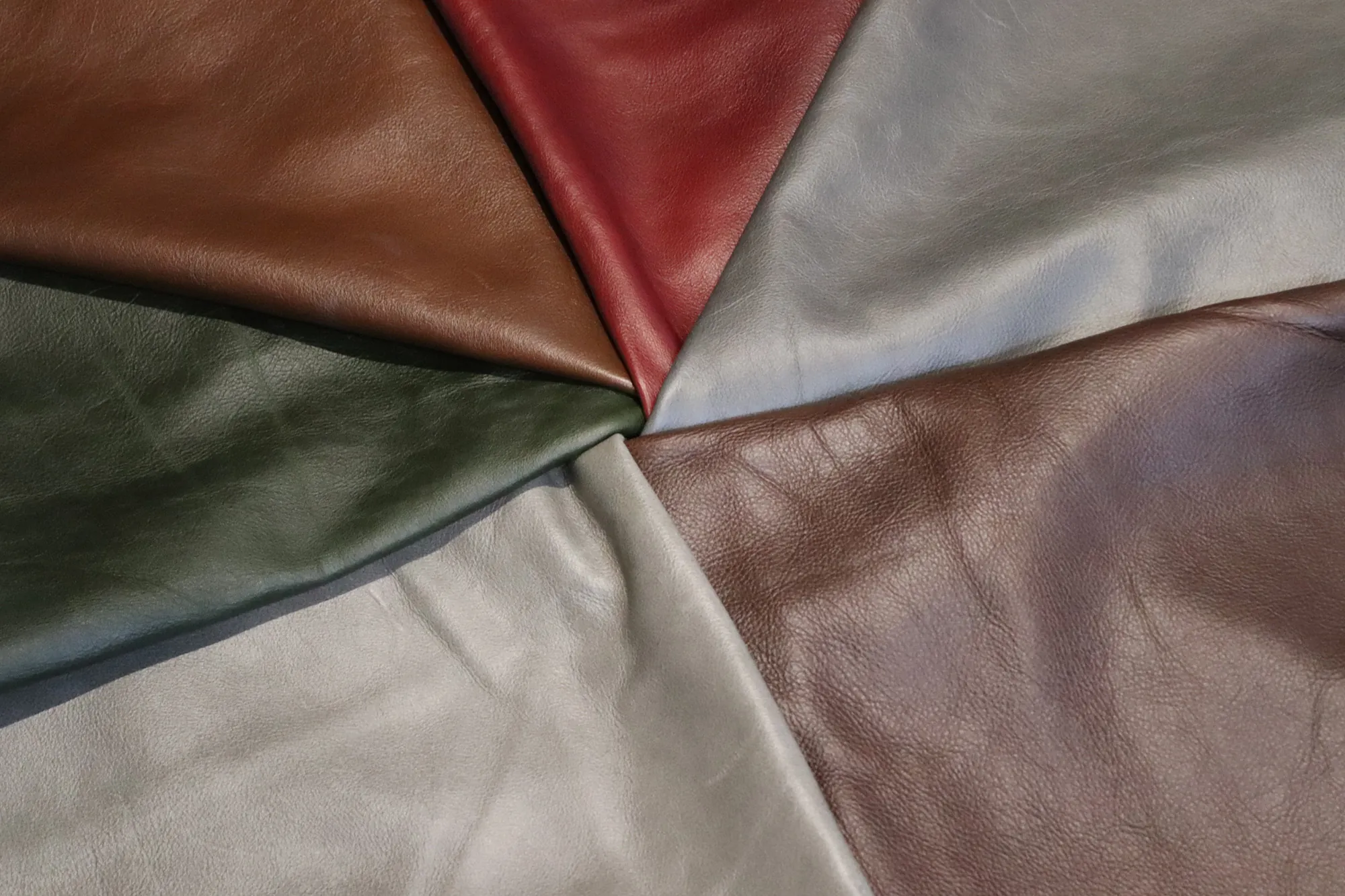
In leathercraft and bookbinding, few terms carry the historical and qualitative weight of “morocco leather”. It is not merely a geographical name but a marker of a standard of excellence recognised since the sixteenth century. To understand morocco leather is to understand the intersection of botany, chemistry, handcraft and the decorative arts. It represents the summit of vegetable tanning technology, producing a material that is not only visually beautiful but functionally superior.
This article sets out in depth the technical definition, characteristics, manufacture and applications of morocco leather, and at the same time distinguishes it from other materials that are often mistakenly called by the same name.
The Technical Definition and History of Morocco Leather
Strictly defined, genuine morocco leather refers to a leather that meets specific criteria. A departure from those criteria yields a product that, however good its quality may be, technically cannot be called true morocco leather.
Origins and Historical Significance
This tanning technique, though named after the country of Morocco, is believed to have been perfected by the Moors in North Africa and Spain. Through the trade routes the technique and its product were introduced to Europe, where it was quickly taken up by bookbinders in Italy and France during the Renaissance. Before that, European bookbinding relied mainly on thick, stiff cowhide or pigskin. The arrival of morocco leather, light, strong and easy to decorate, revolutionised the art of bookbinding, allowing more intricate and elegant designs to be created.
Principal Characteristics
The superiority of morocco leather can be attributed to three main pillars: the raw material, the tanning process and the visual finish.
- Raw Material: Selected Goatskin. Goatskin has a very dense, interlocking fibre structure, unlike sheepskin, whose fibres are looser and more linear. This fibre density gives it exceptional tensile strength and resistance to abrasion, making it extremely long-lasting.
- The Tanning Process: The Advantage of Sumac. Sumac (from the genus Rhus) is a vegetable tanning agent that produces a very pale, almost white leather. The chief advantage of sumac tanning is its colour stability; sumac-tanned leather is highly resistant to damage from light exposure and will not darken over time as leather tanned with other tannins does (oak, for instance). This pale base is also ideal for dyeing, giving clear, bright and long-lasting colours, above all the crimson that is its hallmark.
- Visual Appearance: Grain Pattern and Bright Colour. One of the most easily recognised features of morocco leather is its grain pattern. The surface of goatskin naturally has a pebbled texture that is pronounced and raised. This pattern is often accentuated during finishing to create a distinctive appearance with depth.
Identification and Quality Comparison
It is important for craftspeople, collectors and buyers to be able to tell genuine morocco leather from imitations or lower-quality variants. This knowledge makes sure that the value of a product, and the expectations placed on it, can be met.
Telling Genuine Morocco Leather from “French Morocco”
The term “French Morocco” is one of the most common sources of confusion. Although the name implies quality, it has historically referred to sheepskin processed to imitate the appearance of morocco leather. The differences are significant:
| Feature | Genuine Morocco Leather (Goatskin) | “French Morocco” (Sheepskin) |
|---|---|---|
| Grain Pattern | Pronounced, raised, a clear natural pebbled pattern. | Smooth, less pronounced, often embossed to imitate the natural pattern. |
| Strength & Durability | Very strong, abrasion-resistant and not easily torn. | Softer, less dense, and more prone to scratching and wear. |
| Fibre Structure | Dense and interlocking. | Loose and more linear. |
| Ability to Hold Decoration | Very good at holding detail from hot tooling and foil stamping. | Less good; stamped detail can lose its sharpness over time. |
In essence, “French Morocco” is a more economical alternative, but at the cost of the durability and the authentic characteristics of genuine morocco leather.
Applications in Bookbinding and Leathercraft
The combination of strength, flexibility and aesthetic beauty makes morocco leather a highly versatile and valued material.
The First Choice in Bookbinding
In fine binding, morocco leather is regarded as the gold standard. The reasons are several:
- Durability at the Joint: The joint, or hinge, of a book is the part that moves most often. The flexibility and strength of morocco leather allow it to take repeated stress as the book is opened and closed without cracking or tearing.
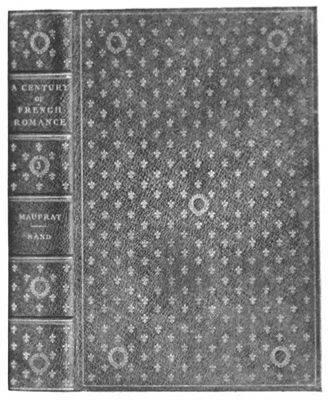
- Taking Decoration: Its dense surface is ideal for hot-tool decoration, both gilt and blind tooling. The gold lines or blind impressions it produces are sharp, detailed and permanent.
- Aesthetics: The richness of its colour and natural texture gives an unmatched sense of luxury.
Use in Conservation and Restoration
For the restoration of antique books originally bound in morocco leather, using the same material is essential to preserve historical authenticity, or period correctness. A book conservator will use new morocco leather, specially prepared, to repair or replace damaged parts of the cover.
Care Guide
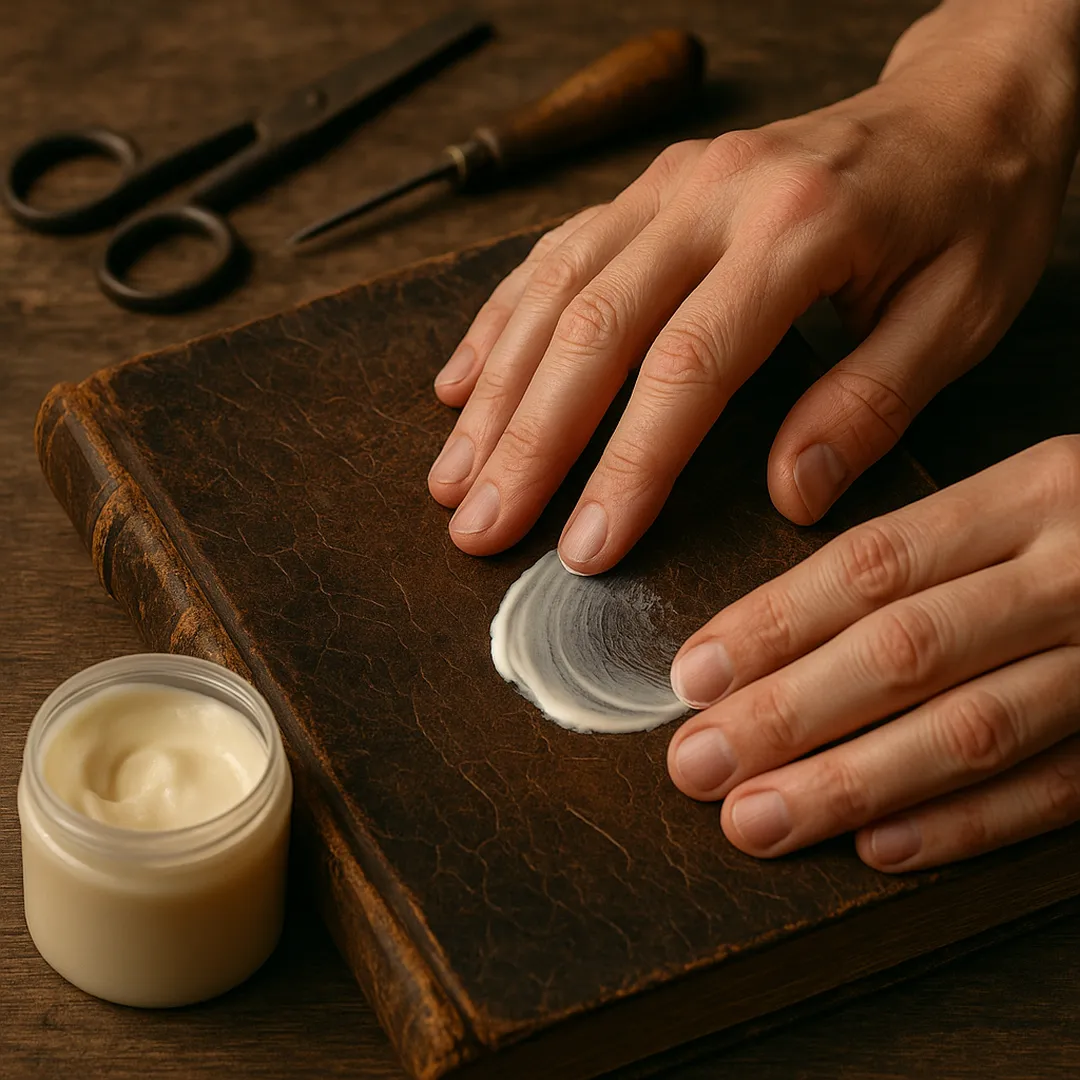
To preserve the beauty and long life of anything made from morocco leather, proper care is essential. Avoid prolonged exposure to direct sunlight and extremes of humidity. Dust it regularly with a soft, dry cloth. To keep it supple, an archival-quality leather dressing may be applied thinly and evenly at very infrequent intervals (for example once every few years), particularly for antique books.
Frequently Asked Questions (FAQ)
Is morocco leather still produced today?
Yes. Genuine sumac-tanned morocco leather is still produced by a few specialist tanneries in Europe, though in limited quantities and at a premium price. The term “morocco” is also often used more loosely by the trade to refer to goatskin with a similar grain pattern, even where it may be tanned by modern methods (chrome tanning).
Why is morocco leather so expensive?
Its high cost comes from several factors: the quality of the raw material (selected goatskin), a slow and labour-intensive vegetable tanning process, the scarcity of specialist producers, and its historical reputation and demand in the luxury goods market.
Is morocco leather waterproof?
Like most natural leathers, morocco leather is not fully waterproof. It has a degree of resistance to light splashes, but exposure to a large amount of water can cause staining or damage to the structure of the leather. It is best kept protected from rain and excess damp at all times.
References
Further information on morocco leather and bookbinding technique can be found through the following authoritative sources:
- Roberts, Matt T., and Don Etherington. “Bookbinding and the Conservation of Books: A Dictionary of Descriptive Terminology.” – A comprehensive online dictionary that is the standard in the world of book conservation. Look for the entry “Morocco”.
- J. Hewit & Sons Ltd. “Skin Deep.” (the original link is dead; the reference is kept without a link) – In-depth information on the various leathers used for bookbinding, from one of the oldest and most respected suppliers of binding leather in the world.
- Antiquarian Booksellers’ Association of America (ABAA) Glossary. (the original link is dead; the reference is kept without a link) – A glossary used by antiquarian booksellers, giving clear definitions that are relevant from a collector’s point of view.
- Victoria and Albert Museum. “Caring for your Books.” (the original link is dead; the reference is kept without a link) – The V&A provides guides and articles on caring for collections, including objects made of leather.
An antique book originally bound in morocco leather demands a material match when it is repaired: grain, thickness and colour must come close to the original. Finding that match is usually the hardest part of a restoration.

Custom Notebook
A handmade leather notebook you can design yourself, for a gift, a memory, or plans for the future.
Business & Whitelabel
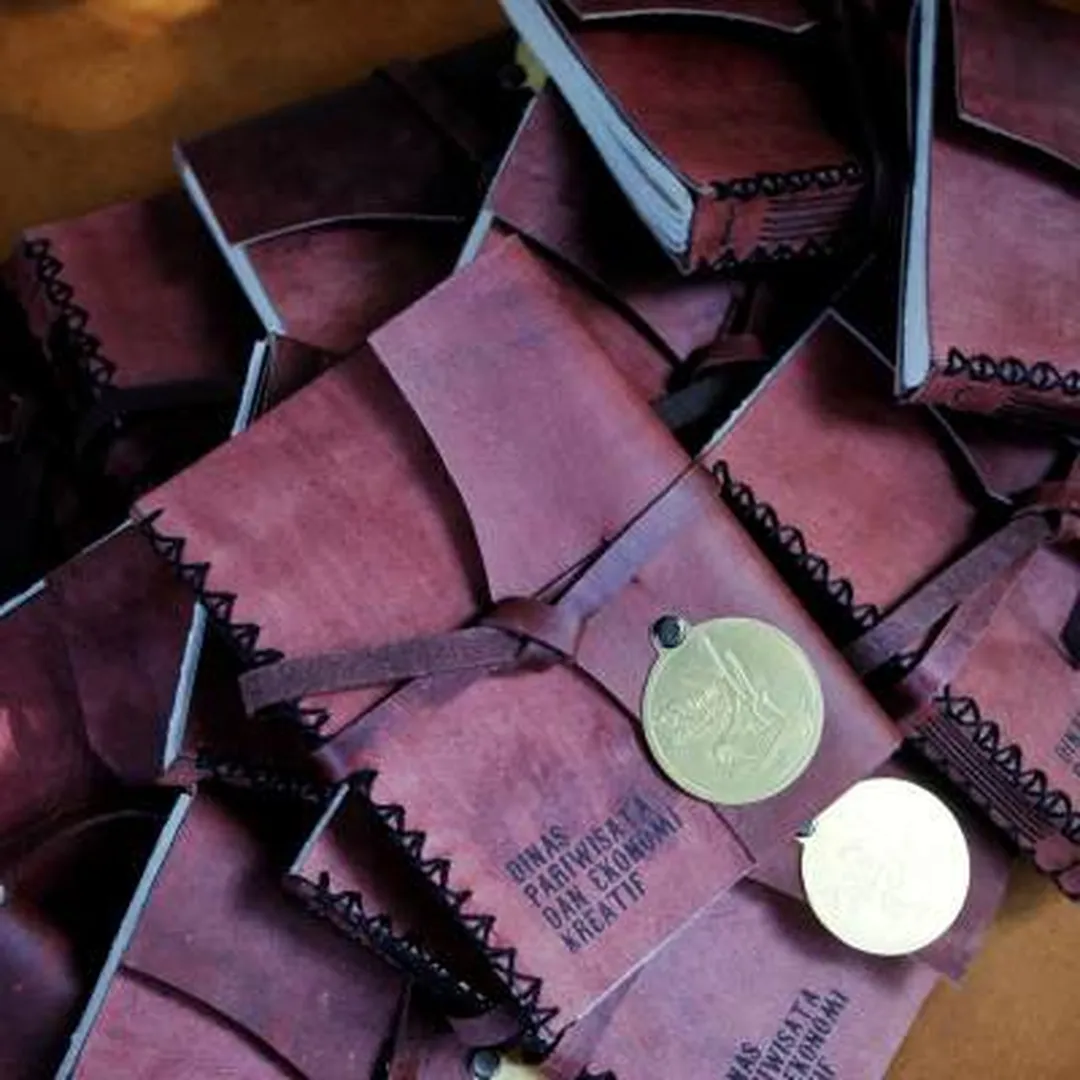
Business solutions and corporate gifts in the form of exclusive agendas carrying your company logo.
Book Repair & Conservation
Repair and conservation of antique books, family heirlooms, or private collections of historical value.