
Leather Journal Indonesia
by Ibrahim Anwar · July 28, 2025
In a global market filled with mass-produced goods, “Leather Journal Indonesia” has become a label worn with pride. It marks a movement in which consumers and creators alike value the process, the story and the human touch behind a product. When you hold a handmade leather journal from Indonesia, you are not only holding a book. You are holding the result of a skill handed down through generations, reworked with a modern aesthetic. It is a celebration of Indonesia's natural wealth, from quality cow and sheep leather through to locally produced paper, all of it assembled into a useful work that is personal and authentic.
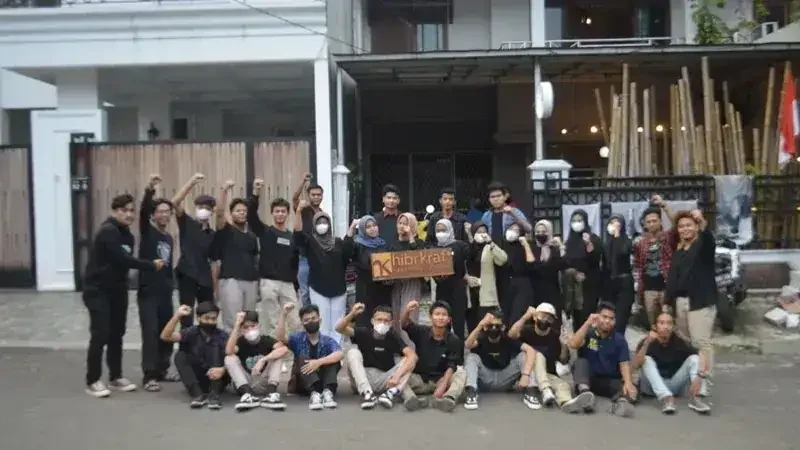
Hibrkraft, as one of the pioneers in this field, stands at the front of that movement. We believe that every journal is a collaboration. A collaboration between the richness of Indonesian craft tradition and a contemporary vision, and most of all, a collaboration between us as makers and you as the owner of the story. We do not only make journals; we create a vessel for your ideas, your memories and your heritage, wrapped in the beauty and the strength of Indonesia's distinctive leather craft.
Craft Roots and a Local Revival: The Story Behind the Indonesian Leather Journal
To appreciate an Indonesian leather journal fully, we need to look further than the finished product. We have to go into the long history of handcraft in the Nusantara, understand the wealth of local materials, and watch how modern artisans are bringing that heritage back to life.
The Handcraft Heritage of the Nusantara
Indonesia has a craft tradition that is very old and very varied, one in which working natural materials such as wood, metal, textile and leather has been part of daily life and of cultural ritual for centuries. The skill of working leather, for instance, can be seen historically in the making of wayang kulit in Java, where buffalo hide is prepared, chiselled (ditatah) and painted in extraordinarily intricate detail. That chiselling and carving demands precision, patience and a deep sense of art—the same values now adapted by modern leather journal makers.
This expertise did not appear overnight. It is handed down from generation to generation in the craft centres spread across Indonesia. Regions such as Garut, Magetan, Sidoarjo and Yogyakarta have long been known as centres of the leather industry, each with its own character and its own strengths. Garut, for example, is known for sheep leather that is soft and of high quality, ideal for products such as jackets and flexible journal covers. Magetan, meanwhile, has a leather industry said to be among the oldest in Indonesia, beginning in the era of the Diponegoro War in the 1830s. It is this heritage that forms the solid foundation for today's creators of the Indonesian leather journal.
Local Materials, Global Quality
One of the main pillars of the Indonesian leather journal is the use of local resources. Indonesia, with its large livestock industry, produces cow, sheep and goat hides in abundance. Handled properly, these hides yield products whose quality is not second to imported ones.
- Cowhide: The most commonly used, for its strength, its thickness and its durability. Local cowhide, especially full-grain (the topmost and highest-quality layer of the skin), is the first choice for a sturdy journal cover that will develop a beautiful patina.
- Sheep Leather: As mentioned above, sheep leather from Garut is highly valued for a texture that is very soft, light and supple. It gives a journal a different note of luxury and comfort.
- Goatskin: Known for a grain that is dense yet still flexible, goatskin is often used in traditional bookbinding because its strength holds stitching very well.
By putting local materials first, artisans not only support the domestic economy from upstream to downstream, but also hold greater control over quality and over the tanning process itself, and are even moving towards more environmentally friendly practices such as vegetable tanning (penyamakan nabati).
Choosing an Indonesian leather journal is not merely buying a product. It is an investment in a story, support for a community of local makers, and a proud statement about the quality of the nation's own work.
The “Bangga Buatan Indonesia” Movement and the Role of the Modern Artisan
The last few years have brought a shift in outlook among Indonesian consumers. Awareness of local products, and pride in using them, keep rising. That movement is a breath of fresh air for local artisans and brands like Hibrkraft. Consumers are sharper now; they are not only looking for a low price, but for quality, uniqueness and the story behind a product.
Modern makers of the Indonesian leather journal have answered that challenge brilliantly. They combine time-consuming traditional techniques, such as hand-stitching (jahit tangan) and manual personalisation (debossing/tooling), with design that is relevant to present-day taste—minimal, useful and elegant. They prove that “handmade” and “local” are synonyms for premium quality and exclusivity, not for second-class goods.
The Special Qualities of an Indonesian-Made Leather Journal: What Sets It Apart?
Leather journals are made all over the world, but a few distinctive characteristics are often where the Indonesian leather journal has the advantage. That uniqueness is born of a blend of working culture, resources and local entrepreneurial spirit.
1. A High Flexibility of Customisation
One of the biggest advantages of working with a local artisan is the ease and flexibility of customisation. Unlike ordering from a large brand abroad, which often has rigid rules about personalisation, a brand like Hibrkraft can offer a more personal conversation. You can discuss the small details: the type and colour of the thread, a specific paper layout, right through to adapting a carved design that might be inspired by a batik or tenun motif of your own. That level of personalisation turns a journal from merely a product into a deeply personal collaborative project.
2. The Quality of Handwork (Handmade)
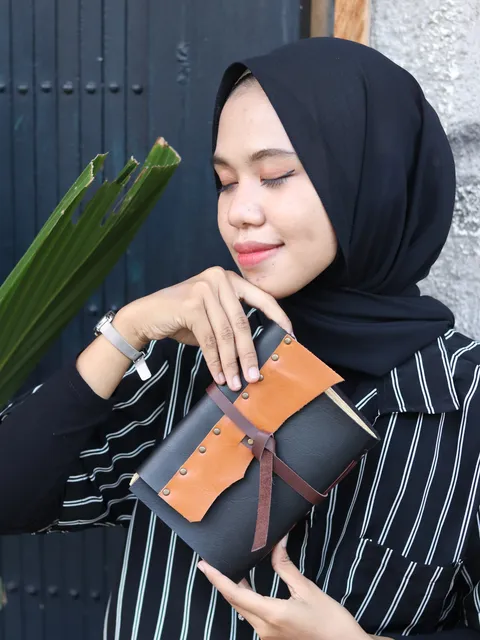
Many Indonesian leather journals, especially those from artisan studios like Hibrkraft, are made almost entirely by hand. That process covers:
- Manual Cutting: Every leather panel is cut one at a time, to ensure precision and to make use of the best part of the hide.
- Hand Stitching (Saddle Stitch): This hand technique, worked with two needles at once, produces a seam far stronger and longer-lasting than a machine stitch. Its slightly slanted stitch pattern is also a distinctive mark of the handmade aesthetic.
- Edge Finishing (Edge Burnishing): The leather edge is smoothed and polished by hand with a special tool and wax, creating a border that is seamless, glossy and protected. It is a small detail, often skipped on mass-produced goods, yet it greatly affects how long a product lasts and how it looks.
At Hibrkraft we are part of the story of the Indonesian craft revival. We are not only makers but keepers of a heritage, blending ancient technique with your modern needs.
3. A Competitive Price with Premium Quality
By cutting out a long distribution chain and the cost of importing, the Indonesian leather journal can offer a more competitive price for a product of comparable quality. You can get a hand-stitched journal bound in genuine full-grain leather for what might only be enough to buy a mass-produced synthetic-leather journal from an international brand. It is a compelling value proposition: you get premium quality, you support the local economy, and you own a unique product without having to pay dearly for it.
4. A Touch of Culture and Local Story
Many designs adopt a universal minimal style, but some artisans like to slip elements of Indonesian culture into their work. That might be batik or tenun cloth used as a lining, or a carved motif inspired by Indonesian flora, fauna or traditional geometric patterns. Owning something like this gives an extra layer of meaning, as though you were carrying a small piece of Indonesia's cultural wealth wherever you go.
Hibrkraft: Pioneer and Guide to Quality
As one of the early players in custom leather journals in Indonesia, Hibrkraft holds a responsibility not only to produce but to educate the market about the true value of handcraft. We are committed to using the best-quality leather, to applying binding techniques tested by time, and to giving a customisation service that goes beyond expectation. We are proud to be part of the local creative ecosystem, working with suppliers and other artisans to lift the name “Leather Journal Indonesia” together onto a higher stage.
FAQ (Frequently Asked Questions)
What sets an Indonesian-made leather journal apart from an imported one?
The main difference lies in a unique combination of quality, personalisation, story and price. Indonesian products often offer high-quality handwork (handmade) at a more competitive price. The flexibility of customisation is also far greater, allowing a direct conversation with the maker. Beyond that, by buying local you directly support the artisan ecosystem and the creative economy in Indonesia.
Where does the leather used for an Indonesian leather journal come from?
Most of the leather comes from livestock and tanning centres in Indonesia. Among the regions known for supplying quality leather are Garut (Jawa Barat), famed for its sheep leather, along with Magetan (Jawa Timur), Yogyakarta and Sidoarjo (Jawa Timur), known as centres of the cow and buffalo leather industry.
Are Indonesian leather journals good quality and long-lasting?
Of course. Quality is not decided by country of origin but by the material and the maker's expertise. Many brands of the Indonesian leather journal, Hibrkraft among them, use the best-quality leather such as full-grain leather and hand-stitching techniques such as saddle-stitching. These methods produce something fundamentally stronger and longer-lasting than mass-produced leather goods made with low-grade leather and machine stitching.
How can I support leather journal makers in Indonesia?
The best way is to buy their work directly, for instance through the Hibrkraft website. Beyond that, respect how long the making takes, leave a positive review if you are happy, and share their work on your social media. By ordering a custom piece you also set a creative challenge that helps makers keep growing and innovating.
References
- Indonesian Leather Goods: Craftsmanship and Quality Redefined – Domus Novem.
- Indonesian Leather Craftsmen’s Skills Captivate the World’s Eyes – ITPC Milan.
- 4 Daerah Penghasil Produk Kulit Kenamaan di Indonesia (the original link is dead; the reference is kept without a link) – Kumparan.
- Sentra Industri Sukaregang, Pusatnya Wisata Belanja Berbahan Dasar Kulit (the original link is dead; the reference is kept without a link) – Indonesia Travel.
- Home Industry of Leather Crafts in Magetan Regency (the original link is dead; the reference is kept without a link) – ResearchGate.

Custom Work from the Heart of Indonesia
Own a journal made especially for you by skilled Indonesian hands. Choose your own leather, thread and design. We make your idea real.
For Business & Local Brands
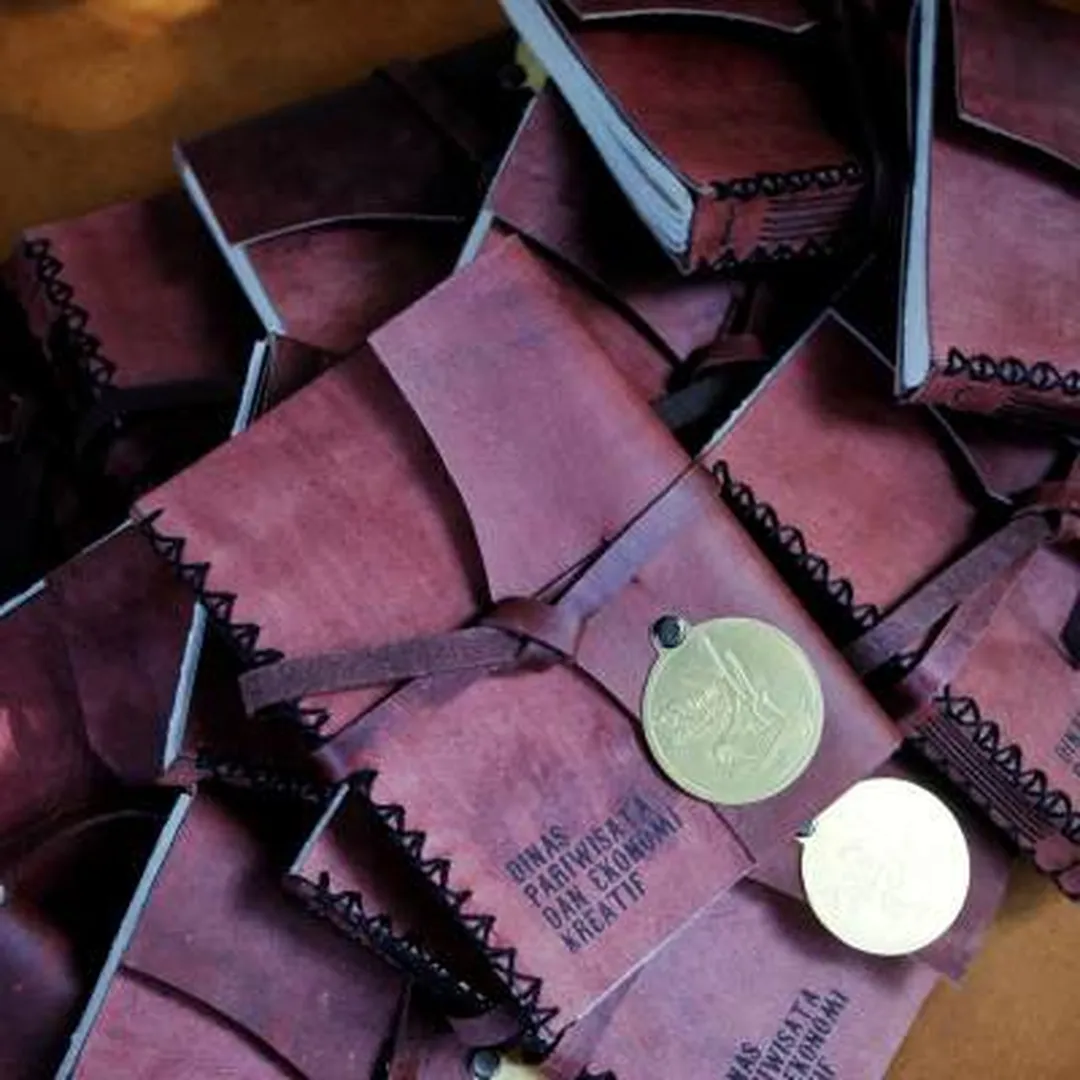
Show local pride and local quality in your corporate gifts. Custom leather agendas with your company logo, made in Indonesia for the global market.
Preserve Your Heritage
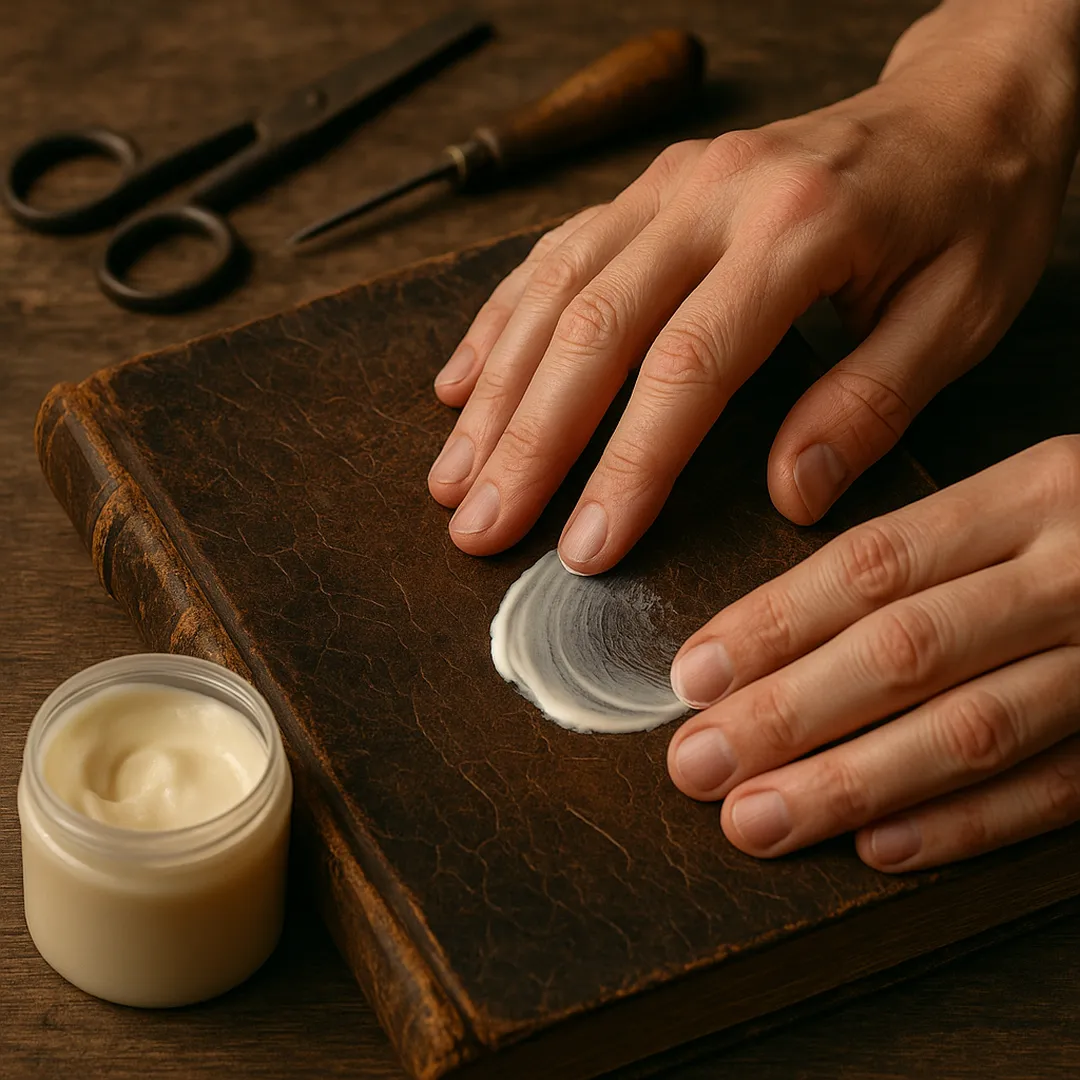
We do not only make new things, we also care for the old. Book repair and conservation services to keep your precious collection alive.