Visigothic
by Ibrahim Anwar · July 24, 2025
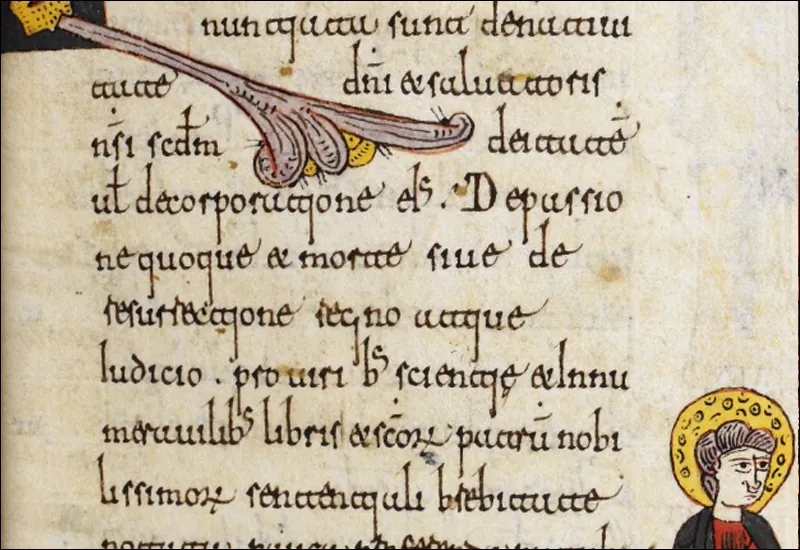
Visigothic script is the calligraphic fingerprint of a lost kingdom. Developed in the Iberian Peninsula (now Spain and Portugal) and in parts of southern France between the 7th and the 13th centuries, this is not merely an ancient handwriting. It is a statement of identity. Born of the evolution of Roman script but with a wholly new and unique spirit, it is known for its dense forms, sometimes slightly sloped, and for the distinctive letter characters that make it immediately distinguishable from other Latin scripts. Studying it is like opening a time capsule, revealing how knowledge, law and art endured and flourished at the crucial crossroads between the Classical world and the Middle Ages.
Long before Times New Roman or Arial dominated our screens, the world was filled with diverse regional handwriting styles, beautiful and complex, each of them telling the story of the place and the time that made it. One of the most interesting and historically significant of them is Visigothic script. To the untrained eye it may look like an illegible scrawl out of the past. But to historians, palaeographers and book craftsmen, this script is a window onto the culture of the Visigoths, a Germanic tribe that ruled Hispania after the fall of the Western Roman Empire.
This script is more than a tool for recording information. It is a medium of art, a symbol of cultural independence, and tangible evidence of a dynamic intellectual life in an era often wrongly called “Dark Ages”. From legal documents to beautifully decorated religious texts, Visigothic script carries the DNA of a society forging a new identity. Understanding it is not only about recognising letterforms, but about appreciating how a civilisation preserved its knowledge and its heritage on parchment, long before the printing press changed the world forever.
A Kingdom, an Identity, a Script
To understand why Visigothic script is so unique, we have to look at the context of its birth. After the Western Roman Empire fell in the 5th century, the Visigoths founded a powerful kingdom in the Iberian Peninsula. They were the new rulers, but they inherited Roman administrative infrastructure and the Roman writing tradition. Rather than simply imitate it, the scribes in the monasteries and centres of learning of the region began to adapt and reshape Old Roman script (particularly Uncial and Late Cursive) into something new and distinctively their own.
Visigothic script, or littera Visigothica, became the “national script” of Hispania for almost 500 years. Using it was a way of declaring a difference from the rest of Europe, and above all from the Carolingian Empire, which would later promote a standard script of its own. It was an assertion of cultural and political identity written into every sheet of every document.
The Anatomy of Visigothic Script: Reading the Hidden Code
What makes Visigothic script so special visually? A few principal characteristics make it stand out, and make it a pleasurable challenge for palaeographers (specialists in ancient writing).
Unique Letterforms
Several letters in Visigothic script have highly distinctive forms, and they are its principal markers:
- The Uncial ‘g’: One of the clearest markers is the ‘g’ that looks like the numeral ‘5’, or like an ‘s’ with a looped head above it. It is very different from our modern ‘g’.
- The Open ‘a’: Often the ‘a’ is written open at the top, so that it comes to resemble a ‘cc’ combination or a ‘u’.
- The ‘t’ with a Left Crossbar: The horizontal bar of the ‘t’ often extends only to the left of the vertical stem, or carries a loop on the left side.
- Two Forms of ‘r’: There are two versions of the letter ‘r’, one close to our modern form and another that drops below the baseline of the writing, much like the numeral ‘2’.
The Art of the Intricate Ligature
Visigothic scribes were masters at joining letters. A ligature is what happens when two or more letters are combined into a single stroke to save space and time. Visigothic script is rich in complex ligatures. One of the best known is the ‘ti’ ligature (pronounced “tsi” in the Spanish Latin of the day), which often looks like an ‘a’ with a circle above it. Recognising these ligatures is the key to being able to read a Visigothic text.
This is not merely writing but a choreography on parchment, in which every letter and every join has a rhythm and a character of its own.
Two Faces of the Script: Cursive and Bookhand
Like many other historical scripts, Visigothic script exists in two principal variants:
- Cursive: This is the faster, less formal version, used for everyday documents such as charters, letters and legal records. Its strokes are more sloped and it makes heavy use of ligatures.
- Bookhand (or Minuscule): This is the more careful, upright and formal version, used for copying books, above all Bibles and religious texts. Its letters are formed with greater precision and are easier to read (once you are used to them, of course).
More Than Just Letters: Illumination and Decoration
Visigothic script often did not stand alone. It became part of a rich tradition of manuscript art, above all in the Mozarabic style, which is a blend of Visigothic, Islamic and Christian influence. The initial (the enlarged first letter) was often decorated with great intricacy, using interlacing geometric patterns and motifs of birds, fish and other animals. Its colours are bright and bold, using yellow, red, blue and green to create a page that is visually striking.
The Twilight of the Script: the Carolingian Arrival
The heyday of Visigothic script did not last forever. From the late 8th century a sweeping reform of writing began in the heart of the Carolingian Empire under Charlemagne. Its aim was standardisation. Out of it was born Carolingian Minuscule script, a script designed to be clear, uniform and legible across the whole empire. Its letters are round, well separated, and for the most part became the basis of the lower-case letters we use today.
Carolingian influence spread gradually across the whole of Europe, Hispania included. Church reformers saw local scripts such as Visigothic as “barbarous” and hard to read, and pressed for their replacement by the more “international” Carolingian script, which was held to be clearer. At an important council at León in 1090 it was laid down that all liturgical texts had to be written in Carolingian script. That decision effectively marked the beginning of the end for Visigothic script as a living script, though it survived in a few remote monasteries into the 13th century.
An Enduring Legacy: Why Does Visigothic Script Still Matter?
Although it is no longer in use, the legacy of Visigothic script remains alive and relevant:
- For Historians: Manuscripts written in this script are priceless primary sources. They give direct insight into law (such as the Lex Visigothorum), religion, science and everyday life in medieval Spain.
- For Designers and Calligraphers: Visigothic script is a goldmine of inspiration. Its unusual letterforms, its clever ligatures and its dynamic decorative style offer a rich alternative to the more familiar canon of Latin calligraphy.
- For Book Lovers: It reminds us that a book is a cultural artefact. Every element, from the parchment, the ink and the binding stitches to the style of its script, tells a story. Visigothic script is an important chapter in the long evolution of the book in the Western world.
The Hibrkraft Perspective: Honouring the Traces of History in Handcraft
At Hibrkraft we are captivated by the history of the book. Studying something like Visigothic script deepens our respect for the skill of the ancient scribes. They were not only copyists but artists and keepers of knowledge. That is the spirit we want to carry into every leather notebook and every book repair service we offer.
We may not use Visigothic script in our products, but we respect the principle behind it: that how we write something matters as much as what we write. Choosing to use a quality handmade journal, just as one chooses to use a beautiful and considered script, is an act of appreciating the process of creation and of preserving our thoughts in a way that is meaningful and lasting. The history of Visigothic script teaches us that even writing has a soul.
Frequently Asked Questions (FAQ)
1. Is Visigothic script the same as Gothic script (Blackletter)?
Not at all. It is a common misunderstanding, because the names are similar. Visigothic script precedes Gothic script (also known as Blackletter) by several centuries. Gothic script developed in northern Europe around the 12th century and has a very different appearance, more upright, angular and dense, while Visigothic tends to be rounder and more cursive.
2. Why is Visigothic script so hard to read?
The difficulty comes from several factors: letterforms unfamiliar to the modern eye, the extensive use of abbreviation to save expensive parchment, and complex ligatures that merge several letters into a single form that is hard to unpick.
3. Where can I see original examples of Visigothic script?
Many national and university libraries around the world have digitised their manuscript collections. You can search the online archives of the Biblioteca Nacional de España, Bibliothèque Nationale de France, or the British Library to find manuscripts from the right period and region.
References
- O’Donnell, A. M. “Littera Visigothica.” A blog dedicated to the study of Visigothic manuscripts and palaeography.
- Stanford Libraries. “Leaf from a Visigothic-script Antiphonal.” A digital example with a detailed description.
- Oxford Bibliographies. “Visigothic Script.” An academic overview of the subject. (the original link is dead; the reference is kept without a link)
- Institut de recherche et d’histoire des textes (IRHT-CNRS). “Écritures: La wisigothique.” An academic resource in French with many examples. (the original link is dead; the reference is kept without a link)

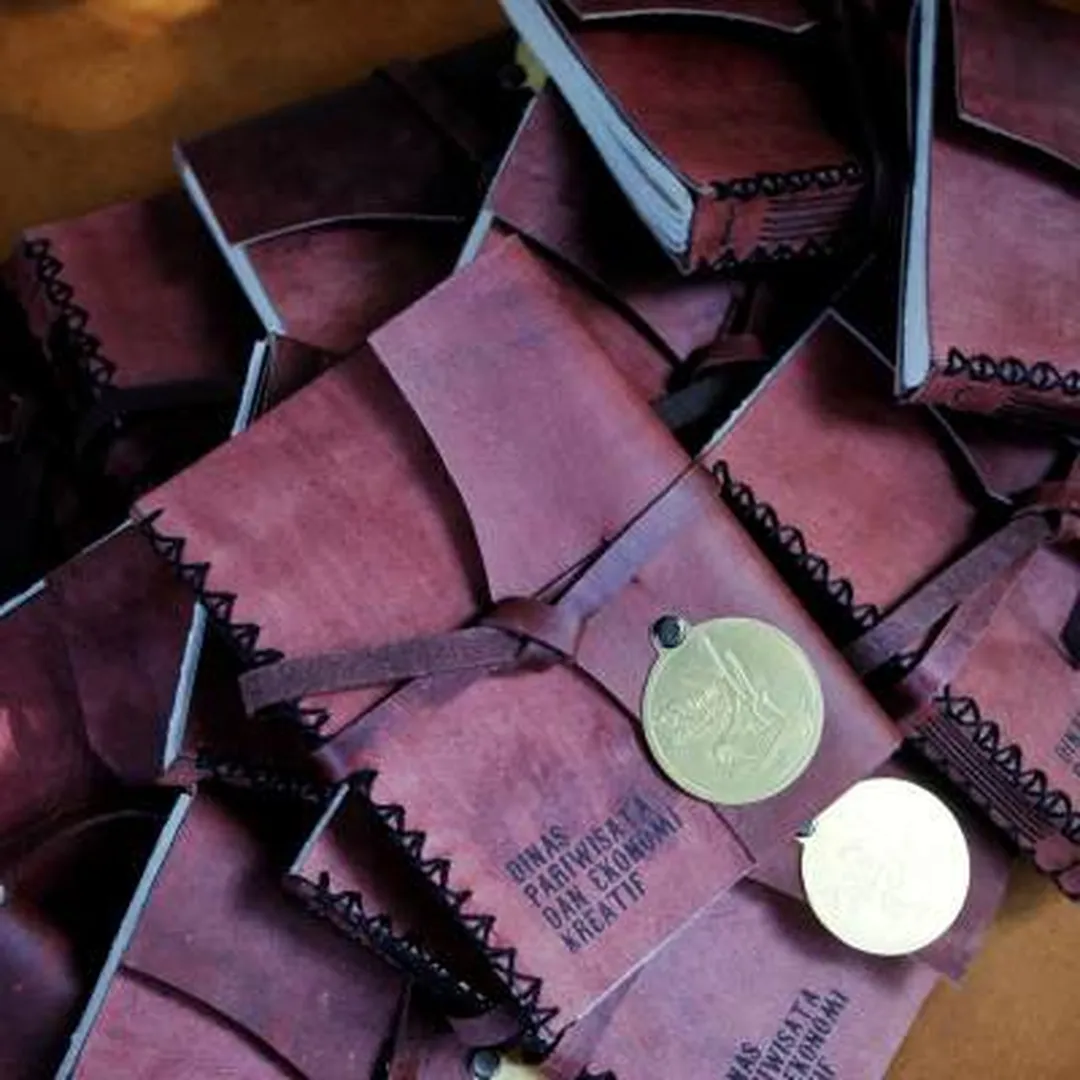
Custom Notebook
A handmade leather notebook you can design yourself — for a gift, for a memory, or for plans still to come.
Business & Whitelabel
Business and corporate gift solutions in the form of exclusive agendas carrying your company’s logo.
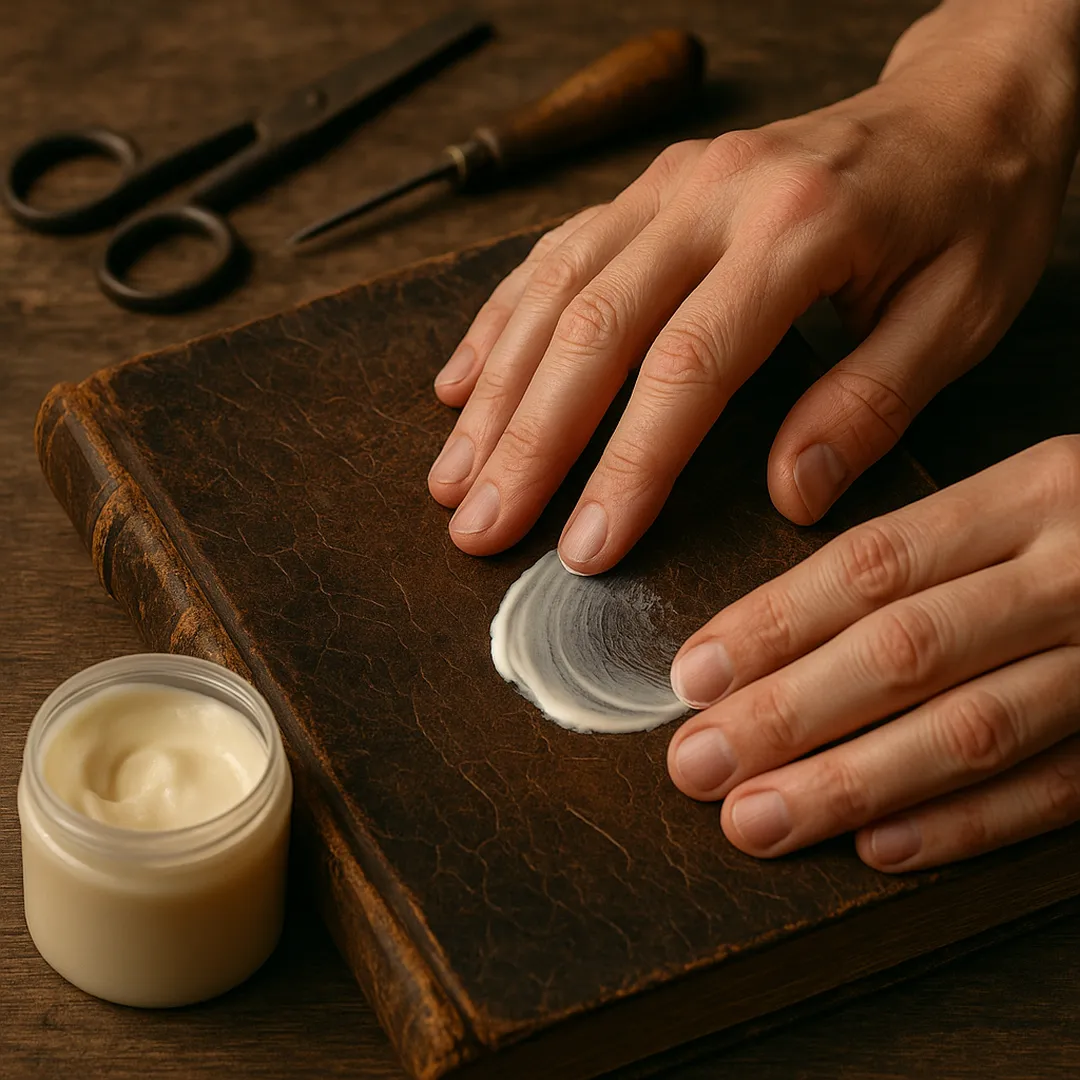
Book Repair & Conservation
Repair and conservation for antique books, family heirlooms, or private collections of historical value.