
Tragacanth Mucilage
by Ibrahim Anwar · August 9, 2025
In a craftsman’s workshop, whether a bookbinder restoring an ancient manuscript or a leatherworker perfecting the edge of a wallet, there are materials that have been tested by time. Tragacanth mucilage is one of them. This is not a modern adhesive made in a laboratory but a heritage from nature, put to use since the time of Theophrastus, several centuries before Christ. What makes it special is not instant bonding strength but its versatility, its reversibility, and its ability to interact gently with organic materials such as paper and leather. To understand tragacanth mucilage is to enter a craft tradition that values process, patience and quality that lasts.
The Essence and the Science of Tragacanth Mucilage
Behind its simple appearance, whether as dry flakes or as a thick mucilage, lies a complex chemical process. Tragacanth mucilage is more than merely a “natural glue”; it is a sophisticated colloidal system, the result of millions of years of plant evolution towards protecting itself. For a craftsman, understanding the science behind the material is the key to getting the most out of it, and to appreciating why something this old is still relevant in a modern age.
Botanical Origins and a Long History
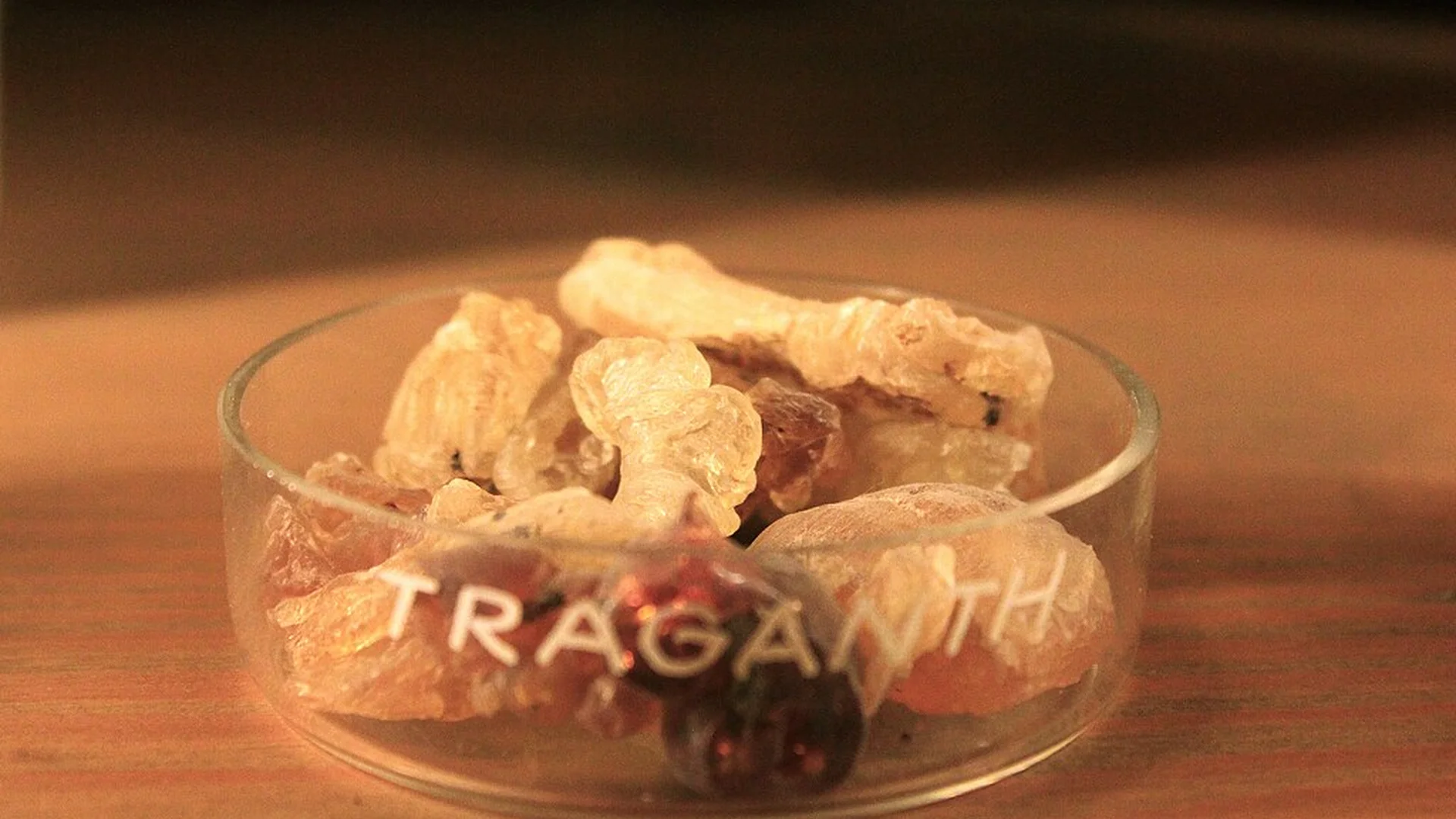
Tragacanth mucilage comes from the dried sap extracted from several species of spiny shrub in the genus Astragalus, above all Astragalus gummifer. This hardy plant thrives in the dry, mountainous regions of the Middle East, with Iran the largest producer in the world. The name “tragacanth” itself comes from the Greek tragos (goat) and akantha (thorn), which describes the plant’s appearance rather poetically. The sap issues naturally from a wound in the stem or the root, serving as a defence mechanism that seals the damage and keeps out infection and dehydration. Growers often make deliberate incisions to increase the yield. The sap that emerges then dries in the air into translucent white to yellowish flakes or ribbons, what we know as raw gum tragacanth. Its history of use is a very long one, recorded in ancient texts as an ingredient in incense, as a medicine for coughs and diarrhoea, and as an emulsifier and stabiliser in food.
Its use in art and craft goes back just as far. In Turkey the mucilage is traditionally used in the art of paper marbling (Ebru), to make the medium on which pigment floats and is drawn into shape. In Western fine art, tragacanth became the traditional binder in pastel making, because it has the unique property of not sticking to itself when dry, unlike gum arabic. Its wide presence across so many fields shows how versatile and how dependable this natural material is, evidence of the wisdom of past generations in making use of natural resources.
A Chemical Marvel: From Dried Sap to Stable Mucilage
The transformation from dry flakes of sap into a usable thick mucilage is an interesting piece of hydration. What makes tragacanth unique is its complex chemical composition, made up of two principal polysaccharides: tragacanthin and bassorin.
- Tragacanthin (about 30-40%): This fraction is soluble in water and is responsible for forming the true colloidal solution. Think of it as the component that creates the liquid “body” of the mucilage.
- Bassorin (about 60-70%): This fraction does not dissolve, but it has a remarkable capacity to absorb water and to swell to many times its original volume, forming a very thick gel. This is what gives tragacanth mucilage its high viscosity.
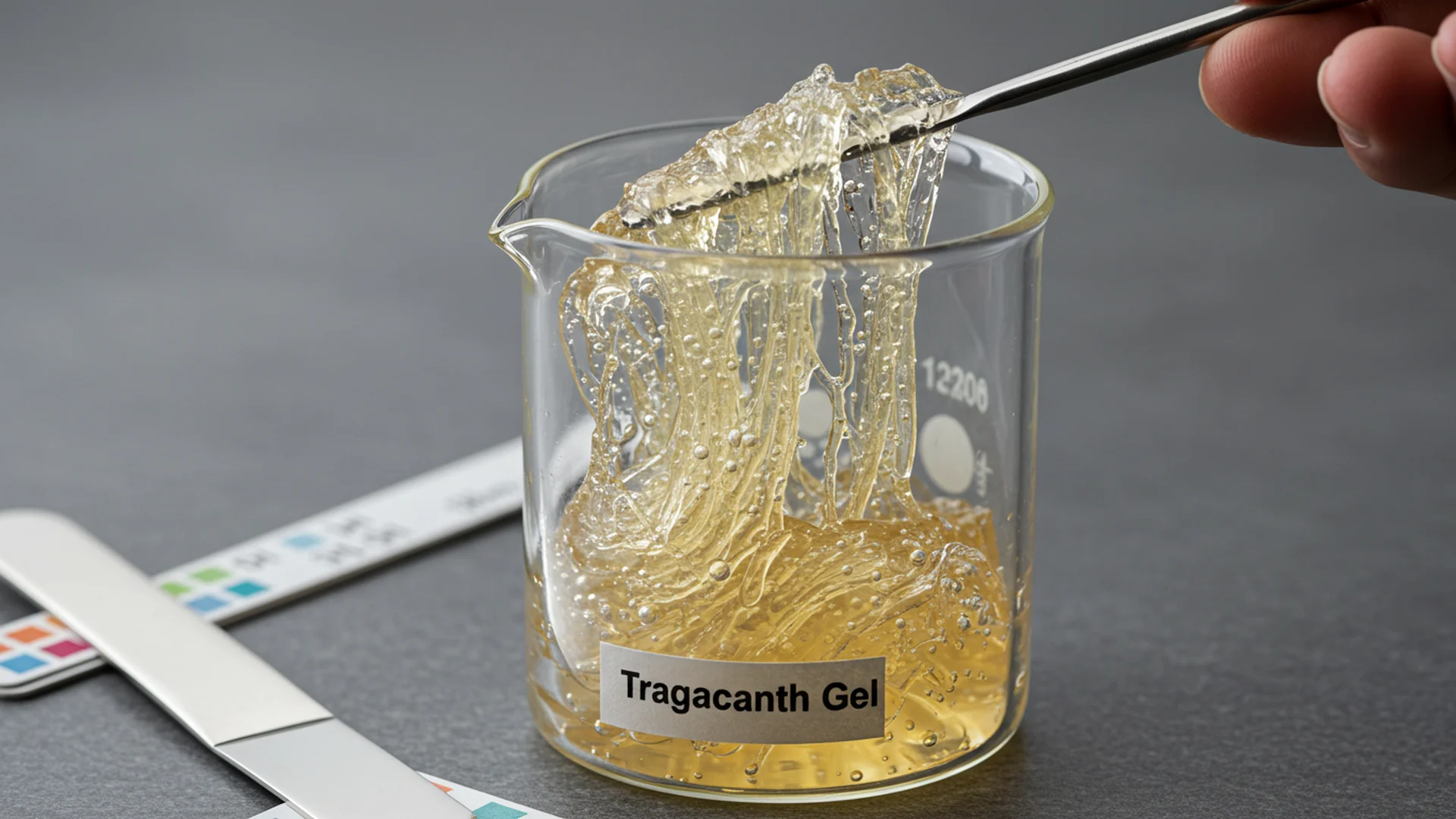
When gum tragacanth is mixed with water, both processes happen at once. The tragacanthin dissolves while the bassorin swells. It is the swelling of the bassorin that takes the time. Several days are needed for water molecules to penetrate and fully hydrate the dense bassorin particles, producing a homogeneous, stable mucilage. This is why preparing tragacanth mucilage is an exercise in patience; a hurried process, such as heating, can damage the delicate polysaccharide structure and reduce the final quality of the mucilage.
The strength of tragacanth mucilage lies not in speed but in stability and gentleness, the result of the slow hydration of its two unique components: tragacanthin, which dissolves, and bassorin, which swells.
Preparation: The Art of Patience in Making Tragacanth Mucilage
Making tragacanth mucilage from powder or flakes is a simple process, but it takes time. The quality of the finished mucilage depends heavily on patience during hydration. The ratio in common use is about 1-2 grams of tragacanth powder to every 100 ml of water.
- Initial dispersion: The first and most important step is to stop the powder clumping when it first meets water. The best way to do that is to wet the tragacanth powder first with a little alcohol (ethanol or isopropyl alcohol, for instance) until it forms a paste. The alcohol separates the powder particles, allowing them to disperse evenly once the water is added.
- Slow hydration: Once it has been wetted with alcohol, add water (distilled for preference, to avoid minerals) gradually, stirring as you go. The mixture will start to thicken almost at once. Move it into a covered container (a glass jar, for example) and leave it for at least 24 hours, or ideally several days, at room temperature.
- Stirring at intervals: During hydration, stir the mixture from time to time. You will see the mucilage gradually become more homogeneous and more transparent as the bassorin particles go on absorbing water and swelling.
- Straining and storage: Once the consistency you want is reached (much like a thick gel), strain the mucilage through a thin cotton cloth (muslin) to remove unhydrated particles and dirt. Being an organic material, tragacanth mucilage is prone to mould and bacterial growth. Keep it in an airtight container in the refrigerator to extend its life. A few drops of a preservative such as clove oil or thymol can help, particularly if it is to be stored for a long time.
An unhurried process like this makes sure you get a mucilage of maximum viscosity and the best stability, ready to be used on even the most delicate craft project.
Practical Applications in Bookbinding and Leather Craft
The versatility of tragacanth mucilage truly shines when it is put to work in the crafts. Its unique physical properties—a thickness that can be adjusted, a transparent dry, and an adhesion that is never too aggressive—make it a first choice for craftsmen working with delicate materials. Whether as an archival adhesive in book conservation or as a premium polishing agent in leather craft, the part tragacanth plays is a crucial one.
In Bookbinding: Archival Adhesive and Paper Strengthener
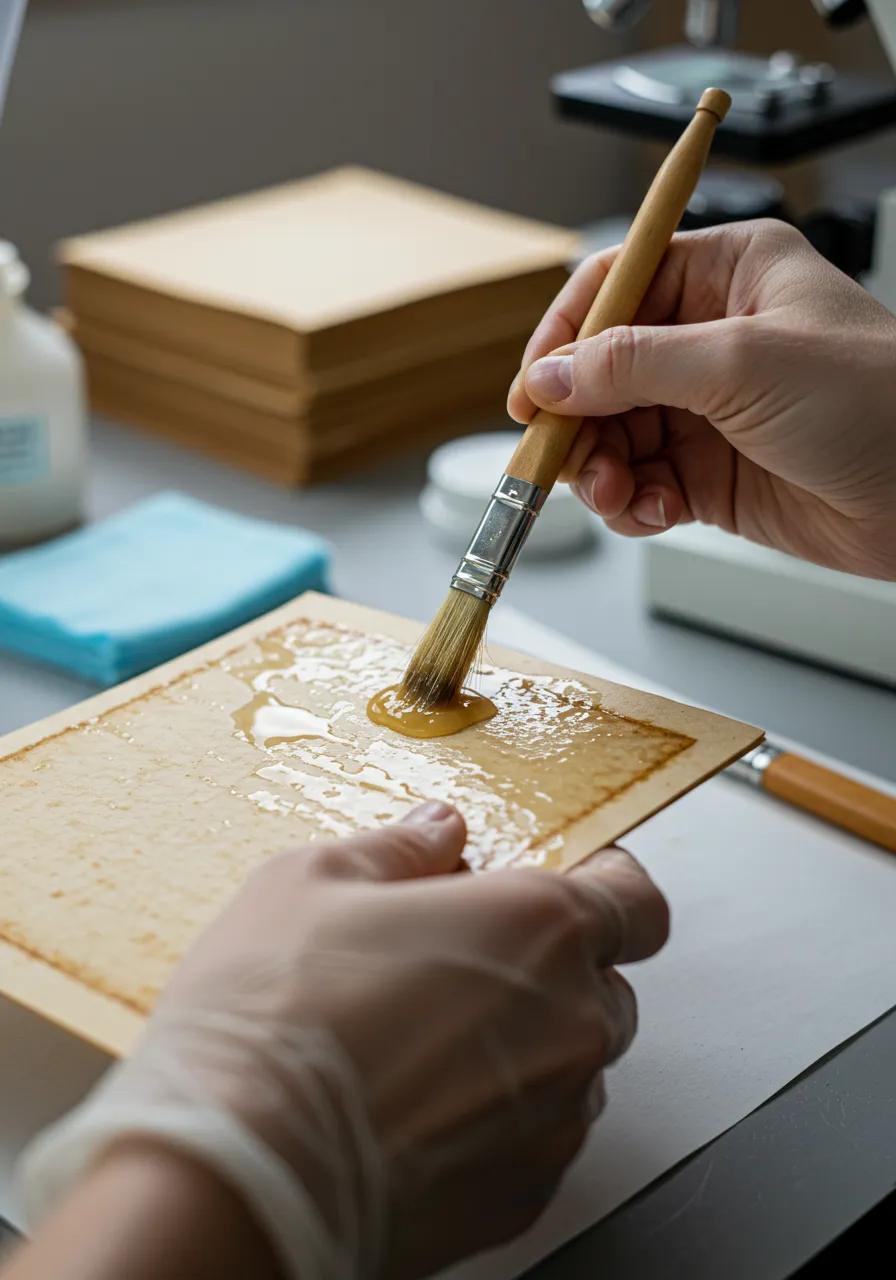
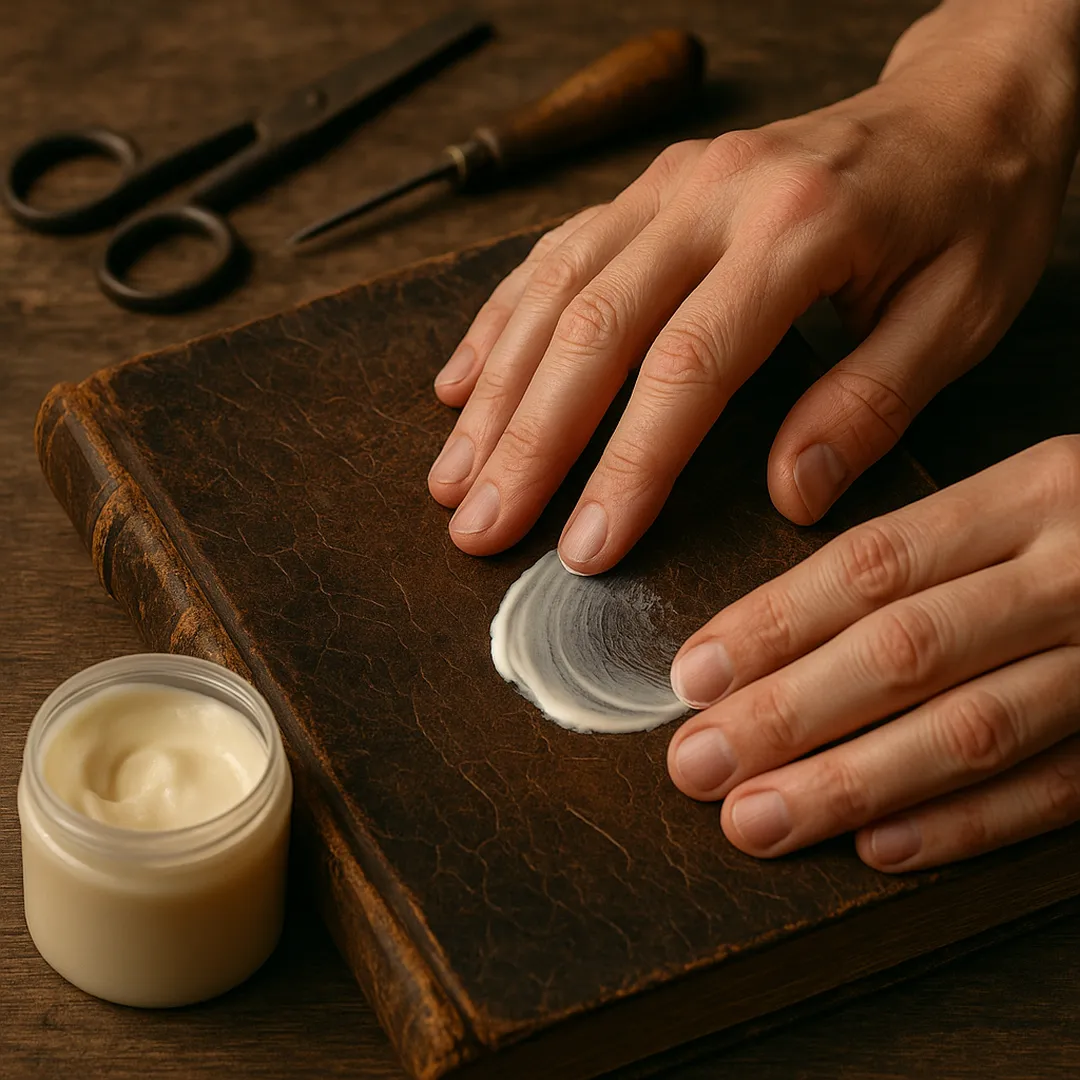
In the world of book conservation and repair, reversibility is the first principle. Every treatment applied to a historic object must be removable in the future without damaging the original artefact. Tragacanth mucilage meets that criterion perfectly. As an adhesive it is strong enough to mend a small tear in paper or to reattach a loose fragment of a page, and it remains soluble in water. That means that if the repair ever has to come off, a conservator can do it carefully with water without damaging the original paper fibres. Its gentle strength makes it ideal for old and fragile papers.
Besides its use as an adhesive, tragacanth also serves as a sizing agent. Sizing is the process of coating the surface of paper to control how ink or paint spreads. Old handmade paper often loses its sizing over time, which leaves it too absorbent and makes ink “bleed”, or spread. By thinning tragacanth mucilage and applying it in a thin coat to the paper surface, a bookbinder or conservator can restore the paper’s ability to hold ink properly. Because it is transparent when dry, the original appearance of the paper is left unchanged.
In Leather Craft: The Secret Behind a Glossy Edge (Burnishing)
One distinctive mark of a high-quality leather product is an edge that is smooth, dense and glossy. The process that achieves this is called burnishing, and tragacanth mucilage is one of the best traditional materials for the job, above all on vegetable-tanned leather. When leather is cut, the fibres along the edge open up and look rough. This is where tragacanth comes in.
The process involves applying a thin layer of tragacanth mucilage along an edge that has already been smoothed. The mucilage does two jobs: first, as a lubricant that reduces friction, and second, as a binder. Once it is on, the craftsman takes a polishing tool (a slicker or burnisher) made of wood or bone and rubs it briskly along the edge. The friction generates heat, which helps the tragacanth mucilage soak into the leather fibres. The mucilage binds the loose fibres and compacts them into a hard, smooth surface. As it dries it leaves a thin, flexible, glossy layer that is not only beautiful to look at but also protects the leather edge against cracking and wear.
Compared with Other Adhesives: When to Choose Tragacanth?
Although there are plenty of modern adhesives and finishing materials, tragacanth keeps its place because of its specific characteristics.
- vs. Gum Arabic: Both are natural gums used in art. Gum arabic, though, is more soluble in water and forms a less viscous solution. That makes it better suited as a binder in watercolour or ink, where it needs to flow smoothly. Tragacanth, with its swelling bassorin component, gives a far thicker gel, which makes it superior as a suspending agent, or for applications where high viscosity is needed, such as burnishing leather or use as a thick adhesive.
- vs. Methyl Cellulose or CMC (Carboxymethylcellulose): These are modern synthetics often used in place of tragacanth, above all for burnishing leather, because they are cheaper and easier to prepare. CMC works well, but many purist craftsmen hold that the finish from tragacanth gives a deeper and “warmer” sheen, and feels more natural. The choice between them often comes down to personal preference, tradition and budget.
- vs. PVA Glue (Polyvinyl Acetate): PVA glue is a synthetic adhesive, very strong and permanent once dry. That makes it excellent for modern bookbinding construction, but wholly unsuited to archival repair work because it is irreversible, which runs against the ethics of conservation.
Choosing tragacanth mucilage is often a deliberate decision: to follow the traditional method, to get a specific aesthetic finish, or because the conservation project in hand demands reversibility.
Hibrkraft’s Take on It: Valuing Heritage Materials
At Hibrkraft we believe there is a soul in every material we use. Vegetable-tanned leather tells a story of time and of nature, linen thread speaks of strength and tradition, and good paper is the beginning of every idea. In that context, tragacanth mucilage is not merely a consumable but a link to the long history of handwork. To use it is to pay respect to methods craftsmen have perfected over centuries.
We choose to understand, and sometimes to use, materials like tragacanth because it sits well with our philosophy of quality and permanence. When we polish the edge of a custom leather journal, the use of tragacanth gives a finish that no modern shortcut can imitate. It creates a sheen that comes from inside the leather itself, not merely a coat laid over the top of it. In book repair work it lets us touch history with respect. Valuing heritage materials like tragacanth mucilage is part of our commitment not only to make products, but to preserve the soul of the craft itself.
FAQ
What is tragacanth mucilage and where does it come from?
Tragacanth mucilage is a natural gel made from the dried gum of plants in the genus Astragalus, which grow widely in the Middle East. The gum, a mixture of polysaccharides, is collected, dried, then hydrated with water to form a thick mucilage used in a range of applications, including as an adhesive and as a polishing agent.
Why does making tragacanth mucilage take days?
The process takes time because of the unique composition of gum tragacanth. The gum contains two main components: tragacanthin, which is soluble in water, and bassorin, which does not dissolve but swells as it absorbs water. It is the swelling of the bassorin that is slow, needing several days for the water molecules to soak all the way in, and that is what produces a thick, stable and homogeneous gel.
What is the main use of tragacanth mucilage in leather craft?
Its main use in leather craft is as a burnishing agent for leather edges, above all vegetable-tanned leather. The mucilage is applied to the edge of the leather and then rubbed with a special tool. The process binds and compacts the loose leather fibres, creating an edge that is smooth, dense, glossy and durable.
Is tragacanth mucilage safe to use for repairing antique books?
Yes, very safe, and in fact recommended. In book conservation, tragacanth mucilage is valued for being reversible (it can be taken off again with water) and gentle. It can be used as an adhesive to mend small tears without damaging the original fragile paper fibres, in keeping with the ethical principles of archival conservation.
References
- Britannica. (n.d.). Tragacanth.
- Meer, G. (1954). History, Production, and Uses of Tragacanth. Advances in Chemistry. (the original link is dead; the reference is kept without a link)
- Fiebing’s. (n.d.). Gum Tragacanth.
- Fine Leatherworking. (2023). How to Use Gum Tragacanth on Leather. (the original link is dead; the reference is kept without a link)
- ScienceDirect. (n.d.). Astragalus gummifer. (the original link is dead; the reference is kept without a link)
- Tandy Leather. (n.d.). Eco-Flo Gum Tragacanth.
- Weaver Leather Supply. (n.d.). Weaver Gum Tragacanth.
- Leatherworker.net. (2013). What Is The Use Of Gum Tragacanth?.
- Natural Pigments. (n.d.). Gum Tragacanth. (the original link is dead; the reference is kept without a link)
- The Dreamstress. (2024). Making 18th century buckram: gum arabica vs tragacanth vs xantham.
- Museum of Fine Arts, Boston. (2022). Gum tragacanth. (the original link is dead; the reference is kept without a link)
- Ataman Kimya. (n.d.). TRAGACANTH. (the original link is dead; the reference is kept without a link)
- Pharmacognosy.info. (n.d.). Tragacanth. (the original link is dead; the reference is kept without a link)
- Kremer Pigmente. (n.d.). Gum Tragacanth. (the original link is dead; the reference is kept without a link)
- Textile Institute. (1977). The Use of Gum Tragacanth in Textile Printing. (the original link is dead; the reference is kept without a link)
- ResearchGate. (2018). Characterisation of gum tragacanth… (the original link is dead; the reference is kept without a link)
- MDPI. (2023). Formulation and In Vitro Assessment of Tragacanth Gum-Based Hydrogel… (the original link is dead; the reference is kept without a link)
- PHARMACY. (2013). Preparation of Mucilages. (the original link is dead; the reference is kept without a link)
- Henriette’s Herbal Homepage. (n.d.). Mucilago Tragacanthae (U. S. P.)—Mucilage of Tragacanth. (the original link is dead; the reference is kept without a link)

Custom Notebook
Preserve your journey in a custom notebook, made for expression that lasts. Like the stable natural bond of tragacanth mucilage, your journal will be a steadfast companion to your thoughts and your creativity.
Business & Whitelabel
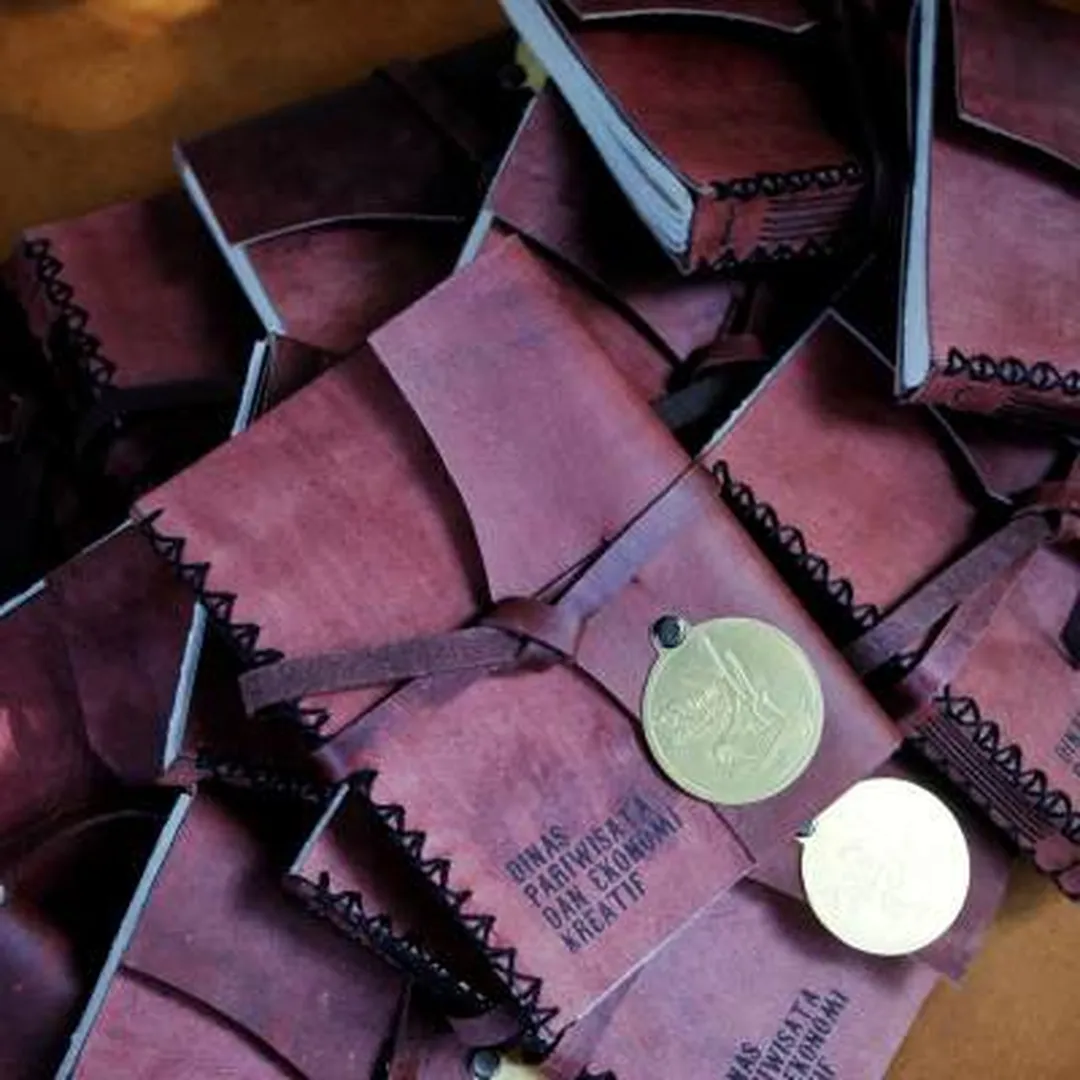
Raise your brand’s narrative with premium custom business journals. Offering natural stability and quality that lasts, our solutions, like tragacanth mucilage, create a lasting impression for your corporate identity.
Book Repair & Conservation
Preserve your literary treasures. We repair books using natural, archival-quality adhesives, drawing inspiration from the dependable binding properties of tragacanth mucilage for durability that lasts generations.