Terne
by Ibrahim Anwar · August 9, 2025
When we picture an antique book cover dressed in metal, our minds usually turn to the opulence of gold or the elegance of silver. But there is another, plainer material that quietly played an important part in democratising decorative art on books: Terne. This is not a precious metal but a clever solution from the industrial age, a blend of the strength of steel with the resilience of a tin-lead alloy. Its use on book covers and decorative boxes reflects the ingenuity of the craftsmen of the past, who looked for ways to bring the beauty and durability of metal without the exorbitant cost. To understand Terne is to appreciate the innovation in materials that made luxury of design accessible to a wider audience.
Unpicking the Identity of Terne: From Roof to Book Cover
The story of Terne is a story of adaptation. Designed at first for rough industrial applications, the material found its way into the workshops of fine craftsmen, where its unique properties—a dull appearance, corrosion resistance and low cost—were given a new value. To understand it properly we have to break down its composition, trace its history, and clear up several common misconceptions that tend to travel with it.
The Precise Definition: Terneplate vs. Terne Metal
It is important to understand that “Terne” almost always refers to Terneplate. It is not a solid alloy in itself, but a layered system. At its core is a thin sheet of steel (or iron in the earliest days), which serves as the “backbone” giving strength and structure. The outer layer is “Terne metal”, an alloy whose composition varies but which historically consists of a majority of lead and a minority of tin. A common proportion is about 80% lead and 20% tin. The role of the tin in this alloy is crucial; although it is more expensive than lead, tin is needed so that the coating alloy can “wet” the surface of the steel and adhere to it properly, something pure lead cannot do. The result is a material that combines the strength of steel with the corrosion resistance and ease of soldering of a tin-lead alloy.
Etymology and History of Use
The name Terne, as mentioned, comes from the French word for “dull”. The term was used to distinguish it from tinplate, which is a sheet of steel coated with pure tin and has a very bright lustre. The softer, matte, greyish appearance of Terneplate resembles old tin or pewter. Developed first in Europe, Terneplate became extremely popular in the United States in the nineteenth century, above all as a roofing material. Its remarkable durability (properly maintained and painted, a Terne roof can last more than a hundred years), its fire resistance and its relatively low cost made it the material of choice for important buildings. Thomas Jefferson is even recorded as having used an early version of the material for the roof of his home, Monticello. It was from this architectural application that Terneplate spread into other fields, including the making of petrol tanks (because of its resistance to petrol), storage boxes and, eventually, decorative art.
Terne is not a pure metal but a clever composite material: the strength of steel wrapped in a durable, dull-looking tin-lead alloy.
A Common Misconception: Not a Copper Alloy
One confusion that comes up often is to take Terne for a copper-based alloy. This is not correct. Terneplate is fundamentally an iron-based (steel) material. The confusion may arise because a range of cheap “white metals” were used in decorative metalwork as alternatives to silver, and some of them may contain copper. The historical and technical definition of Terneplate, however, refers specifically to steel coated with a tin-lead alloy. It is important to distinguish it from other materials such as brass (copper-zinc), bronze (copper-tin) or German silver (copper-nickel-zinc), all of which have a different composition, colour and set of properties. The uniqueness of Terne lies in the combination of its steel core and its distinctive tin-lead coating.
Applications, Techniques and Modern Relevance
The arrival of Terneplate in the world of bookbinding and leather craft is an example of how a craftsman can see the potential in an industrial material. Its capacity to be formed, cut and decorated, together with its unassuming aesthetic, opened new possibilities for lasting decoration without having to use expensive precious metals.
Terne in Bookbinding: A Popular Alternative to Silver
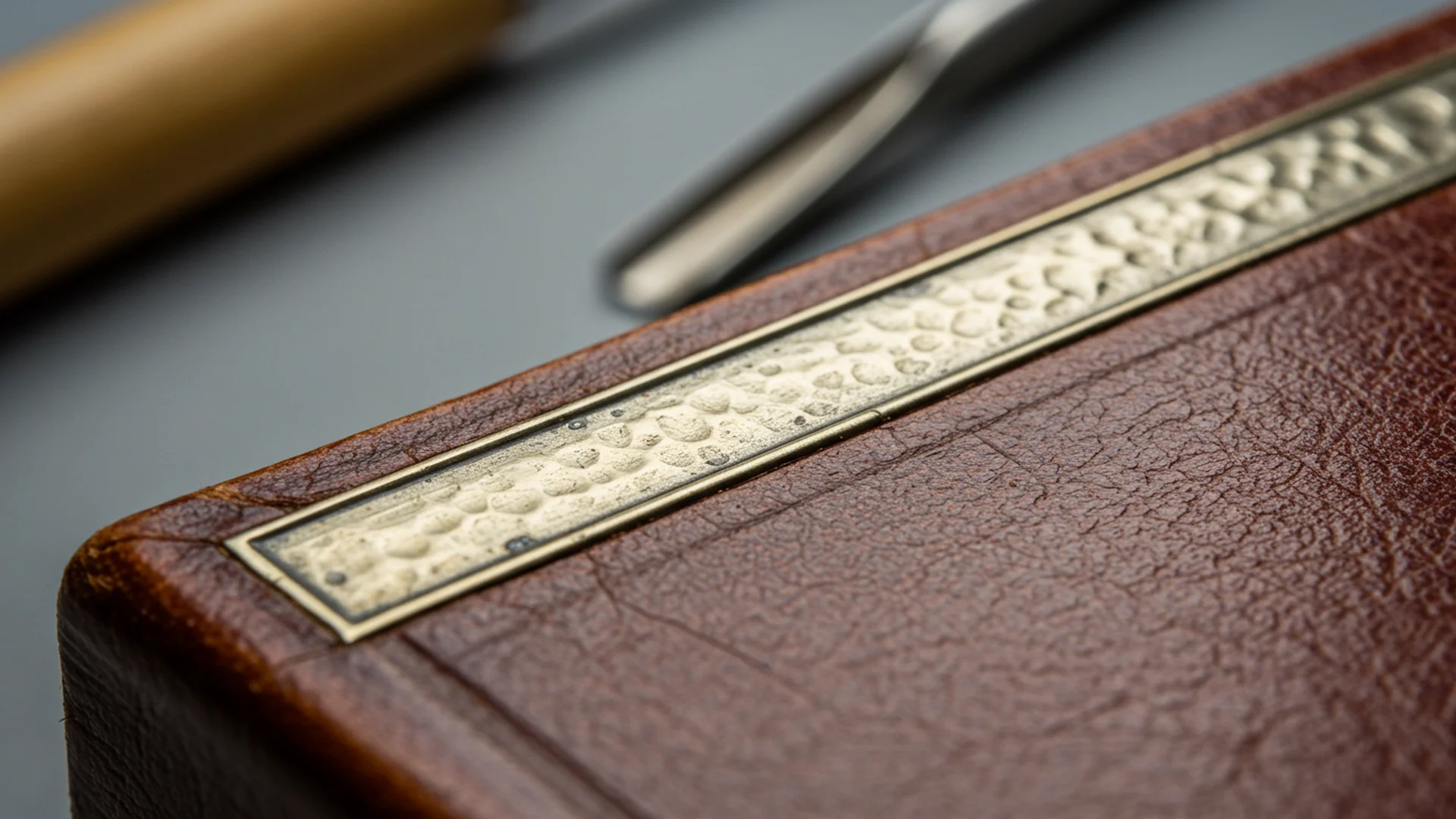
In the nineteenth century, particularly in binding styles inspired by the Middle Ages or the Gothic, the use of metal elements on book covers became popular again. Pure silver, however, was very expensive. This is where Terneplate offered an attractive solution. Thin sheets of Terneplate could be used to create a range of decorative elements. These might be a “boss” (a protective stud at the corner), a “clasp” (a catch that keeps the book shut), or even a large ornamental panel in the centre of the cover. Because the base is steel, these elements are very strong and useful. Its tin-lead coating gives a greyish white-metal appearance that can be polished to a soft shine, imitating the look of old silver at a far lower cost.
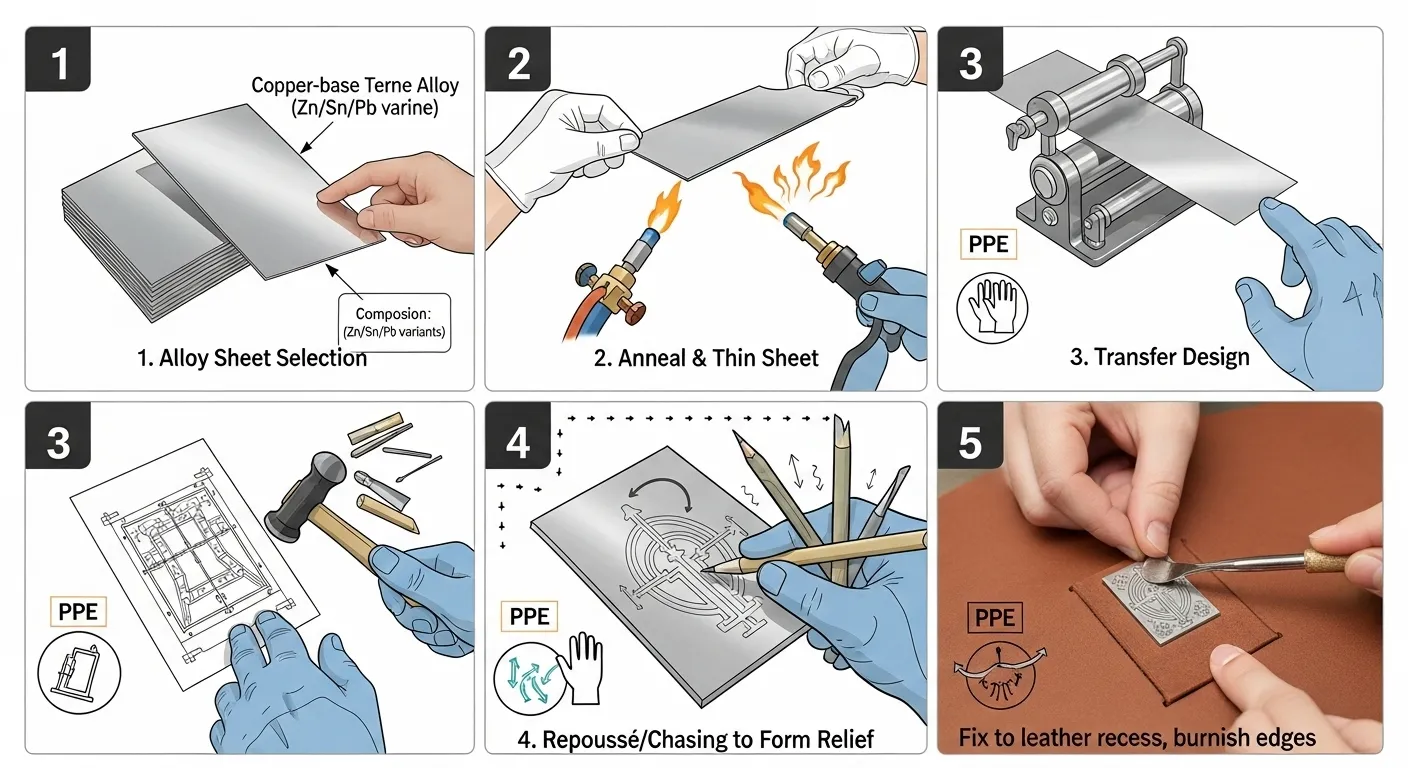
The techniques used to apply it varied. Sheets of Terne could be cut into the shapes required and fixed to the leather, often within an area that had been debossed in order to protect them. For more elaborate designs, a technique similar to repoussé (forming the metal from behind to create a raised design) could be used before the metal was fitted to the cover. Its dull sheen gives an attractive contrast with the rich texture of the leather, creating a sturdy, historic aesthetic.
Appearance and Identification: Recognising Terne Metal
Identifying Terneplate on an antique book can be a challenge, because it is often mistaken for tin or even for tarnished silver. Its chief characteristic is a dull grey colour with none of the brilliant lustre of freshly polished tin or of silver. Where the coating has been deeply scratched, a little rust from the steel core beneath may show, something that would not happen with solid silver or solid tin. Because of its high lead content, Terne feels relatively heavy for its thickness. Over time, if it is not cared for, the tin-lead layer can oxidise and form a greyish white powdery layer on the surface. The most certain method of identification is of course chemical analysis, but for the ordinary observer the combination of the dull colour, the possible rust beneath it and the weight can be a good clue.
Preservation and Care
Caring for an object decorated with Terneplate calls for special consideration, above all because of its lead content. Lead can react with pollutants in the air, especially sulphur compounds, which causes the colour to darken. High humidity can also accelerate oxidation, leading to the formation of white corrosion (often called “lead disease”). Storage in a dry, stable environment is therefore very important. Cleaning must be done with great care. Abrasive methods must be avoided, because they can wear away the thin alloy layer and expose the steel core beneath. Cleaning is usually limited to gentle wiping with a very soft dry cloth. If there is active corrosion, intervention by a professional conservator is strongly advised in order to prevent further damage.
Legacy and Relevance Today
Today, traditional lead-bearing Terneplate has largely been discontinued because of health and environmental concerns. The modern version, often called “Terne II” or “TCS” (Terne-Coated Stainless), replaces carbon steel with stainless steel and the tin-lead alloy with a tin-zinc alloy or pure tin. This modern material retains many of the aesthetic qualities of the original Terne—above all its matte grey patina—while removing the risks associated with lead and improving corrosion resistance.
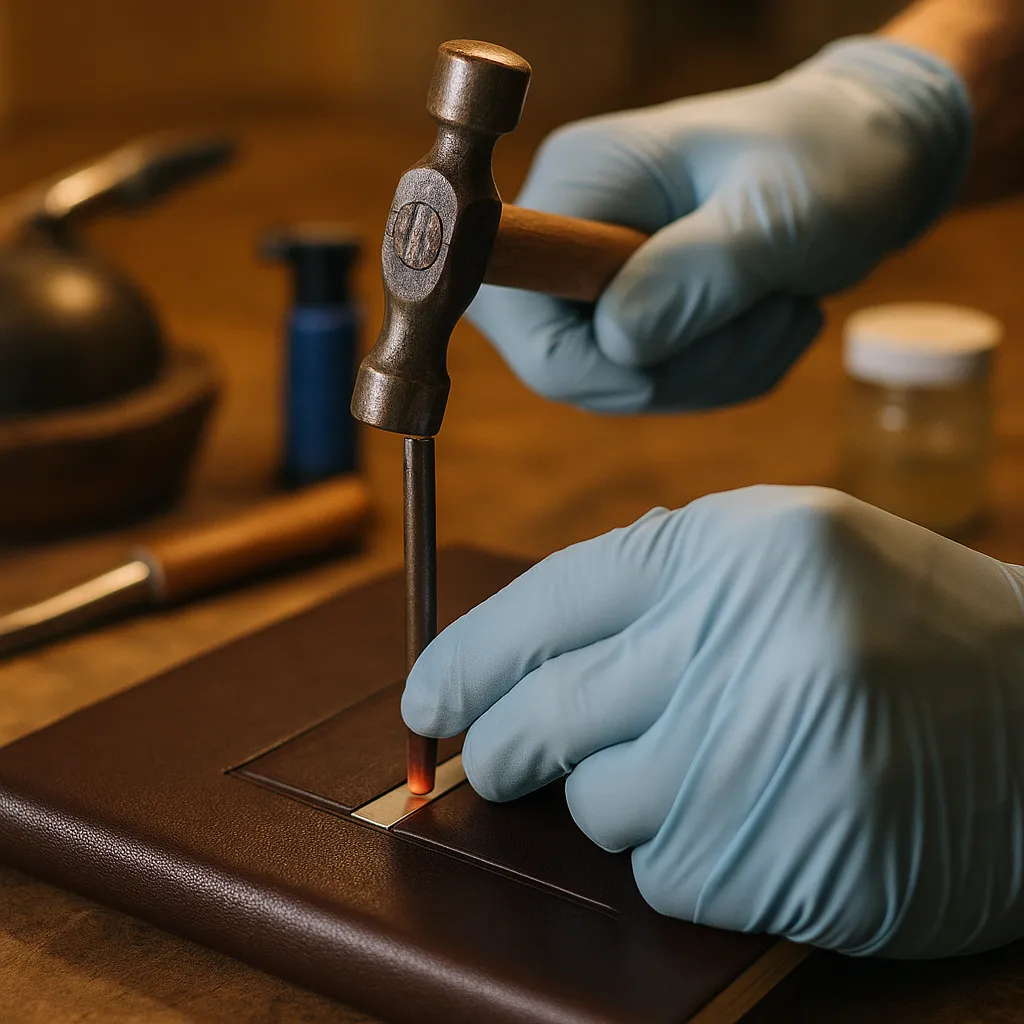
Although Terne is no longer common as a decorative element on books, studying it gives us valuable insight into the history of materials and into innovation in the crafts. It reminds us that craftsmen have always looked for new ways to reach their artistic vision within the economic and technological limits of their time. For Hibrkraft, the story of Terne is an inspiration. It is a reminder that beauty does not always come from the most expensive material, but from the intelligent and skilled use of material. Although we use safe, high-quality modern materials such as hot foil to create metallic effects on our custom journals, we respect the spirit of innovation that Terne represents—the spirit of finding the right, beautiful and lasting solution for every design.
FAQ
What exactly is Terne metal, or Terneplate?
Terneplate is a composite material, not a single alloy. It consists of a core sheet of steel (or iron) coated with a metal alloy called “Terne metal”. Historically this alloy consisted of about 80% lead and 20% tin. Its name comes from the French word for “dull”, because of its matte, grey appearance.
Why was Terne used in bookbinding? What were its advantages?
Terneplate was used in bookbinding, above all in the nineteenth century, as a cheaper alternative to silver or to solid tin. Its advantage is that it gives an elegant greyish white-metal appearance at low cost while remaining very strong and durable because of its steel core. This allowed craftsmen to make elaborate metal ornament without a high material cost.
Is Terne the same as tin or silver?
No. Terneplate differs from both. Unlike solid tin or solid silver, Terneplate has a steel core. Its outer layer is an alloy of tin and lead, which makes it look duller than the bright lustre of tin and gives it a different colour from silver. It can also rust if the coating is deeply scratched, which does not happen with tin or silver.
Is Terne still used today?
Traditional lead-bearing Terneplate is largely no longer produced, for environmental and health reasons. There is, however, a modern version, often called Terne-Coated Stainless (TCS), which uses stainless steel as the core and is coated with a tin-zinc alloy or pure tin. This material is still in use, above all for high-end architectural roofing, to imitate the historic appearance of the original Terne.
References
- Britannica. (n.d.). Terneplate.
- Merriam-Webster. (n.d.). Terneplate Definition & Meaning.
- Corrosionpedia. (2024). What Does Terne Mean?. (the original link is dead; the reference is kept without a link)
- 1911 Encyclopædia Britannica. (n.d.). Tin-plate and Terne-plate.
- National Park Service. (n.d.). Preservation Brief 4: Roofing for Historic Buildings.
- U.S. General Services Administration. (2016). Repairing and Replacing Corroded Tinplate and Terneplate Roofing. (the original link is dead; the reference is kept without a link)
- Spengler Industries. (n.d.). Terne is tin over stainless steel.
- Rupert Harris Conservation. (n.d.). Glossary: Terne plate. (the original link is dead; the reference is kept without a link)
- The Building Conservation Directory. (n.d.). Metal Sheet Roofing. (the original link is dead; the reference is kept without a link)
- Etherington & Roberts. (1982). Bookbinding and the Conservation of Books: Boss.
- Hardin Exteriors. (2024). Terne Roofing Material.
- Finishing.com. (n.d.). Seeking Terne plate or Terne 2.
- Britannica. (n.d.). Lead processing: Lead-tin.

Custom Notebook
Adorn your personal narrative with a custom leather notebook, enhanced with exquisite detailing reminiscent of fine Terne work. Craft a journal that’s as enduring and artistically crafted as the historic bookbindings it evokes.
Business & Whitelabel
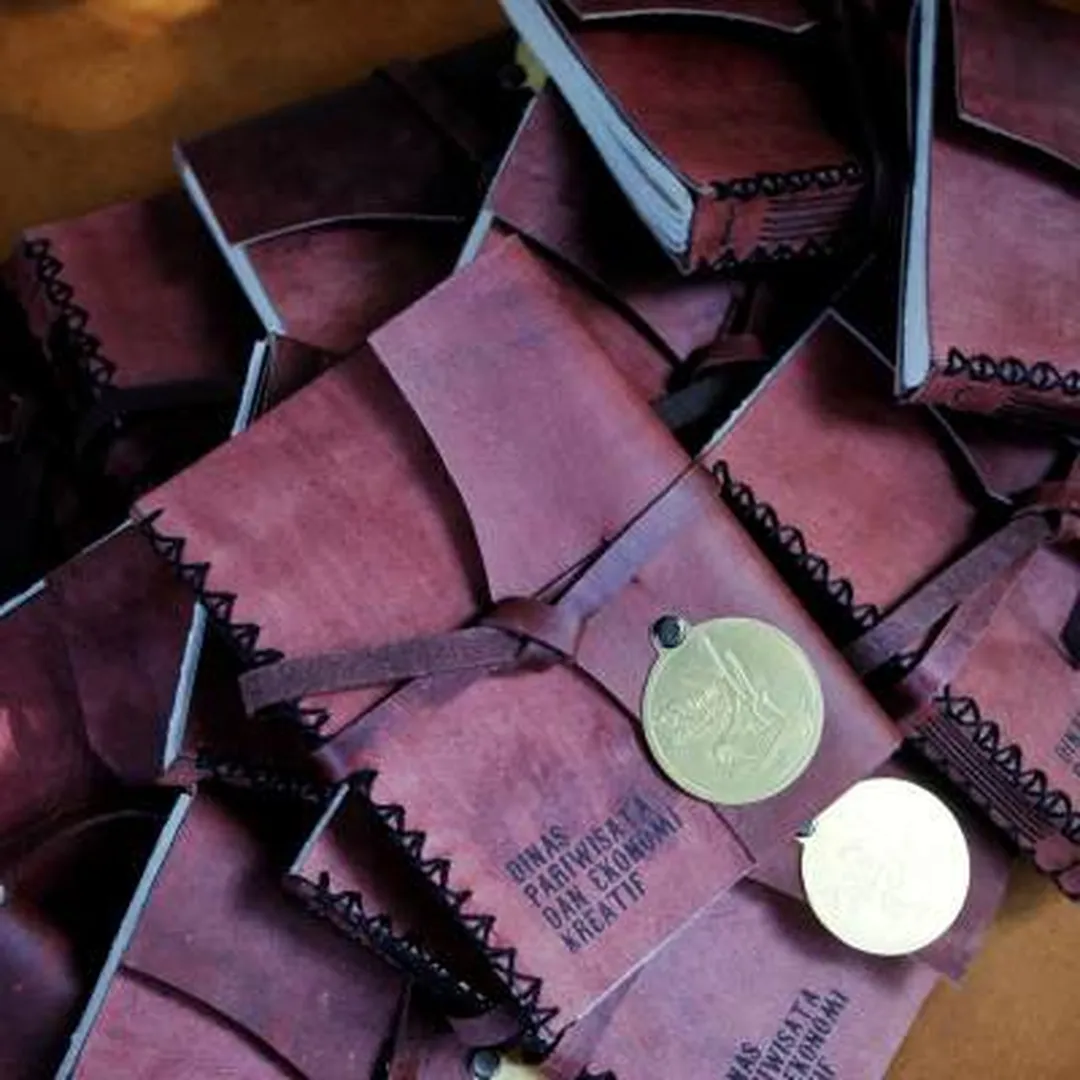
Offer your clients the luxury of timeless craftsmanship. Our premium custom business notebooks, inspired by the art of Terne inlay, provide a distinguished and lasting impression, perfect for corporate gifting and branding.
Book Repair & Conservation
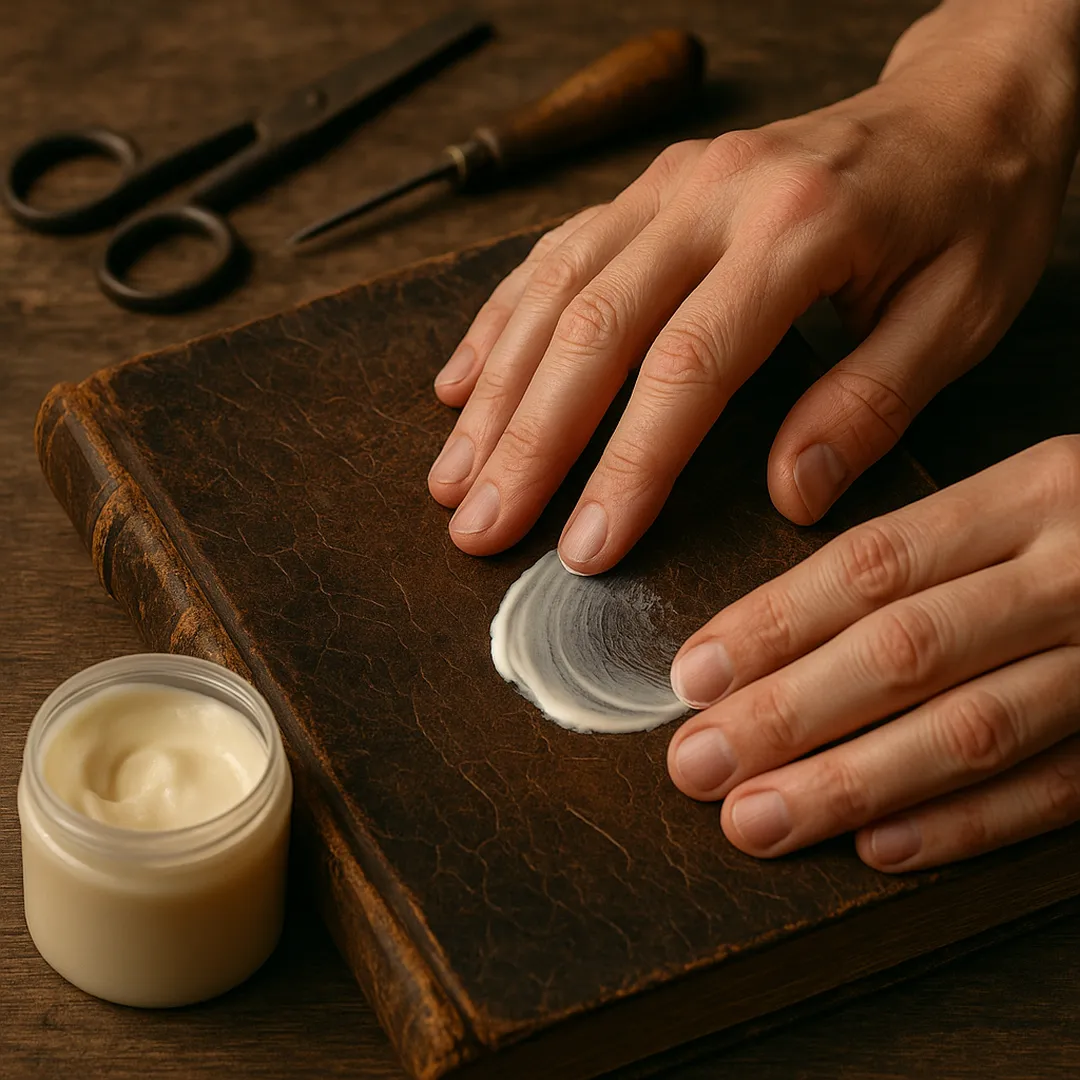
Preserve the intricate beauty of historical bindings. We specialize in restoring ornate details, including Terne inlays and ornaments, ensuring your treasured volumes retain their authentic, decorative legacy with expert care.