
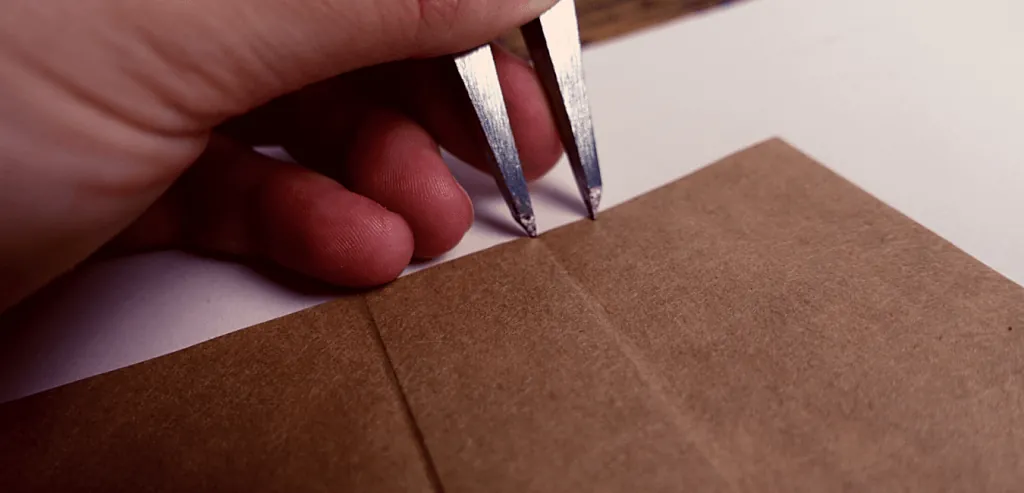
Stumpfer Schneide
by Ibrahim Anwar · July 26, 2025
“Stumpfer Schneide”, a German term that literally means “a blunt edge”, refers to the character of a cutting or working tool whose edge has deliberately been ground or shaped into a profile that is not sharp and tends towards the rounded. The idea is the opposite of “scharfe Schneide” (a sharp blade), which is what most cutting tools are made to be. In bookbinding and leather craft, deliberately choosing a blunt edge on a particular tool is not a shortcoming but a crucial design feature. It is applied to improve control when working with fine materials, to reduce the risk of damaging materials such as paper or leather, and to carry out tasks that call for controlled pressure rather than sharp cutting. How rounded or how blunt a blade is can vary a great deal, depending on the specific application.
“Stumpfer Schneide”: Design Intelligence in Bookbinding and Leather Craft
In crafts that demand high precision, such as bookbinding and leatherwork, every detail of a tool plays a decisive part in the finished result. One idea that often sounds contradictory yet is entirely fundamental is “Stumpfer Schneide”, a German term meaning “a blunt blade”. Unlike a blade that has gone blunt through wear, a “Stumpfer Schneide” is the result of deliberate design, in which the edge of a tool is made unsharp or rounded for a specific purpose. It is the antithesis of the “scharfe Schneide” (the sharp blade) we all know. The idea is highly relevant at many stages of making books and leather goods, where precise control, safety and the integrity of the material take priority over aggressive cutting power.
Etymology and the Deeper Conceptual Meaning
To understand the idea fully, let us break the term “Stumpfer Schneide” apart. “Stumpf” in German means blunt, not pointed, or not sharp. “Schneide” refers to a cutting edge, a blade, or the edge of a knife. So, literally, the term describes a blade that has no sharpness with which to cut. In a craft context, though, this is not about a tool that does not work, but about a tool whose function has been changed for a specific purpose. The blunt edge may be a rounded tip, a gentle curve along the side of the blade, or a profile ground at a wider angle so that it does not readily “bite” or tear the material. Rather than cutting, a tool with a “Stumpfer Schneide” is made to press, to smooth, to shape, or to pare material away in a gentler and more controlled way.
Historical Background: The Evolution of Craft Tools
The history of craft toolmaking is a story of evolution and specialisation. Since ancient times, makers have recognised that the shape and the edge profile of a tool strongly affect the work. As metallurgy and sharpening technique developed, the ability to create very sharp tools advanced quickly. Alongside that, though, came an awareness that different tasks needed tools with different edge profiles.
In medieval Europe, bookbinders and leather workers used a range of precisely sharpened tools. As binding technique grew more intricate and finer materials came into use, such as vellum (a very thin animal skin) and high-quality leather, the need for tools that gave greater control became more pressing. In skiving, for instance, a knife that is too sharp, used without good control, can easily ruin the leather. Knives with a slightly rounded tip, or blades with a gentle curve, of the kind found on some French- or Japanese-style skiving knives, were therefore developed to allow more controlled paring and to stop the tool from accidentally “digging in” to the leather. This is evidence that makers in the past already understood the importance of the “Stumpfer Schneide” in their practice.
“A blunt edge, or ‘Stumpfer Schneide’, is not a defect in a tool but an intelligent design feature that allows the maker to work with precision, to preserve the integrity of the material, and to improve safety in the craft process.”
Techniques and Skills That Use the Blunt Blade
The “Stumpfer Schneide” idea becomes very important in several craft techniques that call for delicacy:
- Leather Skiving: This is one of the main applications, and one in which a blunt or rounded blade profile is invaluable. A skiving knife with a rounded tip lets the maker pare away a layer of leather with a gentle sweeping motion. The unsharp tip stops the knife from going through the leather when working near a curve or an edge, giving far better control in creating an even thickness. That is crucial for making neat stitching or a smooth fold without adding excessive bulk.
- Scoring and Creasing: A tool such as a bone folder often has one end that is blunt and rounded. That end is used to press and form a fold in paper or leather without damaging the surface. The rounded edge makes sure the material is only shaped and folded neatly, not cut or torn.
- Edge Burnishing/Slicking: The tool for smoothing a leather edge (a burnisher or a slicker), usually made of wood, bone or another hard material, has a very smooth, rounded edge. It is rubbed along a leather edge that has already been cut and shaped. The process uses the heat of friction to compact the fibres of the leather, creating an edge that is smooth, glossy and durable. The blunt, smooth edge on the tool is the key to that process succeeding.
- Shaping Fine Detail: Some specialist knives, such as the Ely knife or knives with a curved blade, have an edge designed to “scratch” or shape material gently rather than cut it aggressively. This allows a smooth curve to be worked into leather, or a small detail on a book cover to be adjusted.
Each of these techniques shows that in high-level craft, brute force is not everything. The ability to control pressure and to interact with the material delicately is often more important than sharp cutting power alone.
Practical Applications, and a Comparison with the Sharp Blade
Understanding the “Stumpfer Schneide” becomes clearer when we look at it in use and compare it with its opposite, the sharp blade. The choice between the two decides a maker’s approach to the material and the finish they are after.
A Direct Comparison: “Stumpfer Schneide” vs “Scharfe Schneide”
The difference between a purpose-designed blunt blade and a sharp one is fundamental:
- The Main Purpose:
- The Sharp Blade (Scharfe Schneide): Its purpose is to separate material cleanly and efficiently. It is needed for cutting paper, splitting leather, or carving detail with high precision. Examples are the craft knife, the scalpel, or a skiving knife ground very sharp.
- The Blunt Blade (Stumpfer Schneide): Its purpose is to manipulate the material without separating it. It is needed for pressing, folding, smoothing or shaping. Examples are the bone folder, the burnisher, or a skiving knife with a rounded tip.
- Interaction with the Material:
- The Sharp Blade: It “bites” into the material and goes through it. Without good control it can cause tears or unwanted cuts, particularly in fragile or fibrous materials.
- The Blunt Blade: It glides over the surface of the material, compacting its fibres, or shaping it according to the pressure applied. This reduces the risk of damage and gives greater control.
- Safety:
- The Sharp Blade: It carries a higher risk of injury. The user has to be very careful to avoid cuts.
- The Blunt Blade: Significantly safer to use, because it is not designed to cut human skin easily. This lets the maker apply greater pressure with more confidence.
A skilled maker knows when to use each kind of blade. The common beginner’s mistake is to reach for a blade that is too sharp for a task that needs control, or the reverse: to use a tool blunted by wear when absolute sharpness is required.
Tools That Embody the “Stumpfer Schneide”
Several standard tools in bookbinding and leather craft use this principle inherently:
- Bone Folder: This iconic tool is the perfect example. It usually has a pointed end for scoring and a wider, rounded end for creasing and smoothing.
- Edge Slicker/Burnisher: A tool made of wood, bone or plastic with rounded grooves in a range of sizes. Those grooves suit smoothing and polishing a cut leather edge very well.
- Specialist Skiving Knives: French- or Japanese-style skiving knives often have a rounded tip or a curved blade, which lets the maker pare leather down with a controlled sweeping motion.
- Modeling Tools: In leatherwork, modelling tools made of metal or plastic with a round or spoon-shaped tip are used to make relief or three-dimensional detail in leather that has been dampened.
“Knowing when to use a sharp blade and when to use a blunt one is one of the marks of a maker who is experienced and who respects the material they work with.”
Relevance in Modern Practice, and the Hibrkraft Philosophy
In an age of mass production, attention to a detail like the edge profile of a tool is often neglected. For independent makers and artisanal brands such as Hibrkraft, though, the “Stumpfer Schneide” principle is highly relevant. It reflects a philosophy in which quality lies not only in the finished object but also in the process and the tools used. Every custom leather journal, agenda or other craft product we make involves a sequence of processes, and each needs the right tool for the right job.
We understand that to create a perfect fold in leather or paper we need a tool that smooths rather than tears. To finish a leather edge so that it lasts and looks professional, we need a tool that compacts the fibres rather than scraping them away. That commitment to intelligently designed tools is part of our promise to produce high-quality goods made by hand and with careful attention.
Tips on Care and Use
For makers, caring for a tool with a “Stumpfer Schneide” matters as much as caring for a sharp knife:
- Keep Them Clean: Make sure a tool such as a bone folder or a burnisher is free of glue residue or dirt that could stain your next project.
- Keep the Profile: If you need to regrind a skiving knife with a rounded tip, make sure you keep the shape of the curve. Grinding it to a point changes what it does drastically.
- Use Them Properly: Understand what each tool is for. Do not force a tool to do work its design does not suit.
Taken as a whole, the “Stumpfer Schneide” is a powerful reminder that in craft, effectiveness does not always mean aggression. There is beauty and function in gentleness, and there is intelligence in a design that puts control and delicacy first. It is one of the small secrets behind beautiful work that lasts across time.

Quality Custom Notebooks
Made with the right tools and hand craftsmanship, every one of our journals is a reflection of quality and attention to detail.
Express yourself with a handmade leather journal that can be designed exactly as you want it, a useful work of art.
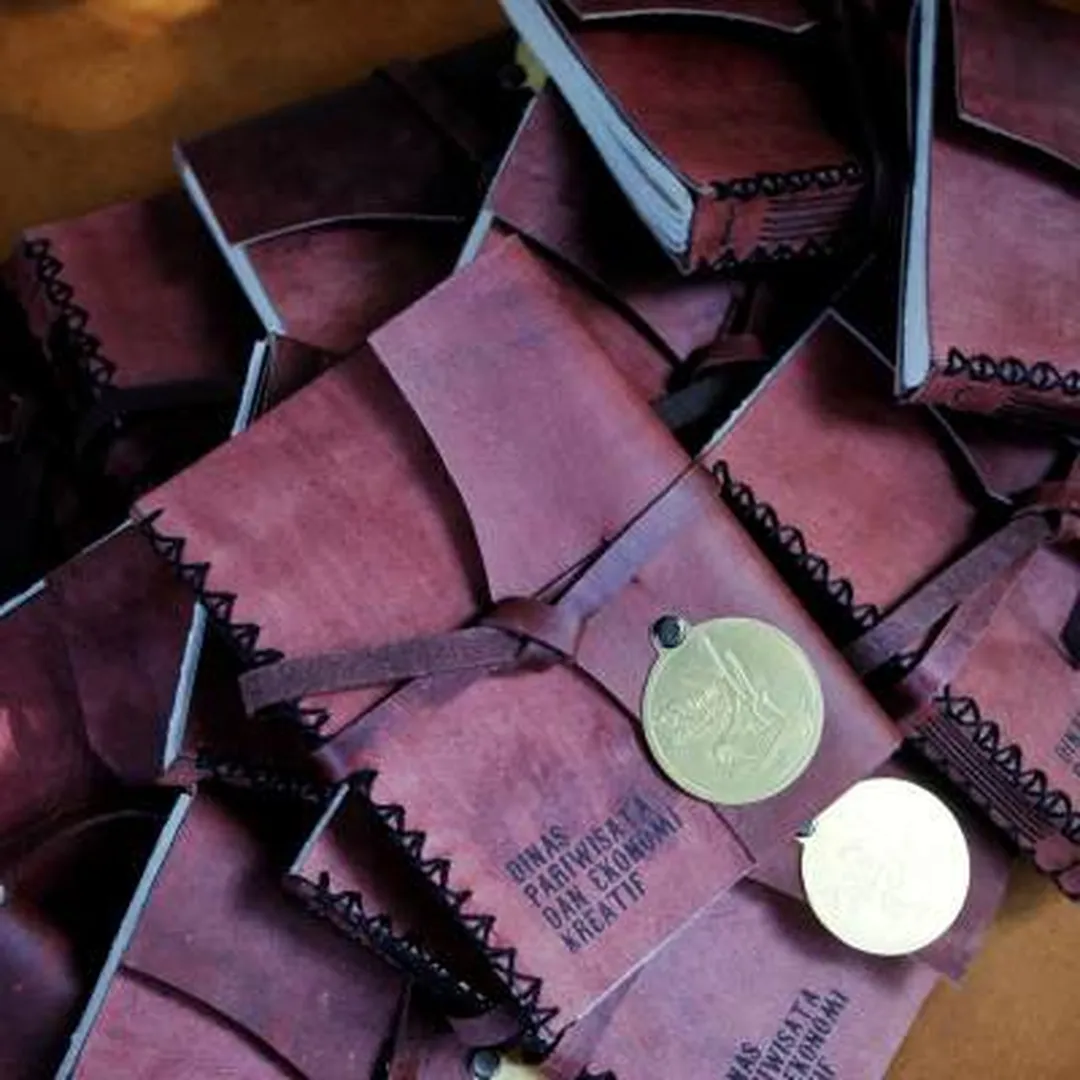
Premium Business Solutions
Raise your brand image with corporate gifts made to the highest standard of craft, from the material to the finish.
An exclusive leather agenda with your company logo, showing a commitment to quality and excellence.
Get in Touch
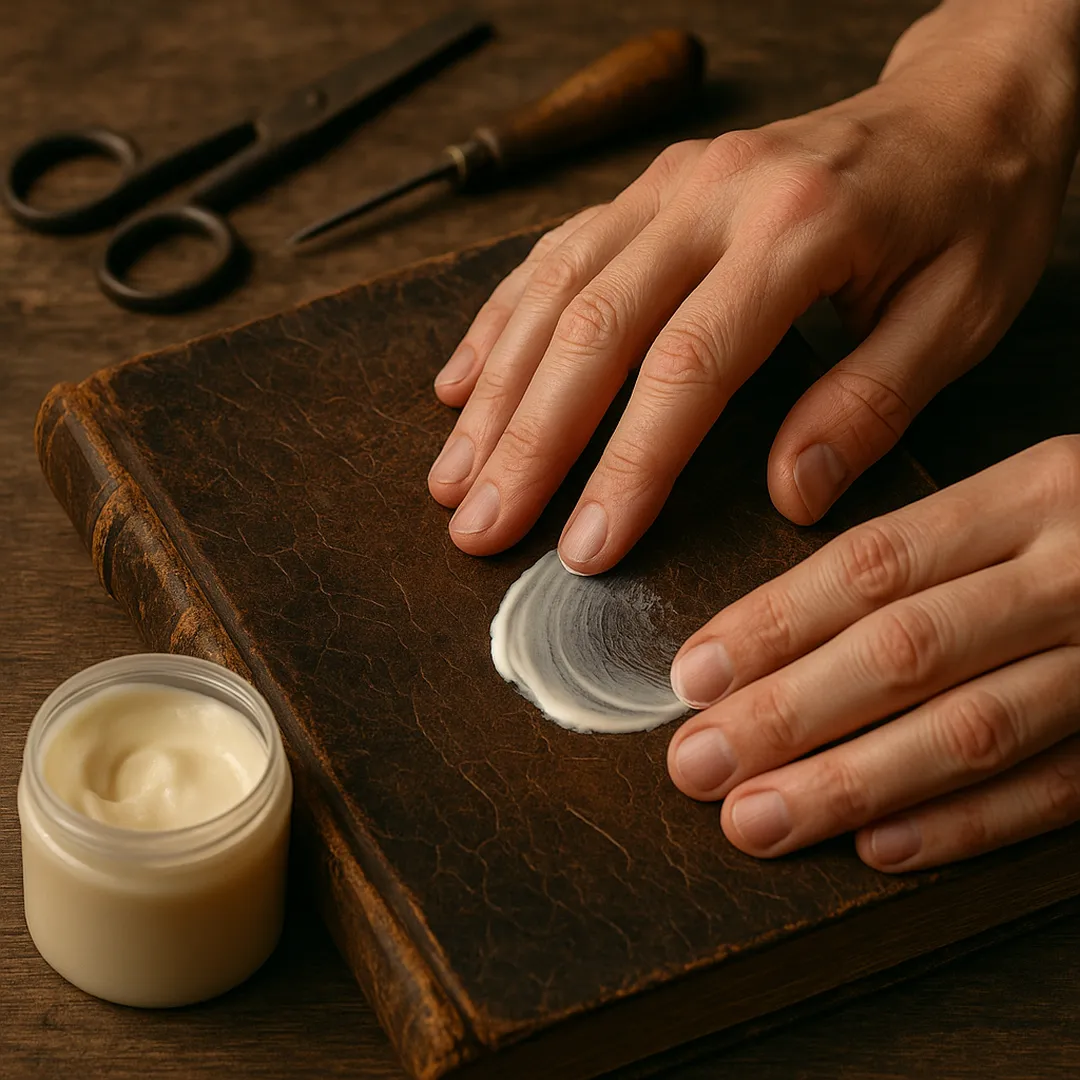
Book Repair & Conservation
We use the right techniques and the right tools, including the most delicate of them, to restore your precious books.
A restoration service for antique books and private collections, returning their beauty while respecting their history.
Free Consultation