
Slipcase Boxes
by Ibrahim Anwar · July 24, 2025
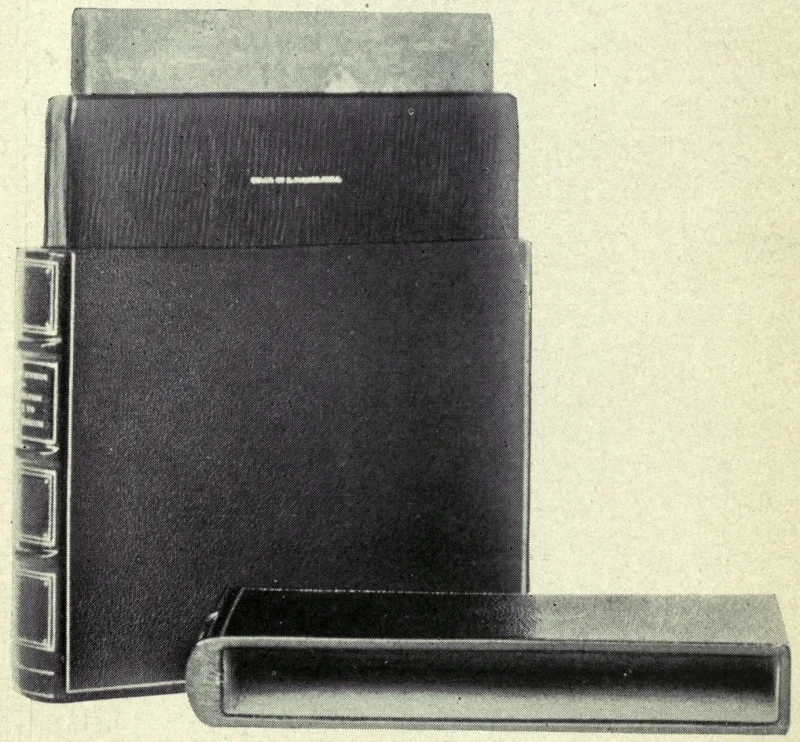
You have felt it. A special edition arrives, and it does not simply arrive. It comes wrapped in a box that is sturdy and elegant. There is a special feeling in touching it, in slowly drawing the book out of it. The box seems to whisper, “Hey, the thing in here is precious. Treat it well.” That is the magic of a slipcase.
But there is another side to this story. A darker one, known only to bookbinders, to collectors, and perhaps to you if you have lived through it yourself. The story of the slipcase that is too tight, that grips the book like a prison, forcing you to haul it out until the head of the spine is scuffed or even torn. Suddenly the protector has become the torturer. Strange, how a good intention can end up so wrong.
The Anatomy of an Ambiguous Protector
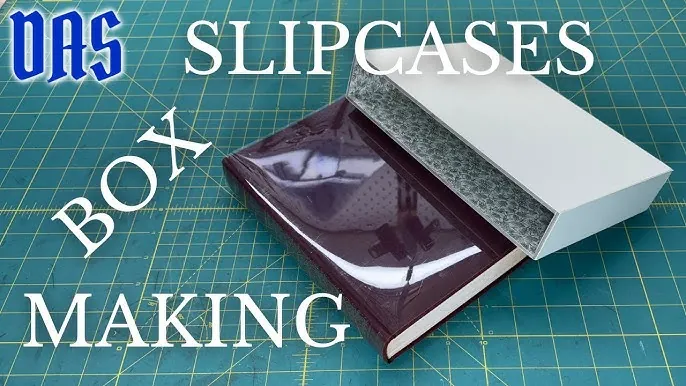
Technically, a slipcase is a rigid box with one open side. The design is deliberate: the book’s spine stays visible while it sits on the shelf. That is its main appeal. You can see a row of handsome spines, lined up neatly, each one protected in its own “slot”. It gives protection from dust above, from knocks at the sides, and from the pressure of neighbouring books, while still putting the book’s identity on show.
The materials vary too; it is not all plain grey board. Makers use book board or binder’s board, dense and not given to warping. They can cover it with almost anything, from classic book cloth, to decorative paper from Italy or Japan, to genuine leather matching the book’s own cover. Often the slipcase is finished with gold foil, embossing (raised lettering) or debossing (sunken lettering) reproducing the title from the spine, creating a satisfying visual whole.
The Paradox of Protection: Friend or Foe?
This is where the trouble begins. The open mouth that shows off the spine is also the weak point when it comes to access. Because there is only one way out, friction is unavoidable. If the slipcase is made too snug, even by a single millimetre, disaster can follow.
A good slipcase should embrace the book. Not throttle it.
The most common damage is at the head and tail of the spine (the headcap and the tail). Trying to pull the book out, people instinctively hook a finger over the top of the spine. That repeated tug, together with the friction at the mouth of the slipcase, wears down, damages and even tears the most fragile part of the binding. The edges of the front and back boards are just as liable to be scuffed each time the book goes in and comes out. Put it this way: it is like building a beautiful garage with a doorway so narrow that your car is scratched on every trip in and out.
The Right Way to Take a Book Out of a Slipcase:
Never, and again, NEVER pull a book out by the top of its spine. Do this instead:
- Hold the slipcase horizontally, with the open side tilted slightly downwards.
- Let gravity do the work. With a small shake or a gentle tap on the back, the book will slide out of its own accord into your other palm.
- If there is a “thumb cut” (the semicircular notch in the side), use it to push the book out with your thumb rather than pulling it.
A properly made slipcase should have a little play, about the thickness of a coin, so the book can “breathe” and slide smoothly.
Behind the Scenes: The Art and Science of the Box
Making a perfect slipcase is a test of patience and precision for a bookbinder. This is not merely folding card. It is micro-architecture.
The process starts with obsessive measuring. The bookbinder measures the length, width and thickness of the book at several different points, because a handmade book often does not have 100% uniform dimensions. They then calculate the internal dimensions of the box, adding a few millimetres of play. The smallest error at this stage is fatal.
After that the boards are cut precisely, joined with a strong adhesive, and often reinforced with cloth at the corners. The inside is lined first, ideally with something soft such as acid-free paper, thin velvet, or flannel, to keep friction to a minimum. Only then is the outside covered with the chosen decorative material, with close attention to every fold and corner so that the finish reads smooth and neat.
Hibrkraft and the Philosophy of Protection
At Hibrkraft we regard the slipcase with respect and a little caution. We know its capacity to beautify and to damage at the same time. If a client asks for a slipcase for their custom leather journal, we do not only make it. We educate them.
We make sure every slipcase we make is the right size, with enough play for easy access without the book rattling about inside it. We give priority to an inner lining that is soft and safe for leather. And most importantly, we will recommend an alternative if we judge that a book, especially an old or fragile one we are repairing, needs a higher level of protection.
The Box Family: The Slipcase and Its Relatives
The slipcase is not the only option for protecting a book you treasure. There are several “relatives” in the family of protective boxes, and the best known is the Clamshell Box.
Slipcase vs. Clamshell Box (Solander Box)
If the slipcase is a garage, the clamshell box is a private safe. It is called a clamshell for its shape, like the shell of a clam: two parts, a lower tray and an upper lid, joined by a hinge on one side. Closed, it protects the book on all six sides.
Here is the comparison:
| Feature | Slipcase | Clamshell Box |
|---|---|---|
| Level of Protection | Good (5 sides). Protects from dust, light and shelf pressure. | Very Good (6 sides). Total protection from every element. Archival standard. |
| Access to the Book | Friction going in and out. A risk of damage if not made or used correctly. | No friction. The book is laid into the tray and lifted out of it safely. |
| On the Shelf | The spine is visible; very aesthetic. | The book is hidden completely. The box itself becomes the display. |
| Cost to Make | Relatively cheaper and quicker to make. | More complex, more time-consuming, and more expensive. |
In the end, the choice between the two depends on your priorities. If you want to show off the beauty of the spines in your collection and protection from dust is enough, the slipcase is the elegant choice. But if you own a book that is rare, fragile, or of high sentimental value and needs maximum protection, the clamshell box is by far the wiser investment.
References
Want to go deeper into the world of making protective book boxes? These sources are a good starting point:
- Bookbinding Outbound (the original link is dead; the reference is kept without a link) – A blog offering guides and a detailed comparison between making a slipcase and making a clamshell box.
- Leonard’s Book Restoration (the original link is dead; the reference is kept without a link) – Explains the functional difference between a slipcase and a clamshell case from the perspective of a professional book restorer.
- Sage Reynolds (YouTube) – A professional bookbinder with a great many tutorial videos, including how to make a slipcase and a clamshell box with the right technique.
- Don Etherington’s Conservation Blog – A resource from a legendary conservator, discussing the various kinds of book enclosure from an archival point of view.

Custom Notebook
Handmade leather notebooks you can design yourself — for a gift, a memory, or plans still to come.
Business & Whitelabel
Business and corporate gift solutions in the form of exclusive agendas carrying your company’s logo.
Book Repair & Conservation
Repair and conservation for antique books, family heirlooms, and private collections of historical value.