Single Tray Box: An Enclosure for Storage & Presentation
by Ibrahim Anwar · August 11, 2025
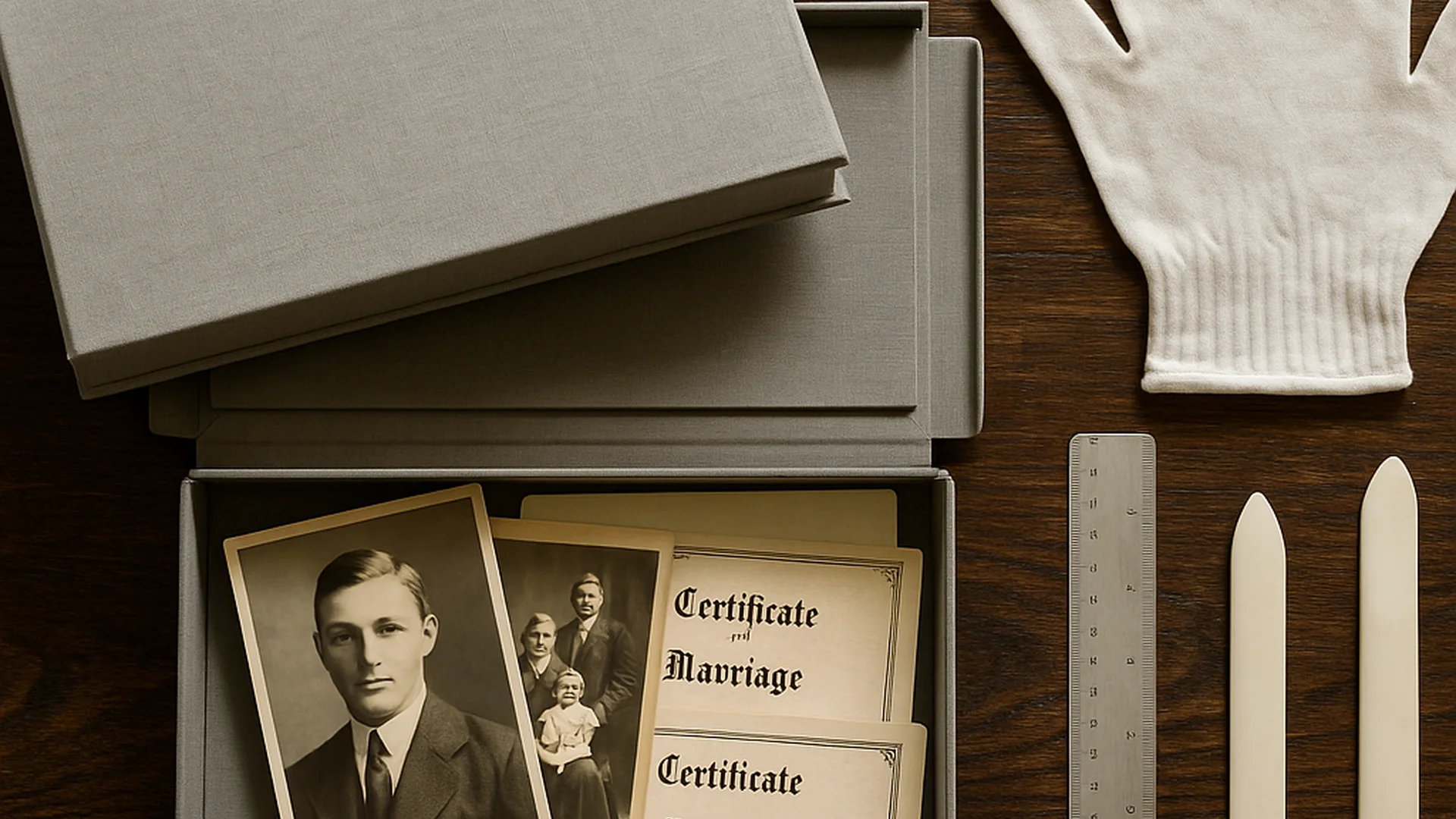
Imagine you are storing a collection of precious photographs, important certificates, or even a first edition. You do not want simply to keep them in a drawer; you want to protect them in a way that also honours their worth. This is where the single tray box comes in, not as an ordinary box but as a protective sheath made with precision. It is a blend of the art of bookbinding and the engineering of packaging. Opened, it does not come apart into two pieces like a shoebox; it is revealed like a precious book, presenting its contents with a measured ceremony. It is a storage solution that understands that the way we protect something is a reflection of how much we value it.
Dissecting the Anatomy of the Single Tray Box: More Than a Container
To understand the elegance of the single tray box, we have to see it not as one object but as a system made of two main components working in harmony: the tray and the case. Its unique design sets it apart from other kinds of protective enclosure, offering a perfect balance between accessibility, protection and aesthetics. It is a construction born of the needs of archivists, collectors and makers who demand the best for their precious possessions.
The Structure Defined: A Tray United with a Case
At the heart of the single tray box, as the name says, is a single tray. The tray is a shallow three-dimensional container, usually made of rigid book board so that it gives structural protection. It is built separately and then fixed permanently to the inside of the case’s “back board”. The case itself is made exactly like the case of a hardcover book, complete with a spine and two cover boards. The whole structure hinges along the spine, letting the case open and close smoothly.
When the box is closed, the front cover covers the top of the tray, and often the walls of the case (known as the “turn-ins” or the “squares”) fit neatly around the walls of the tray, creating a tight seal against dust and light. It is this unified design that gives the box its book-like character and makes it feel so solid and so satisfying to hold and to work. It is a box that thinks like a book.
The Key Element: The Drop-Front Wall
One of the most brilliant innovations in the design of the single tray box, above all for archival use, is the drop-front feature. In many designs one of the tray’s four walls, usually the one at the front, is not glued permanently but hinged along its lower edge. That means that when the box is opened, the front wall can be folded down flat with the base of the tray.
The feature may sound trivial, but it is crucial to the safety of the contents. When storing fragile material such as art prints or old photographs, trying to lift them out of a tray with four rigid walls carries a real risk of damage, a bent corner or a fingerprint left behind. With the drop-front feature you can slide the contents safely out of the tray without having to lift them vertically. It is a detail of design born of a deep understanding of what conservation needs, a perfect example of function dictating form in the most elegant way.
The single tray box turns storage from a passive act into an active presentation; it does not hide, it prepares to reveal.
The Main Purpose: Elegant Presentation and Archival-Grade Protection
The single tray box serves two main purposes that are often hard to balance: protection and presentation. On protection, its rigid, tight-closing construction gives an excellent defence against physical threats (knocks, pressure), environmental ones (dust, light), and even changes in humidity. Made with archival-quality materials (acid-free and lignin-free board, together with a neutral adhesive), it also protects the contents from chemical damage from within, preventing yellowing or brittleness over time. This is why museums, libraries and archives all over the world rely on this kind of box to store their most precious collections.
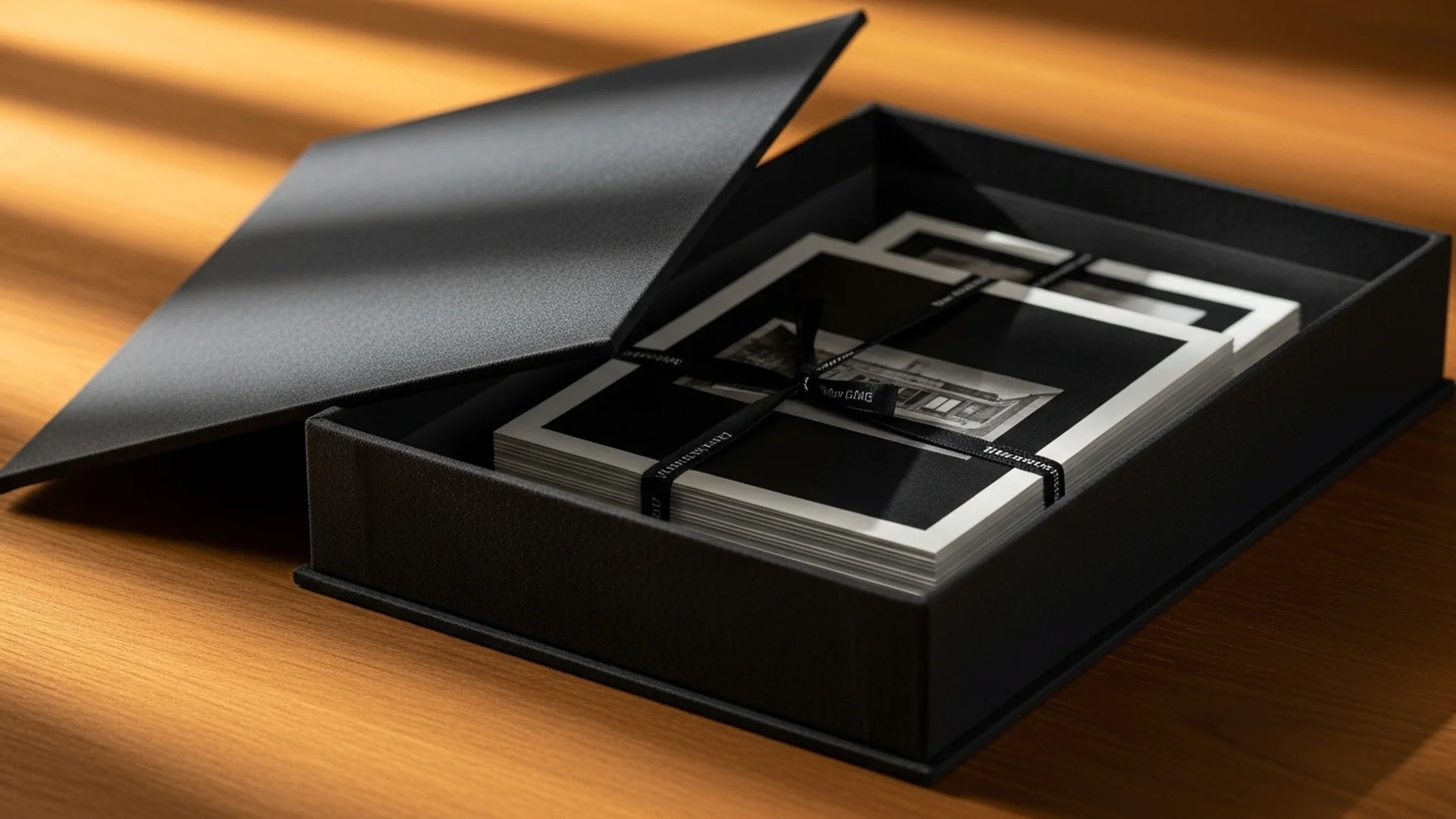
On presentation, the box has no equal. The act of opening it—lifting the lid, seeing the contents laid out neatly in the tray—creates a deliberate and satisfying “unboxing” moment. It is ideally suited to the portfolio of an artist, a photographer or a designer who wants to show their work in a way that is professional and makes an impact. It is also a popular choice for limited editions or luxury gift sets, where the packaging itself is part of the value and the experience of the product.
Behind the Construction: Art, Variation and Custom Application
Making a single tray box is an advanced bookbinding project that calls for precision, patience and a firm grasp of paper engineering. Every measurement has to be exact, every cut straight, and every corner square. Behind these technical demands, though, lies a wide space for customisation and artistic expression, letting every box become a unique work of art.
The Construction Process: A Marriage of Box and Book
Making a single tray box essentially combines two disciplines: box making and case making.
- Tray Construction: The process begins with the tray. Book board is cut precisely for the base and for all four walls. The pieces are then assembled into a tray, usually by gluing the corners and reinforcing them with strips of strong cloth or paper. If the drop-front design is used, one wall is fitted with a cloth hinge rather than glued fast.
- Case Making: At the same time the case is made. This is exactly like making the case for a hardcover book. Two boards, for the front and back covers, and a thinner piece of board, for the spine, are cut to size, allowing for the thickness of the tray. The boards are then laid on the covering material (book cloth, leather or decorative paper, say) at exactly the right spacing to create the hinges, and the covering material is folded over and glued down neatly.
- Casing-in & Finishing: This is the most crucial step. The finished tray is fixed carefully to the inside of the back cover. The inside of the case and the outside of the tray are then often lined with decorative paper or cloth to give a clean, professional finish. Final touches such as a ribbon tie or a hidden magnet can be added to keep the box securely closed.
Every step demands accuracy down to the millimetre to make sure every part fits perfectly.
A Comparison of Styles: Single Tray vs. Clamshell vs. Four-Flap Enclosure
To understand fully what makes the single tray box unique, it is worth comparing it with other protective enclosures:
- vs. the Clamshell Box: This is its closest rival. A clamshell box is made of two separate trays, upper and lower, that interlock like the shell of a clam. Opened, the contents sit in the lower tray. Its advantage is a very sturdy 360-degree protection. The single tray box, though, is often held to have the more elegant presentation, because of its book-like design and the easier access the drop-front feature gives.
- vs. the Four-Flap Enclosure: This is a simpler solution and not as rigid as a box. It is made from a single sheet of board folded into four flaps that overlap one another to wrap the contents. Its advantage is that it adapts to contents of varying thickness and is cheaper to produce. It does not, though, give the rigid structural protection of a single tray box.
- vs. the Slipcase: A slipcase is a sleeve with one open side, into which a book or object can be slid. It protects the book’s spine from light and dust, but leaves the spine visible. It does not give the full protection of a single tray box.
The choice among these styles depends on the level of protection needed, the aim of the presentation, and the budget.
When to Choose a Single Tray Box (and Why)?
You should consider a single tray box when:
- You Are Storing Flat, Fragile Objects: This is the gold-standard choice for storing photographic prints, important documents, watercolours, or a collection of archival material. The drop-front feature is invaluable for these items.
- Presentation Is Key: If you are an artist or a designer making a portfolio, or you are giving a high-end corporate gift, a single tray box offers a premium opening experience that stays in the memory.
- You Need a Solution for a Set: The box is perfect for holding a cohesive set, such as a limited edition of a book with additional prints, or a set of custom stationery.
- You Want a Book-Like Aesthetic: If you want your protective enclosure to sit in harmony on the shelf beside the rest of your book collection, the book-like design of the single tray box is the ideal choice.
Hibrkraft’s Take on It: A Custom Enclosure for Your Precious Moments
At Hibrkraft we see the single tray box as a natural extension of the art of bookbinding. It is a way of taking our philosophy of craftsmanship, personalisation and quality materials and applying it to protect the things that mean most to you, even when those things are not books. We see it as a blank canvas with unlimited potential for customisation.

Imagine a single tray box covered in the same leather as your wedding album, made specially to hold your marriage certificate and a few of your favourite prints. Or a slim, professional portfolio box covered in book cloth with your company logo subtly debossed, to make an unforgettable first impression on an important client. We can even design a box with interior compartments built specially to hold a custom Hibrkraft journal alongside your favourite pen, creating a complete and luxurious gift set.
When you come to us needing a protective enclosure, we do not think only about a “box”. We think about the story behind the object it will hold, and how we can design a home that not only protects that story but honours it and makes it more beautiful. The single tray box is one of the most elegant tools in our repertoire for realising that vision.
FAQ
What is a Single Tray Box?
A single tray box is a kind of custom protective box made of one shallow tray fixed to a hinged case that wraps around it. Its design is unified like a book’s, and it is ideally suited to protecting and presenting flat or precious objects.
What is the main difference between a Single Tray Box and a Clamshell Box?
The main difference is the number of trays. A single tray box has one tray attached to its case. A clamshell box has two separate trays, upper and lower, that close on each other like the shell of a clam. The single tray box is often held to be the more elegant in presentation, while the clamshell offers a very tight protection.
What is a Single Tray Box mainly used for?
The box is highly versatile, but it is most often used for: archival storage of documents or precious photographs (above all with the drop-front feature), professional portfolios for artists and designers, and luxury packaging for limited-edition products or corporate gift sets.
Why does the 'drop-front' feature matter?
The drop-front feature matters greatly for the safety of fragile contents. It lets you slide flat objects such as photographs or prints out easily, without having to lift them by a corner, which significantly reduces the risk of bending, scratching or leaving a fingerprint. It is the standard in high-quality archival boxes.
References
- Etherington & Roberts. (1982). Bookbinding and the Conservation of Books: A Dictionary of Descriptive Terminology – Portfolio Box.
- iBookBinding. (2020). Making a Portfolio Box for Your Prints. (the original link is dead; the reference is kept without a link)
- Archival Methods. (n.d.). What Is A Drop Front Box?. (the original link is dead; the reference is kept without a link)
- Jeff Peachey. (2012). Boxes & Enclosures in Conservation (and a great tutorial). (the original link is dead; the reference is kept without a link)
- University Products. (n.d.). Drop-Front Boxes. (the original link is dead; the reference is kept without a link)
- Northeast Document Conservation Center. (n.d.). 4.3 Storage Enclosures for Books and Artifacts on Paper. (the original link is dead; the reference is kept without a link)
- Sage Reynolds. (2018). How to Make a Clamshell Box for a Book. (Video shows Clamshell, useful for comparison).
- TALAS. (n.d.). Archival Storage Boxes.
- Instructables. (n.d.). How to make a single tray box. (the original link is dead; the reference is kept without a link)
- The Huntington Library, Art Museum, and Botanical Gardens. (2021). A Box Full of Surprises.