
Quarter Circles
by Ibrahim Anwar · August 9, 2025
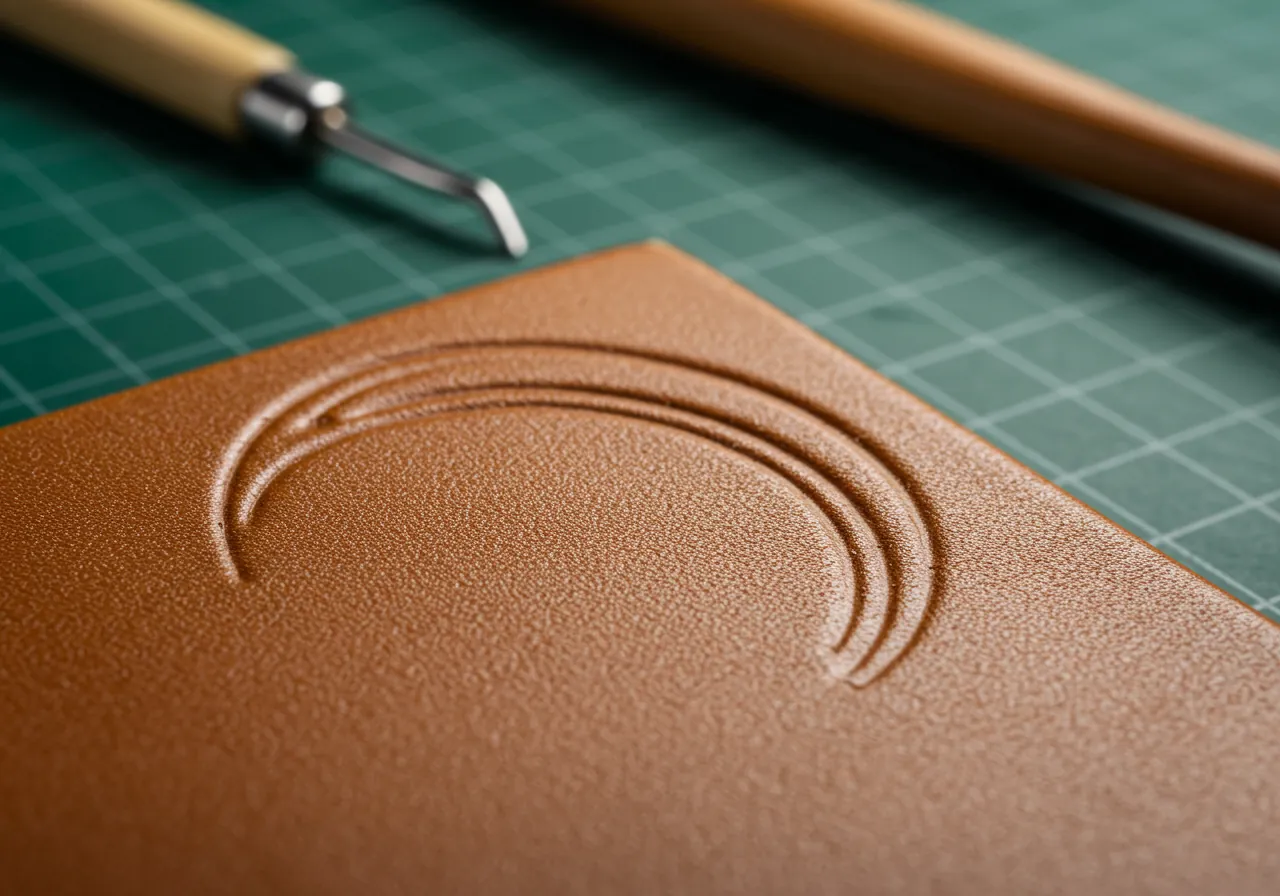
Look at a beautiful leather-bound book. Our eye naturally travels across its surface, beginning at the edges and moving towards the centre. Bookbinders of centuries past understood this visual path very well. They used decorative elements to guide our gaze, and one of the most fundamental and effective of them is Quarter Circles. Placed at the corners of the cover, the motif works like an opened stage curtain, quietly framing the main content at the centre and giving a sense of order and grace. Whether as a single simple arc or as part of an intricate geometric pattern, the quarter circle is evidence of how a basic shape can be raised into sophisticated art, turning a book cover from a mere covering into a visual portal.
From Simple Geometry to Intricate Art: Understanding Quarter Circles
In the lexicon of design, basic shapes such as the circle, the square and the triangle are the foundation of all visual composition. The quarter circle, as a fragment of a perfect form, has a unique quality. It carries the softness and continuity of the circle’s curve, while keeping the structure and definition of its two straight sides meeting at the corner. In bookbinding, the use of this shape is not merely a matter of aesthetics; it is a deliberate design choice, rooted in classical principles of composition and in craft techniques honed over hundreds of years.
The Design Function: More Than a Corner Ornament
At first glance, Quarter Circles may look like nothing more than a corner ornament. Its function, though, is far deeper and more strategic. First, it serves as a framing element. By occupying all four corners of the cover, these quarter circles collectively create an imaginary frame, directing the eye to the centre of the cover, which is often filled with a centrepiece, a title or an emblem. This creates a clear visual hierarchy and stops the design from feeling “empty” or “lost” at the edges.
Second, the motif adds balance and symmetry. Repeating the same shape at all four corners gives a sense of order and harmony to the design as a whole. Even where the centre of the cover carries an asymmetrical or organic design, these structured corners provide a stable foundation. Third, the quarter circle can be used to define a style. A simple arc worked in blind tooling will give a minimal, modern impression, while a quarter circle filled with an intricate pattern of flowers and leaves in gold will immediately summon the luxury of the Baroque or the Rococo. The choice to use this motif (or not to use it), and the way it is executed, is therefore an important decision, one that communicates period, degree of luxury and the bookbinder’s artistic intent.
The Historical Trail: The Evolution of the Quarter Circle in Bookbinding
The use of corner ornament in bookbinding can be traced back to the earliest manuscripts, though the shape was not always a quarter circle. At first the corners of wooden boards were often protected with bosses (metal studs) to shield them from knocks. As leather binding developed in Europe, particularly during the Renaissance, the focus shifted from physical protection to decorative ornament. Bookbinders in Italy and France began to use heated metal finishing tools to make impressions in the leather.
In the sixteenth and seventeenth centuries, highly intricate binding styles such as the fanfare were born. In this style the whole surface of the cover is decorated with a dense geometric pattern, and the quarter circle is often the starting point of the interlacing curved lines and plant motifs that spread across the cover. This is where the quarter circle evolved from an isolated corner element into an integral part of an all-over design. In the eighteenth and nineteenth centuries the style became more restrained, and the quarter circle returned to its role as an elegant framing element, often executed with great precision using purpose-made corner tools. Even in modern design movements such as Art Deco the motif held on, though in a more stylised, emphatic and geometric form.
The corner of a book cover is not the end of the design, but the beginning of the frame that defines and dignifies the space within it.
The Technique Behind the Beauty: How Are Quarter Circles Made?
Creating a quarter-circle motif on a book cover, and especially on leather, calls for skill and specialised equipment. Bookbinders use several main techniques, each giving a different finish:
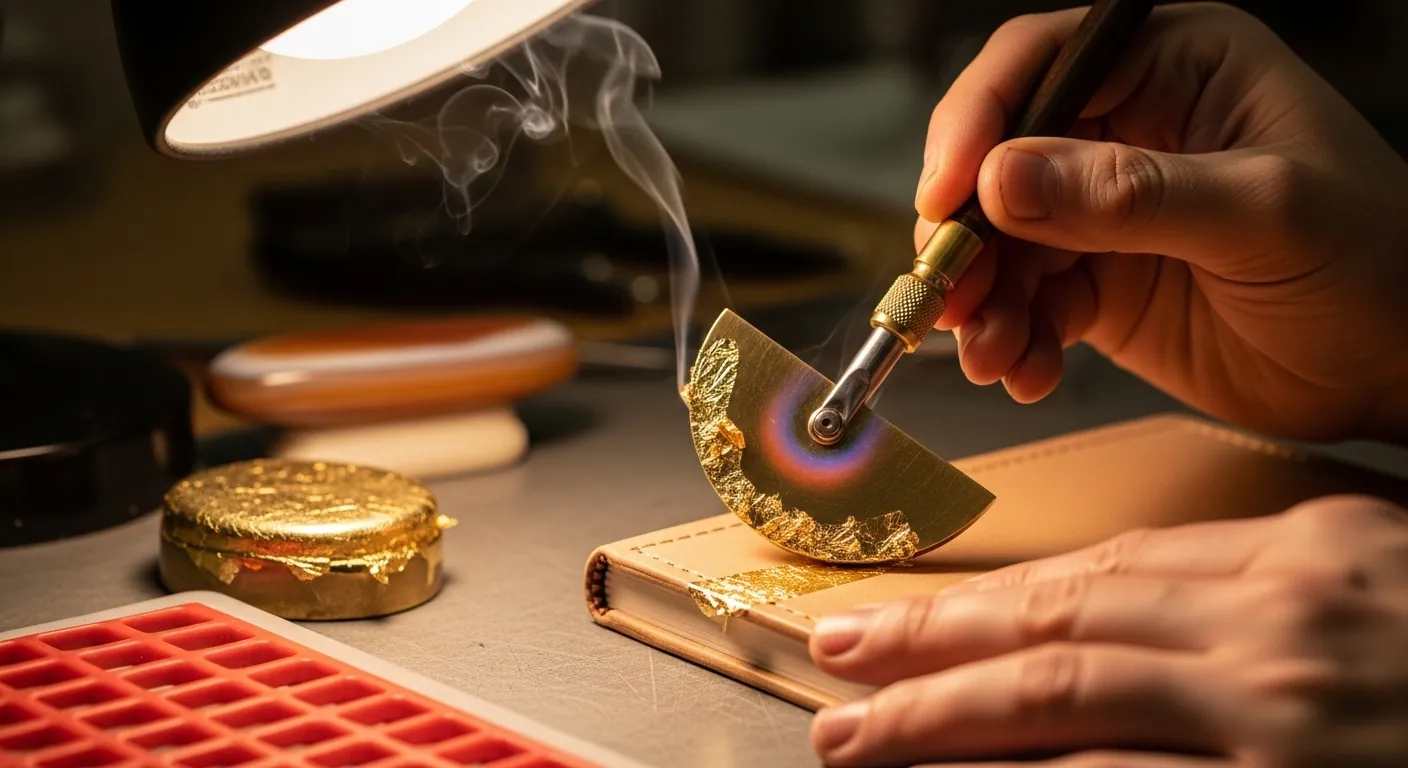
- Gold Tooling: This is the most lavish method. A craftsman uses a metal finishing tool heated to exactly the right temperature. The tool is then used to press a sheet of gold leaf into the surface of the leather. Heat and pressure transfer the gold into the impression the tool makes, producing a design that is bright and permanent. The tool may be a single whole corner stamp, or the shape may be built up by combining several smaller curved and straight tools.
- Blind Tooling: The process is the same as gold tooling, but carried out without gold leaf. The heated tool is pressed directly into leather that has been slightly dampened. The result is an impression darker and glossier than the leather around it. The technique gives a subtler, more elegant effect and brings out the natural texture of the leather. It is a popular choice for plainer, more modern designs.
- Inlay and Onlay: For a contrasting colour effect, inlay or onlay can be used. In inlay, part of the cover leather is cut away to the shape of the quarter circle and a piece of leather in a different colour is set into the area so that the surface stays flush. In onlay, the coloured piece of leather is laid on top of the cover leather, creating a more pronounced three-dimensional effect. Both techniques are highly labour-intensive and show a high level of skill.
Every technique demands a steady hand, a sharp eye and a deep understanding of how tool, heat and pressure interact with different kinds of leather.
Meaning, Style and Contemporary Use
Beyond its technical and historical function, a design element such as the quarter circle also carries a layer of meaning and symbolism. Choosing to bring it into a modern book design is no longer merely a matter of following tradition, but a conscious decision to summon a particular mood, to tell a story, or to express a personal style. In the world of custom craft, it is small elements like these that often have the greatest effect.
Symbolism in Shape: What Does a Curved Corner Say?
Symbolically, the straight line is often associated with structure, strength and logic, while the curve is associated with softness, nature and flow. The quarter circle uniquely combines the two. Its straight sides are anchored in the corner of the cover, giving a sense of stability and foundation. Its curved side, though, softens the hardness of that corner, adding a touch of grace and movement. The curve is itself part of an unseen circle, implying wholeness, perfection, and the world contained inside the book. By framing the cover, the quarter circle symbolically “protects” and “consecrates” the space at the centre, marking it as an area of importance and worth attention. It is a quiet way of saying that what is inside the book is precious and complete.
Variation and Style: From Minimal to Fanfare
The versatility of the quarter circle shows in its ability to adapt to a range of design styles. A designer or bookbinder can work this element to reach very different effects. In a minimal style, a single thin arc blind tooled at each corner is enough to give a sophisticated finish without disturbing the simplicity of the design. In an Art Deco style, the quarter circle can be repeated in several concentric layers, or combined with radiating straight lines in a sunburst, to create a dynamic and modern energy. For a more traditional or fantastical style, the quarter circle can be filled with intricate motifs such as vine work, floral patterns or even small mythological creatures, turning the corner of the book into an artistic vignette. Its ability to be paired with other elements such as borders and centrepieces makes it one of the most flexible components in a bookbinder’s design kit.
Hibrkraft’s Take on It: Personalisation Through Geometric Detail
At Hibrkraft we understand that the beauty of a custom book often lies in its detail. A design element such as Quarter Circles is one of the best ways for our clients to add a personal touch that reflects their own style. We do not see it as ornament alone, but as part of that book’s visual narrative. Are you picturing a business journal with a clean, professional look? A pair of precisely blind tooled quarter circles can add a touch of class without looking overdone. Or are you making a romantic wedding guest book? Corners gilded in the shape of an arc and dressed with small leaves can frame the couple’s initials beautifully at the centre.
We encourage clients to think about how these geometric elements can strengthen the theme or the purpose of their book. It is a chance to play with the balance between simplicity and intricacy. By offering a range of techniques—from hot foil stamping in a range of colours to timeless blind tooling—we give the client a canvas to create on. A quarter circle may be only a small detail, but in a Hibrkraft custom book, it is the small details that tell the biggest story.
How to Ask for This Feature in Your Custom Order
Interested in adding Quarter Circles to your custom order? It is easy. When you talk it through with our design team, you can say that you would like to add “corner ornament” or “quarter-circle decoration”. It helps a great deal if you have a picture of the style you want. Would you prefer something subtle and modern, or classical and ornate? You can look for reference images from historical books or from modern designs to help communicate your vision. Say which technique you prefer as well: do you want the gleam of gold foil, the grace of rose gold, or the simplicity of blind tooling? Our team will help you choose the size and the level of intricacy that best suits your overall design and your budget, making sure that every corner of your book is finished perfectly.
FAQ
What are Quarter Circles in the context of book design?
Quarter Circles are a decorative motif in the shape of a quarter of a circle, traditionally used to ornament all four corners of a book cover. They work as a framing element, creating visual balance and adding beauty to the design as a whole.
How is Quarter Circles decoration made on a leather book cover?
The decoration is usually made using one of several techniques. The most common is tooling, in which a heated metal tool, or stamp, is used to press the design into the leather. It can be done with gold leaf, as gold tooling, for a bright result, or without gold, as blind tooling, for a subtler and darker impression.
Which book design styles often use the Quarter Circles motif?
The motif is highly versatile and appears in many styles. It is especially prominent in luxury European binding from the sixteenth to the nineteenth century, including the intricate fanfare style. It was also adapted into more modern styles such as Art Nouveau and Art Deco, and it remains a popular element in classical and neoclassical book design today.
What is the function of a decorative element like Quarter Circles?
Beyond beauty, its function is strategic within the composition of the design. It frames the central area of the cover, directing the eye to the title or to the main ornament. It also creates symmetry and balance, giving a sense of order to the whole design of the book cover.
References
- Etherington & Roberts. (1982). Bookbinding and the Conservation of Books: A Dictionary of Descriptive Terminology – Cornerpiece.
- Britannica. (n.d.). Bookbinding: Styles of binding and decoration.
- Darren Scott. (2020). Finishing a Book – The Sides.
- Antiquarian Booksellers’ Association of America. (n.d.). Glossary: Cornerpiece. (the original link is dead; the reference is kept without a link)
- Trillium Bookbinding. (n.d.). Glossary of Bookbinding Terms. (the original link is dead; the reference is kept without a link)
- Leonard’s Book Restoration. (n.d.). A Look at Tooling a Book Cover Design. (the original link is dead; the reference is kept without a link)
- Jeff Peachey. (2012). Gold Tooling Basics: From the Bench. (the original link is dead; the reference is kept without a link)
- Biblio.com. (n.d.). Book Collecting Glossary: Blind-Tooling / Stamping. (the original link is dead; the reference is kept without a link)
- VJ Books. (n.d.). Book Collecting Terms. (the original link is dead; the reference is kept without a link)
- The Metropolitan Museum of Art. (n.d.). Book Binding with Fanfare Design.
- Early Modern Manuscripts Online. (n.d.). Glossary of Terms. (the original link is dead; the reference is kept without a link)
- Harry Ransom Center. (n.d.). The Gutenberg Bible at the Ransom Center – Bookbinding. (the original link is dead; the reference is kept without a link)

Custom Notebook
Add a touch of classic artistry to your own personal story. Our custom notebooks can carry elegant quarter-circle designs, reflecting the quiet grace you bring to the narrative of your own life, and making every journal a unique masterpiece.
Business & Whitelabel
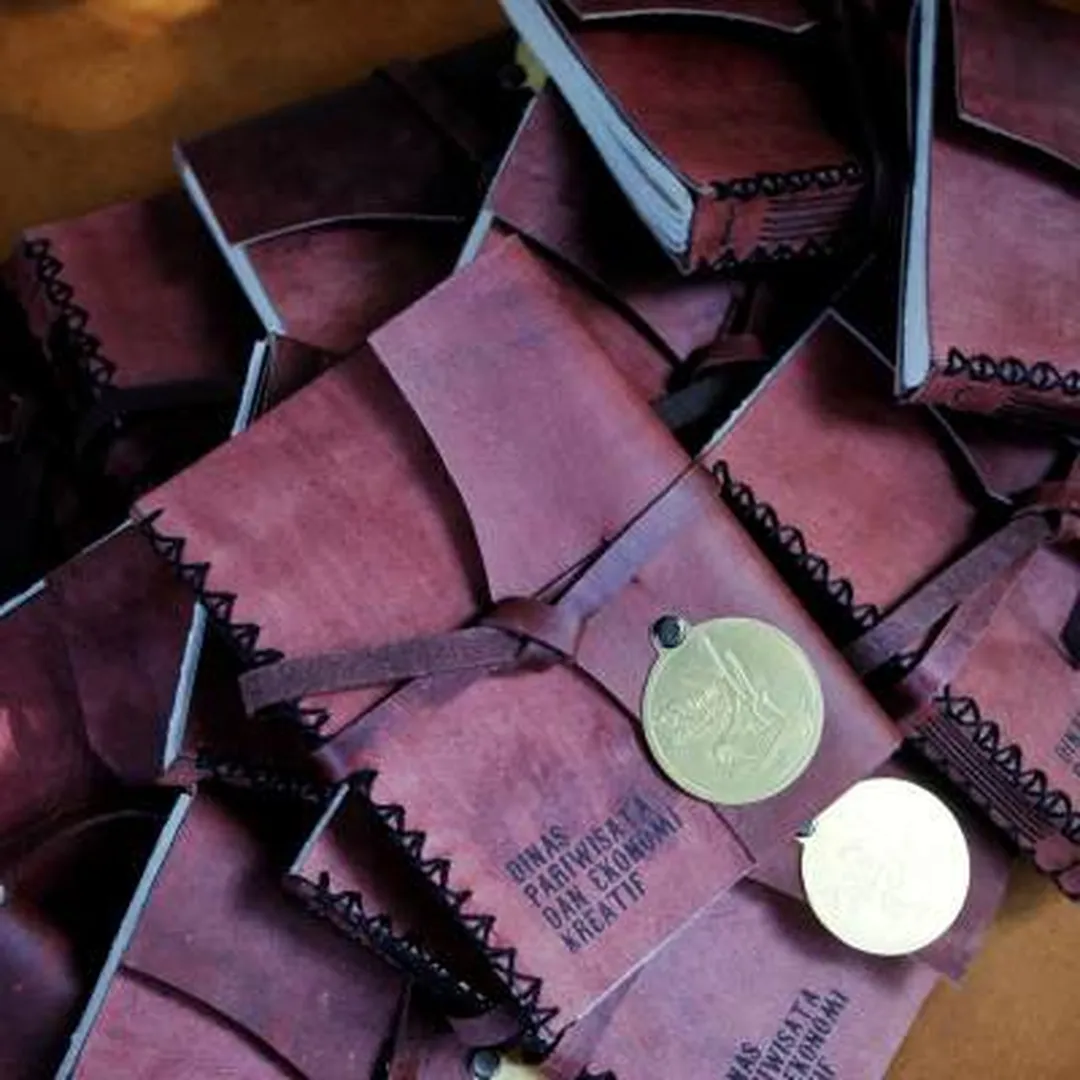
Raise your corporate identity with a custom corporate journal carrying beautiful quarter-circle detail. This classic ornament adds a special touch, making your brand’s premium notebooks memorable and sophisticated for your clients.
Book Repair & Conservation
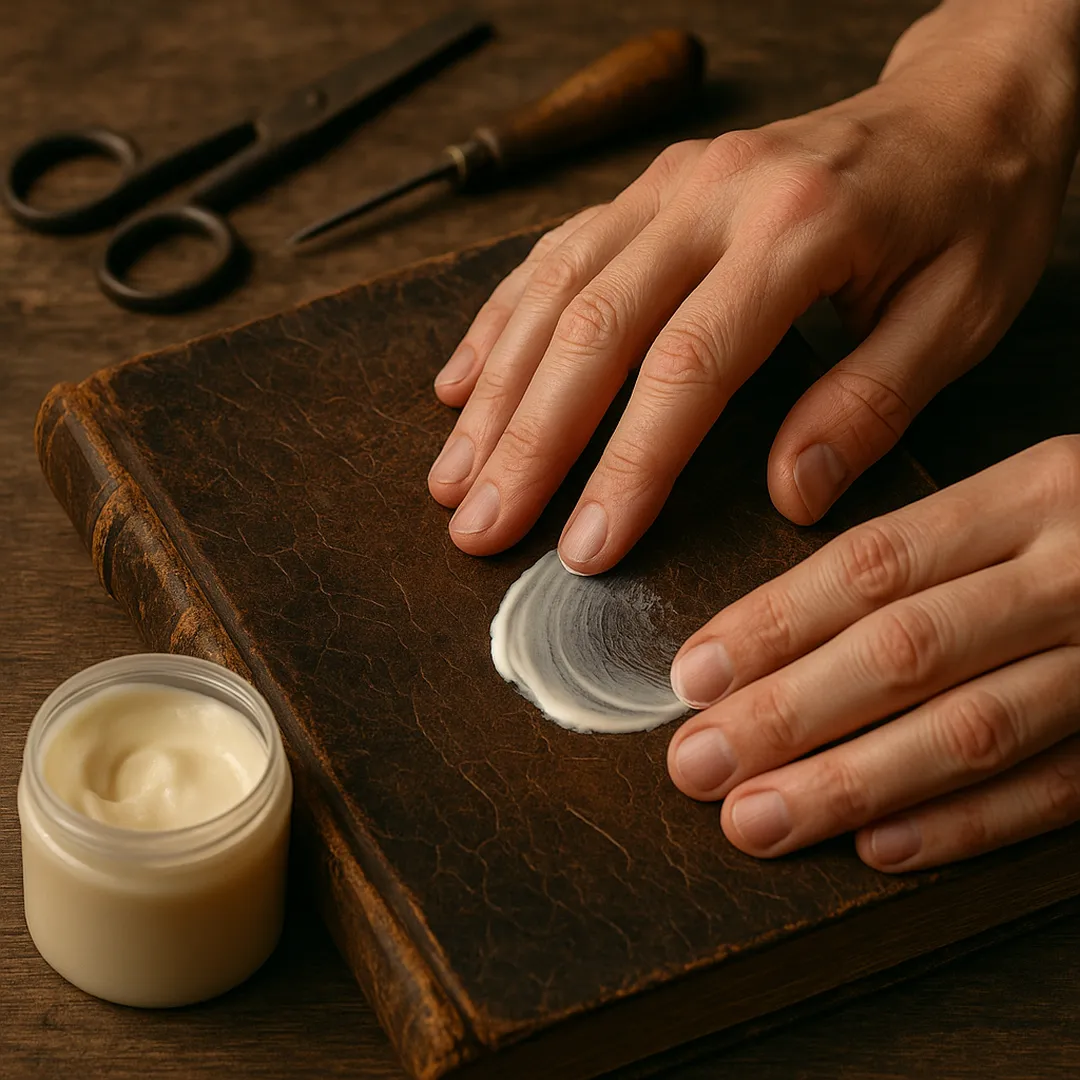
Preserve the heritage of your books. We carefully restore decorative elements such as quarter circles, making sure the historical integrity and the artistic charm of your treasured volumes are kept with lasting craftsmanship.