
Microminiature Book
by Ibrahim Anwar · July 26, 2025
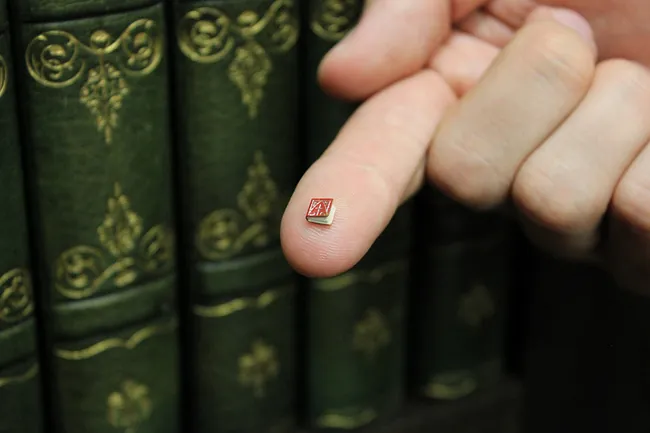
A microminiature book, often also called a Lilliputian book, is the summit of the art and craft of bookbinding, defined as a book measuring less than one inch (about 2.5 cm) in every dimension: height, width and thickness. That extreme size demands a level of precision and patience that almost passes the limit of what a human being can do. Every stage of its production — writing the text, which often requires a microscope; printing by etching or lithography; and a binding process that uses thread finer than a hair, and surgical instruments — is a tour de force. Far from being merely a curiosity, the microminiature book is a perfect blend of the sculptor’s art, technical skill and a deep love of the book as an object of beauty.
Microminiature Books: When a Literary Universe Fits on a Fingertip
At the crossroads of optical wonder, a surgeon’s meticulousness and a monk’s patience, an art form was born that defies logic: the microminiature book. This is a world in which a library fits inside a dollhouse and an epic can be kept in a locket. Strictly defined as a book measuring less than one inch on every side, these objects are more than small books. They are the ultimate statement of human mastery over material, evidence that the worth of a work is not measured by its size but by the depth of skill and vision held within it. To explore the world of microminiature books is to submerge yourself in a beautiful obsession, one in which the limits of the possible are pushed further and further.
Strict Definitions: Miniature, Microminiature and Ultra-Micro
For collectors and makers, size matters a great deal. There is a clear hierarchy in the world of these tiny books, set by The Miniature Book Society:
- Miniature Book: A book measuring no more than 3 inches (about 7.6 cm) in height, width or thickness. This is the most common category, and it covers a wide range of small books.
- Microminiature Book: The standard becomes far stricter. A book has to measure less than 1 inch (2.54 cm) in every dimension to be classed as a microminiature.
- Ultra-Microminiature: Not an official category, but the term is often used by enthusiasts to describe books only a few millimetres in size, which frequently cannot be read, or even seen, without a powerful microscope.
This article focuses on the astonishing world of the microminiature, where a book still often keeps its function and its legibility, at a scale that is very nearly impossible.
A Short History of a Tiny World
The human wish to make small precious objects is nothing new. The history of the miniature book can be traced back thousands of years, to stamp-sized Sumerian clay tablets from 2500 BC. Small books as we know them, though, became popular in Europe in the Middle Ages. Very small illuminated manuscripts, known as “girdle books”, were often carried by monks and by noblewomen.
The miniature book’s first peak of popularity came after the invention of the printing press. In the 16th and 17th centuries, printers such as Plantin in Antwerp and the Elzevir family in the Netherlands competed to produce the classics in an elegant, portable “pocket” format. The true golden age of the microminiature book, though, was the 19th and the early 20th century. Advances in printing technology made small books possible in mass production, from thumb-sized Bibles to complete dictionaries that could be hidden in the palm of a hand. These books were made not only for their portability but as enchanting novelties, a demonstration of the technical prowess of the printer and the binder.
The Summit of Skill: The Challenges of Making at Micro Scale
Making a microminiature book is not merely shrinking the ordinary bookmaking process. It is an entirely different discipline, and it demands its own set of skills, its own tools and a unique frame of mind.
- Creating the Text and the Images: How do you get “War and Peace” into a book the size of a dice? The text has to be made very small and still remain readable (at least with the help of a magnifying glass).
- Writing by Hand: Some makers write the text out by hand with a pen whose nib is as sharp as a needle, working under a microscope.
- Photolithographic Printing: This is the most common method for commercially produced microminiature books. Full-size book pages are photographed and reduced drastically onto negative film, which is then used to make the printing plate. The process allows very sharp detail at a small scale.
- Nanotechnology: For the smallest books in the world, scientists use advanced techniques such as a focused ion beam to carve text onto a silicon surface, pushing the limit of what can be called a “book”.
- Paper and Materials: Ordinary paper is too thick and too stiff at this scale. Makers have to use paper that is very thin and still strong, such as “India paper” or the very thin Bible paper, which lets hundreds of pages fit within a thickness of only a few millimetres.
- Binding at Micro Scale: This is where the real magic happens. Every principle of traditional binding—folding, collating and sewing the signatures—has to be carried out at a scale that is almost invisible.
- Folding: The printed sheets are folded carefully into small gatherings with tweezers and a miniature bone folder.
- Sewing: Those gatherings are then sewn together with thread that is often finer than a human hair.
- Casing: The hard cover is made from thin board, or even from heavy paper, then covered in luxurious materials such as pared leather, silk, or even sheets of precious metal.
- Surgical Instruments: Forget the standard binder’s hammer and knife. The world of the microminiature bookmaker is closer to an operating theatre. Their tools include surgical tweezers, a scalpel, a hypodermic syringe for applying a single drop of glue and, of course, a stereo microscope or a high-power magnifier.
The whole process is a meditation in precision. One tremor of the hand, one badly taken breath or a single drop of glue too many can destroy hours of work, or even days of it.
Making a microminiature book is a discipline in which patience is no longer a virtue but an absolute prerequisite, and in which a surgeon’s instruments meet an artist’s soul.

Why Make Something So Small? The Motives Behind the Obsession
The question that comes up most often is, “What for?” Why would anyone dedicate so much time and skill to creating something that is barely usable in the traditional sense? The answers are varied and absorbing, and they reveal a great deal about human nature and about our love of craft.
- A Demonstration of Skill (A Tour de Force): For many makers the main reason is the challenge itself. To be able to create a perfect microminiature book is a bookbinder’s Mount Everest. It is a way of showing total mastery of their craft, a calling card that says, “I can do anything.”
- Portability and Secrecy: Historically, a small size offered practical advantages. A miniature Bible or prayer book could be carried easily on a journey, or hidden through a period of religious persecution. Subversive political texts were also sometimes printed in a small format so that they were easy to smuggle.
- Collectors’ Objects and Investments: There is a deeply enthusiastic community of collectors around the world devoted to miniature and microminiature books. These books, especially the rare ones and those made by well-known makers, can be a valuable investment.
- Beauty and Artistic Charm: In the end, many people are drawn to microminiature books by their undeniable charm. There is something inherently magical about holding an object that works perfectly—with pages that turn, text that can be read and a beautiful binding—at so small a scale. It stirs our curiosity and our wonder.
Legendary Examples and World Records
A few microminiature books have reached legendary status:
- The Lord’s Prayer: Probably the text most often printed in miniature format. In the early 20th century a version was printed by a company in Ohio measuring only 5×5 mm, and it was printed in millions of copies as a novelty.
- “Old King Cole”: In 1985 the Gleniffer Press in Scotland printed this book at 1×1 mm, and it held the record as the smallest printed book for many years.
- “Teeny Ted from Turnip Town”: Recognised by Guinness World Records as the smallest reproduced book in the world. Made by scientists at Simon Fraser University in Canada, the book measures 70 x 100 micrometres (smaller than the width of a human hair) and is carved into crystalline silicon with an ion beam. You need an electron microscope to “read” it, of course.
The Legacy of the Microminiature and the Hibrkraft Craft Philosophy
In a world obsessed with “bigger is better”, the microminiature book offers a powerful antidote. It teaches us to value the small, the detailed and the slowly made. It celebrates the touch of the human hand and our ability to create beauty and order at the most intimate scale.
Hibrkraft does not make ant-sized books, but we are deeply inspired by the working ethos of the makers of microminiature books. Their spirit is our spirit. Dedication to detail, the choice of the best materials and the conviction that a book should feel special in the hand are at the heart of everything we do. When we sew a custom leather journal by hand, we share that same inheritance of patience and precision.
A microminiature book is a universe on your fingertip. In the same way, we believe that every personal journal, whatever its size, is a universe of its own—a vessel for your thoughts, your dreams and your stories. And a universe, however small, deserves a binding made with love, with skill and with deep respect. That is the promise we hold to in every product we create.

A Universe in Your Hand
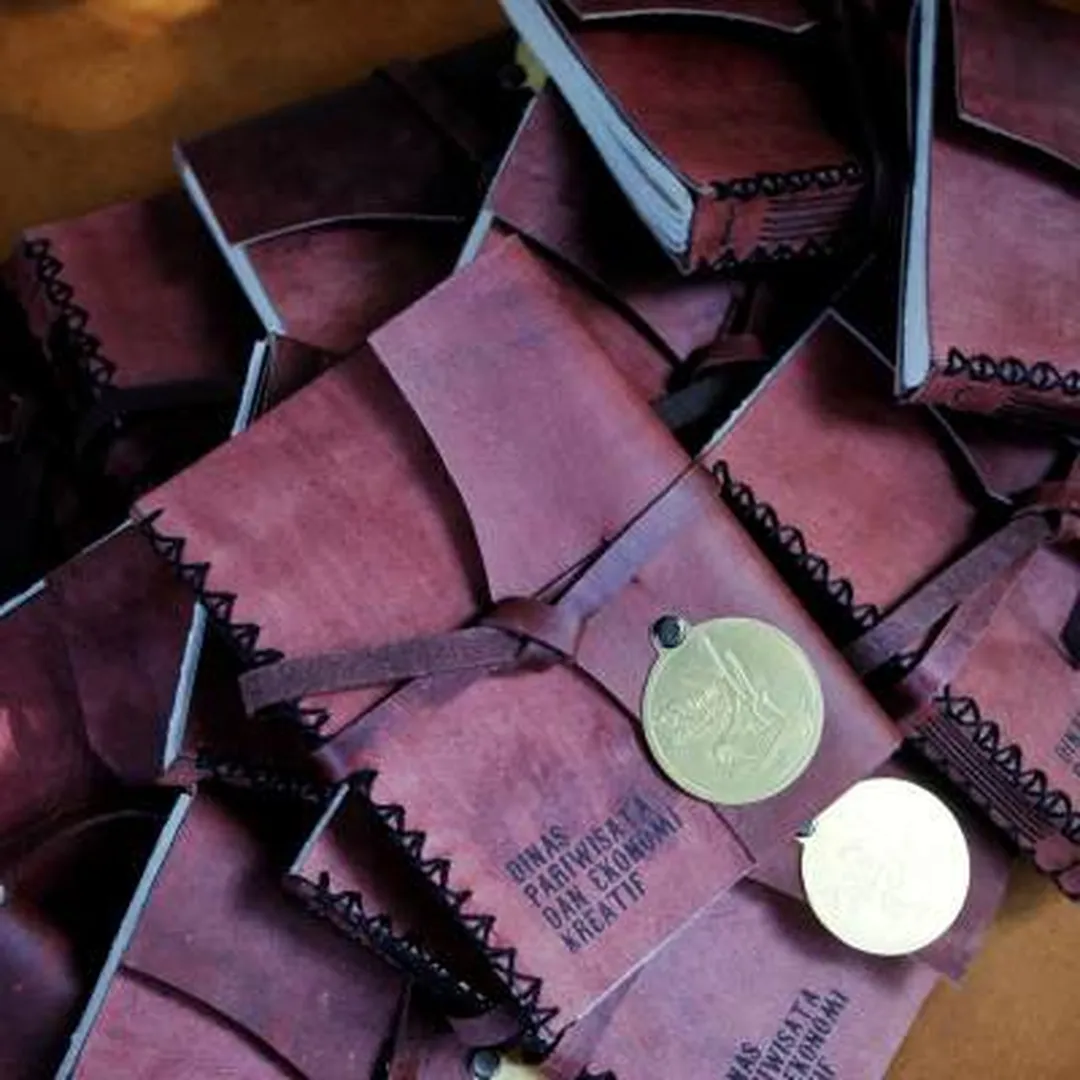
Not as small as a microminiature, but every one of our journals is a world made with extraordinary detail and the skill of the hand.
Create your own personal journal, a beautiful object made with the same spirit of precision and dedication as the smallest books in the world.
Small Details, Large Impact
Show that your brand cares about the smallest detail. Our business diaries are made to a standard of quality inspired by the highest craftsmanship.
Premium custom leather diaries that prove excellence lies in attention to every small detail.
Contact Us
Caring for Treasures, Large and Small
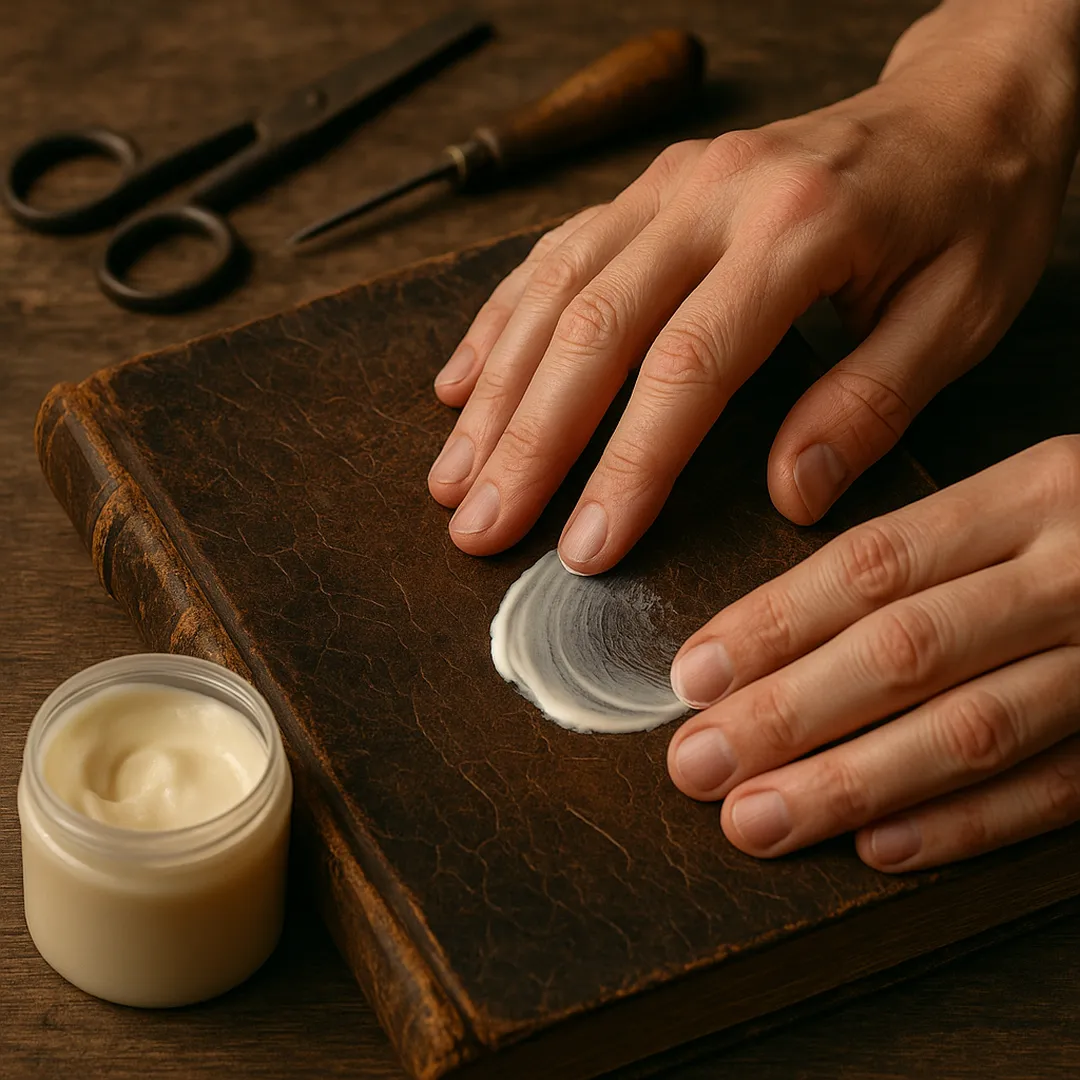
From large volumes to precious miniature books, we restore every kind of book with skill and with respect.
Entrust your precious books to us, whatever their size, for careful and professional restoration.
Free Consultation