
Mattierpunzen
by Ibrahim Anwar · July 24, 2025
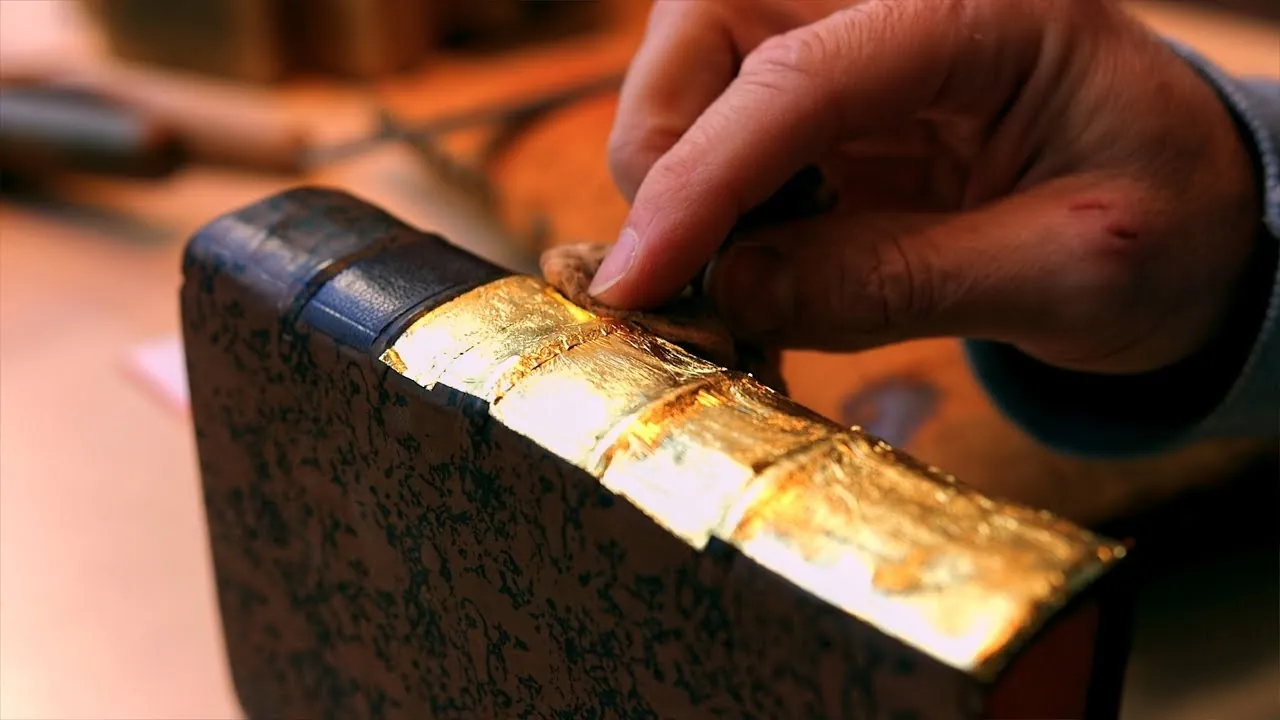
Mattierpunzen is a German word for a particular kind of decorative tool, and it means literally “a matting punch”. It is a hand stamp used by bookbinders and goldsmiths to turn the brilliant shine of gold leaf into a soft, textured matte surface. Rather than burnishing the gold to a mirror gloss, the maker taps the Mattierpunzen carefully onto the gilded surface. The textured face of the tool, often a mass of fine dots or a sand grain, creates thousands of micro-indentations that scatter the light. The result is a beautiful contrast between the areas of gold that shine and the matte areas that look like velvet, adding depth, elegance and visual sophistication to the decoration of a book.
Gold has been synonymous with dazzling shine and luxury since the earliest times. In the art of bookbinding, tooling a cover in gold is the summit of the craft, a way of signalling the value and the beauty of a book. But what happens when a maker wants more than shine? What if they want to paint with the light itself, controlling it to create depth, contrast and subtlety? This is where a modest but transformative tool comes into play: the Mattierpunzen.
This tool is not about adding luxury but about perfecting it. It is the tool of the master who understands that true beauty often lies in contrast, in the subtle interplay of light and shadow. The Mattierpunzen takes a bright shine and tames it into a soft whisper, turning a flat surface into a landscape of texture that invites the touch. To study this tool is to understand one of the most sophisticated techniques in the art of book decoration, a method of carving light at the smallest and most beautiful scale.
The Anatomy and the Art of Taming Light
To understand the genius behind the Mattierpunzen we need to take apart its name, its form and its function. It is a perfect blend of a plain etymology and a simple but elegant piece of physics.
Etymology: A Name That Describes Everything
“Mattierpunzen” is a compound term from German:
- Mattieren: The verb, meaning “to make matte,” “to dull,” or “to reduce the gloss.”
- Punzen: The noun, meaning “punch” or “stamp.”
So, literally, this is “a stamp for making matte.” The name describes its purpose directly and accurately, a distinctive mark of the precision of German craft terminology.
The Anatomy of the Tool: A Face That Creates Texture
At bottom, the Mattierpunzen is a hand stamp of metal (usually brass or steel) set into a wooden handle. The magic, though, lies in the design of its face—the part that meets the gold. These faces are not flat, and they are not engraved with a clear image the way other decorative stamps are. Instead they carry a micro-texture designed for a single purpose: to scatter light. The common variations include:
- Stippling: The face of the tool is covered with many small raised dots. This is the most common type and creates a fine “speckled” effect.
- Sand Grain: The texture is more random and finer, resembling the surface of sandpaper, and produces a matte that is very uniform and soft.
- Cross-Hatching: Made up of very fine crossing lines.
- Concentric Circles: The face of the tool carries a pattern of small circles about a common centre.
Each face texture interacts with light differently, and gives the maker a palette of matte effects to choose from.
The Science Behind Matte vs. Shine
Why does the technique work? The answer lies in the basic physics of the reflection of light.
- Shine (Burnishing): When a maker works a burnisher over gold leaf, they smooth the surface at the molecular level. That very smooth surface acts like a mirror, reflecting the rays of light uniformly in one direction (specular reflection). This is what we perceive as a sharp, brilliant shine.
- Matte (Matting): When the Mattierpunzen is tapped into the gold it creates a surface that is microscopically rough and irregular. Each small indentation left by the texture of the tool acts as a miniature surface reflecting light in a different direction. The light is scattered at random (diffuse reflection). As a result not one sharp flash returns to our eye, and the surface looks dull, soft and without shine.
Shine draws the eye, but texture invites contemplation. The Mattierpunzen is the tool for creating that contemplation.
Technique and Context: The Role of the Mattierpunzen in Decoration
The Mattierpunzen is rarely used alone. Its greatest strength appears when it is used alongside other finishing techniques, burnishing above all. It is a tool for creating visual hierarchy.
The Steps of the Process
The process calls for patience and a trained touch:
- The First Gilding: The whole design is gilded with gold leaf using the standard tools (fillet, pallet, stamps). At this stage the entire gold area carries a uniform satin shine.
- Choosing the Areas: The maker then makes an artistic decision. Which parts of the design should stand out with a mirror shine? Which should recede into the background with a matte texture?
- Burnishing: The areas chosen to shine are polished carefully with an agate or haematite burnisher until they reach maximum gloss.
- Matting: Now it is the turn of the Mattierpunzen. The maker takes the tool with the appropriate texture and taps it gently, over and over, across the area that is to be made matte. Every tap must carry a consistent pressure to create a uniform texture.
The Classic Application: The “Backgrounding” Technique
One of the most common and effective uses of the Mattierpunzen is for “backgrounding”, or filling in the ground behind the design. Picture an intricate floral design:
- The petals and the leaves can be burnished to a high shine, so that they stand out and look alive.
- The background area around the flowers is then filled with texture from the Mattierpunzen.
The result is a dramatic three-dimensional effect. The matte background does not compete for attention, which lets the shining main elements become the centre of it. The technique gives depth and clarity to even the most complex design.
A Sophistication That Does Not Fade with Time
The use of contrast between matte and shine is the mark of luxury bookbinding at its highest level, popular in the Baroque and Rococo styles of Europe. It shows that the maker was not only skilled at laying gold but also had the artistic sensibility to manipulate its visual quality. A book decorated with this technique is no longer merely an object but a carefully designed jewel.
Beyond Bookbinding
The principle of the Mattierpunzen is not confined to leather and books. Similar tools and techniques are essential in:
- Precious Metalwork: Goldsmiths and silversmiths use matting punches to create textural contrast on jewellery, trophies and silverware. A matte background can make an engraving, or a gemstone in its setting, look more brilliant.
- Engraving: In the graphic arts, a similar tool called a “roulette” or a “mattoir” is used to create tonal areas on a metal plate for mezzotint or etching prints.
It shows how fundamental the idea of controlling reflectivity through texture is across the various craft disciplines.
The Hibrkraft Perspective: Valuing Nuance
At Hibrkraft we are captivated by the level of craftsmanship a tool like the Mattierpunzen represents. It is the embodiment of a philosophy we hold: that true quality lies in nuance. Our own working process may use modern technology, but the spirit of it is the same.
When we choose a piece of leather we look not only at its colour but at its texture—whether it is a rich full-grain, a dynamic pull-up, or a soft suede. When we offer personalisation by debossing, we consider how the depth of the impression interacts with the light. The story of the Mattierpunzen is a precious lesson that the smallest detail can create the largest impact. It inspires us never to stop exploring how a subtle finishing touch can lift a product from “good” to “extraordinary”. It is about creating products that not only look good from a distance but also reveal their beauty and their craftsmanship when they are seen close up and touched.
FAQ
1. Does the Mattierpunzen damage the gold leaf?
Not if it is used correctly. The aim is not to remove the gold but to change its texture. A skilled maker uses enough pressure to make the indentation without breaking through the layer of gold or damaging the leather beneath it. This calls for a very well-trained touch.
2. What is the main difference between a Mattierpunzen and an ordinary decorative stamp?
An ordinary decorative stamp (one shaped like a flower or a star, say) has a clear design and is meant to create a recognisable image. The Mattierpunzen has an indistinct textured design (dots, or sand) and its purpose is to create a textural area, not a specific image. Its function is to fill space or to change the quality of a surface.
3. Can I use this technique on a modern foil rather than real gold?
Generally no. The modern foils used in hot stamping work in a different way. Their colour layer is very thin and is bonded to an adhesive activated by heat. Tapping one with a tool after application is most likely to make the foil flake or crack rather than create a fine matte texture.
References
- Ligatus Language of Bindings Thesaurus. “Matting.” (the original link is dead; the reference is kept without a link)
- Etherington & Roberts. “Bookbinding and the Conservation of Books: A Dictionary of Descriptive Terminology.” – See the entry for Finishing Tools. (the original link is dead; the reference is kept without a link)
- Eden Workshops. “Bookbinding – Tools and Techniques.” – Gives a general overview of the various finishing tools. (the original link is dead; the reference is kept without a link)
- An example video of gold tooling. Though it is not specifically about the Mattierpunzen, many videos on fine binding show the various finishing tools in use and give visual context.
Matting tools like this one belong to the group of finishing tools — the last stage, when a mistake costs most because there is no further layer to cover it. That same stage decides the final result of a custom leather journal.

Custom Notebook
A handmade leather notebook you can design yourself, for a gift, for memories, or for future plans.
Business & Whitelabel
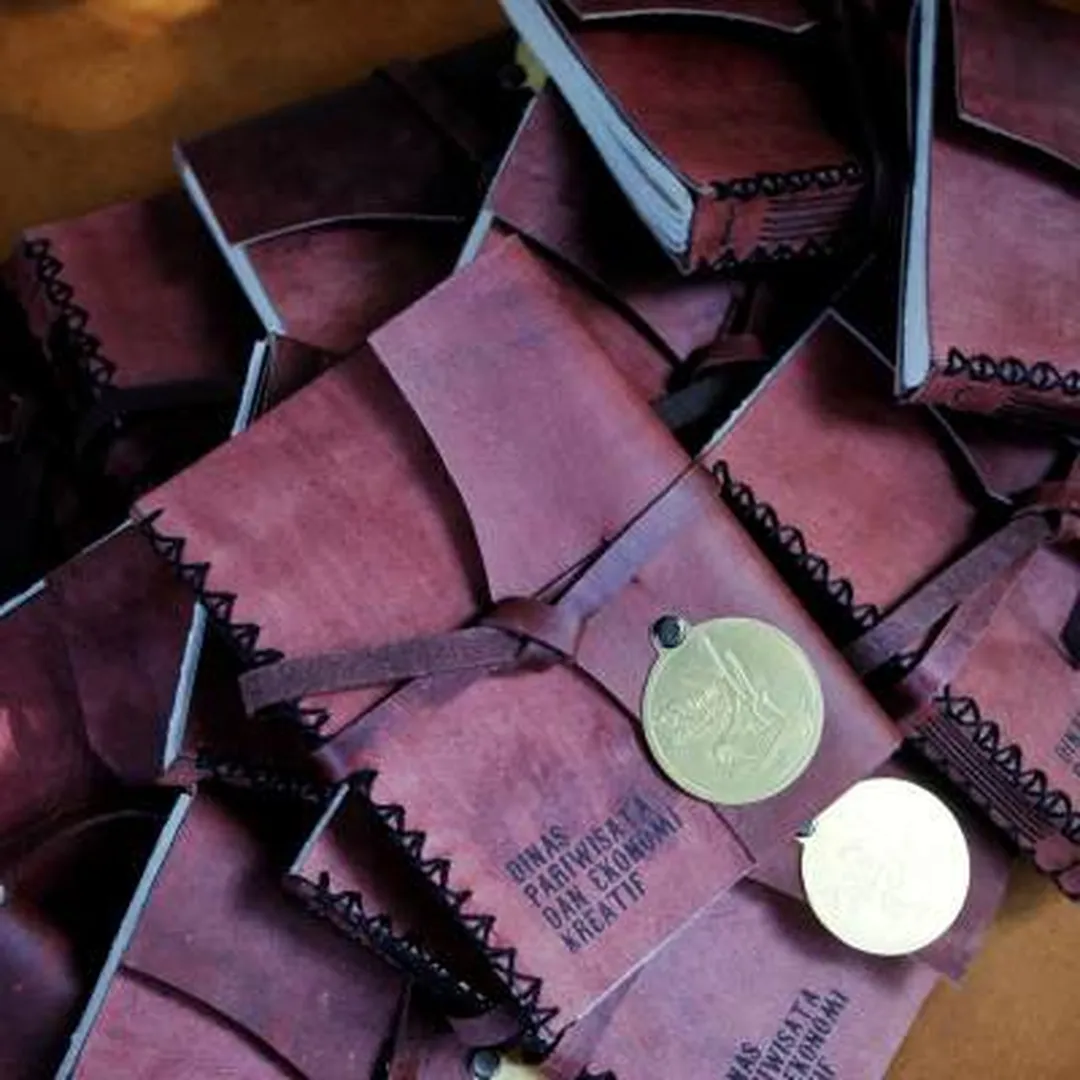
Business solutions and corporate gifts in the form of exclusive agendas carrying your company’s logo.
Book Repair & Conservation
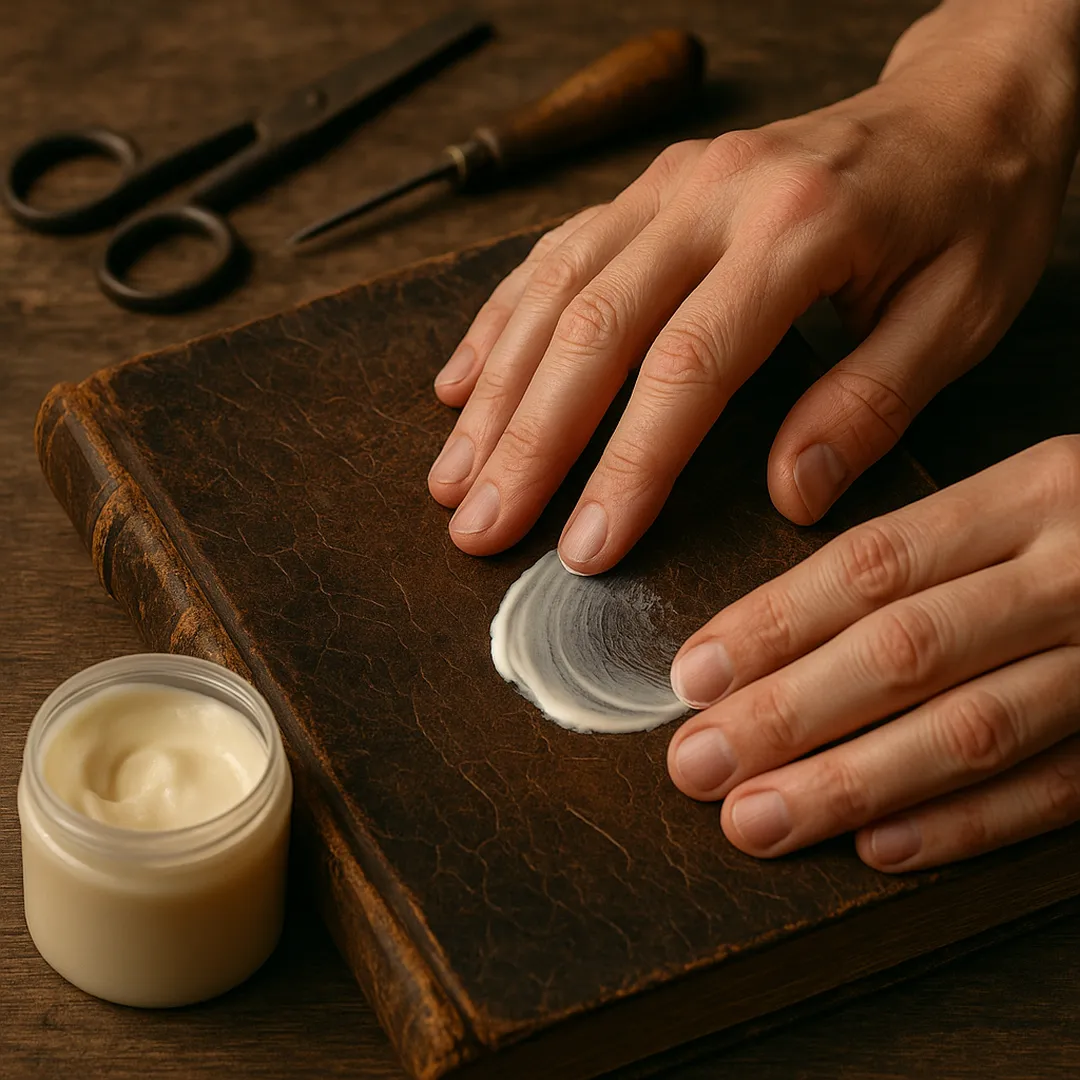
Repair and conservation services for antique books, family heirlooms, or private collections of historical value.