
Le Gascon Tools
by Ibrahim Anwar · July 24, 2025
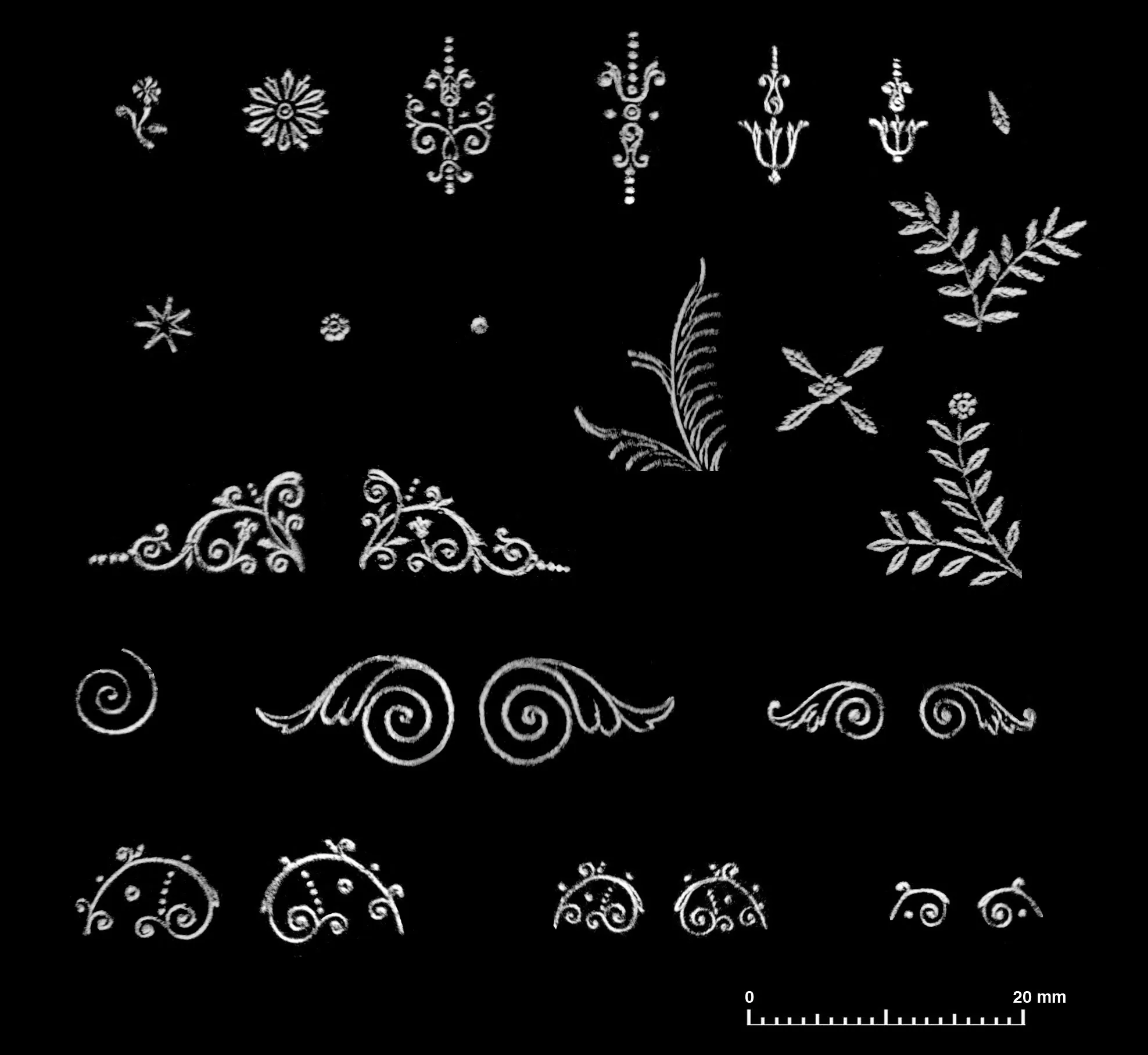
“Le Gascon tools” does not refer to a single tool, but to a set of finishing tools that revolutionised the art of bookbinding in France in the 17th century. Instead of using stamps with solid lines as their predecessors did, craftsmen working in the Le Gascon style used small stamps made up of dots, broken lines and small curves. This technique, known as pointillé, made possible designs of extraordinary intricacy — light and glittering, resembling embroidery or gold lace laid over leather. These tools are the bookbinder’s brush: patiently building a striking pattern out of thousands of tiny impressions, turning a book cover into a glittering work of art.
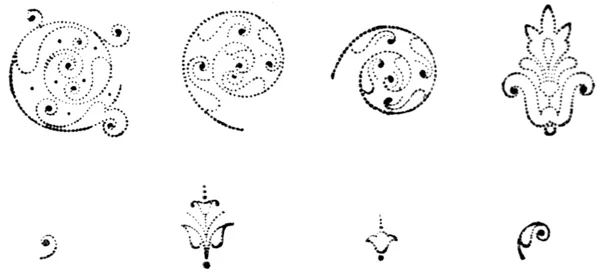
In the great pantheon of legendary bookbinders, few names are wrapped in as much mystery and grandeur as “Le Gascon”. This is not the confirmed name of one person, but a byname given to an anonymous binder, or a workshop, in 17th-century Paris whose work was so inventive and so beautiful that it created a new era in book decoration. When we speak of “Le Gascon tools”, we are not speaking of a knife for cutting paper or a hammer for shaping the spine. We are entering the world of high decorative art, speaking of small brass instruments that, in the hands of a master, could turn sturdy leather into something that looks like fine gold lace.
Forget the thick lines and the large motifs of earlier styles. Picture a design built not from strokes but from points of light. That is the essence of the Le Gascon style and of the tools that created it. They are evidence of a seismic shift in aesthetics, from the heavy and architectural to the light, the airy and the glittering. To understand these tools is to understand how an artistic revolution happened — not with broad brushstrokes, but with the touch of countless tiny dots.
The Mystery of the Master and the Pointillé Revolution
The history of bookbinding often fails to record the names of its craftsmen, and Le Gascon is the prime example. Historians believe the name may refer to a highly skilled binder active in Paris around 1620-1660. His work was so distinctive and so influential that he was given a byname, perhaps because of his accent or his origins in Gascony. Although his identity remains a puzzle, his legacy—the Le Gascon style—and the tools he used are entirely real and transformative.
Before Le Gascon: The Fanfare Style
To appreciate Le Gascon’s innovation, we have to look at what came before. The dominant style in the late 16th and early 17th centuries was the “fanfare” style. It is marked by interlocking geometric compartments formed by ribbons or double lines, with each compartment filled with arabesques worked with solid-line tools. The result is grand, dense and structured. These books look strong and architectural.
Le Gascon’s Innovation: The Pointillé Technique
Le Gascon took the geometric framework of the fanfare style but changed entirely the way it was filled. Instead of solid-line scrollwork, he used tools that created an impression made of dots. The technique is called pointillé (from the French “point”, meaning dot).
The pointillé tools themselves are the key to this revolution:
- Finishing Tools: these are small metal stamps, usually brass, mounted on a wooden handle. The tip (the face of the stamp) is engraved with a design.
- The Design of the Stamp Face: this is what sets the Le Gascon tools apart. The stamp faces are not engraved as solid lines. Instead they are made up of:
- Dots: individual stamps that create a single dot only.
- Dotted Lines: straight or curved stamps made from a series of dots rather than a continuous line.
- Composite Shapes: small forms such as spirals, rosettes or little leaves, all built from dense clusters of dots.
Armed with these tools, a craftsman could build an intricate design one impression at a time. By varying the spacing and the combination of stamps, they could create gradations, textures and shimmering effects that were impossible to reach with solid-line tools. The result is a design that looks light, that vibrates, and that comes alive under the light.
The Le Gascon style traded the heavy architectural statement of its predecessors for the glittering whisper of a thousand points of light.
The Decorating Process: A Dance of Precision
Creating a Le Gascon-style binding is a process that demands extraordinary patience and precision:
- Preparing the Leather: the cover, usually made of high-quality morocco leather (goatskin), is prepared with a thin adhesive layer called glair (egg white, beaten and left to settle). This layer is what will hold the gold.
- Laying the Gold: an extremely thin leaf of real gold is laid over the area to be decorated.
- Heating the Tool: each pointillé tool is heated carefully over a small stove. The heat has to be exact: hot enough to make the glair tacky and transfer the gold, but not so hot that it burns the leather.
- Stamping: the craftsman then takes the heated tool and presses it firmly and steadily onto the gold leaf. That pressure and heat make the gold adhere permanently to the leather in the shape of the tool.
- Cleaning Off: once the whole design has been stamped, the loose gold that has not adhered is brushed gently away, leaving a glittering gold pattern.
Picture doing this thousands of times, with different small stamps, to cover an entire book cover. This is work that demands concentration and skill of a godlike order.
Untangling the Ambiguity: Not a Cutting Tool
An early description of “Le Gascon tools” as knives for cutting parts of a book most likely comes from confusion, or from a misreading of an unclear reference. In the study of bookbinding history the term “Le Gascon’s tools” refers universally and exclusively to the pointillé finishing tools that define his style.
Of course, Le Gascon and the binders of his day used a range of knives and cutting tools. They used a paring knife for leather, knives for cutting board, and a plough for trimming the edges of the book block. But there is no specific blade known by the name “Le Gascon tool”. The name has attached itself firmly to the decorative revolution he created, not to the structural side of the craft.
The Glittering Legacy of the Le Gascon Style
The influence of the Le Gascon style was enormous, and it spread quickly from Paris across Europe.
- In England: leading binders such as Samuel Mearne adopted and adapted the style, creating an English version known as the “cottage roof” style.
- In the Netherlands: the Magnus family of Amsterdam, celebrated binders, were also strongly influenced by pointillé design.
- The Evolution of Design: the style marked a turning point. After Le Gascon, book decoration became lighter and more elegant. It opened the way for the Rococo styles of the 18th century, which were more intricate and more asymmetrical still.
Even today, fine binders working in the classical tradition still use pointillé tools, or take their inspiration from the complexity of Le Gascon’s designs. The technique remains the summit of gold tooling.
The Hibrkraft Perspective: Valuing the Detail That Defines
The story of the Le Gascon tools is a powerful reminder of the power of detail. One simple idea—replacing solid lines with dots—was able to change an entire artistic landscape. At Hibrkraft we are deeply inspired by that kind of dedication to detail. Although we use modern technology for personalisation, such as laser debossing or hot foil stamping, the underlying principle is the same: to create a beautiful and lasting impression through the precise application of a tool to quality material.
Looking at a Le Gascon binding teaches us that true luxury often lies in quiet intricacy and hidden skill. Every leather journal we make, every old book we repair, we do in the same spirit: respecting the material, and valuing the fact that it is the small touches done well that create a masterpiece.
FAQ
1. So Le Gascon was not a real person?
We cannot be certain. Art historians generally agree that “Le Gascon” is a name given to an anonymous master binder, or workshop, whose work defined the style. There is no firm record of his identity, which only adds to the legend.
2. What material was most commonly used for Le Gascon bindings?
Morocco leather in red, olive or dark blue was the most common choice. This supple but strong goatskin is ideally suited to taking the fine detail of gold tooling.
3. Can I see an original Le Gascon binding?
Yes. Major collections such as those at the British Library, the Bibliothèque Nationale de France, and the Morgan Library & Museum in New York hold many outstanding examples of Le Gascon bindings. Much of this material has been digitised and can be explored online.
References
- British Library, Database of Bookbindings. “Le Gascon style.”
- The Morgan Library & Museum. An online collection presenting examples of Le Gascon bindings. (the original link is dead; the reference is kept without a link)
- “Pointillé, A short explication of a bookbinding technique” – An essay by Peter R. D. Verheyen. (the original link is dead; the reference is kept without a link)
- Ligatus Language of Bindings Thesaurus. “Pointillé tools.” (the original link is dead; the reference is kept without a link)

Custom Notebook
A handmade leather notebook you can design yourself — for a gift, for a memory, or for plans still to come.
Business & Whitelabel
Business and corporate gift solutions in the form of exclusive agendas carrying your company’s logo.
Book Repair & Conservation
Repair and conservation for antique books, family heirlooms, and private collections of historical value.