
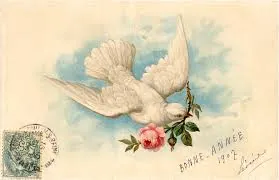
Flying Dove
by Ibrahim Anwar · July 24, 2025
Have you ever come across an old book at a flea market or in a family library? Not the sort with a glossy cover and a photograph of the author, but one made of leather or cloth, with small gold ornaments already a little faded at the corners. Look closely, and among the lines and the floral patterns you may find the silhouette of a small bird with its wings spread. That is it: the Flying Dove.
This is no casual ornament. In an age when every design element on a book was chosen full of meaning, the appearance of this dove was a message. It was a visual language understood by the people of its time, a code that told you something about the contents of the book, or about the hopes of the person who owned it. Strange, is it not, that an image so small can carry such a weight of history and such rich symbolism. But are small things like that not exactly what make handmade objects feel alive?
A Trace in the History of Bookbinding
The Flying Dove motif, or Merpati Terbang, is one of the many ornaments bookbinders used to decorate their work. The ornament is a metal stamp, usually brass, that is heated and then used to press gold foil onto the cover of the book (gilt tooling), or pressed on its own to create an impression sunk into the surface (blind tooling).
Its popularity peaked in a period when a book served not only as a source of information but also as an object of status and a work of art. In the late eighteenth century, under the influence of the Neoclassical style, ornament became finer and more symmetrical. Then in the nineteenth century, the age of Romanticism and the Victorians, the symbolism of nature and of emotion took over. The flying dove suited every one of those ages. It could appear graceful and classical, or it could be read as a symbol of freedom and of romantic spirituality.
Variations in Style
Like fashion in clothing, the style of this dove motif changed over time.
- Neoclassical style (late eighteenth century): The dove is drawn more realistically, its lines clean and graceful. Often it forms part of a larger composition, surrounded by garlands, ribbons or other classical ornament.
- Victorian style (nineteenth century): The depiction could become more sentimental and more detailed. Sometimes it carries an olive sprig in its beak, reinforcing the symbolism of peace.
- Arts and Crafts style (late nineteenth century): The form becomes simpler and more stylised, less realistic. The focus is on the beauty of the form and the line themselves, a reaction against industrial mass production.
Every bookbinder, or every large binding workshop, usually had its own set of ornamental stamps. So by studying the specific style of a dove, an expert can sometimes trace where, or even by whom, a book was bound. Put it this way: it is like a craftsman’s fingerprint.
The Silent Language of the Dove
Why a dove? Why not a crow, an eagle or a sparrow? The answer lies in the layers of meaning that have clung to this bird for thousands of years.
A dove does not only fly. It carries a message. And on the cover of a book, its message is doubled.
Here are a few “translations” of this motif:
1. Peace and New Hope (Noah’s Olive Branch)
This is the most universal symbolism of all. The story in the Book of Genesis of the Prophet Noah, who released a dove after the great flood. When the dove came back carrying a fresh olive leaf in its beak, it was a sign that the waters had receded and that a new life could begin. On the cover of a book, this dove could mean that the contents bring peace of mind, or that the book itself is a gift given with good wishes.
2. The Holy Spirit and the Divine Message
In Christian iconography, the dove is the symbol of the Holy Spirit, which descended from heaven at the baptism of Jesus. For that reason the motif is very commonly found on the bindings of Bibles, prayer books and theological texts. Its presence seems to bless the book, marking it as a vessel of the word, or of divine wisdom.
3. Love, Faithfulness and Romance
Doves are known as birds that mate for life. They became a symbol of faithful and everlasting love, often associated with goddesses of love such as Venus or Aphrodite. So if you find this motif on a book of poetry or a romantic novel from the nineteenth century, the symbolism it means to convey is most likely love.
4. The Messenger
Before modern postal services, the carrier pigeon was one of the fastest ways to send an important message. The image of a dove flying across a great distance to deliver news is a powerful one. What is a book if not a message frozen in time, sent by an author from the past, or from somewhere far away, to you, the reader? A flying dove on the cover of a book is the perfect metaphor for the function of the book itself.
How Is This Motif Made? The Art of ‘Finishing’
Adding a motif such as the flying dove is part of the process called ‘finishing’ in bookbinding, a stage that comes after the book has been sewn and covered. It is the art of decoration, and it demands skill, composure and a sharp eye.
The process runs roughly like this:
- Preparing the cover: If leather is used, the surface may need to be dampened a little. For gilt tooling, a thin layer of a special adhesive called ‘glair’, usually made from egg white, is brushed over the area to be decorated.
- Heating the stamp: The brass stamp bearing the dove is heated on a small dedicated stove. The temperature has to be exactly right. Too cold and the gold foil will not adhere. Too hot and it will scorch the leather and the foil, producing a dull, ugly impression.
- Applying the foil: A sheet of genuine gold leaf, extremely thin, is laid over the area that has been given the adhesive.
- The crucial moment: The bookbinder takes up the hot stamp with a steady hand, places it precisely over the gold leaf, and presses with firm, even pressure for a few seconds. There is only one chance to get it right.
- Cleaning up: Once the stamp is lifted, the loose gold leaf that has not adhered is brushed away gently, leaving a brilliant and permanent gold image of the dove.
For ‘blind tooling’, the process is the same but without the adhesive and the gold leaf. The result is a dark, fine impression of the dove, a beauty that is more subtle and more unassuming.
Why Does This Matter to Hibrkraft?
At Hibrkraft we are obsessed with details like these. We may not use an antique nineteenth-century dove stamp every day, but the spirit behind it is at the heart of what we do. The spirit that says an ornament is not merely an ornament. It is a story.
When a customer comes to us to make a custom journal, we want them to think like a bookbinder of the old days. “Which symbol stands for the journey I am on now? What do I want to say with this book?” Perhaps they will not choose a dove. Perhaps they will choose a compass for adventure, a tree for growth, or an anchor for stability.
The Flying Dove motif teaches us that the most meaningful personalisation is not merely our name printed on the cover. True personalisation is planting a symbol, an intention, a small prayer into an object we will use every day. That turns a product into a personal heirloom.
Frequently Asked Questions (FAQ)
Is this motif still used today?
In traditional bookbinding and in fine binding, certainly. Many modern bookbinders still use antique ornamental stamps, or make their own designs inspired by the classical motifs. In mass book production, though, it is very rarely found, because of the cost and the complexity.
How do you tell a dove from other birds in an antique motif?
A dove is usually drawn with a somewhat full body, a gracefully curved neck and a spreading tail. Hawks and eagles tend to be sharper and more aggressive, often with a clearly hooked beak. If the bird carries an olive branch, it is almost certainly a dove.
Is a book automatically worth more if it carries this motif?
Not necessarily. The value of an antique book is set by many factors: rarity, condition, author, and the quality of the binding as a whole. But a beautifully decorated, well-kept binding that happens to carry a dove motif will certainly be more sought after by collectors than a comparable book with a plain or damaged binding.
Can I ask for a motif like this on a custom order at Hibrkraft?
Of course. We may not have an antique dove stamp, but we can make a custom design (custom deboss) from a drawing or an idea you give us. Whether that is a dove, or another symbol that means something to you. That is the heart of our customisation service: translating your story into leather and paper.
References
To go deeper into the world of ornament and symbolism in bookbinding, these sources can be your gateway:
- Antiquarian Booksellers’ Association of America (ABAA) Glossary (the original link is dead; the reference is kept without a link) – A complete glossary of the terms used in the world of antiquarian books, including explanations of the various kinds of decoration and of binding techniques.
- The National Library of Wales (the original link is dead; the reference is kept without a link) – Presents a digital gallery with examples of decorative bookbinding techniques, including tooling.
- University of Rochester, Dept. of Rare Books – Often has online exhibitions and articles on the history of the book and of binding, which can supply visual context.
- The Morgan Library & Museum (the original link is dead; the reference is kept without a link) – Holds one of the finest collections of historical bookbindings in the world, and their online catalogue is an outstanding resource for seeing real examples of the various decorative motifs.

Custom Notebook
A handmade leather notebook you can design yourself, for a gift, for a memory, or for plans still to come.
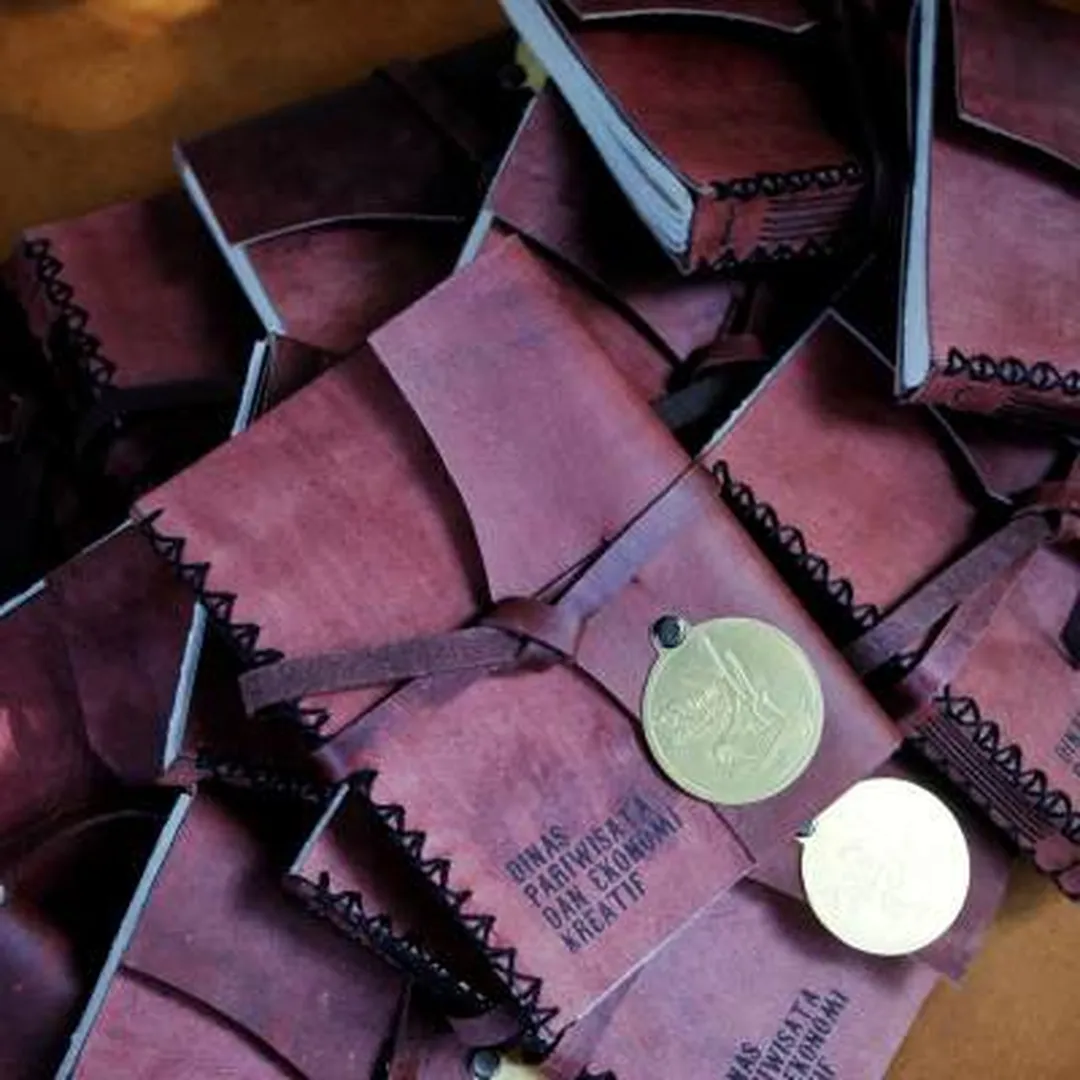
Business & Whitelabel
Business solutions and corporate gifts in the form of exclusive agendas carrying your company logo.
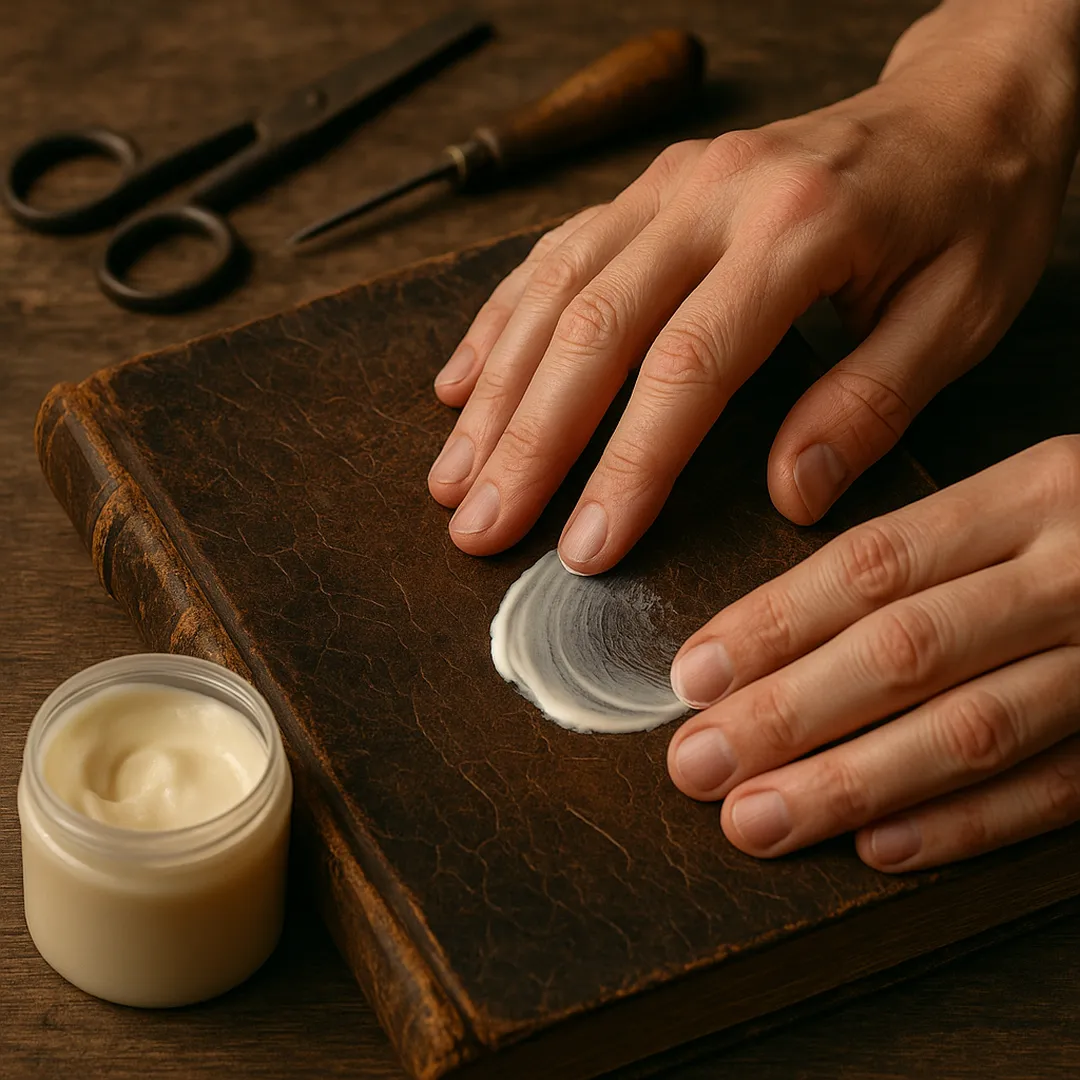
Book Repair & Conservation
Repair and conservation services for antique books, family heirlooms, and private collections of historical value.