
Corné
by Ibrahim Anwar · July 28, 2025
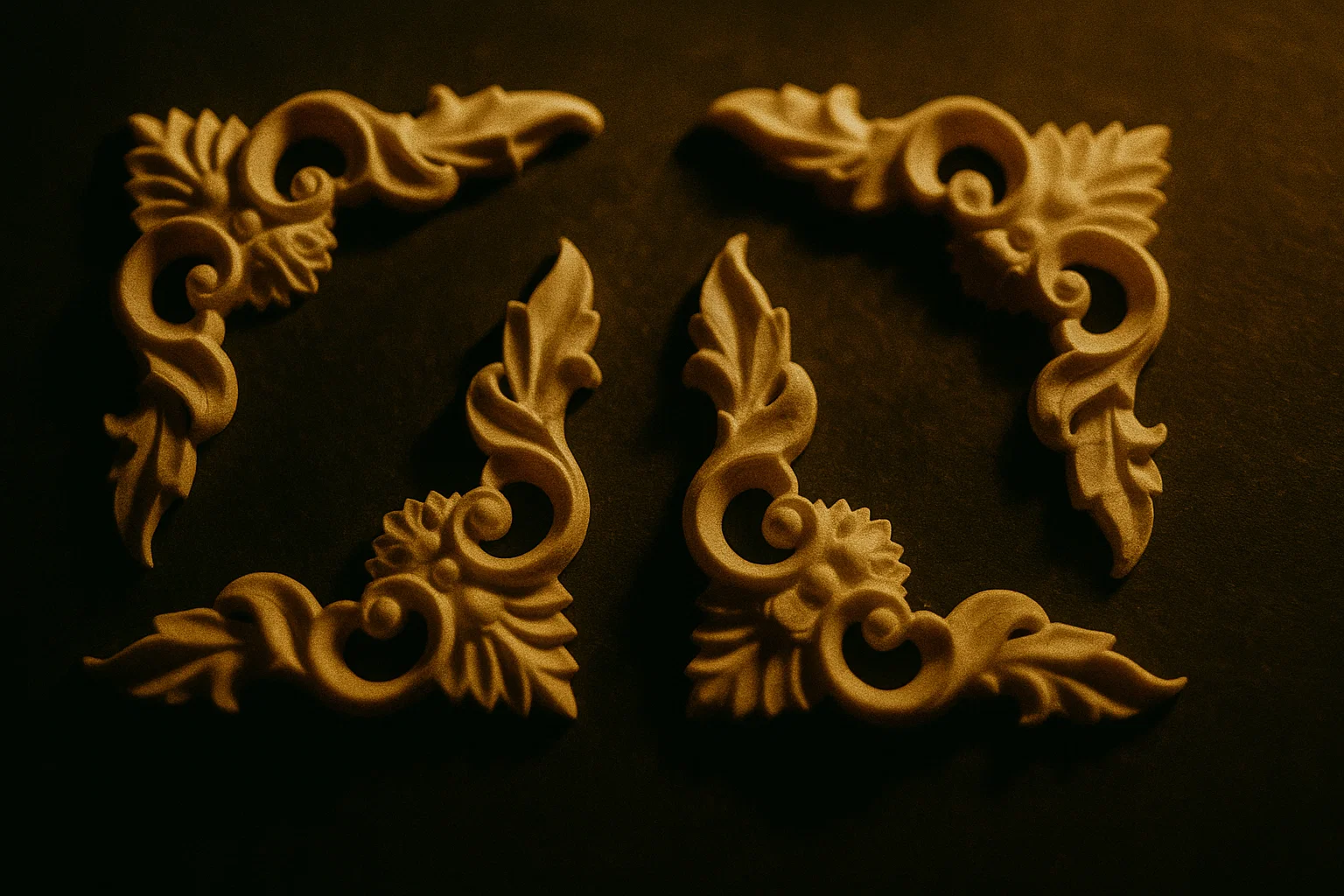
In the world of antique bookbinding, corne is a French term for a lavish horn-shaped decorative element. These ornaments, often made from hard materials such as bone, ivory or sometimes metal, serve as an embellishment (finial) or as protection at the corners of a book cover. They were at their most popular in the eighteenth century and the early nineteenth, above all on Rococo and Neoclassical bindings, and were designed to add a touch of luxury, status and elegance to a precious book.
When we hold an antique book, we are not holding paper and ink alone. We are holding a historical artefact, a time capsule that preserves the handwork, the artistic taste and the values of the age that made it. Among the details that most often escape notice are small decorative elements that tell a large story. One of them is the corne, a detail that may sound unfamiliar yet plays an important part in defining the luxury of European bookbinding in a particular era. The term is not mere ornament but a marker of its age, a symbol of status and plain evidence of a craftsman’s fineness of hand.
Unravelling the Mystery of ‘Corne’: More Than a Book Corner
For collectors, historians and book lovers, understanding a term like corne opens a new window onto the appreciation of bookbinding. It is a journey towards seeing a book not only as a vessel for text but as a complete work of art, in which every detail, however small, has a purpose and a meaning of its own. Let us go deeper into the world of the corne and uncover its hidden charm.
Etymology and a Double Meaning
Literally, “corne” is the French word for “horn”. The connotation points straight at two things: the shape, curved like an animal’s horn, and the source material, which often really was horn, bone or ivory. It is important to separate this sense from the other meaning of “corne”, which can also refer to a wind instrument (such as a cornet or a trumpet). In the context of bookbinding the connection is purely visual and material, not functional as it is with an instrument.
The term is used specifically for an ornament fitted to the corners of a book cover. Its function is twofold: it protects the corner from knocks and wear, and at the same time it is a decorative element that enriches the aesthetics of the book. Unlike metal corner protectors (known as coins in English, or coins de livre in French), which are more common and more functional, the corne implies a higher level of luxury and craftsmanship, because its material and its making are more elaborate.
Historical Background: A Reflection of Rococo and Neoclassical Art
The popularity of the corne peaked in the eighteenth century, a period of great transition in European art and design. The era was dominated by two principal styles that ran counter to one another and yet sometimes overlapped: Rococo and Neoclassical.
- The Rococo era (about 1730-1760): The Rococo style is known for asymmetric, organic design, full of S- and C-curves, and for ornament drawn from nature such as shells and foliage (acanthus). In bookbinding the style translated into designs that were elaborate and “light”. A corne of finely carved ivory or bone suited this aesthetic exactly, adding an elegant and exotic touch to a cover that was often already decorated with intricate gold tooling (reliure à la dentelle).
- The Neoclassical era (about 1760-1820): As a reaction against Rococo luxury, the Neoclassical style returned to principles of order and symmetry and to the inspiration of ancient Greek and Roman art. More restrained though it was, the appetite for luxury did not disappear. A corne from this period might take a more geometric and symmetrical form, but it remained a symbol of status. Its use on books bound for aristocrats and intellectuals shows that such a book was not only something to read with, but a precious object to display.
The presence of a corne on a book is often a marker that the book comes from this period and was made for a very wealthy client who valued art of the highest order.
Corne is not merely a corner protector; it is a whisper of luxury from the eighteenth century, an unwritten signature from the craftsman and a marker of the owner’s status.
Materials and Handwork
The choice of material for a corne matters a great deal and reflects its value. The materials commonly used include:
- Ivory: The most luxurious and most expensive choice. Elephant, walrus and mammoth ivory were prized for their creamy white colour, their density and their ability to be carved in very fine detail. A smooth, lustrous surface gives an unmatched touch of luxury. Ivory on a book communicated the owner’s wealth and status directly.
- Bone: A more affordable alternative to ivory, and still valued. Bone has a more porous structure, which sometimes shows as small specks or fine lines on the surface. Though it is not as smooth as ivory, bone is still a strong material and can be carved beautifully.
- Horn: As the name of the term implies, animal horn (from cattle or buffalo) was used as well. The material is thermoplastic, meaning it can be softened with heat and shaped as wanted before hardening again. Its colour varies from transparent to dark, often with a unique pattern.
- Hardened Vellum: In some cases thick vellum (calfskin) could be shaped and hardened to create a similar corner ornament.
Making one demanded particular skill. The craftsman had to cut, shape, file and polish this hard material into a precise horn form. Often the surface was carved as well, with small motifs matching the rest of the cover decoration. Fitting it to the book’s board also had to be done carefully, so that it was strong and neat, sometimes with a small peg and sometimes glued with a very strong animal adhesive.
The Hidden Meaning of the Corne, and Its Modern Relevance
Beyond its physical and aesthetic function, the corne carries a deeper layer of meaning. Its presence is a statement. It sets a book apart from the thousands of others produced in bulk or in a standard binding. It is the marker of a luxury binding, a special commission made for someone who was not only buying the contents of a book but collecting the beauty of its form.
Symbolism and Cultural Significance
In the eighteenth century, owning a library was a symbol of intelligence and of social standing. Owning books in luxurious bindings, such as those decorated with a corne, raised that standing higher still. It showed that the owner was not only a learned person but a connoisseur with high taste and the financial means to commission the best work from the leading binders of Paris, London or the other great cities of Europe.
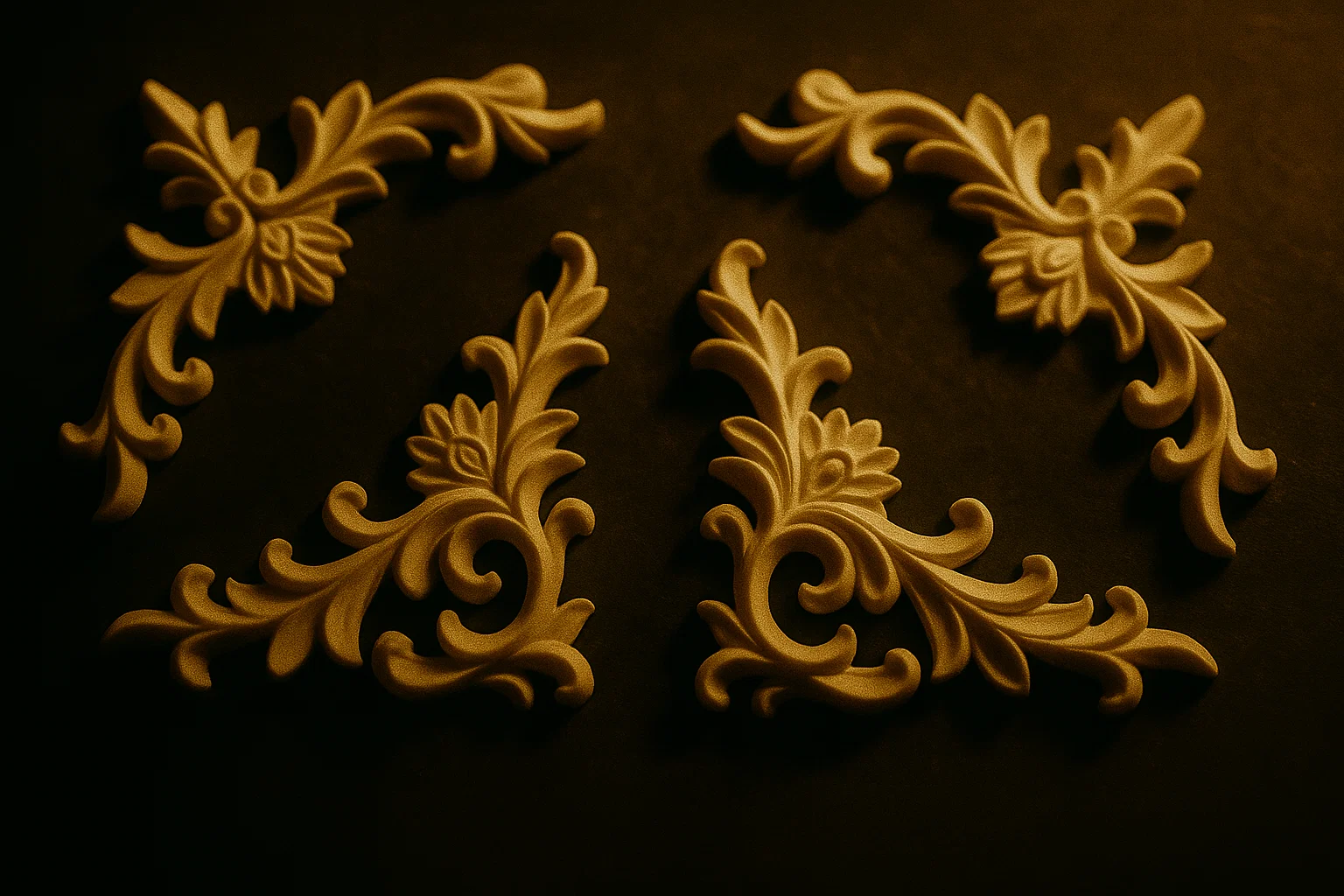
These books were not meant to be carried about often. They were treasures displayed on the shelves of a private library, ready to be admired by guests. The corne therefore worked as a visual focal point, drawing the eye to the corners of the book and bringing out the three-dimensional quality of the object.
A Comparison with Other Decorative Elements
To understand what makes the corne unique, it is worth comparing it with the other decorative and functional elements on a book:
- Metal Corners: This is the most common counterpart to the corne, usually made of brass, silver or another metal. Its function is predominantly protective (above all on large, heavy books such as Bibles or ledgers). It could be decorated, but the main concern was durability. The corne, by contrast, puts the aesthetics and the luxury of the material first.
- Bosses: These are metal studs (usually shaped like a button or a dome) set at the centre and the corners of a cover to protect the leather surface when the book is laid down. The feature is more common on very large, heavy medieval books.
- Gold Tooling (Finishing): This is the process of decorating a leather cover by pressing heated metal tools onto gold leaf. A corne was often used together with intricate gold tooling, creating a harmonious and luxurious decorative ensemble.
The corne holds a unique position among these elements as an ornament made from exotic organic material, one that demanded carving skill on top of the skill of bookbinding itself.
Inspiration for Hibrkraft and Modern Craft
Although the use of real ivory is now heavily restricted for ethical and conservation reasons, the spirit behind the corne remains a rich source of inspiration for modern craftspeople. At Hibrkraft we believe that the essence of handcraft lies in attention to detail and in the ability to create something genuinely personal and unique.
The corne principle—adding a distinctive, luxurious three-dimensional element at the corner or elsewhere on the cover—can be reinterpreted with modern, ethical materials. Imagine a custom leather journal with corners reinforced by hand-carved exotic wood, by coloured resin with a unique pattern, or even by metal soldered with a personal design. This is a way of carrying the tradition of commissioned, bespoke luxury into the contemporary world.
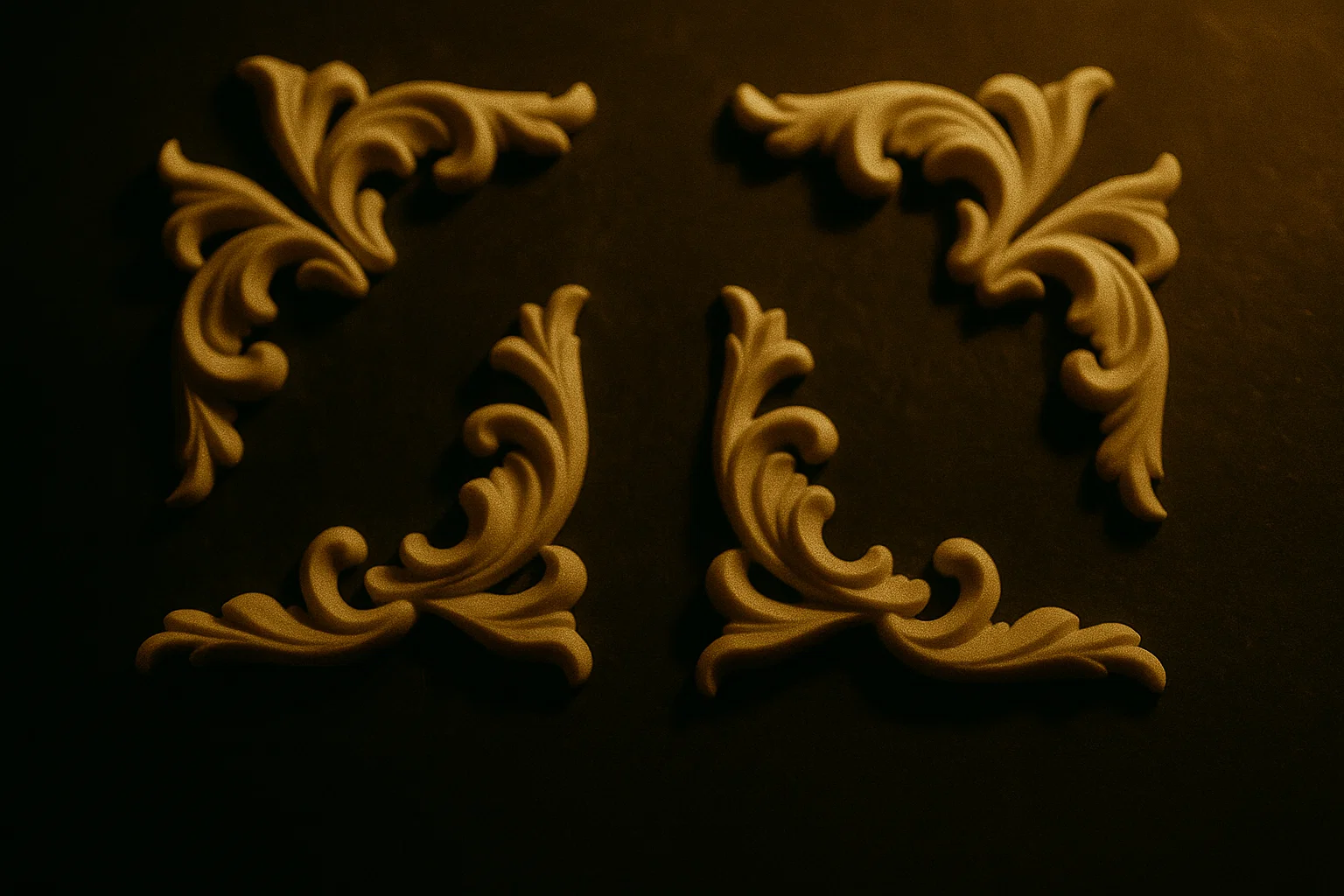
When you order a custom notebook from Hibrkraft, you have the chance to discuss small details like these. Perhaps you would like your initials carved on a small plaque at the corner, or a symbol that means something to you applied as a decorative element. This is how we bring the spirit of the corne into the twenty-first century: not by imitating the past, but by capturing its essence, namely personalisation, uniqueness and beauty in the detail.
From buffalo horn on the hilt of a keris to elephant ivory on a European book, the use of precious organic material as a marker of status and of art is a universal language in the world of handcraft.
A Connection with Indonesian Craft Tradition
Interestingly, the idea of using precious hard organic material as a decorative element and a symbol of status echoes strongly in Indonesian craft tradition. For centuries the empu and the craftspeople of the Nusantara have used:
- Buffalo Horn: Used widely to make the hilt (hulu) of a keris, weapon sheaths, combs and various ornaments. Its ability to be carved in intricate detail made it a highly valued material.
- Bone and Ivory: Rarer, but ivory too was used in some high-level crafts, indicating wealth and power.
- Tortoiseshell and Seashell: Used as a beautiful inlay material on furniture, boxes and musical instruments, giving lustre and contrasting colour.
The parallel shows that the human wish to beautify important objects with natural materials that are beautiful and durable is a universal phenomenon. Understanding the European corne gives us a new lens for appreciating a similar richness in our own craft heritage. At Hibrkraft we often draw inspiration from both worlds, blending classical binding technique with materials and an aesthetic rooted in the richness of Indonesian culture.
FAQ
What is the main difference between 'corne' and a metal book corner?
The main difference lies in the material, the aesthetics and the purpose. Corne refers specifically to a corner ornament made from luxurious organic material such as ivory, bone or horn, popular in the eighteenth century with a focus on elegance and status. Metal corner protectors (metal corners), meanwhile, are more common, made of brass or another metal, and their main function is protection or durability, though they can be decorative too. In short, a corne is a statement of luxury, while a metal protector is the more functional of the two.
Why is 'corne' rarely found on modern books?
There are several main reasons. First, cost and material: ivory and bone are expensive materials, and their use is now closely governed by legislation protecting endangered animals. Second, a change of style: book aesthetics changed drastically after the eighteenth century, moving from lavish ornament towards simpler, mass-produced design. Third, a change in production technique: modern machine bookbinding makes it impossible to fit an intricate detail like a corne efficiently. Ornament of this kind is only possible by hand.
How should an antique book with a 'corne' ornament of bone or ivory be cared for?
It must be handled with great care, because these materials are vulnerable to changes in their environment. Keep the book somewhere with stable temperature and humidity (ideally 45-55% relative humidity) to prevent cracking or distortion. Avoid direct sunlight, which can make the material brittle and fade its colour. When cleaning, use a very soft brush to lift the dust. Never use water or chemical cleaners. If further treatment is needed, consult a professional book conservator experienced with organic materials.
References
- Metropolitan Museum of Art. (2018). “English Ornament Prints and Furniture Books in Eighteenth-Century America.” – Provides context on how design books spread styles such as Rococo and Neoclassical.
- Conservation Wiki. “Book Decoration.” – Explains various book decoration techniques, including those relevant to the Rococo era.
- Canadian Conservation Institute. (2023). “Care of Ivory, Bone, Horn and Antler.” – An essential resource for understanding the characteristics of these materials and how to care for them.
- Cambridge University Press. (2024). “Worked Bone, Antler, Ivory, and Keratinous Materials.” (the original link is dead; the reference is kept without a link) – Gives scientific insight into the identification and structure of these organic materials.
- The Morgan Library & Museum. “Magnificent Gems: Medieval Treasure Bindings.” (the original link is dead; the reference is kept without a link) – Although it focuses on an earlier period, it shows the long tradition of using precious materials such as ivory in luxury bookbinding.

A Custom Notebook Full of Style
Inspired by historic details? Create a notebook with a unique personal touch, from carving at the corners to the choice of cover material.
Business & White Label Solutions
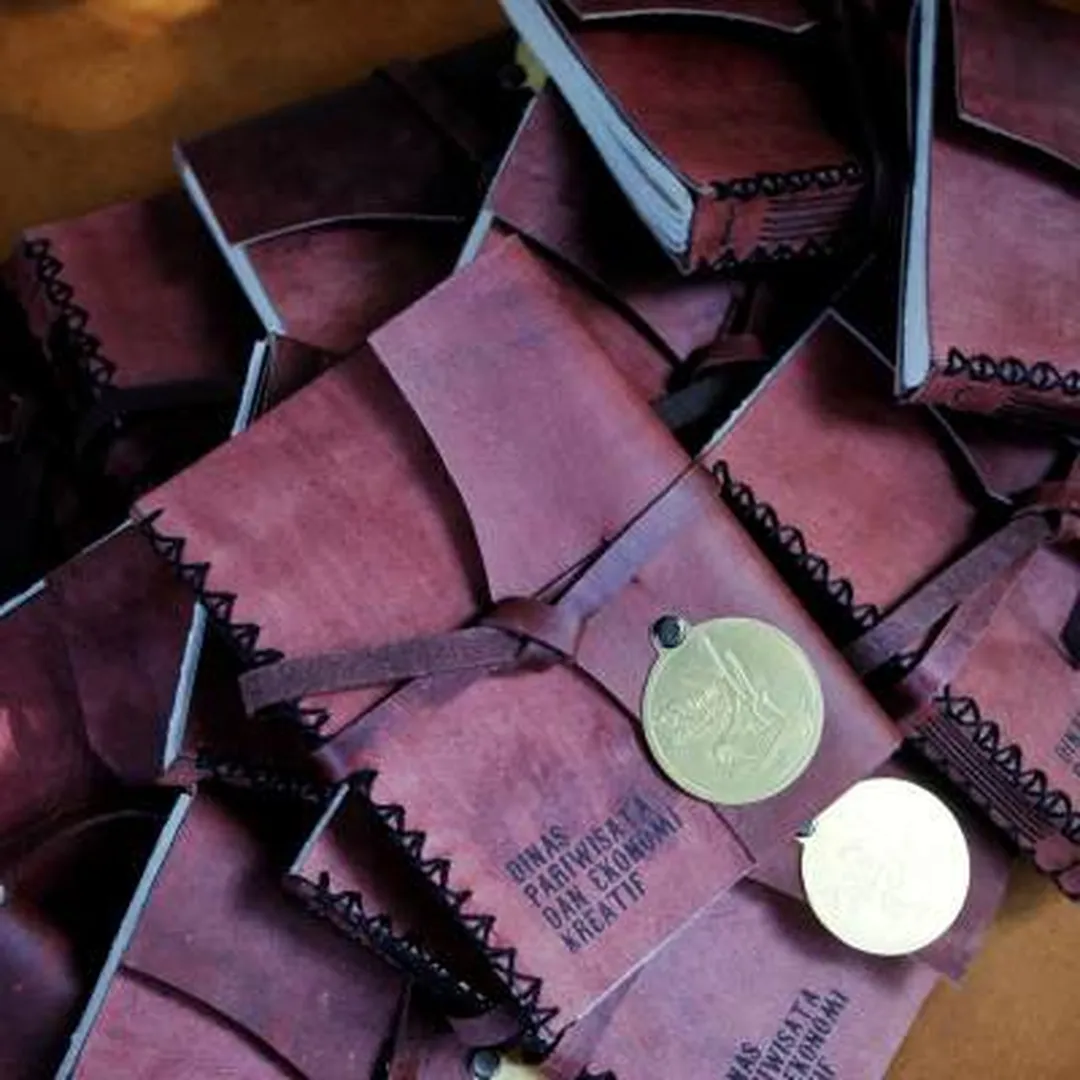
Raise your brand image with premium leather agendas. Add luxurious details such as engraved metallic corners for an exclusive impression.
Book Repair & Conservation
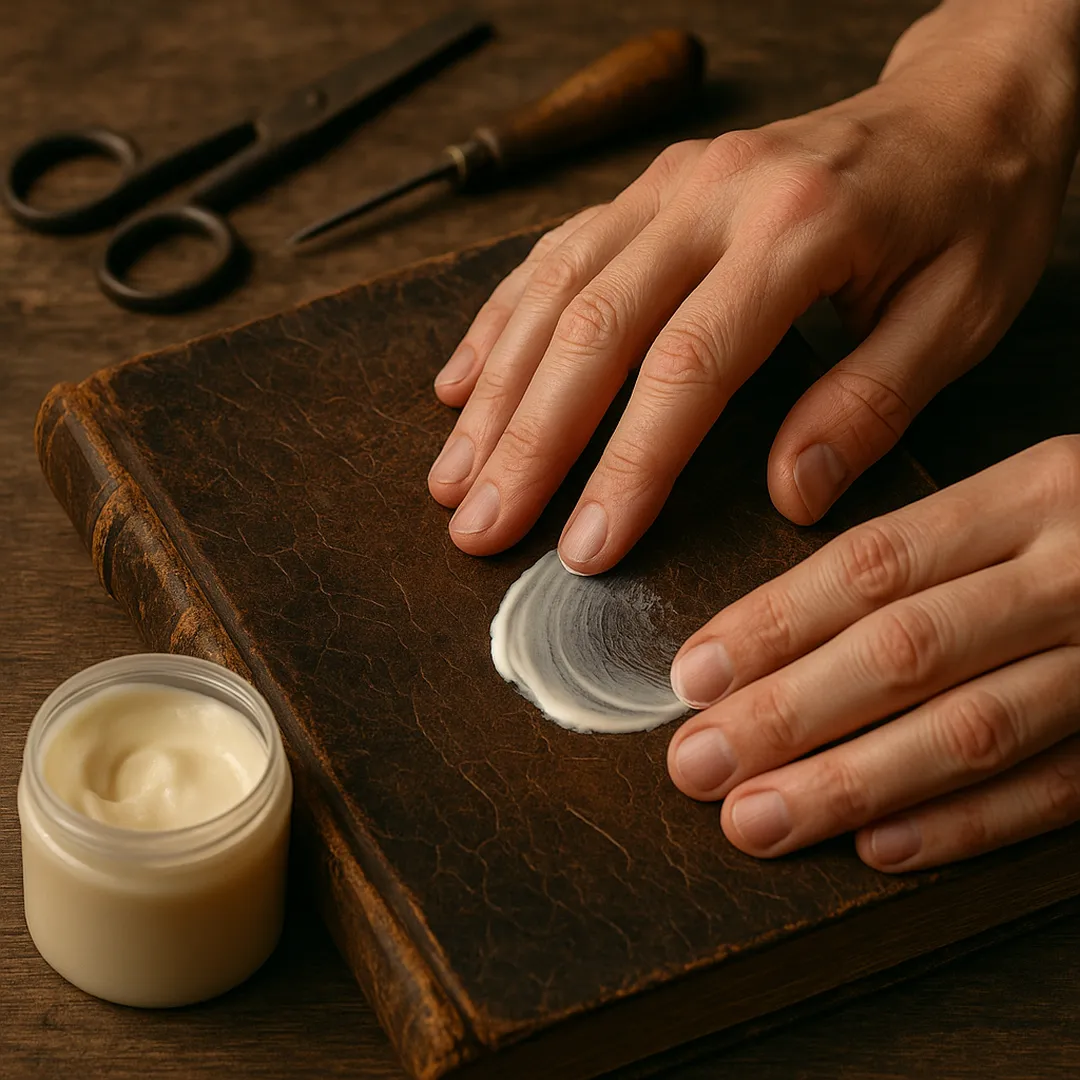
Do you own an antique book with fragile ornaments such as ivory or bone? We offer a conservation service to care for it and preserve it.