
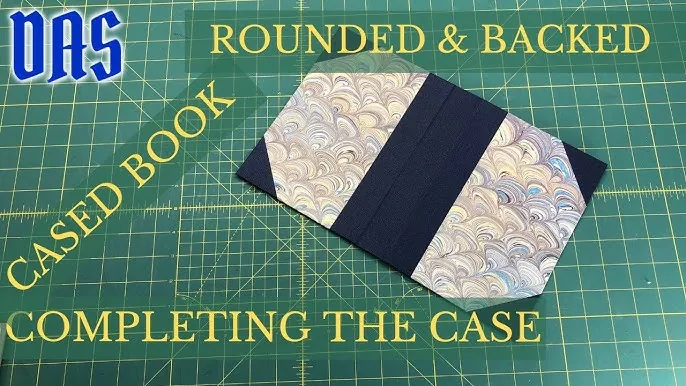
Cased Books
by Ibrahim Anwar · July 26, 2025
Cased books, also often called cased-in binding, are the most fundamental and the most common binding method for a hardcover book. The defining feature is that the cover, called the “case”, is made separately from the book block (the pages of the book). Once the book block has been sewn or glued and trimmed, it is “cased in” and stuck into the finished case, usually by pasting the endpapers to the inside of the boards. This efficient process yields a book that is strong, durable and highly versatile, allowing a wide range of covering materials, designs and ornament, from a plain mass-produced book to an intricate custom leather binding.
Cased Books: The Foundation of the Hardcover Book as We Know It
When you hold a hardcover book—the latest novel, a textbook, or a beautiful leather journal—you are most likely holding a “cased book”, or buku berselubung. This binding method is the gold standard in the publishing industry and in the world of book craft. It is called “cased” because the essence of the technique is that two main components are made separately: the book block (the gathered pages) and its case (the hard cover). The two are then joined at the final stage to create a product that is sturdy, useful and beautiful. Far from being merely a technique, case binding is a clever piece of engineering that has revolutionised the way books are made, putting them within reach of a mass audience while keeping an extraordinary potential for beauty and durability.
A Short History: A Revolution of Efficiency in Binding
To appreciate the innovation of the cased book, we need to look at what came before. For centuries the main binding method in Europe was “in-board binding”, or binding directly into boards. In that older technique the cover boards (usually wood, later thick millboard) were attached directly to the cords or tapes on which the pages were sewn, before the outer covering (leather or cloth) was put on. It was a very slow, intricate, integrated process, producing a remarkably strong book but demanding intensive time and skill.
In the early 19th century, as demand for books rose with literacy and the Industrial Revolution, the need for a faster and more efficient binding method became pressing. This is where case binding was born, as a breakthrough. Developed around the 1820s, the technique allowed production to be split into two parallel workflows: one team could concentrate on preparing the book block while another made the case at the same time. “Casing-in”, putting the book block into the case, became the quick final step that brought the two together. This revolution cut production time and cost drastically, opening the way to the era of mass publishing and making hardcover books more affordable for the general public.
The Anatomy of a Cased Book
A cased book consists of two main units, made separately and then joined. Understanding these components is the key to appreciating the genius of its design.
- The Book Block (Text Block): This is the heart of the book: all the pages that have been printed, folded into gatherings (signatures), collated in the right order, and then joined together at the spine. That joining can be done in two ways:
- Sewn (Smyth-sewn): The strongest, highest-quality method, in which every gathering is sewn to the next, creating a flexible, durable book block that can open flat.
- Glued (Perfect-bound): The individual pages are trimmed flush at the spine and held together with a strong adhesive. This is more common for paperbacks, but it is sometimes used for more economical hardcover books as well.
Once joined, the spine of the book block is often reinforced with a layer of thin cloth (mull or crash) and a paper lining.
- The Case: This is the hard cover, made separately. The case itself is made up of several parts:
- Boards: Two pieces of thick, rigid board (front and back) that give the book its protection and its shape.
- Spine Piece: A thinner piece of board or heavy paper set between the two boards to cover the spine of the book block.
- Covering Material: This is the outer “skin” of the book. It can be cloth (book cloth), decorative paper, or genuine leather. The material is glued to the boards and the spine piece, with its edges turned in for a neat finish.
- Endpapers: These are the vital bridge that unites the book block and the case. An endpaper is a folded double sheet of paper: one leaf is pasted to the first and last page of the book block, the other to the inside of the front and back boards. It is the adhesive on the endpapers that physically holds the whole book together as one.
Case binding is a clever piece of engineering, separating the making of the contents from the making of the cover to reach production efficiency without sacrificing the fundamental strength and beauty of a hardcover book.
Process, Variation, and Relevance in Modern Craft
Making a cased book is a dance between machine and hand, or, in a craft setting, between the various stages of manual work. The beauty of the method lies in its flexibility, which allows endless variation and adapts to production at small and large scale alike.
The “Casing-In” Process: The Moment of Union
The last and most decisive step in making a cased book is “casing-in”. Once the book block and the case are finished, adhesive (usually PVA or animal glue) is applied evenly to the outside of the endpapers. The book block is then carefully positioned inside the case, making sure the margin around the edges (known as the squares) is even. The book then goes into a book press and is left to dry under pressure. That pressure ensures a strong, even bond, and it forms the hinge, or joint, between the boards and the spine, which lets the book open and close smoothly.
Endless Variation in Design
One of the greatest strengths of case binding is the freedom of design it offers. Because the case is made separately, almost any material can be used as a covering:
- Book Cloth: The most common choice for mass-produced hardcover books. Durable, and available in a range of colours and textures (linen or buckram, for instance).
- Decorative Paper: Allows complex graphic designs, illustrations or photographs to be printed directly onto the cover of the book.
- Genuine Leather: Used for luxury editions, collectors’ books, and high-quality custom journals such as those made by Hibrkraft. Leather gives an unmatched look, smell and feel, along with extraordinary durability.
- Combination Bindings: The technique also makes it easy to produce a quarter binding (quarter-bound, where only the spine is covered in a premium material such as leather) or a half binding (half-bound, where the spine and the corners are covered in the premium material).
Strengths and Weaknesses
Every binding method has its strengths and its weaknesses. For the cased book, the strengths are plain:
- Efficient: Ideal for mass production.
- Versatile: Allows a wide choice of cover materials and decoration.
- Durable: Produces a strong, protective book for normal use.
- Beautiful: Can produce a book that is very beautiful and very neat.
It does, though, have one main structural weak point compared with the older in-board binding. That weak point is the hinge, whose strength depends entirely on the endpapers and the reinforcing cloth at the spine. On a heavy book, or one in frequent use, the hinge can be the first area to fail. Even so, for most purposes the strength of case binding is more than enough, and it has proved reliable for nearly two centuries.
Though it was born of the needs of mass production, case binding remains the first choice of the modern bookbinder for its flexibility in blending structural strength with limitless artistic expression.
Relevance in Hibrkraft’s Custom Book Craft
At Hibrkraft we take the best principles of case binding and apply them to the highest standard of handwork. Every one of our custom leather journals is a “cased book”. We make the book block from high-quality paper, hand-sewn for maximum strength and the fullest ability to open flat. Separately, we make the case from selected genuine leather, making sure every cut is precise and every corner is turned neatly.
Adopting this method lets us offer our customers a high degree of customisation. You can choose the leather, the thread colour and the personalisation on the case, while we make certain the book’s internal structure stays sturdy and reliable. For us, case binding is not a shortcut but a solid platform on which to build a book that is beautiful, personal, and made to last. It is a perfect blend of a time-tested technique and individual creative expression—a philosophy at the heart of every product we create.

A Cased Custom Notebook
Our custom journals use strong cased-in construction, making sure your work is protected in a binding that is beautiful and durable.
Feel the strength and the beauty of case binding in a leather journal we make specially for your story.
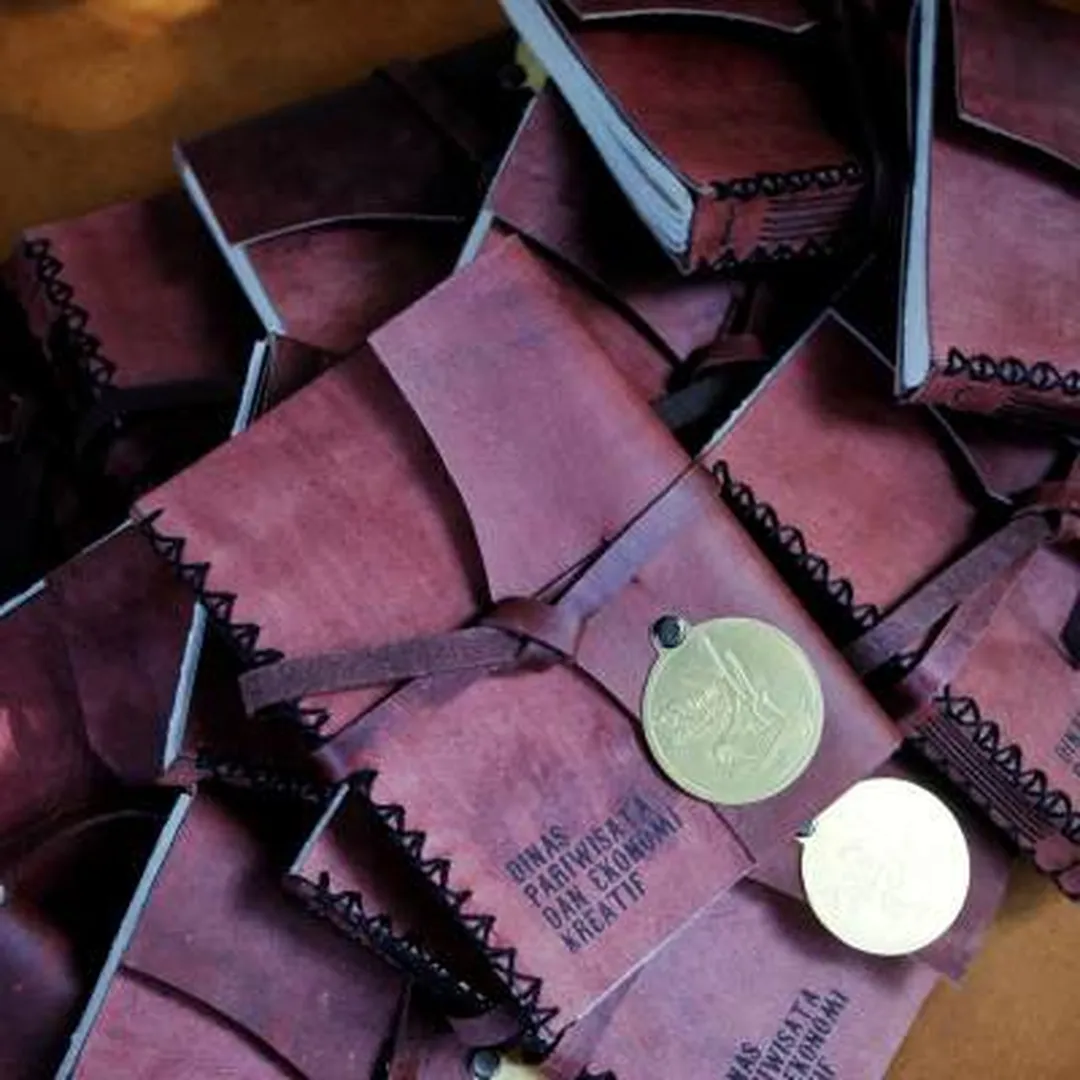
The Gold Standard for Your Business
Present a professional image with a cased-in bound agenda, the gold standard for a quality book that reflects the excellence of your brand.
A business agenda in a sturdy, elegant hardcover binding, made by the cased-in method for durability and a premium feel.
Get in Touch
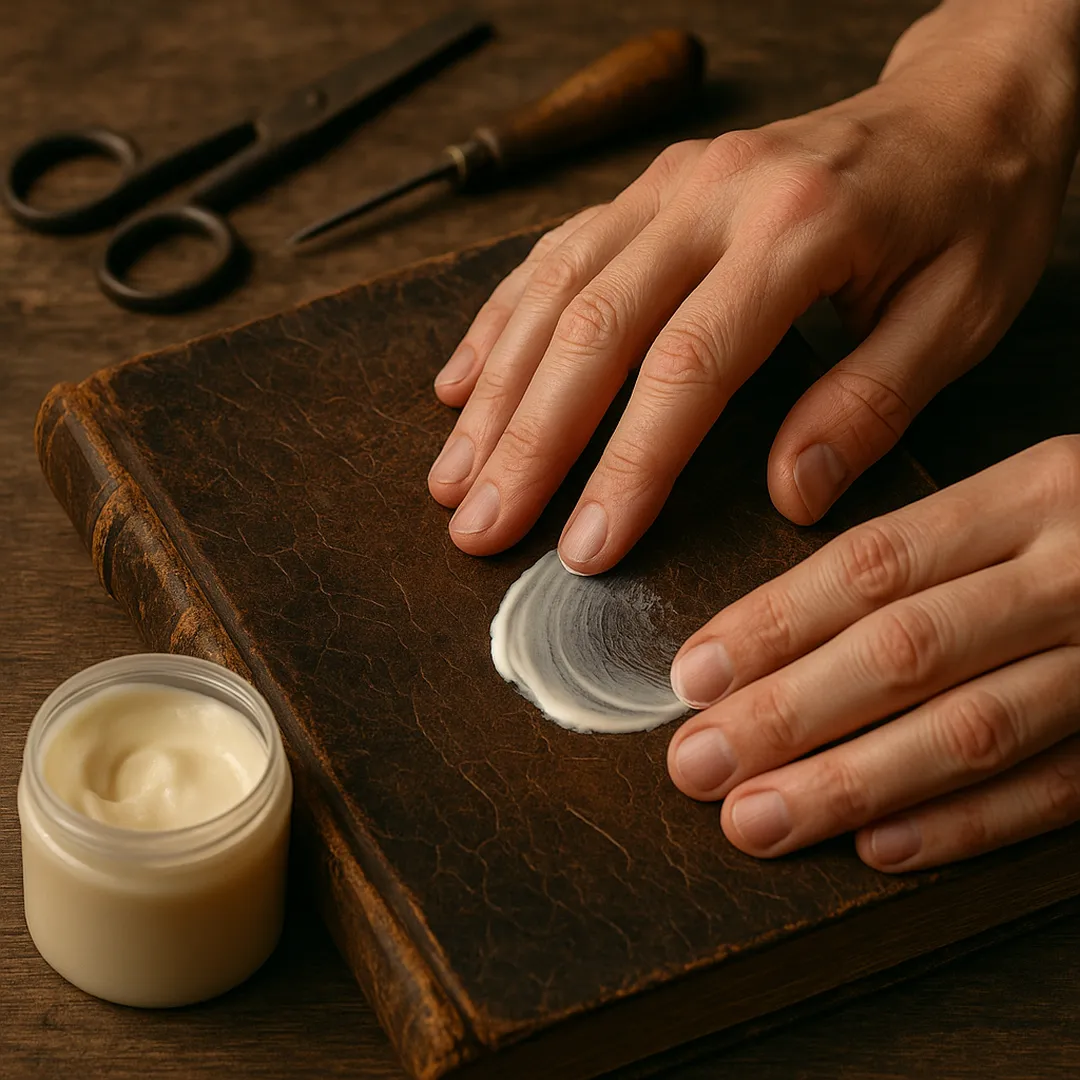
Cased Book Repair
We are expert in repairing cased books, strengthening the hinge joint and restoring their original beauty.
Is your favourite hardcover damaged? We can repair its cased-in binding so it is as strong as new.
Free Consultation