
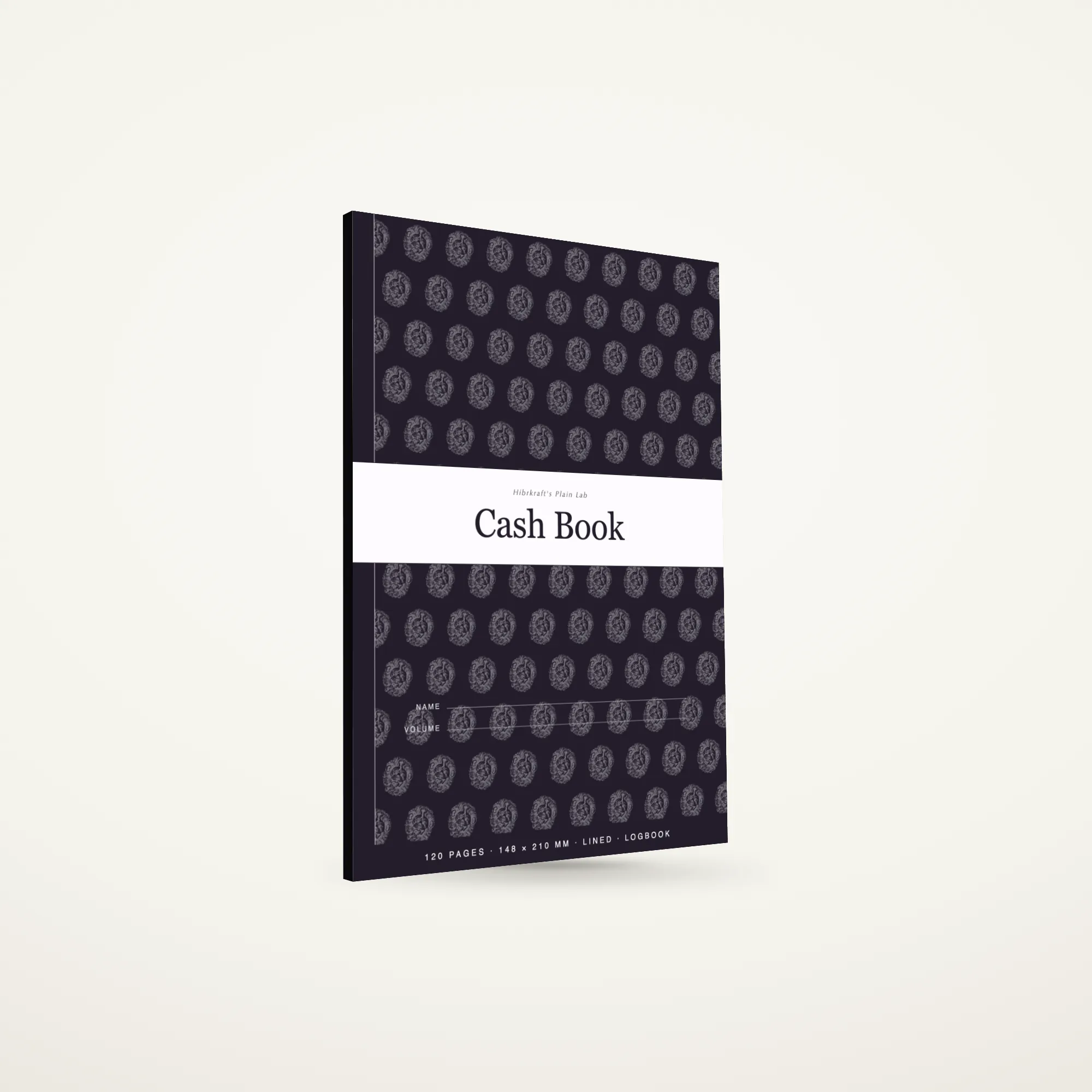
Plain Lab · logbook
Cash Book
Eighty-eight ruled ledger pages for receipts, payments and a running balance, with fourteen pages of notes and six of periodic reflection behind them.
Specification
- Trim
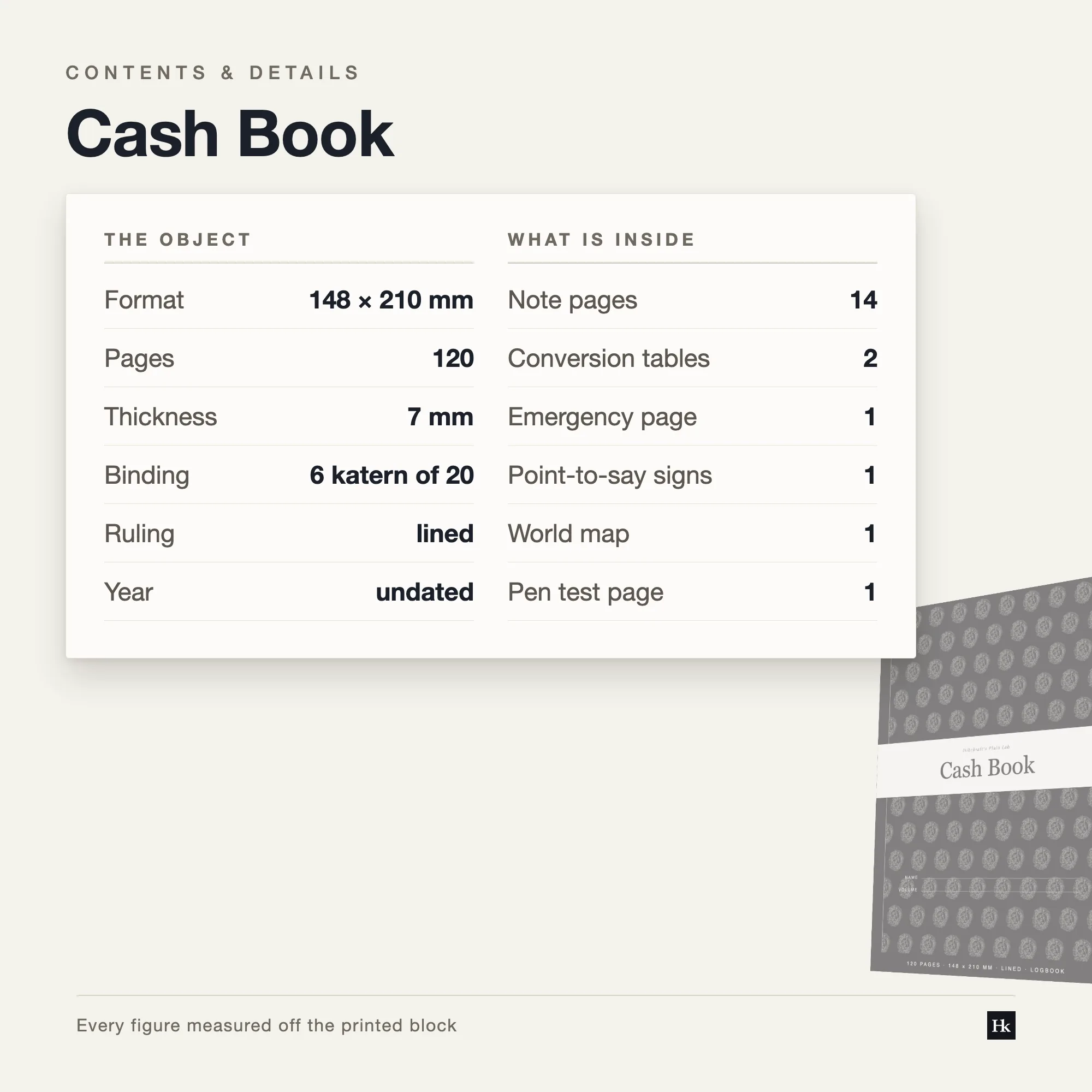
- 148 × 210 mm · 5.827 × 8.268 in
- Pages
- 120
- Leaves
- 60
- Sheets
- 30
- Signatures
- 6 × 20pp
- Spine
- 6.86 mm
- Paper
- white
- Ruling
- lined
- Ruling pitch
- 7.14 mm · 20.25 pt · 9/32 in
- Rows per page
- 24
Eighty-eight pages of ledger, ruled lined, twenty-four lines to a page. Each line carries the date, the particulars, what came in, what went out, and the balance after that line. A cash book is only as good as the last figure carried forward, and a spreadsheet with no paper backup has a way of vanishing the one week you actually needed to show it to someone.
Fourteen pages of plain ruled notes come after the ledger, for the explanation a balance column has no space for: why a payment was late, what a receipt was actually for, which entry got queried. Six shorter reflection pages close the working section, meant for a monthly or quarterly look back rather than a daily line.
It will not reconcile your accounts for you, and it carries no formula to check your arithmetic. What it gives you is one place where every entry sits in the order it happened, which is most of what a cash book was ever for.
What is inside
- Ledger
- 88pp
- One line per transaction, so the balance is never more than a page away from where it went wrong.
- Notes
- 14pp
- Plain ruled, for the explanation behind an entry that a balance column has no room for.
- Reflection
- 6pp
- A shorter page for a periodic look back, separate from the daily ledger line.
- Reference
- 6pp
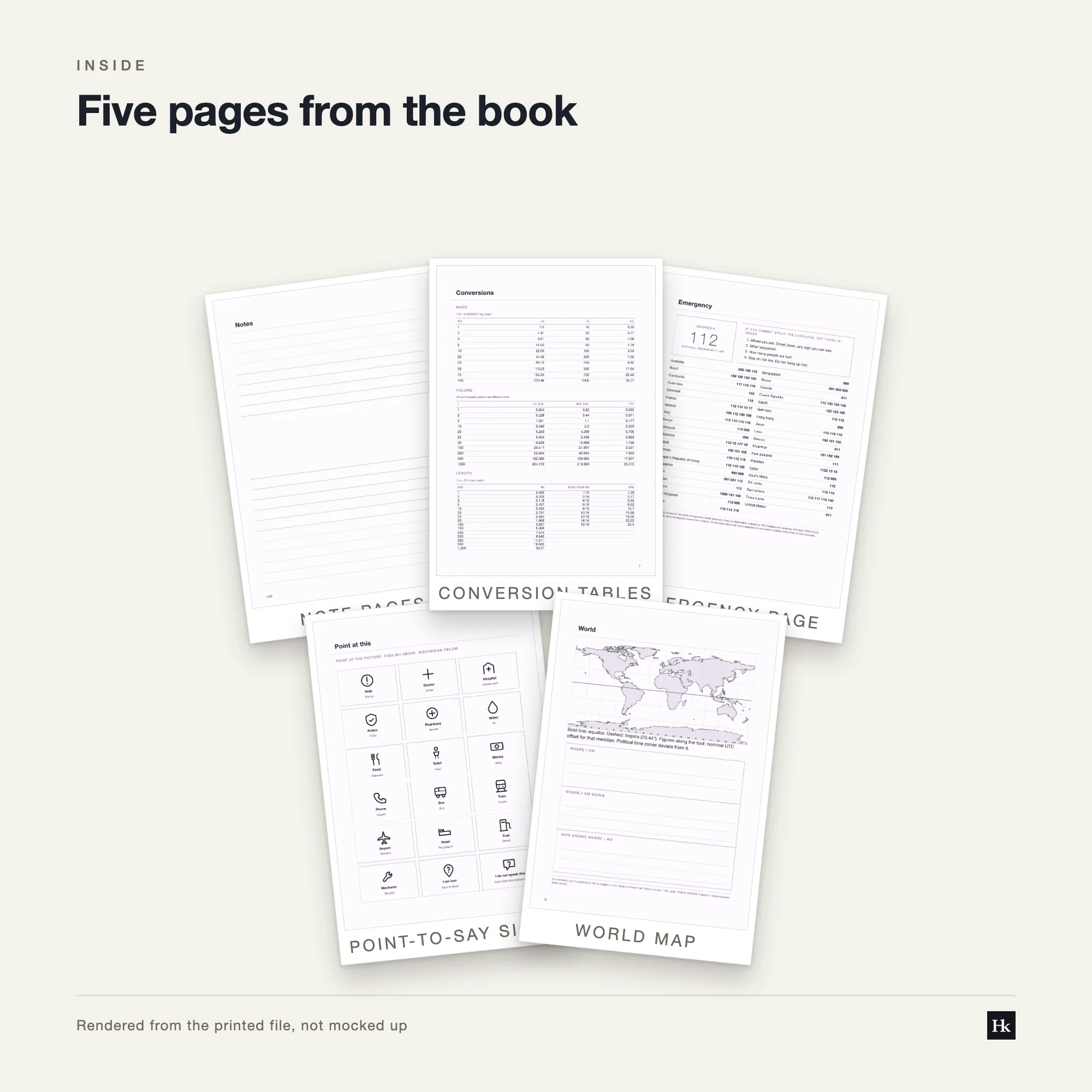
- Weight and length tables worked from definitions, with emergency numbers checked against two sources.
- Last leaf
- 1pp
- A pen-test page at the very back, so it is not the ledger's last real page that takes the hit.
The film
Page by page
A vertical film from our own bench — this page contacts nobody's server to play it, and downloads nothing until you press play.
Real pages
Made at the Hibrkraft bindery, Bogor · about the maker
Books that sit alongside it
- Accounting NotesWorks alongsideshares accountant
- Cash Flow PlannerWorks alongsideshares accountant, record-keeping
- Evening LedgerWorks alongsideshares accountant, record-keeping
- Expense InsertWorks alongsideshares record-keeping
- Gratitude LedgerWorks alongsideshares accountant, record-keeping
- Inventory LedgerWorks alongsideshares accountant, record-keeping
- IT Asset and Change LogWorks alongsideshares record-keeping
- Machine Log NotebookWorks alongsideshares record-keeping
Questions
What does each ledger page record?
The date, the particulars, receipts, payments and the balance carried forward.
How big is it?
A5, 148 x 210 mm, one hundred and twenty pages, 6.86 mm across the spine.
What ruling are the ledger pages?
Lined, 7.14 mm pitch, which is 9/32 inch, twenty-four lines to the page.
Is it dated?
No. Start it the day you open the till, the account, or the year.
What are the reflection pages for?
A shorter page for a periodic look back at where the money went, separate from the daily ledger line.
Is it double-entry?
No. It is a single running ledger: date, particulars, receipt, payment, balance. Double-entry bookkeeping needs a chart of accounts a printed page cannot carry.
Accurate accounts should be kept of every expense and of all the sales; and at the end of each week the profit should be divided.