
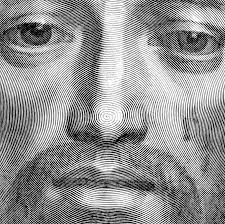
Allen, D., Line Engraver
by Ibrahim Anwar · July 24, 2025
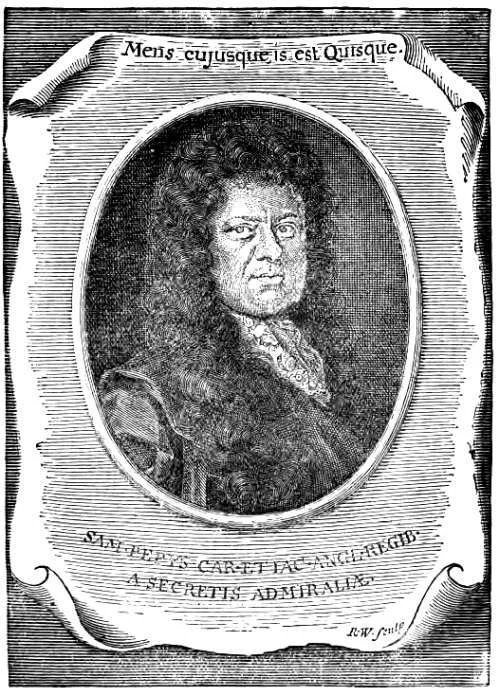
In the wide world of handcraft, full of great names such as Dürer or Blake, there are thousands of other names recorded only as whispers in history. “Allen, D., line engraver (120)” is one of those whispers. It is not merely a name but a marker of skill, a data point in the great catalogue of artists and craftsmen whose work shaped the visual beauty of print and bookbinding over centuries. The term invites us to go down into a world of precision, patience and art hidden behind simple strokes.
This entry is not about an artist whose fame echoed around the world, but about the significance of a skilled practitioner whose existence is acknowledged within a reference system. It represents the backbone of the creative industry of its day. Craftsmen such as D. Allen were the unsung heroes who made it possible for scholarly, literary and religious books to be decorated with detailed illustrations, accurate maps and striking covers. Let us open up the mysterious but fundamental world of the line engraver a little further.
Who Was “D. Allen”? A Mystery in the History of Craft
The first question to arise is, of course, who D. Allen actually was. History, unfortunately, is often selective. Without the context of which catalogue this “120” comes from, identifying D. Allen definitively is all but impossible. Allen could have been a Daniel, a David or a Dorothy, working in London, Dublin or Philadelphia in the eighteenth or nineteenth century. The number “120” is the strongest clue, indicating a 120th entry in some list, perhaps in the inventory of a printing house, a craft guild or a museum collection.
The mystery is precisely what brings out an important truth about craft. Behind every great work of art there is an ecosystem of skilled makers whose names are rarely recorded in the history books. D. Allen stands for these specialists, individuals whose skill was much in demand for specific tasks. Allen was not a painter or a sculptor but a “line engraver”, a trade that called for a unique blend of artistic talent and extraordinary technical meticulousness.
Behind every precise stroke there is an artist whose story may never have been written down in full. A name like “D. Allen” is a reminder of the hidden foundations of the beauty we inherit.
Dissecting the Line Engraving Technique: The Art of the Precise Stroke
To understand D. Allen’s role we have to understand the craft. Line engraving is one of the oldest and most respected forms of intaglio printing. Unlike the woodcut, where the image is printed from a raised surface, intaglio prints from lines cut down into the surface.
The process is an exacting one:
- Preparing the plate: An engraver begins with a smoothly polished metal plate, usually copper or, later on, steel for greater durability.
- Cutting the design: Using the principal tool, called a burin, a steel rod with a sharp V-shaped tip, the engraver drives it across the metal surface. By varying the pressure and the angle they can create lines that swell and taper, giving the image an elegant and dynamic calligraphic quality.
- Inking: Once the design has been engraved, the whole surface of the plate is coated with ink.
- Wiping the surface: The ink is then wiped carefully off the face of the plate, leaving ink only inside the lines that have been cut.
- Printing: A dampened sheet of paper is laid over the plate, and the two are run through a high-pressure press. The pressure forces the paper down into the cut lines, picking up the ink and transferring the image to the paper.
The result is a print with lines that are sharp, clear and slightly raised by the pressure on the paper. The technique is ideal for creating very fine detail, which made it the method of choice for scientific illustration, formal portraits, maps and banknotes over centuries.
The Vital Role of Line Engraving in the World of Books
Before photography and modern printing processes arrived, line engraving was a key technology in the spread of visual information. The role of a line engraver such as D. Allen in the production of books was vital. These were the people who translated paintings, sketches and diagrams into images that could be reproduced in quantity without losing their detail.
Every time you look at an antique book with an ornamented title page, a portrait of the author at the front, or an intricate anatomical diagram, you are most likely looking at the work of a line engraver. They did not simply copy an image; they interpreted it into a language of line, shadow and texture through techniques such as cross-hatching and stippling.
From Copper Plate to Leather Cover: The Close Relationship Between Engraving and Bookbinding
A line engraver’s skill did not stop at the illustrations inside a book. Its effect was felt just as strongly on the outside, on the leather cover itself. This is where the worlds of engraving and bookbinding meet in a beautiful harmony of craft.
The art of engraving is not only about an image on paper, but about the lasting mark left on leather. This is the bridge between the illustrator and the bookbinder.
Bookplates (Ex-Libris): An Artistic Mark of Ownership
One direct application of line engraving is the making of bookplates, or ex-libris. These are small paper labels pasted inside the front cover of a book to mark ownership. Rather than merely a written name, wealthy bibliophiles would commission an engraver to create a personalised design, often carrying a family crest, a monogram or an allegorical image. These prints, produced by line engraving, are miniature works of art that add value and a story to a book.
Heated Stamps (Finishing Tools): The Soul of Cover Decoration
This is the most fundamental connection, and the one most often missed. The intricate decoration you see on an antique leather book cover, especially where gold leaf is used (gilt-tooling), was not made by magic. It was made with heated metal stamps pressed into the leather. And who made those stamps? The engravers, of course.
A craftsman such as D. Allen very likely engraved not only plates for printing but also brass dies or finishing tools for bookbinders. The process is similar, cutting a design into metal. The purpose, though, is different. Instead of holding ink, this engraving creates a negative relief which, heated and pressed into leather, leaves a permanent mark of the design. Whether a simple line, an intricate floral pattern or a coat of arms, all of it began in the skilled hands of an engraver. A “line engraver” was therefore a supplier of essential tools to bookbinders, allowing them to “paint” in gold on leather.
Hibrkraft and the Heritage of the Engraver’s Art
At Hibrkraft we hold a deep respect for the tradition and the skill that a term like “Allen, D., line engraver” stands for. Although we work with modern technology, the essence of this craft is still alive in our philosophy. Precision, personalisation and the lasting impact of a design are at the heart of what we do.
The heritage of line engraving continues today in the form of laser engraving. Just as the burin cuts metal, a laser beam engraves a design into the surface of leather with extraordinary precision, creating elegant contrast and texture. When you ask for a name, a logo or a particular image to be engraved on a Hibrkraft leather journal, you are in fact taking part in a tradition that has run for centuries. You are continuing a heritage of personalisation that was once open only to a handful of people, through the services of craftsmen like D. Allen.
We see every custom order as a “catalogue entry” of our own, each with its own number and its own unique story, just as D. Allen is recorded as “number 120” in history. It is a reminder that behind every object made by hand there is a story, there is skill, and there is a human touch that makes it priceless.
Frequently Asked Questions (FAQ)
- What is the main difference between line engraving and etching?
- Both are intaglio techniques, but they differ in how the line is made. In line engraving the line is made mechanically, by pushing a burin into the metal. In etching the metal plate is coated with an acid-resistant layer, the design is drawn with a needle that only exposes the metal beneath, and the plate is then dipped in acid, which “bites”, or cuts, the line.
- So was D. Allen a bookbinder?
- Most likely not. Allen was a specialist whose skill (engraving metal) supported the work of bookbinders. Allen created the tools (brass dies) and the components (illustrations, bookplates) that bookbinders used to perfect their own work.
- Can I ask for a design in the classic engraving style on a Hibrkraft journal?
- Of course. You can supply a design that imitates the cross-hatching and the clean lines of classic line engraving, and we can translate it beautifully onto the leather surface using our modern laser engraving. It is a fantastic way to combine a vintage aesthetic with a contemporary product.
References
- The Metropolitan Museum of Art – “Engraving” (the original link is dead; the reference is kept without a link): A thorough account of the process and history of engraving as a printing technique.
- Britannica – “Engraving” (the original link is dead; the reference is kept without a link): An encyclopaedia article covering the technical and historical sides of the engraver’s art.
- Made How – “Book” (the original link is dead; the reference is kept without a link): Explains the process of making a book, including a note on how illustrations and cover decoration were made historically.
- Etherington & Roberts. Dictionary–Finishing Tool: A book-conservation dictionary that defines “Finishing Tool”, confirming that these tools were engraved by hand in brass.

Custom Notebook
A handmade leather notebook you can design yourself, for a gift, for memories, or for plans still to come.
Business & Whitelabel
Business solutions and corporate gifts in the form of an exclusive agenda carrying your company logo.
Book Repair & Conservation
Repair and conservation for antique books, family heirlooms, or private collections of historical worth.