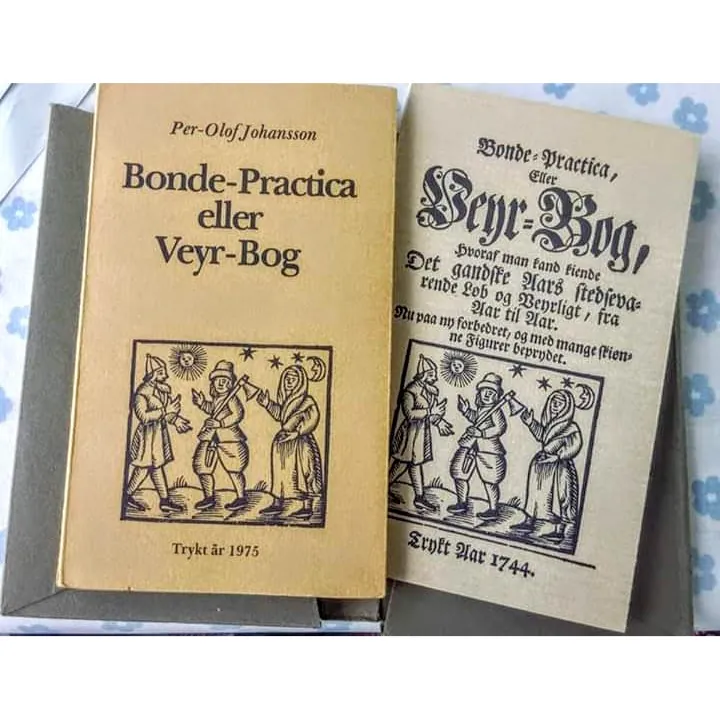
Bonde-practica
by Ibrahim Anwar · July 24, 2025
We live in an age of instant information. Want to know how to grow tomatoes? YouTube has thousands of tutorials. Need the weather forecast? There is an app on your phone. But imagine for a moment that you live in the 1300s in a small village in Sweden. No electricity, no internet, no bookshop on the corner. Knowledge is the most precious commodity there is, and the only way to get it is from your parents, from the village elders, from an oral tradition handed down through the generations.
In a world like that, a book such as Bonde-practica, or “the Farmer’s Handbook”, is no longer just a book. It is an heirloom. A charm against hunger, against sickness, and against the cruel uncertainty of nature. It is plain evidence of the human effort to understand, to record, and to pass on practical wisdom so that the next generation might live.
More Than Just a Farmer’s Almanac
The name “Bonde-practica” explains itself. “Bonde” in the old Scandinavian tongue means a farmer, or a free man who holds land, while “practica” comes from the Latin for a practical guide. So this is a practical handbook for farming people. But do not picture a modern agricultural textbook, dry and full of data.
The Bonde-practica is a medley of knowledge. Inside it, a young science mixes with ancient superstition, astronomical observation sits beside folklore, and medical advice is set next to prayers and charms. Why? Because at that time the border between science, magic and religion was still very blurred. People did not care whether a method was “scientifically proven”. They cared about one thing only: did it work?
This is not about theory. It is about dirty hands, a full stomach, and the hope of seeing the sun rise tomorrow.
These texts are often compilations, gathered from various sources over many years. Some of it may come from ancient Roman treatises on agriculture, some from the Arabic medical texts that reached Europe, but most of it was born of local wisdom. From a grandmother’s knowledge of the medicinal plants in the forest, or an old fisherman who could forecast a storm simply by looking at the colour of the sky at dusk. Strange, is it not, that the most precious knowledge often comes not from a university but from a life lived.
A Look Inside the Treasure Chest
So what would you find if you opened the leaves of a real Bonde-practica? Its contents are a mirror of the whole life, and the whole worry, of rural people at the time.
- Weather and Astrology Guides: This is the most vital part. Farmers learned to recognise weather patterns from the position of the stars, the phase of the moon, or even the behaviour of animals. For instance, “If the crows fly low, a storm is coming”. There are also calendars tying particular holy days to weather predictions for the year ahead. It is a blend of sharp meteorological observation and strong astrological belief.
- A Herbalist’s Dictionary: The Bonde-practica is a walking apothecary. It holds detailed descriptions of local medicinal plants, how to identify them, which part to harvest, and how to compound them into medicine. Remedies for fever, for wounds, for a bad stomach, and preparations to help sick livestock. This knowledge was the first line of defence against illness in an age before modern doctors.
- A Perpetual Farming Schedule: The book tells the farmer when the right moment is to plough, to sow seed, and to harvest each kind of crop. There is advice on crop rotation to keep the soil fertile, and on fighting pests by natural methods. This is the basis of sustainable agriculture, long before the term became a trend.
- An Encyclopaedia of Health and Hygiene: There are chapters on human health as well. Basic rules of cleanliness, how to treat a light wound, and even a guide to cupping (the ancient medical practice of drawing out “dirty blood”). It may sound primitive to us, but it was a real effort to keep a community healthy.
- Livestock Management: Advice on caring for farm animals, from choosing good breeding stock, to treating the common diseases of cattle and sheep, to the signs that an animal is about to give birth.
Sometimes, to make it easier to memorise and to pass on by mouth, parts of the Bonde-practica were written as verse or as simple rhyme. Put it this way: it is a clever way of making important information stick in the head, like an advertising jingle in the modern age.
Why Is This Ancient Book Relevant Today?
You may be thinking, “Wow, interesting. But what has it got to do with me? I have no wheat field and no cattle.” The connection runs deeper than you think. The Bonde-practica is a symbol of something that is beginning to disappear in our thoroughly digital world: wisdom born of personal observation and direct experience.
The Democratisation of Knowledge
In the Middle Ages a book was a luxury. Most books were written in Latin and kept in a monastery or in the library of a noble house, out of reach of ordinary people. The Bonde-practica broke that barrier down. It was often written in the vernacular (the language of the local people) and it dealt with everyday problems. This was knowledge for everyone, not only for the elite. It gave ordinary people the tools to improve their own lives. That is a revolutionary spirit hidden behind a simple leather cover.
A Bridge Between the Oral and the Written Tradition
The Bonde-practica is often the point at which centuries of oral tradition were finally written down. Think how fragile that knowledge was before, resting on nothing but one person’s memory passed to another. One generation fails to hand it on and the wisdom can be gone for good. Written down, that knowledge becomes more lasting. It is a remarkable act of cultural conservation, as important as caring for an old cathedral or an ancient artefact.
Your Journal: Your Own Bonde-practica
And here we come to the point. At Hibrkraft we believe that every person is a writer of history, an observer, a gatherer of wisdom. And every journal is a personal Bonde-practica.
Think about it. Where do you write down your grandmother’s inherited recipes, the ones you will not find on the internet? Where do you set down the lesson you learned after a failure? Where do you track your habits, recording what makes you feel well and happy and what does not? Where do you paste the leaf you found on a climb, with its date and its memory beside it? Your journal.
Your journal is your own farmer’s handbook. The field is your own life. You sow the seed of an idea, water it with reflection, and harvest wisdom.
A leather journal from Hibrkraft is made to be a lasting vessel for your own “Bonde-practica”. The leather will age with you, carrying its scratches and stains the way the ground carries the mark of the seasons. The paper is ready for all the “data” of your life, whether that is a poetic observation about the clouds, a dull list of tasks, or the sketch of a business idea that could change your world.
We no longer need to forecast the weather from the behaviour of crows, but we still have to navigate the storms of our own feelings. We no longer compound medicine from plant roots, but we go on looking for the “recipe” for a more meaningful life. The process is the same. Observation, recording, reflection, and application. That is the essence of the Bonde-practica, and that is the essence of journaling.
Frequently Asked Questions (FAQ)
Are there still original copies of the Bonde-practica?
Yes. Several originals from the 15th to the 18th century are still held in museums and libraries across Scandinavia, such as the Royal Library in Stockholm or Copenhagen. They are precious artefacts, and they give a remarkable insight into the past.
Did this kind of book exist only in Scandinavia?
No. The idea of a “practica”, a practical handbook, was popular across Europe, and above all in Germany with the highly influential “Bauern-Praktik”. Each region adapted it to its own local wisdom, its own flora and fauna and its own climate, which makes every version unique.
How accurate is the information in it?
Mixed. The farming advice on crop rotation or sowing times is often very accurate, because it rests on centuries of experience. The medical and astrological parts, though, mix shrewd observation with pure superstition. Treating a wound with a particular preparation may well have worked because the plant had antiseptic properties, but tying the fate of a harvest to a constellation is of course unscientific by today’s standards.
Why bother learning about an old farmers’ book?
Because it reminds us that our ancestors were not fools living in the dark. They were shrewd observers, innovators, and scientists in their own way. Studying the Bonde-practica is about respecting the roots of practical knowledge, and recognising that wisdom can come in various forms, not only from a modern laboratory or a university classroom.
References
To go deeper into the remarkable world of the medieval farmer’s handbook, you can look at the following sources:
- Fund og Forskning i Det Kongelige Biblioteks Samlinger (the original link is dead; the reference is kept without a link) – The digital journal of the Royal Danish Library, which carries in-depth articles (in English and Danish) on the history of the book, including an analysis of the “Bonde-practica”.
- Letteratura Artistica (the original link is dead; the reference is kept without a link) – An academic resource which, although its focus is art, often discusses practical texts of the early modern period, including the almanacs and ‘practica’ that were the forerunners of the Bonde-practica.
- ResearchGate (the original link is dead; the reference is kept without a link) – An academic book review on farmers’ astrology and weather prediction, giving deep context on the “Bauern-Praktik” genre in Germany, the principal source for the Scandinavian Bonde-practica.
- National Museum of Denmark (Nationalmuseet) – Provides broad context on everyday life in the Danish Middle Ages, the social background in which the Bonde-practica was used and valued.

Custom Notebook
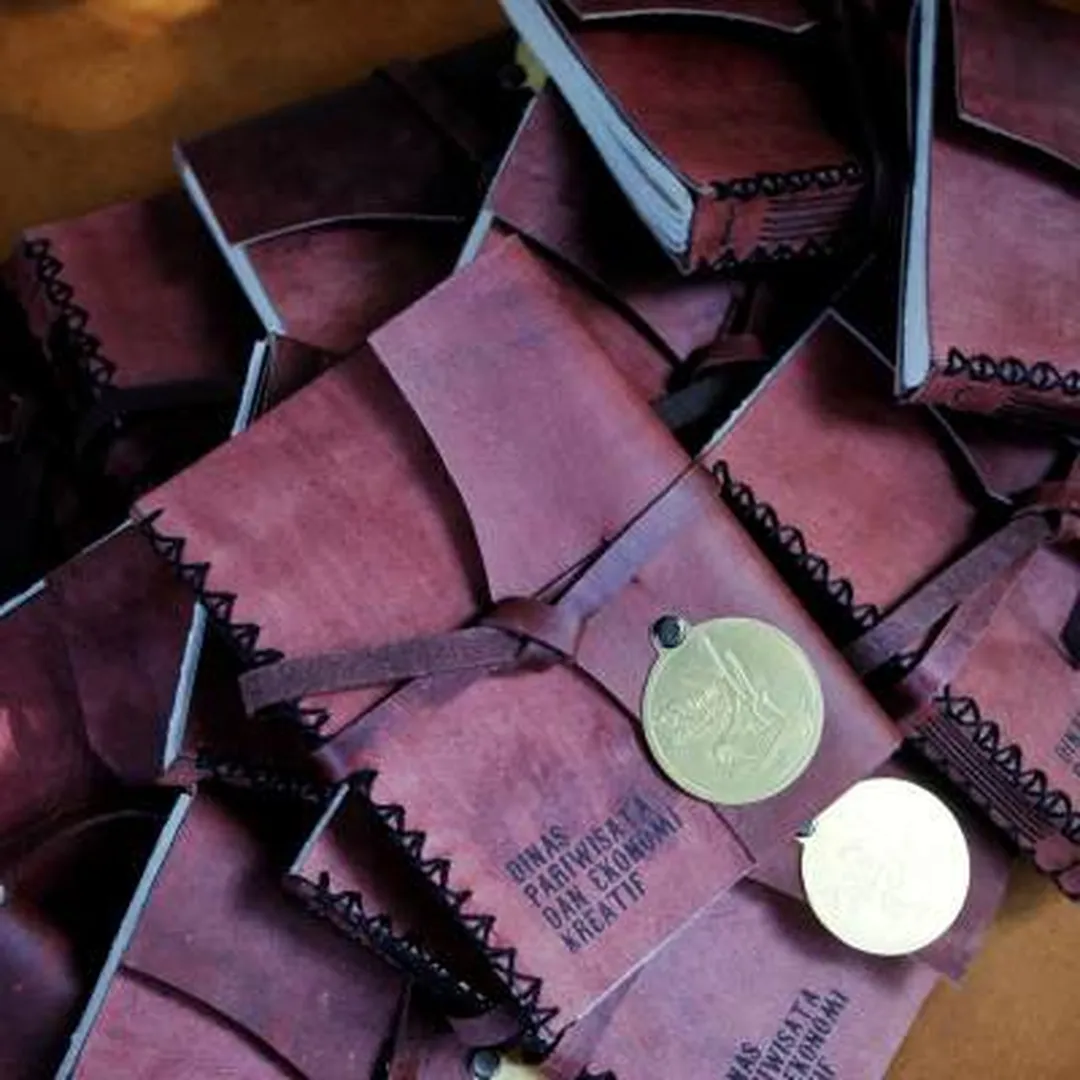
A handmade leather notebook you can design yourself — for a gift, for a memory, or for plans still to come.
Business & Whitelabel
Business and corporate gift solutions in the form of exclusive agendas carrying your company’s logo.
Book Repair & Conservation
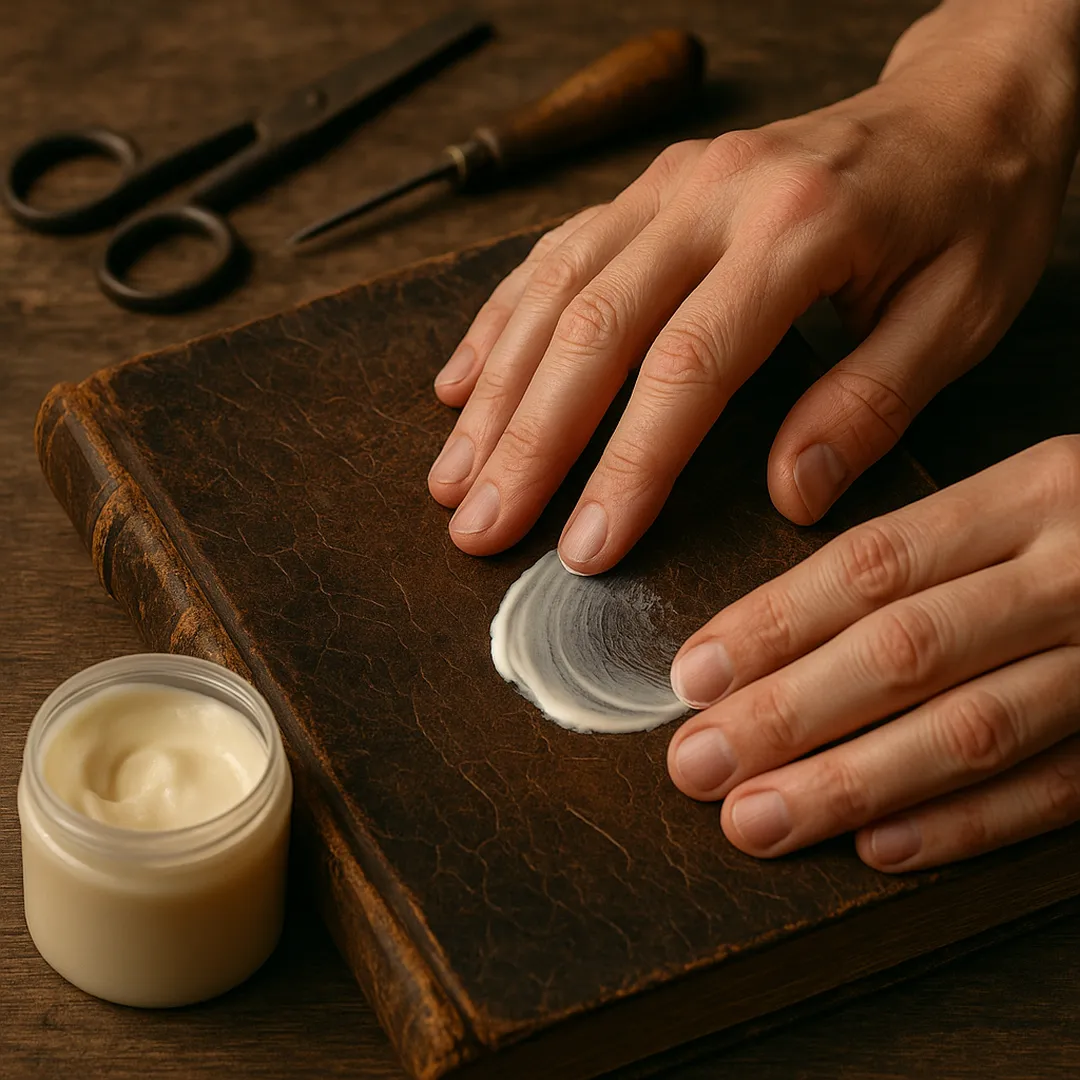
Repair and conservation for antique books, family heirlooms, and private collections of historical value.