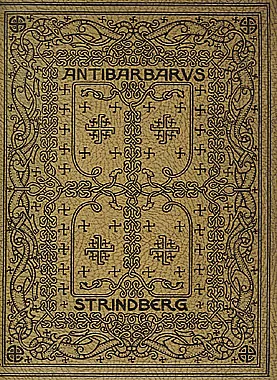
Antibarbarus
by Ibrahim Anwar · July 24, 2025
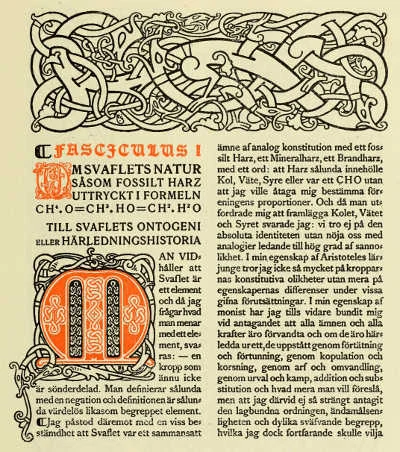
Have you ever been obsessed with an idea that sounds impossible to everyone else? An idea that burns away inside your head, pushing you into strange experiments in the garage, mixing things that were never meant to be mixed, just to see what happens. You are not looking for an answer that is already in a book; you are looking for an answer for yourself. If you have, you may understand what was in August Strindberg’s head as he wrote Antibarbarus.
This is not a story about a scientist. It is a story about a giant of an artist, a playwright whose work shook the theatre stages of the world, and who at one point in his life felt that words alone were not enough. He needed something more real, more fundamental. He needed alchemy.
Behind the Name: What Is Antibarbarus, Really?
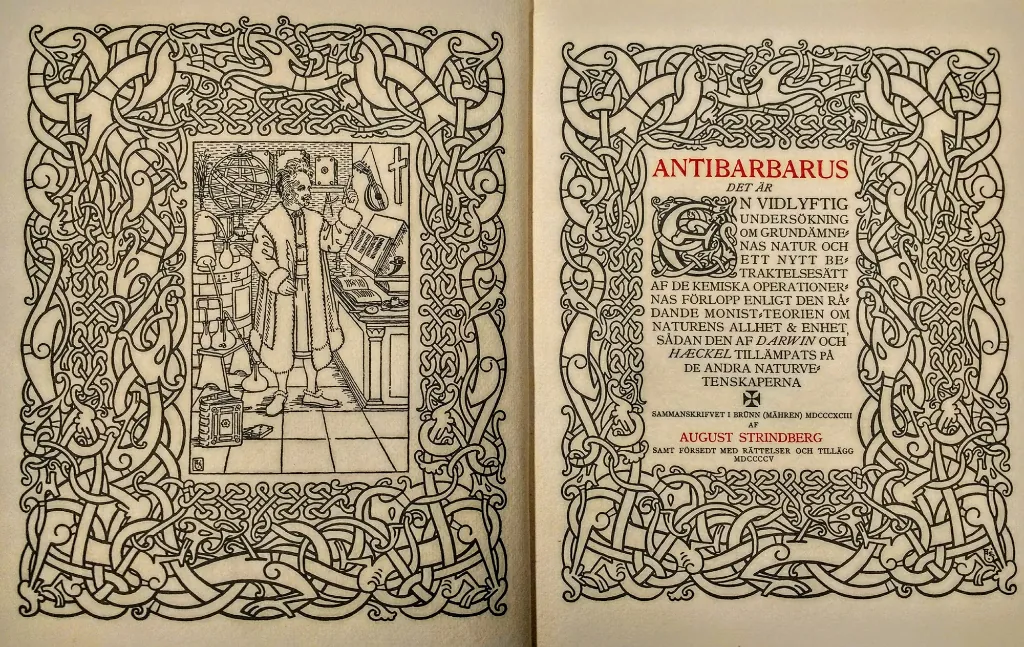
The name “Antibarbarus” is provocative in itself. Literally it means “Against the Barbarians”. Who were the barbarians Strindberg had in mind? Most likely the dogmatic scientists of his day, who looked at the world only through the lens of a rigid materialism and refused every possibility of a connection between the physical and the spiritual. With his treatise, Strindberg seems to declare war on that narrowness.
He was not alone in that refusal. At the end of the nineteenth century there was a wave of dissatisfaction with scientific positivism. Many artists and thinkers, Strindberg among them, turned to theosophy, the occult and spiritualism, looking for a deeper understanding of the universe. Strange, is it not, that in the middle of technological progress people ran towards the mystical.
Not Merely a Chemical Treatise
Antibarbarus was published in 1894, in a period of Strindberg’s life known as the “Inferno Crisis”. These were the years when his sanity was in question, when he suffered delusions, paranoia and a series of deep psychological crises. He left the theatre, moved to Paris, and turned his room into a makeshift alchemical laboratory.
This is not about the gold in a test tube. It is about the gold in the soul.
So reading Antibarbarus is not like reading a scientific report. It is like reading the most private and most chaotic pages of somebody’s journal. Inside it there are observations of chemical reactions, but broken up by mystical speculation, quotations from ancient alchemical texts, and wild philosophical reflection. He saw sulphur not merely as a chemical element but as the “masculine principle” of the universe. He saw transformative potential in everything, from charcoal to filth.
Strindberg the Alchemist
What was he actually trying to do? One of his best-known aims was to make gold. This is not a joke. He genuinely believed he could synthesise gold from simpler elements such as iron, sulphur and silica. He would heat his mixtures, watch the changes of colour and texture, and record the results carefully, certain that he stood on the edge of the greatest discovery in human history.
Of course, from the point of view of modern chemistry, the effort was futile. But that, it seems, was not the point. For him the process itself was everything. Every bubble of air, every precipitate that formed, every change of colour inside his test tube was a message from the universe. Put it this way: he was not doing science. He was performing a ritual. A long conversation with matter itself.
Transformation of Matter, Transformation of Self
This is where Antibarbarus becomes very relevant to us: to craftspeople, to writers, and to anyone trying to create something out of nothing. Alchemy, at its heart, is not about turning lead into gold. That is only the surface metaphor. The heart of alchemy is a process of purification and transformation.
This process, known as the Magnum Opus or “Great Work”, involves breaking raw matter (prima materia) down into total chaos, then purifying it stage by stage (burning, dissolution, separation) until it reaches perfection, symbolised by the Philosopher’s Stone or by gold.
Alchemy as a Metaphor for the Creative Process
Think about it. This process sounds a great deal like the creative process, does it not?
- Prima Materia: This is our raw material. It might be a sheet of vegetable-tanned leather, stiff and pale, a lump of clay, or merely an abstract idea in the head. Full of potential, but not yet formed.
- Nigredo (Blackening): The stage of decay and burning. This is the moment of doubt, when we take our idea apart, when we feel stuck. When we cut the leather for the first time, knowing there is no way back. This is chaos, failure and frustration.
- Albedo (Whitening): The stage of purification. After the chaos, we begin to find a way through. We clear away the ideas we do not need. We sew the first thread, shape the edge of the book, and watch a form begin to emerge from the raw material. There is a glimmer of hope.
- Citrinitas (Yellowing): The dawn of awareness. Inspiration begins to flow freely. The characters in our writing start to speak for themselves. The stitch pattern on the leather begins to look beautiful. This is the moment of illumination before the final result.
- Rubedo (Reddening): The Great Work. The final result, which brings every element together. A leather journal ready to be filled with stories, a finished novel, a whole work of art. The gold has been created. Not physical gold, but something far more precious.
Through his “failed” chemical experiments, Strindberg was in fact living out this process both literally and spiritually. He was trying to purify his tormented soul, looking for illumination in the most basic materials on earth.
The creative process is itself an alchemy… messy, full of failure, but that is where the magic happens.
Why Does This Matter to Craftspeople and Writers?
The story of Antibarbarus reminds us that the creative process is often illogical, unclean, and full of “failures” that are in fact necessary steps. When you sit in front of the blank page of your journal, you are an alchemist. When we at Hibrkraft turn a sheet of leather into a book, we are doing alchemy too.
We take raw material, pour our intention, our energy and our emotion into it, and turn it into something new. A Hibrkraft journal is not only leather and paper. It is a vessel. A private alchemical space where you can run your own mad “experiments”. Where you can record your dreams, take your fears apart and, with luck, find the gold inside yourself. Like Strindberg, you may find the world does not understand your journal, but it is not for them. It is for you.
A Strange and Beautiful Legacy
How does the world remember Antibarbarus? Certainly not as a contribution to chemistry. Scientists rejected it out of hand. For art historians, literary critics and psychologists, though, the treatise is a treasure. It gives a rare window into the mind of one of the most complex artists in history, raw evidence of the relationship between genius, madness and the unstoppable urge to create.
It is a reminder that the greatest work does not always come from the most rational place. Sometimes it comes out of darkness, out of obsession, out of a desperate attempt to find order in chaos. Antibarbarus is the laboratory notebook of an artist’s soul.
Frequently Asked Questions (FAQ)
Was August Strindberg really mad when he wrote this?
It is complicated. He clearly went through a severe psychological crisis, which he called the “Inferno Crisis”. Much of what he did looks irrational. Yet that same crisis produced some of his most innovative work, such as the play “To Damascus”. Some argue that he touched limits of human consciousness that are rarely explored, while others see it as a symptom of mental illness. Perhaps both are true.
Did he succeed in making gold?
No. Chemically it was not possible by his methods. He claimed to have created gold and even sent samples to French chemists, but it was never proved. For him, though, the visual evidence of a glittering yellowish substance was enough to convince himself.
Why is a term from an obscure chemical treatise in a bookbinding glossary?
Because Antibarbarus is more than chemistry. It is a symbol of the process of transformation, of creation, and of the search for meaning that sits at the heart of every creative act, bookbinding and journal writing included. It is about turning raw matter (leather, paper, an idea) into something that has a soul.
Where can I read Antibarbarus?
The original text is in French and Swedish. English translations exist, but they are often part of a larger collection of Strindberg’s autobiographical writing, such as “Inferno & From an Occult Diary”. It is not easy reading, but it is fascinating for anyone interested in the meeting point of art and mysticism.
References
For further exploration of this strange and fascinating topic, you can look at the following sources:
- The Times Literary Supplement – An in-depth review of the book “Strindberg: A Life” by Sue Prideaux, which discusses the Inferno period and his alchemical experiments at length.
- The Public Domain Review (the original link is dead; the reference is kept without a link) – A good essay on Strindberg’s alchemical obsession and its connection to his personal crisis.
- JSTOR – “Strindberg’s ‘Inferno’ and the German ‘Sturm und Drang'” – An academic article linking Strindberg’s crisis to an earlier literary movement, showing a pattern in artistic thinking.
- The Strindberg Museum (the original link is dead; the reference is kept without a link) – Gives direct historical context for the “Inferno Crisis” period in Strindberg’s life.
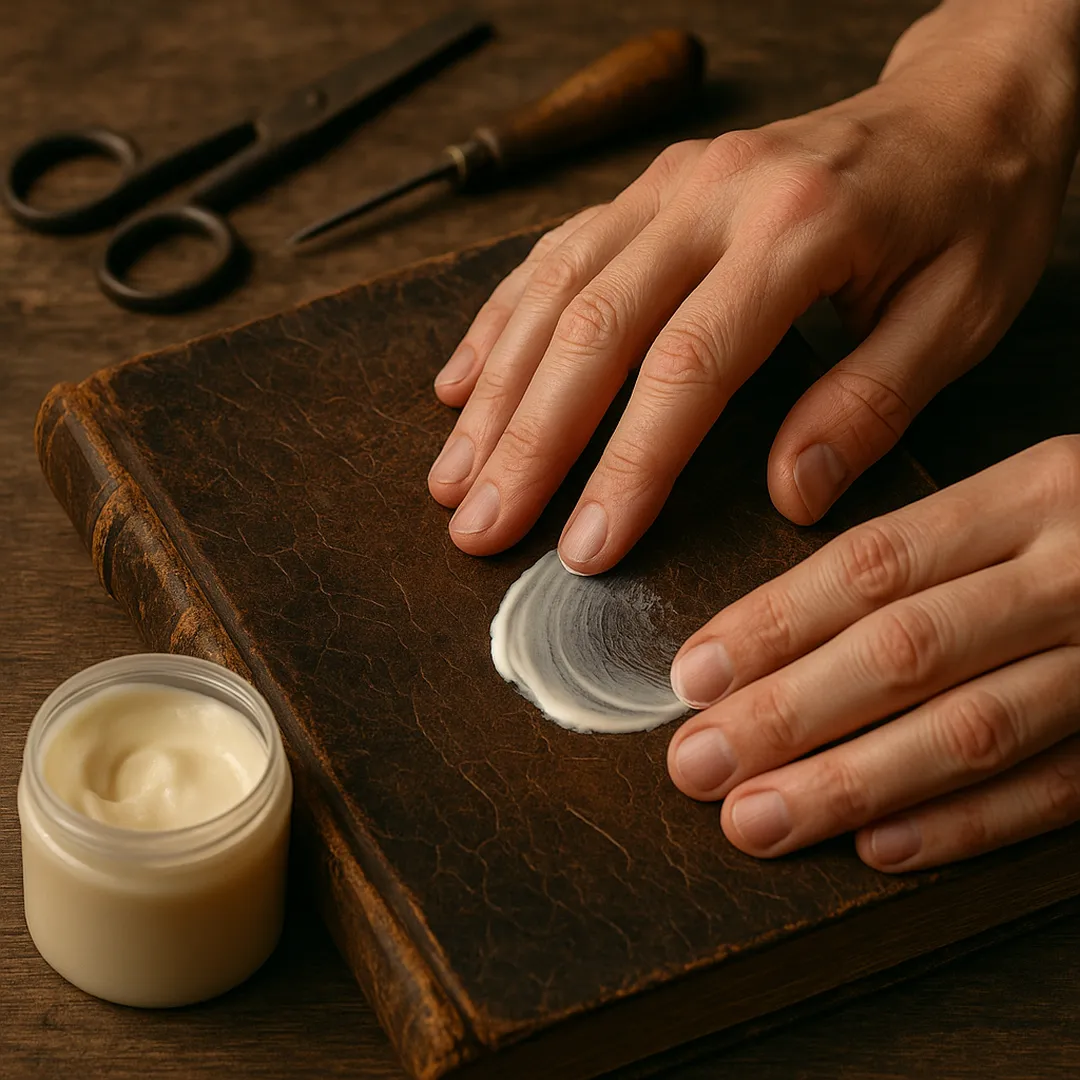
A volume of this age — rag paper, a leather binding, hand sewing — ages in a predictable way: the hinges first, then the spine. Treating one falls under the book repair and conservation service.

Custom Notebook
A handmade leather notebook you can design yourself — for a gift, for a memory, or for plans still to come.
Business & Whitelabel
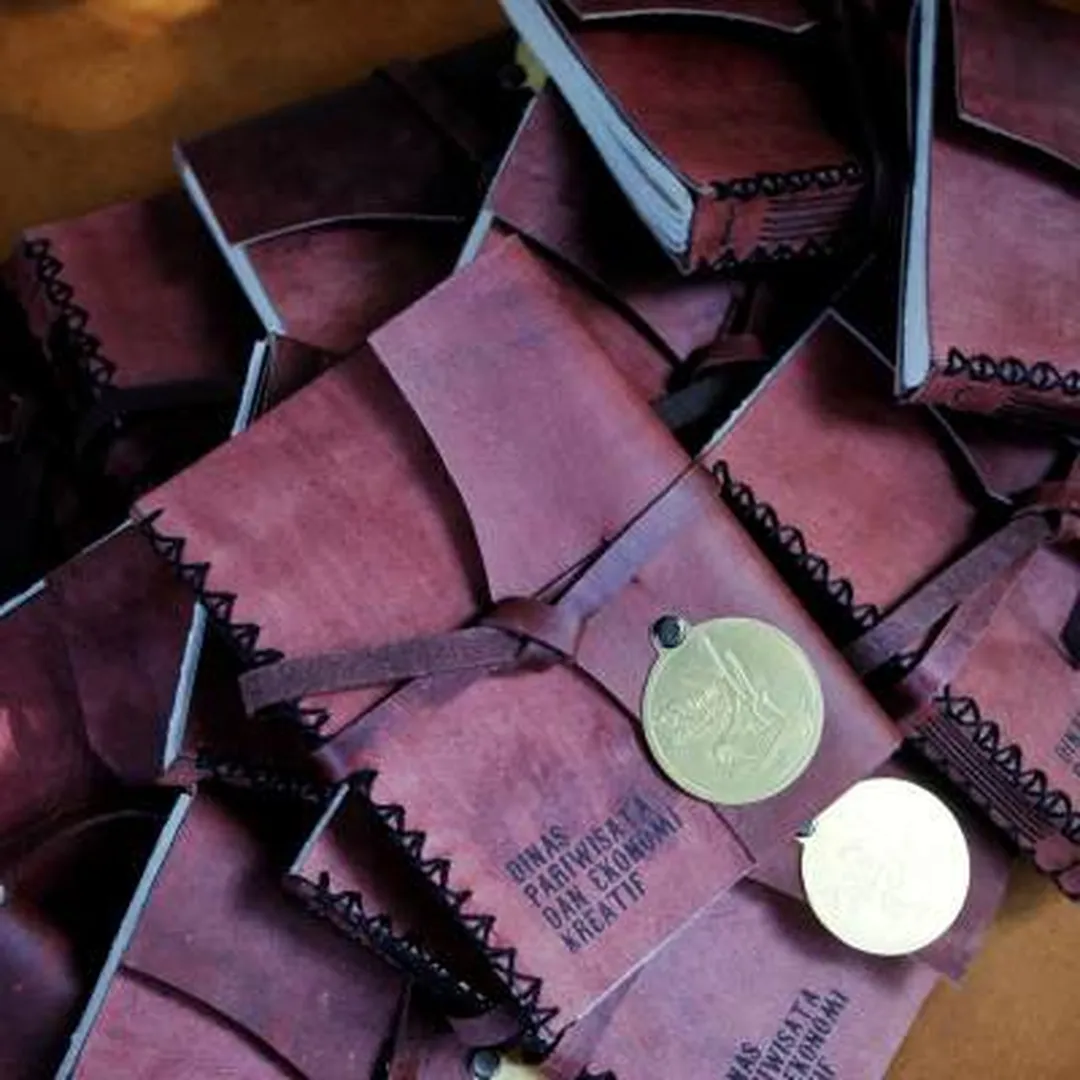
Business and corporate gift solutions in the form of exclusive agendas carrying your company’s logo.
Book Repair & Conservation
Repair and conservation for antique books, family heirlooms, and private collections of historical value.