
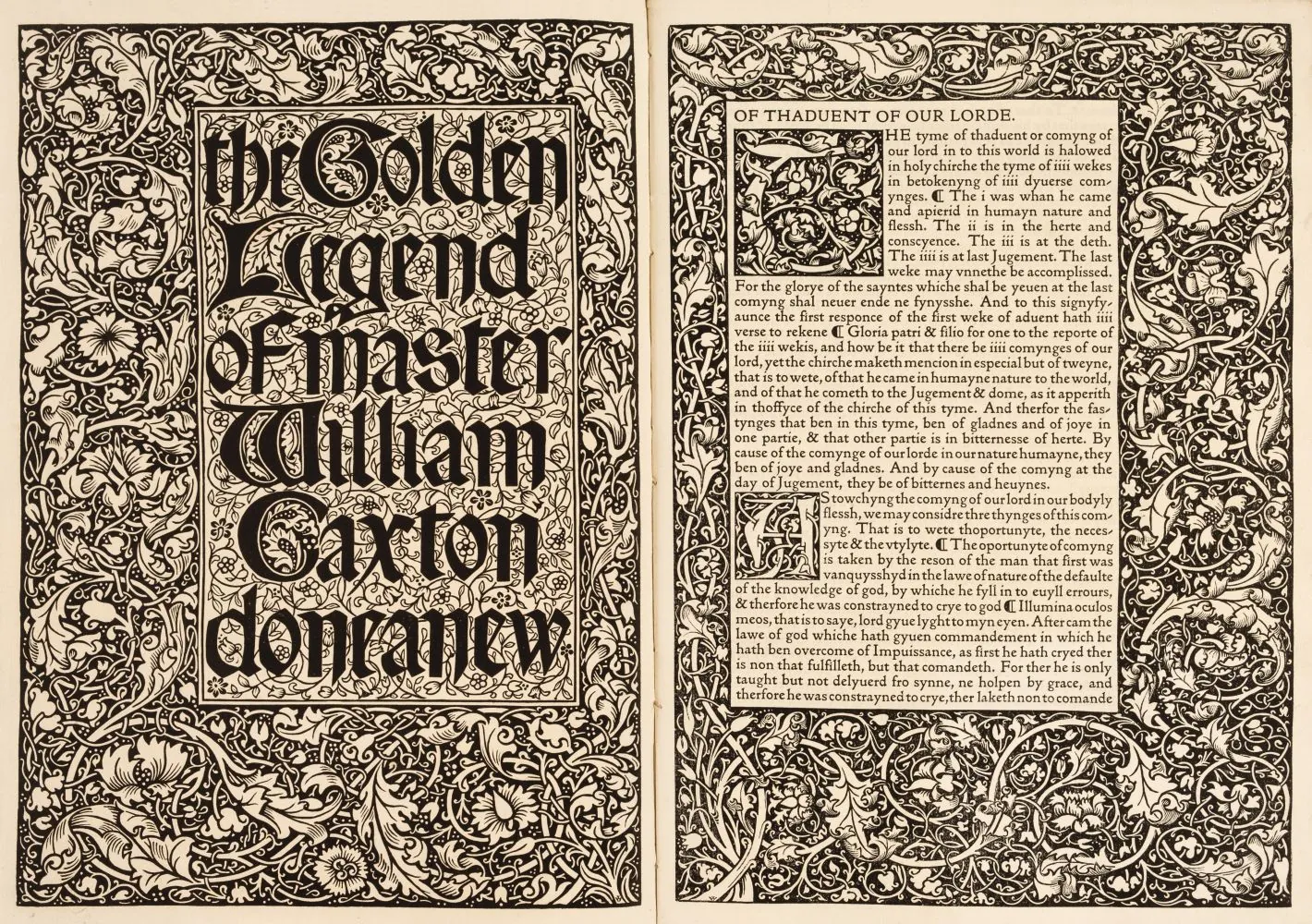
The Golden Legend by Caxton
by Ibrahim Anwar · July 27, 2025
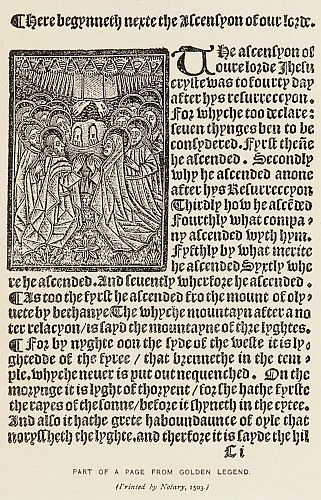
In the world of rare books, the most interesting story is sometimes not the one written on the page but the story behind its making. One of the most compelling case studies comes from a book titled The Golden Legend, printed in 1493. On the surface it is a religious book. Looked at more closely, it is an artefact of historical detective work. It was printed one year after the death of England’s most famous printer, William Caxton, and yet his name still stands in it. Why? The answer takes us to the heart of fifteenth-century printing, a period of transition full of ambition, inheritance, and business practices very different from those of our own time.
This is not merely a story about ink and paper, but about how a “brand” was built and handed on even before the modern concept of branding existed. It highlights the complex relationship between a master craftsman and his apprentice, and how reputation could become the most precious asset in a newborn printing business. Let us open up the mystery behind The Golden Legend and what it can teach us about inheritance, craftsmanship, and the nature of authorship itself.
“The Golden Legend”: A Medieval Bestseller
Before we dive into the puzzle of its printing, it is worth understanding what The Golden Legend (in Latin, Legenda Aurea) actually is. Written around 1260 by Jacobus de Voragine, a Dominican friar who later became Archbishop of Genoa, the book is a collection of hagiography, or the lives of the saints.
Far from a dry biography, The Golden Legend is a collection of living stories, full of dramatic miracles, grim martyrdoms, and forceful moral lessons. Jacobus de Voragine arranged them to follow the liturgical calendar of the church, which made the book a practical guide for priests in search of sermon material and devotional reading for the pious laity. Its popularity soared right across Europe. In the late Middle Ages it was the most widely read book after the Bible. Hundreds of manuscript copies were made, and after the invention of the printing press it became one of the first titles printed in many countries.
Its contents seeped into the popular culture of the day and became a principal source of inspiration for artists. Scenes from The Golden Legend were preserved in cathedral stained glass, altarpieces, and frescoes across Europe. To own or to read The Golden Legend was a way of connecting with the larger spiritual narrative that shaped their world.
William Caxton and His Ambitious Project
William Caxton, the man who brought the printing press to England in 1476, was a shrewd businessman. He knew exactly what would sell. Having printed works such as The Canterbury Tales, he saw extraordinary commercial potential in The Golden Legend. There was, however, no complete English version.
So Caxton began one of his largest projects. He did not only print the book; he translated it himself from the French version, compiled it, and edited it. He even added the lives of several saints from the Bible and from English history that are absent from de Voragine’s original, in order to make it more relevant to English readers. The result was the first edition of The Golden Legend in English, printed in 1483. It was a very large book, a magnificent folio volume, decorated with many woodcuts, and it was an extraordinary technical and editorial achievement.
The story behind the 1493 edition is a mirror of the early printing world: an ecosystem in which a master’s reputation was the most precious currency, often outlasting death itself.
The book was a great success. Caxton had identified and met a large market demand, confirming his reputation as the leading publisher in England.
The Mystery of the 1493 Edition: The Hand of Wynkyn de Worde
This is where the story becomes complicated. William Caxton died in about 1492. His printing business in Westminster was inherited by his most trusted chief assistant, an immigrant from Alsace named Wynkyn de Worde. De Worde was a skilled printer, and he would become the dominant figure in the London book trade for several decades.
In 1493, a year after Caxton’s death, a new edition of The Golden Legend was issued from the same press. Oddly, the colophon (the note at the end of a book carrying its production details) still named William Caxton. That raises the central question: why did de Worde, the new printer, release a book under the name of his dead mentor?
Book historians have put forward several complementary theories:
- Honouring the Master and His Brand: This is the most common explanation. The name “William Caxton” in 1493 was a very powerful brand. It was synonymous with quality, authority, and innovation. De Worde, relatively unknown at the time, may have judged it commercially wise to go on using the established Caxton name to secure sales. This was not deception but shrewd marketing in a culture where personal reputation counted for a great deal.
- Attribution to the Translator: The colophon may not have been meant to identify the printer, but the original translator and editor. Since Caxton was the one who did the monumental work of translating and compiling the English text, de Worde may have felt it proper to go on crediting him for that intellectual labour.
- Practical Printing-House Habit: The 1493 edition was most likely a reprint of the 1483 edition or of a later one. De Worde may simply have reused the existing typesetting or layout from an earlier edition without feeling any need to change the name in the colophon. In the fast, pragmatic world of early printing, efficiency often came first.
Most likely the truth is a combination of all three. Wynkyn de Worde strategically drew on Caxton’s “good name” to launch his own career while also paying tribute to his mentor and following an efficient way of working.
Why Does This Complication Matter? Insight for the Modern World
The case study of the 1493 edition of The Golden Legend is more than a footnote to history. It offers a deep insight into how concepts we take for granted today—copyright, brand identity, and authorship—were still being formed.
The World Before Copyright
This story is a perfect example of the pre-copyright world. The idea that an intellectual work is owned exclusively by its creator did not yet exist. Texts were treated as common property, and the name of a printer or a translator served more as a mark of quality or a stamp of reputation than as a claim of legal ownership. De Worde was free to use Caxton’s name because the focus lay on the inheritance of craft, not on intellectual property.
Inheritance, Succession, and Craft
The transition from Caxton to de Worde is the classic story of craft passing from master to apprentice. De Worde inherited not only the physical equipment (the press, the type) but also the intellectual capital and the reputation of that printing house. His decision to go on using Caxton’s name shows a deep understanding of what such an inheritance is worth. It echoes a tradition found in many handicrafts, where a workshop or a studio holds to its style and its standard of quality even after its founder is gone.
Every custom book we make is a personal ‘legend’. It is not only about binding, but about handing on a story—from your idea, through our hands, into a lasting form.
The Hibrkraft Perspective: Your Legend in Leather and Paper
At Hibrkraft we see the echo of The Golden Legend in our work every day. Although the world has changed drastically, the core principles of craftsmanship, inheritance, and storytelling remain the same.
A Brand as a Promise: Just as the name “Caxton” promised quality to a fifteenth-century reader, the Hibrkraft name on a leather journal is our promise of material quality, handwork, and attention to detail. It is our mark of honour, an assurance that the piece was made with integrity.
The Story Behind the Object: Customers come to us not only to buy a notebook. They come to create an artefact that will hold a legend of their own, whether that is a travel journal, a family recipe book, a business diary, or a collection of poems. The customisation process—choosing the leather, the kind of paper, adding initials or a logo—is the modern equivalent of what Caxton did: adapting a format for a particular audience so that it means more.
Handing On a Story: In the end, both The Golden Legend and a personal leather journal are vessels for a story. The work of Caxton and de Worde made sure the lives of the saints could be handed down from one generation to the next through the technology of print. A well-made Hibrkraft journal is designed to do the same thing on a personal scale, preserving a person’s thoughts, experience, and memories so that they can be read again in the future, or even handed on. It is about creating a personal legend of your own, bound in leather and destined to last.
FAQ
What is 'The Golden Legend'?
The Golden Legend, or Legenda Aurea, is a hugely popular compilation of hagiography (the lives of the saints) written by Jacobus de Voragine around 1260. It became one of the most widely read books in Europe during the Middle Ages after the Bible, serving as devotional reading and as a source of inspiration for art and preaching.
Who was Wynkyn de Worde, and what was his connection to William Caxton?
Wynkyn de Worde was the chief assistant of William Caxton, the pioneer of printing in England. After Caxton died in about 1492, de Worde inherited his printing business and became one of the most productive and influential printers in England in the early sixteenth century.
Why does the 1493 edition of 'The Golden Legend' still carry Caxton's name when he was already dead?
There are several reasons. First, as a marketing strategy that drew on the already famous Caxton “brand”. Second, as a form of tribute and attribution to Caxton as the original translator and editor of that English text. Third, it may have been a practical matter: simply reprinting an earlier edition without altering the details in the colophon.
How does this book show the development of the idea of copyright?
This example shows an era before formal copyright law. The name of a printer or a translator served more as a mark of reputation and quality than as a claim of intellectual ownership. Texts could be reprinted freely, and using someone else’s name (as de Worde used Caxton’s) had more to do with business strategy and the inheritance of craft than with breaking the law.
References
- University of Cambridge – The pages that made history: William Caxton – An article on Caxton’s important works, including The Golden Legend.
- British Library – Caxton’s Golden Legend – A collection description and digital images of the first edition of Caxton’s The Golden Legend.
- Encyclopædia Britannica – Wynkyn de Worde – A short biography of Wynkyn de Worde and his role after Caxton.
- Catholic Encyclopedia – The Golden Legend – Information on the contents and history of the Legenda Aurea itself.

Write Your Legend
Every story is a legend waiting to be told. Craft your personal legacy in a handmade leather journal.
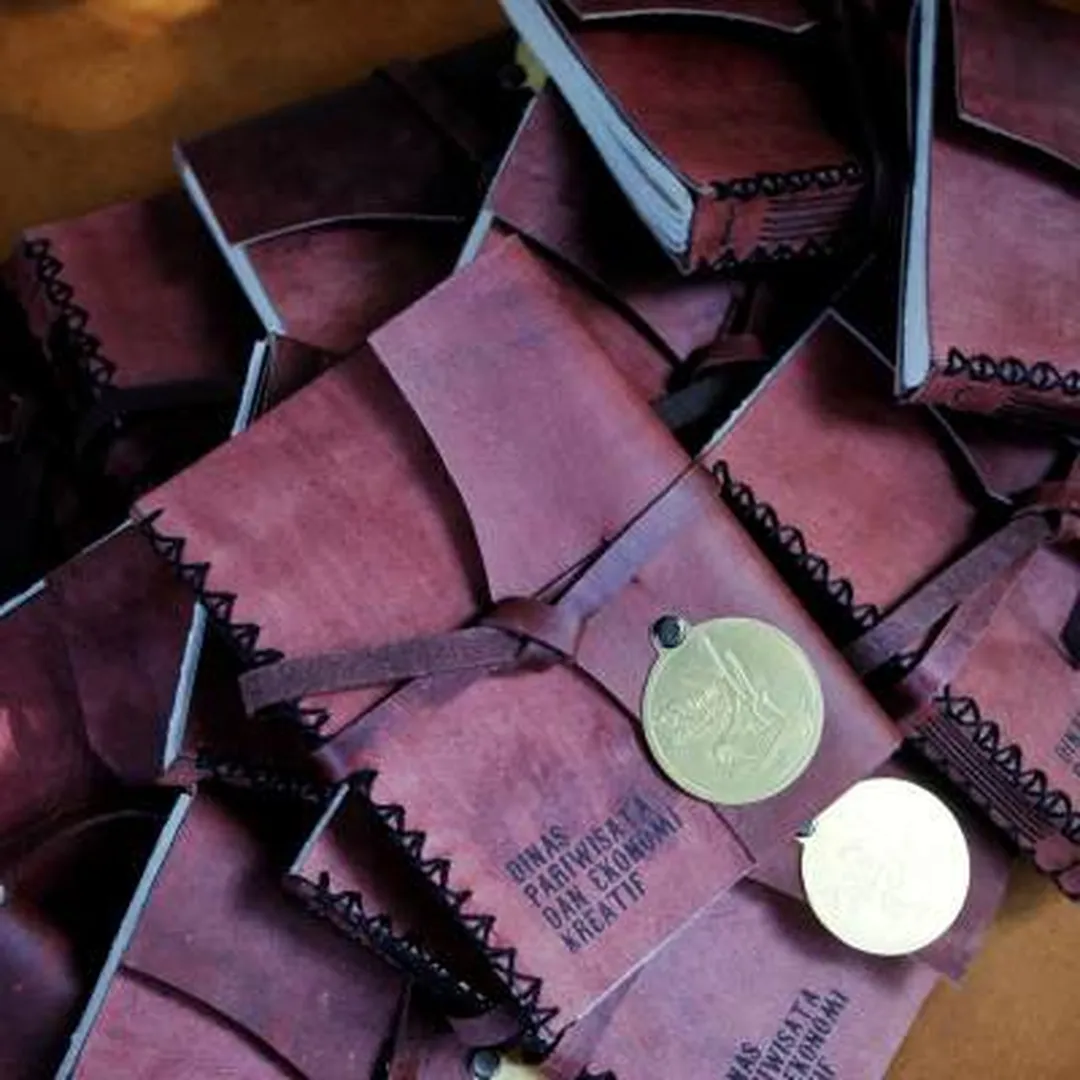
Build Your Brand Legacy
Like Caxton’s name guaranteed quality, let your brand’s logo on our premium products signify your commitment to excellence.
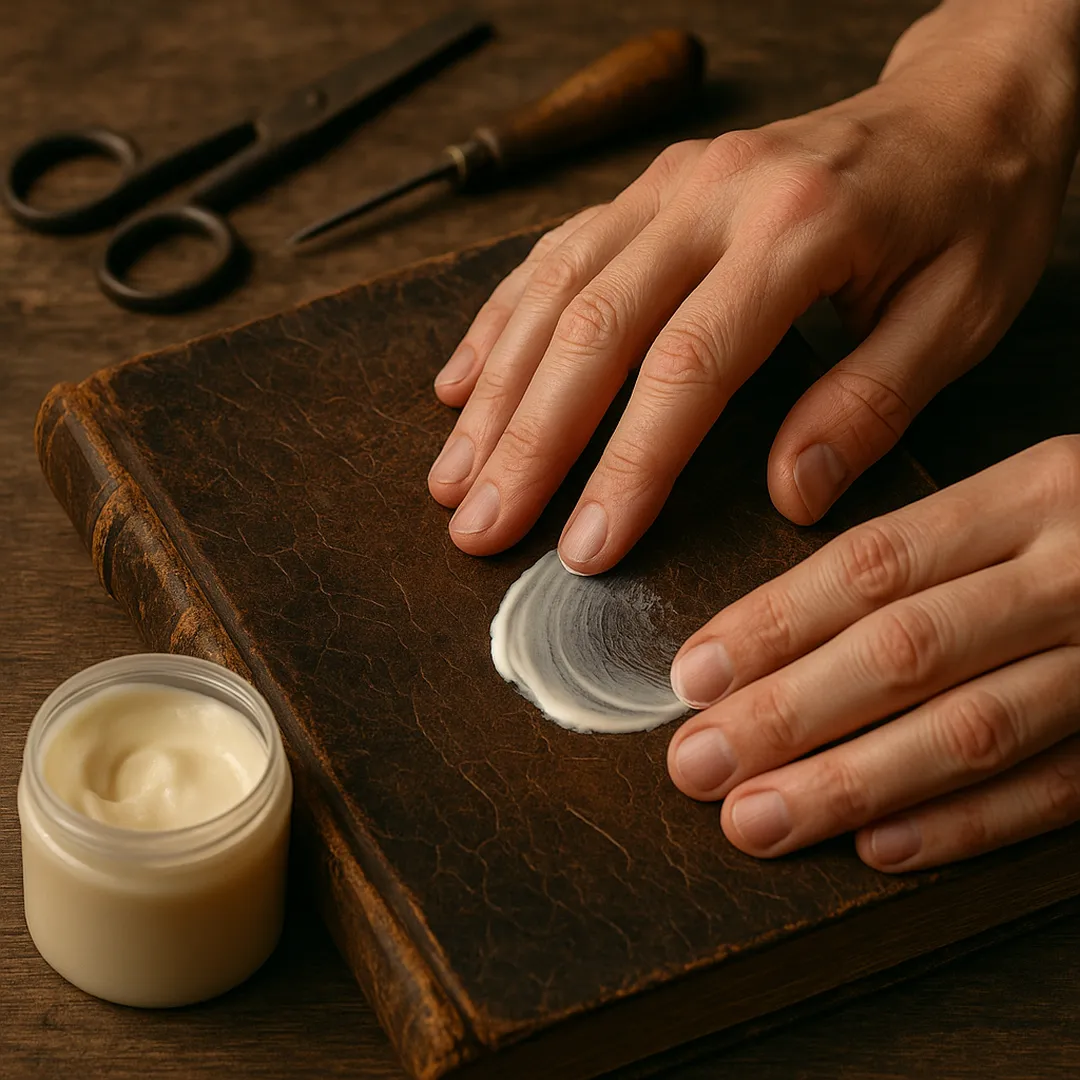
Preserve the Stories of the Past
Preserve your own ‘Golden Legends’. We restore treasured books, ensuring their stories, and the legacy they carry, endure.