

Journaling Habit Tips
by Aika Mentari · August 9, 2025

Almost everyone who has ever bought a beautiful journal begins with the same intention: “This time, I am really going to write every day.” The reality is often different. After a few enthusiastic days or weeks, the book goes back on the shelf, a silent witness to a good intention that has wilted. The problem is rarely a lack of desire, or a lack of understanding of what journaling is good for. The problem lies in execution, in the failure to turn an intention into a habit that takes root. Tips for building a journaling habit are the bridge across the gap between “wanting to write” and “always writing”, giving a clear road map for overcoming internal resistance and, in the end, making the dialogue with yourself on paper an inseparable part of your day.
The Foundation of Consistency: Why Habit Beats Motivation
Before we dive into the list of tips and tricks, it is essential to understand the pillar that holds up everything we are about to do: the psychology of habit. Many people fail to build a journaling routine because they lean too heavily on motivation. Motivation is like a wave—it comes and goes, strong one day and gone the next. It is a good spark for starting, but it is poor fuel for a long journey. Habit, on the other hand, is a reliable diesel engine. It is not spectacular, but it keeps running, even on the days when you do not “feel like” doing it. Building a journaling habit means reprogramming your brain so that the act of opening the journal and writing becomes automatic, like brushing your teeth or making coffee in the morning.
The Vicious Circle of the Blank Page: Overcoming the Psychological Obstacles
The biggest obstacle to starting is often a mental one. The clean blank page in front of you can feel intimidating, even frightening. It seems to demand something brilliant, profound or poetic. That pressure is what gives rise to the two great habit-killing monsters: perfectionism and self-doubt. Perfectionism whispers, “If you cannot write something remarkable, do not write at all.” Self-doubt chimes in, “What are you going to write about? Your life is not interesting enough.”
The key to defeating these monsters is to lower the stakes drastically. Give yourself permission to be imperfect. Give yourself permission to write a boring sentence, a shopping list, or merely “I do not know what to write today.” The initial goal is not to create a work of literature, but to do one thing: show up at the page. Every time you open the journal and write, even if it is only one sentence, you are sending a strong signal to your brain: “I am a person who keeps a journal.” It is the repetition of that simple act, not the quality of the writing, that builds the foundation of the habit.
Finding Your “Why”: An Emotional Anchor for the Long Run
The strongest habits are always held up by a strong reason. Before you try to apply the “how”, take a moment to clarify the “why”. Why do you want to build a journaling habit? A shallow answer such as “because it looks cool” or “because everyone else is doing it” will not be strong enough to carry you through the difficult days. Dig deeper. Do you want to journal in order to:
- Relieve Stress and Anxiety? Making the journal a safe place to pour out your worries without being judged.
- Know Yourself More Deeply? Untangling your thoughts, understanding your patterns of behaviour, and finding your true voice.
- Increase Creativity? Using the journal as a playground for new ideas, with no pressure to produce anything.
- Keep Memories? Documenting the small moments in life that are so often forgotten as time passes.
- Reach Your Goals? Tracking progress, planning the next step, and holding yourself accountable.
Write your “why” on the first page of your journal. When your motivation wavers, go back to that page. It will be your emotional anchor, a reminder of the larger purpose behind the simple act of opening the book and writing.
The key to a journaling habit that lasts is not writing a great deal every day, but showing up at the page every day, even if only for one sentence.
The Habit Stacking Principle: Riding on a Habit You Already Have
One of the most effective habit-forming strategies was popularised by James Clear in his book “Atomic Habits,” namely habit stacking, or stacking one habit on another. The idea is simple: link the new habit you want to build (journaling) to a habit you already have and already perform automatically every day. Our brains already hold strong neural pathways for these old habits, and by stacking a new habit on top of them, we borrow the strength of those pathways.
The formula is: “After I do [OLD HABIT], I will do [NEW HABIT].” Instead of saying, “I will write in my journal every morning,” make a plan that is more specific and easier to act on. For example:
- “After I finish brewing my morning coffee, I will sit down straight away and write in my journal for five minutes.”
- “After I finish brushing my teeth at night, I will write three things I am grateful for today in my journal.”
- “As soon as I sit down at my desk, before I open the laptop, I will write one page in my journal.”
This specific cue removes the need to make a decision. You no longer have to think “when is the right time to journal?”. The plan is already made. The act of brewing coffee or brushing your teeth automatically triggers the next act: opening the journal. This dramatically raises the likelihood that you will actually do it consistently.
A Practical Toolkit: Turning Intention into a Daily Ritual
Understanding the psychology behind it is the first step. Now let us equip ourselves with a toolkit of practical strategies you can apply straight away. Think of it as a step-by-step recipe for building your journaling habit engine. Pick the ones that suit your way of life best and start experimenting. Remember, the goal is progress, not perfection.
1. Start With Something Ridiculously Easy (The Two-Minute Rule)
The biggest obstacle to starting anything is the starting itself. The Two-Minute Rule, also from James Clear, deals with this by making the starting point so easy that you cannot refuse it. Reduce your journaling habit to its two-minute version. For example:
- “Write in my journal every day” becomes “Open my journal and write one sentence.”
- “Do 30 minutes of yoga” becomes “Get the yoga mat out.”
Anyone can write one sentence. The goal here is not to achieve a result, but to master the art of “showing up”. Once you have managed this two-minute version several days in a row, you will find that you often carry on writing well past one sentence. But even if you do not, you have still succeeded. You have strengthened your identity as “a person who keeps a journal”, and that is the biggest win of all.
2. Design Your Environment for Success
Our environment has an enormous influence on our behaviour. Rather than relying on willpower, change your environment so that good habits become easier and bad habits become harder. For journaling, that means removing as much friction as possible. Do not keep your journal in a drawer or on a high bookshelf. Put your journal and your favourite pen right on the bedside table, next to the coffee machine, or on your desk—exactly where you plan to do your habit stacking. When you see it, it works as a strong visual reminder. You no longer have to “remember” to journal; your environment does the remembering for you.
3. Use Prompts to Remove the Burden of Thinking
“I do not know what to write” is the most common complaint of all. A prompt, or trigger question, is the remedy for it. A prompt removes the burden of being original and creative, and asks only that you respond. You can find thousands of prompts online or make a list of your own. Keep that list of prompts in the back of your journal. Some simple prompts you can use:
- What is one thing that made me smile today?
- What is weighing on my mind right now?
- If I could give advice to my younger self, what would I say?
- What is one small thing I could do tomorrow to make my day better?
- Write about a smell that reminds you of childhood.
Having a prompt ready to hand changes the task from “generating an idea” to “answering a question”, which is mentally far easier to do.
4. Celebrate the Small Wins: The Power of Reward
Our brains are programmed to repeat behaviour that is rewarded. Once you have finished your journaling session (even if it was only two minutes), give yourself a small, satisfying reward. This completes the “habit loop” (cue, routine, reward). The reward does not have to be big. It can be as simple as:
- Enjoying a special cup of coffee or tea once the writing is done.
- Putting a big, satisfying tick on a habit-tracker calendar.
- Listening to one of your favourite songs.
- Taking a deep breath and saying to yourself, “Good work.”
This positive sensation will make your brain associate journaling with feeling good, making it more likely to want to repeat it tomorrow.
5. Hibrkraft’s Take on It: Choose Tools You Love
At Hibrkraft, we firmly believe that the tools you use can significantly affect your experience and your consistency. It may sound trivial, but there is a large difference between writing on a random sheet of paper and writing inside a journal that feels special in your hands. When you invest in a journal you love—such as a custom leather journal whose smell, texture and weight feel right—you are unconsciously sending yourself a message: “This activity matters. My thoughts deserve a beautiful place to live.”
A beautiful journal becomes part of the reward itself. The sensory act of opening a soft leather cover, feeling high-quality paper under your pen, and knowing that you are creating a personal heirloom, can turn journaling from an obligation into a luxurious ritual you look forward to. Choosing the right tools is not about vanity, but about respecting the process and respecting yourself. When you love your journal, you will be more inclined to come back to it, day after day.
FAQ
How long does it take for journaling to become a habit?
Popular studies often mention 21 or 66 days, but the reality varies a great deal from person to person and from habit to habit. A study by University College London found that it took an average of 66 days for a new behaviour to become automatic. Focus on daily consistency rather than counting the days, though. The key is the process, not the finish line.
What should I write if I genuinely do not know where to start?
Start by writing that very sentence: “I do not know what to write today.” Then set out what you can see, hear or feel at that exact moment. “I am sitting at the table. I can hear the air conditioner. My hands feel cold.” This is called “grounding” and it can be a powerful way to break the deadlock. Alternatively, use a simple prompt such as “What is one thing I am grateful for right now?”.
Do I have to write every day for the habit to form?
Writing every day is the fastest way to build the habit, because daily repetition creates strong neural pathways. But if that feels too heavy, start with a realistic schedule, three times a week for instance. The key is consistency with the schedule you have set yourself. It is better to write three times a week consistently than to attempt every day and then stop altogether after a week.
What if I miss a day? Is my habit ruined?
Not at all. That is the perfectionist thinking trap. The most important rule in building a habit is: “Never miss twice in a row.” Missing one day is an accident. Missing the second day is the beginning of a new habit (namely, the habit of not writing). If you miss a day, forgive yourself and make sure you are back on track the next day, no matter how small the session is.
References
- Clear, J. (n.d.). How to Build a New Habit: This is Your Strategy Guide.
- Babauta, L. (n.d.). The Simple, Powerful Habit of Journaling. Zen Habits. (the original link is dead; the reference is kept without a link)
- Tiny Buddha. (n.d.). How to Make Journaling One of the Best Parts of Your Day. (the original link is dead; the reference is kept without a link)
- Carroll, R. (n.d.). The 2-Minute Rule. Bullet Journal. (the original link is dead; the reference is kept without a link)
- Psychology Today. (2021). 3 Simple Steps to Start a Journaling Habit. (the original link is dead; the reference is kept without a link)
- Lifehack. (n.d.). How to Start A Journal And Write In It Daily. (the original link is dead; the reference is kept without a link)
- Healthline. (2021). How to Start a Journal and Actually Keep It Up. (the original link is dead; the reference is kept without a link)
- PositivePsychology.com. (2024). How to Write a Journal: 28 Tips for Beginners. (the original link is dead; the reference is kept without a link)
- Lally, P., van Jaarsveld, C. H. M., Potts, H. W. W., & Wardle, J. (2010). How are habits formed: Modelling habit formation in the real world. European Journal of Social Psychology, 40(6), 998–1009.
- Matt D’Avella. (2019). I tried journaling for 30 days.

Custom Notebook
Cultivate a powerful journaling habit with a custom notebook designed for consistency. Track your goals, build momentum, and make self-discovery an effortless daily practice.

Business & Whitelabel
Boost team productivity by fostering journaling habits. Our tailored solutions help build focus, achieve SMART goals, and create a culture of consistent growth and personal development.
Book Repair & Conservation
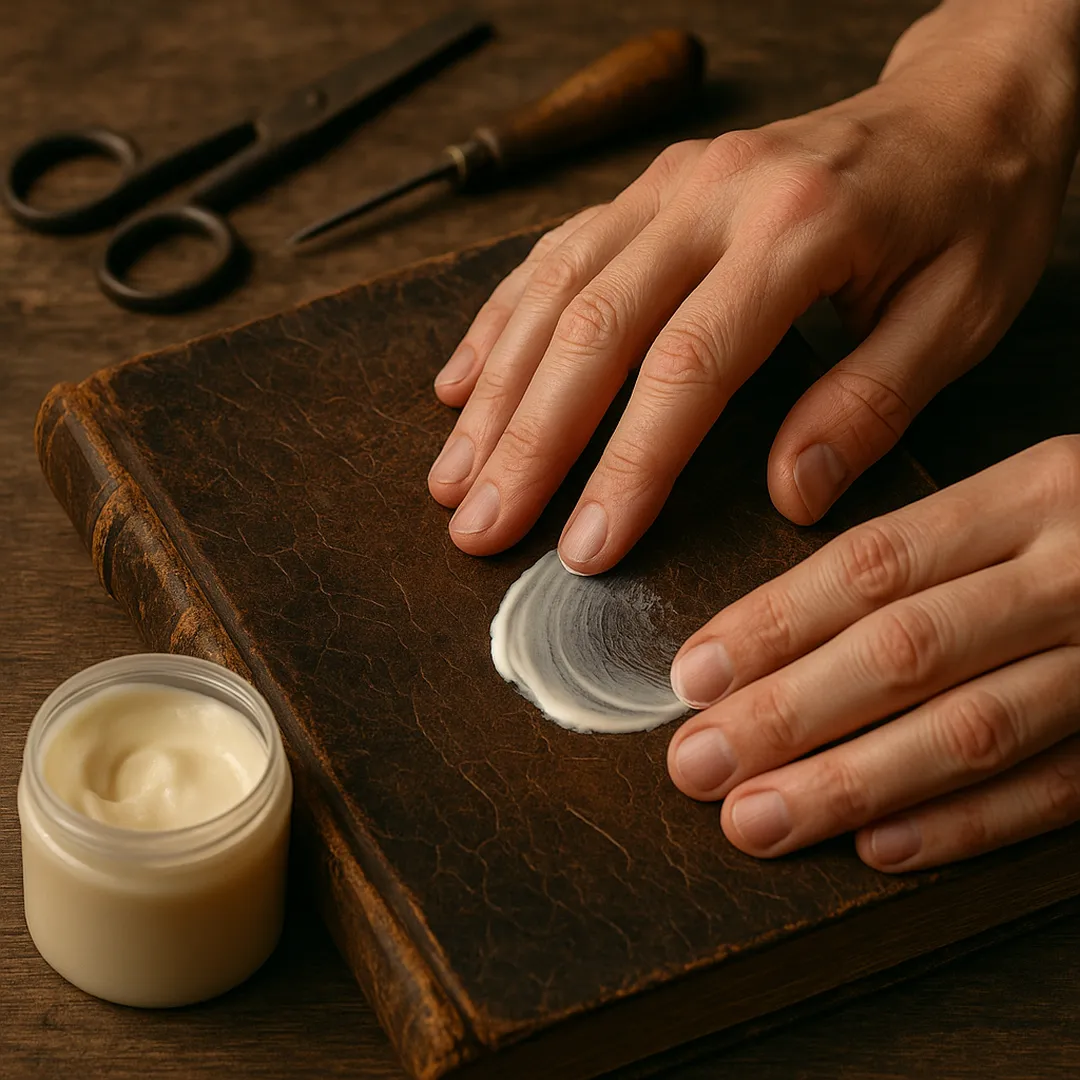
Protect the tangible records of your growth. We preserve the journals that chronicle your habits and achievements, ensuring the valuable insights from your dedicated practice are kept safe for a lifetime.