
Creativity Through Journaling
by Aika Mentari · August 11, 2025
When creativity stalls, journaling is the answer. Ideas are guaranteed to flow again. Every creative person—writer, artist, musician, even entrepreneur—has known that frightening moment: the blank page, the white canvas, or the deafening silence. The moment when the well of inspiration feels dry and brilliant ideas seem impossible to reach. It is at times like these that we so often look for the answer outside ourselves. Yet the key to reopening the tap of creativity often lies within, hidden behind the noise of our everyday thoughts. Journaling is that key. It is a simple act that makes the space and the time to hold a dialogue with the most authentic source of our creativity, proving that sometimes, to create something new, all we need to do is listen to ourselves.
Why Is the Blank Page the Best Playground for Creativity?
Creativity is not a magical gift held by a chosen few. It is a skill, a muscle that can be trained. And like any other muscle, it needs the right place to train. Your journal is the perfect gym for creativity. Inside it there are no expectations, no audience and no deadlines. It is this freedom that lets the spark of creativity catch. By understanding the psychological mechanism behind why a pressure-free environment is so fertile for new ideas, we can deliberately put our journals to work as tools for innovation without limit.
Getting Past the Internal Censor: A Safe Space to Fail
The greatest enemy of creativity is fear—fear of failure, fear of judgement, and the fear that our ideas are not good enough. That fear gives birth to what artists call the “Internal Critic” or the “Internal Censor”. It is the voice in our heads that analyses, criticises and often paralyses every new idea before it has had the chance to draw breath. “That is a stupid idea,” it whispers. “Someone else has already done it, and done it better.” This voice demands perfection from the very start, a demand that is impossible to meet and the main cause of creative block.
Your journal is the one place in the world where the Internal Critic has no jurisdiction. Those pages are entirely yours. There you have full permission to write a bad sentence, draw a sketch that is out of proportion, or note down a half-formed and ridiculous idea. Nobody will see it but you. This environment, 100% safe and private, disarms the Censor. When there is no risk of failure, the mind is free to play, to explore and to take risks. It is precisely out of these “failures”—the imperfect ideas and the wild experiments—that the most brilliant creative breakthroughs are so often born. Journaling is the practice of celebrating the process, not only the perfect finished product.
Becoming a Collector of Ideas: Catching the Butterflies of Inspiration
Inspiration is like a butterfly—it arrives uninvited and often disappears just as quickly if it is not caught at once. Brilliant ideas rarely turn up whole and perfect. They come as fragments: a scrap of conversation overheard in a café, a unique observation about the way light falls on a leaf, an arresting song title, or an odd “what if” question. With nowhere to hold them, these precious fragments are lost forever in the busyness of our minds.
Your journal serves as your butterfly net and your specimen jar. Make your journal a “commonplace book”—a tradition running back centuries, in which thinkers such as Leonardo da Vinci and Thomas Jefferson recorded the quotations, observations and ideas they came across. Get into the habit of always carrying your journal, or a quick-notes app, to catch these ideas as they surface. Later, when you sit down for a more focused creative session, you can reopen this “idea bank”. You will be surprised how often two or three seemingly unrelated fragments, seen together on one page, can spark a new connection and give rise to a genuinely original concept.
Creativity is not about creating something out of nothing; it is about connecting dots that already exist in a way nobody has seen before. Your journal is where you gather those dots.
Connecting the Invisible Dots: The Power of Free Association
A creative breakthrough often happens when two areas of the brain that do not normally “talk” to each other suddenly make a connection. This is the “Aha!” or “Eureka!” moment. Journaling, particularly through a technique such as stream of consciousness (free writing), is a highly effective way to encourage connections of this kind. When you write quickly without censoring yourself, you switch off the prefrontal cortex—the logical, orderly part of the brain—and allow the more intuitive and associative parts to take over.
Your mind starts to leap from one idea to the next on loose association rather than strict logic. You might begin by writing about your breakfast, which reminds you of a childhood holiday, which sets off a thought about the concept of time, which finally hands you an idea for a science-fiction story. The process imitates the state of mind often associated with high creativity, such as being in the shower or out on an unhurried walk, where our thoughts are free to wander. The journal gives you a way to enter that fertile state deliberately, whenever you like, turning it from a random occurrence into a practice you can rely on.
From Theory to Ink: Practical Journaling Techniques to Open the Tap on Your Creativity
Understanding why journaling is good for creativity is the first step. The next is putting it into practice. There are a great many ways to use your journal as a creative tool, far beyond writing ordinary paragraphs. Think of your journal as a multi-disciplinary studio. Sometimes it is a stage for the drama of your thoughts, sometimes a laboratory for visual experiment, and sometimes a whiteboard for brainstorming. Here are a few practical, proven techniques you can use to actively open the tap on your creativity.
1. Morning Pages: Julia Cameron’s Creative “Brain Dump”
Popularised by Julia Cameron in her legendary book “The Artist’s Way”, Morning Pages is one of the best-known tools for getting past creative block. The rule is simple but demanding: every morning, as soon as you wake, before you do anything else, write three full pages by hand, in stream of consciousness style. The subject does not matter. You can complain, write a shopping list, write nonsense, or pour your heart out. The aim is not to produce good writing; the aim is to write three pages.
Cameron describes Morning Pages as “spiritual windscreen wipers”. They do two jobs. First, they are a “brain dump” that clears out all the mental noise, the anxiety and the to-do lists standing between you and your creativity. You tip all that “rubbish” onto the paper so it does not nag at you for the rest of the day. Second, by writing without stopping, you force yourself past the Internal Critic. There is no time to judge if you have to keep writing. It is a practice of showing up at the page every day, building discipline and proving to yourself that you always have something to say, even if it is only nonsense. Many artists and writers swear that this practice is the key to keeping their creativity flowing.
2. Art Journaling: When Words Alone Are Not Enough
Creativity is not always verbal. For many people, ideas and emotions are easier to express through image, colour and texture. Art journaling is the practice of combining visual elements with writing (or with no writing at all). It is about playing visually. You do not need to be a great artist to do it. The aim is the process, not the finished product.
What can you do in an art journal? The possibilities are endless. Use watercolour to create a coloured background, then write on top of it. Cut out the images that appeal to you from old magazines and make a collage. Paste in a cinema ticket, a dried leaf, or a sweet wrapper that carries a memory. Make abstract doodles while you are thinking. Art journaling activates a different part of the brain from writing, encouraging visual thinking and letting you explore ideas in a more intuitive, less structured way. It is a fantastic way to break out of creative block, because it removes the pressure to “say” something and simply invites you to “make” something.
3. Mind Mapping: Charting the Galaxy of Your Ideas
Sometimes an idea feels large and overwhelming, and we do not know where to start. Mind mapping is a brilliant visual technique for breaking a big idea into smaller components and seeing the relationships between them. It is simple:
- Write your main idea or topic in the centre of the page and circle it.
- Draw lines out from the central circle, one for each sub-topic or related idea.
- From each sub-topic, draw further lines for more specific ideas, details or questions.
Use colour, images and keywords. The non-linear, radial structure of a mind map imitates the way our brains make associations naturally. It is far more effective for brainstorming than an ordinary linear list. You can use a mind map to plan the arc of a novel, work out the structure of a business presentation, or simply explore a concept you are curious about. It is a way of seeing the “big picture” and the “small detail” at the same time on one page.
4. Hibrkraft’s Take on It: Your Journal as Your Creative Partner
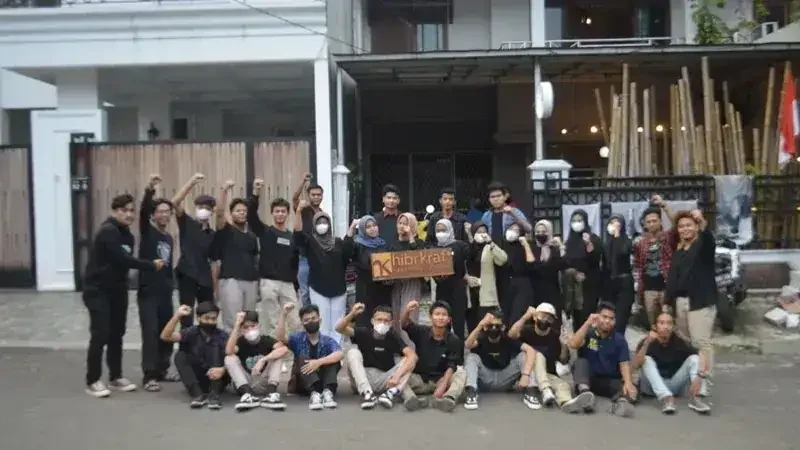
We at Hibrkraft believe that the environment and the tools we use can dramatically affect our creative process. It is hard to feel inspired working in a cluttered room, and hard to value your ideas if you write them on a paper napkin. Your journal should not be a passive container for your ideas; it should be an active partner on your creative journey.
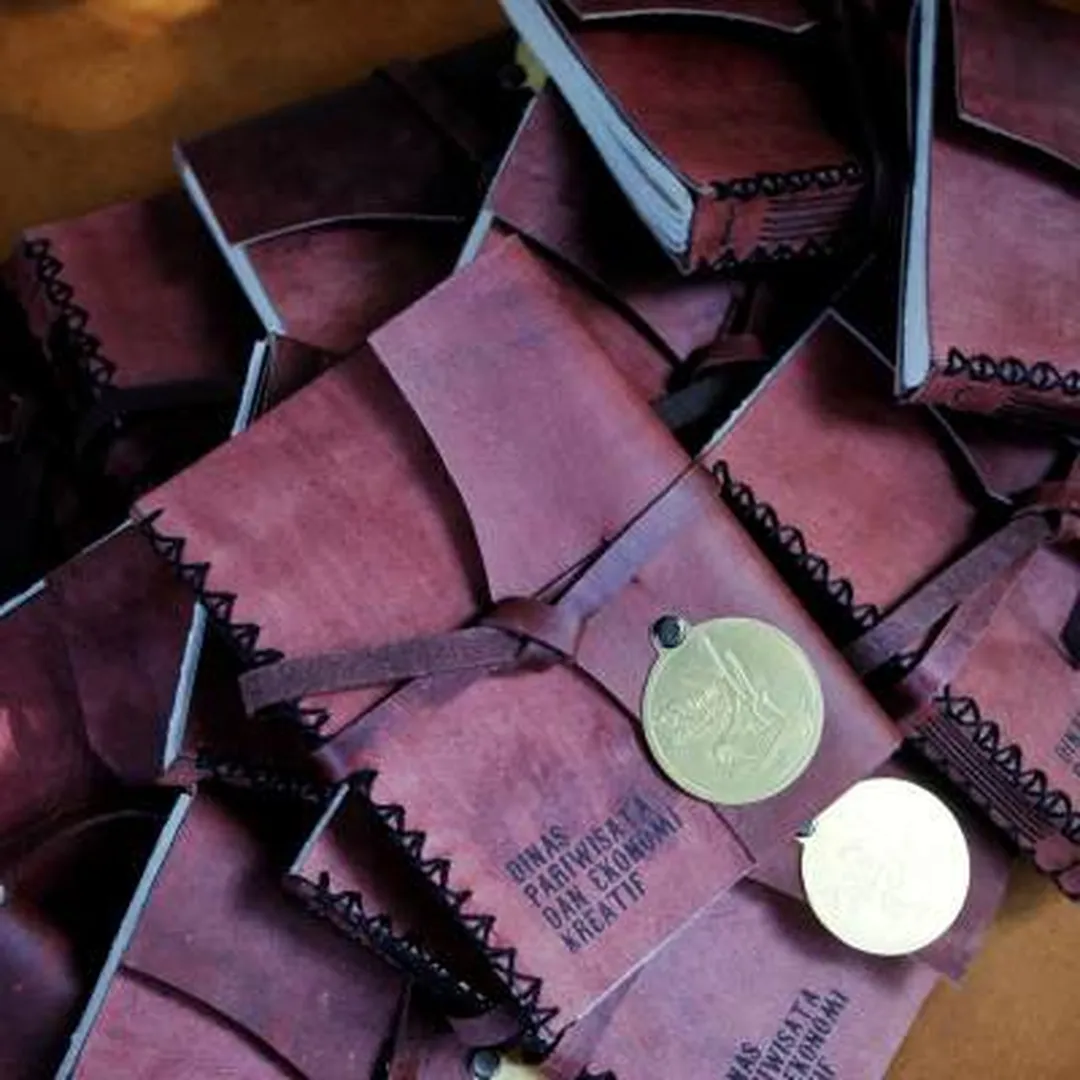
This is why we set such store by the quality of a physical journal. A well-made custom leather journal is an invitation to create. Its solid weight in your hand, the scent of the natural leather, and quality paper ready to take ink—all these elements create a ritual. That ritual signals to your brain that the time you are about to spend with this journal is special time, time dedicated to the important work of creativity. When you use a tool you love and value, you will naturally value the work you produce with it more. A beautiful journal will not magically hand you ideas, but it will make you far more likely to show up, do the work, and create the space in which those magical ideas can be born.
FAQ
How can journaling help if I do not feel creative at all?
Journaling helps by lowering the pressure. Start by writing about the feeling of being “uncreative” itself. Use the “Morning Pages” technique simply to get all the mental noise out, with no aim in mind. Creativity is often blocked by anxiety and expectation. By providing a judgement-free space, journaling lets a small spark reappear of its own accord.
What is the best journaling technique for getting past 'creative block'?
Two highly effective techniques are Morning Pages and Art Journaling. Morning Pages forces you to keep writing past the mental blockade. Art Journaling lets you switch from verbal mode to visual mode, which can get around the stuck part of the brain and approach the problem from an entirely new angle through play with colour and form.
Do I have to be able to draw to do art journaling?
Not at all. Art journaling is not about creating great works of art; it is about the process of self-expression. You can use collage, stickers, watercolour to make patches of colour, or simply make random doodles. The aim is to play and to express yourself visually, whatever your level of technical skill.
How often should I journal to improve my creativity?
Consistency matters more than duration. Even 10-15 minutes a day can make a significant difference. If you follow the Morning Pages method, that is a daily practice. The key is to make journaling a regular ritual, so that your creative muscle keeps being trained and you always have somewhere to catch the inspiration that arrives.
What are 'Morning Pages' and why is the technique so well known?
Morning Pages is the practice of writing three full pages by hand, free-form (stream of consciousness), every morning as soon as you wake. Popularised by Julia Cameron, the technique is well known because it is so effective at clearing out mental “rubbish”, silencing the internal critic, and getting past creative block by building a writing discipline with no pressure to be perfect.
References
- Cameron, J. (n.d.). Morning Pages. Julia Cameron Live.
- CreativeLive. (n.d.). How to Start an Art Journal: A Guide for All Creatives. (the original link is dead; the reference is kept without a link)
- Harvard Business Review. (2013). The Power of Journaling for Creativity and Innovation. (the original link is dead; the reference is kept without a link)
- Psychology Today. (2022). How Journaling Can Help You Become More Creative. (the original link is dead; the reference is kept without a link)
- Lifehack. (n.d.). How Journaling Can Make You a More Creative Person. (the original link is dead; the reference is kept without a link)
- Fast Company. (2015). How A Simple Daily Habit Can Make You A Better Writer. (the original link is dead; the reference is kept without a link)
- Skillshare. (2022). 10 Creative Journaling Ideas to Inspire You. (the original link is dead and there is no archive of it; we have kept this reference without a link)
- MindTools. (n.d.). Mind Maps: A Powerful Approach to Note-Taking.
- Kleon, A. (n.d.). Steal Like an Artist. (Discusses capturing ideas, relevant to commonplace book concept).
- Struthless. (2020). How I use a journal to manage my life & creative projects.