
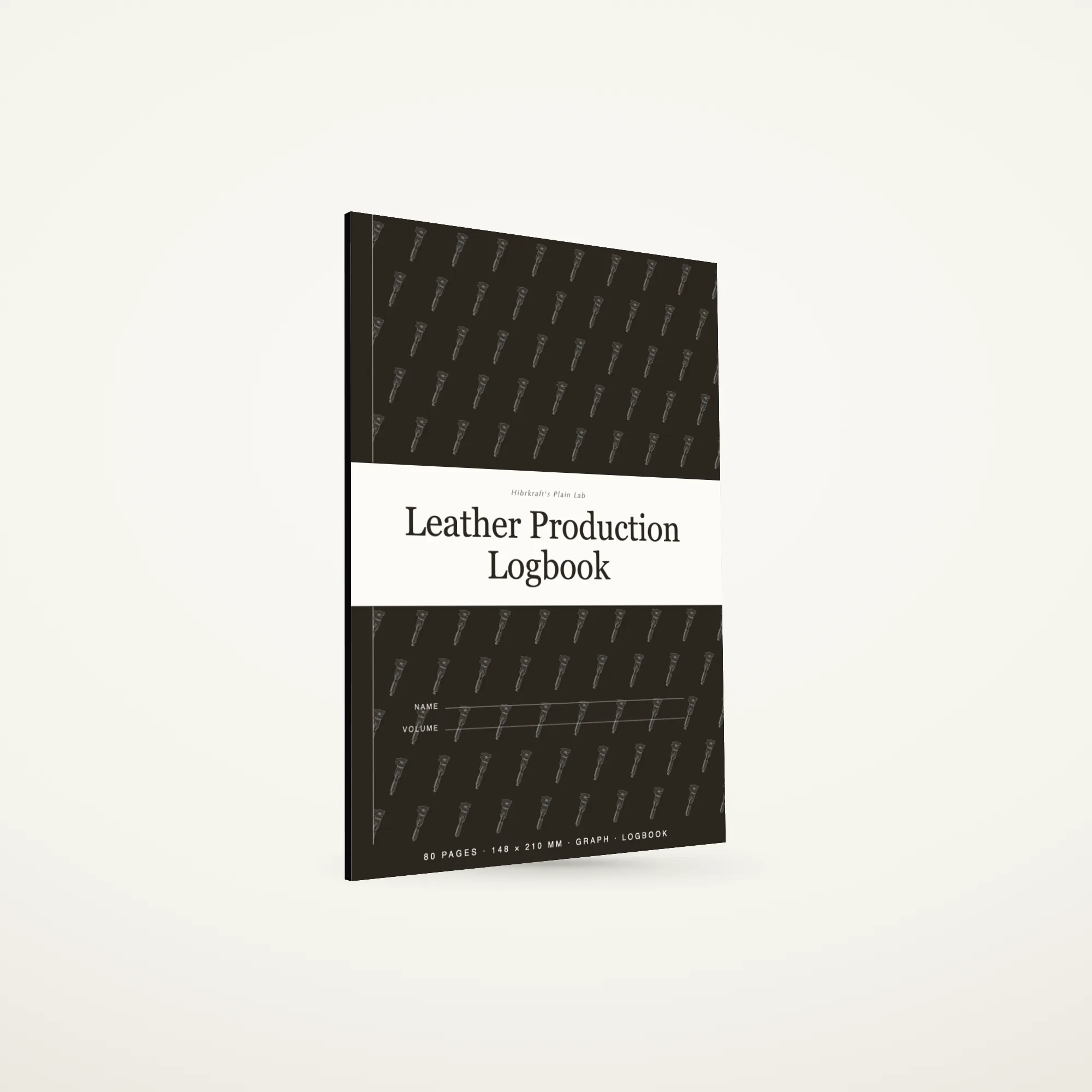
Plain Lab · logbook
Leather Production Logbook
A ten-page daybook for hide and yield, forty job-card pages for the pieces cut from it, and eighteen squared pages besides, all at one 5 mm pitch.
Specification
- Trim
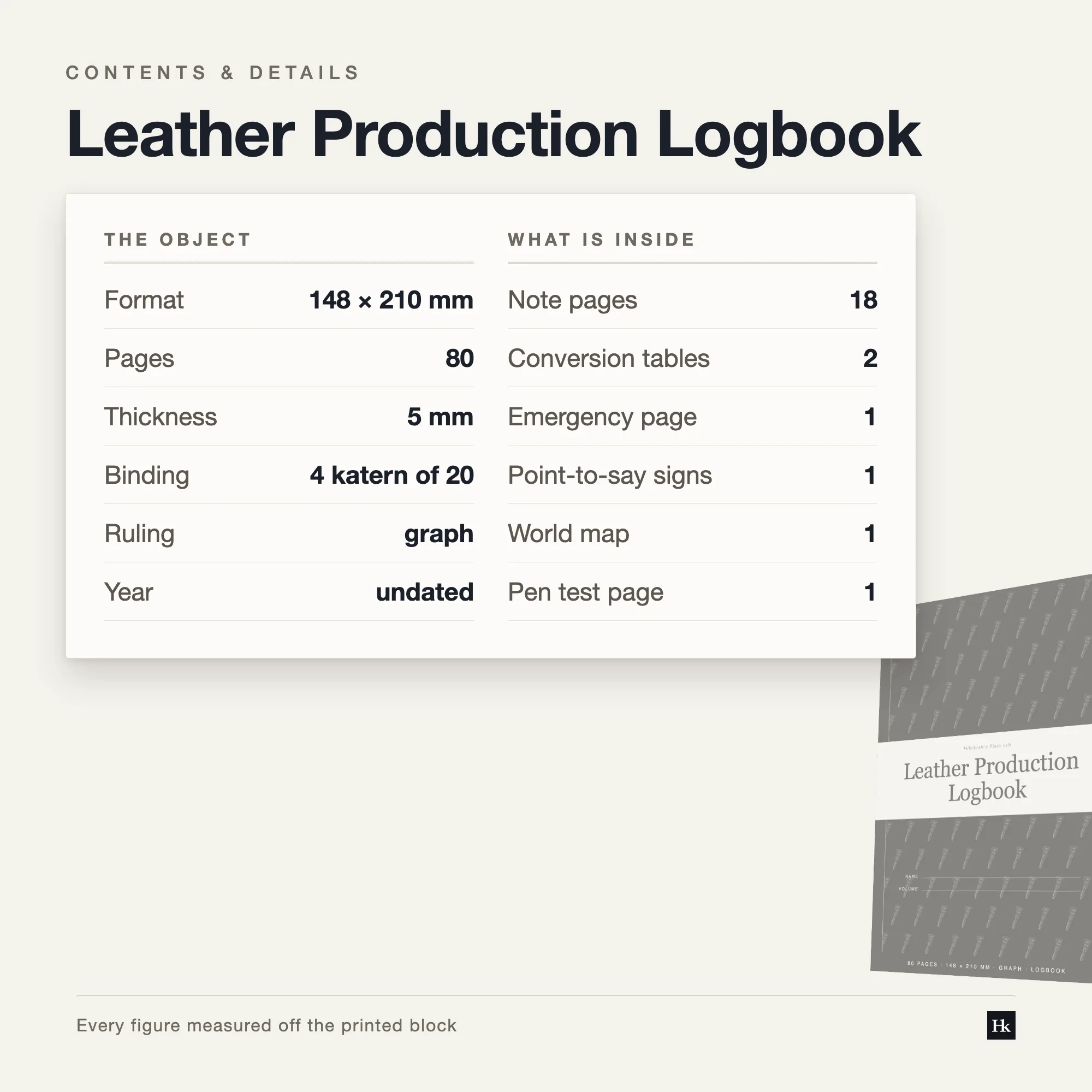
- 148 × 210 mm · 5.827 × 8.268 in
- Pages
- 80
- Leaves
- 40
- Sheets
- 20
- Signatures
- 4 × 20pp
- Spine
- 4.58 mm
- Paper
- white
- Ruling
- graph
- Ruling pitch
- 5.00 mm · 14.17 pt
- Rows per page
- 34
Ten pages open the book: a daybook ruled into four columns, Date, Hide, Yield, Waste. Nobody remembers by December how a particular skin cut in March, and a shop that guesses at its waste rate is a shop paying for hides it never uses. Squared ruling, not lined, because a hide record is also where a cutter sketches how the pattern pieces are going to sit before the knife goes anywhere near the leather.
Forty job-card pages follow, one card per piece: the hide it came from, the grade, the stitching, the hardware that went on it. A job card that only says 'finished' cannot be pulled back out six months later when a strap fails and somebody wants to know which hide it was cut from.
Eighteen more squared pages close the working section, for the layouts and running totals a four-column daybook has no room for. The book will not tell you what yield to expect off a given hide. That number belongs to the leather in front of you and the person doing the cutting, and you will only get it by filling the pages in.
What is inside
- Daybook
- 10pp
- Four columns fixed, so yield and waste get written down the day the hide is cut, not guessed at later.
- Job card
- 40pp
- One card per piece, for the grade, the stitching and the hardware a finished-item note leaves out.
- Notes
- 18pp
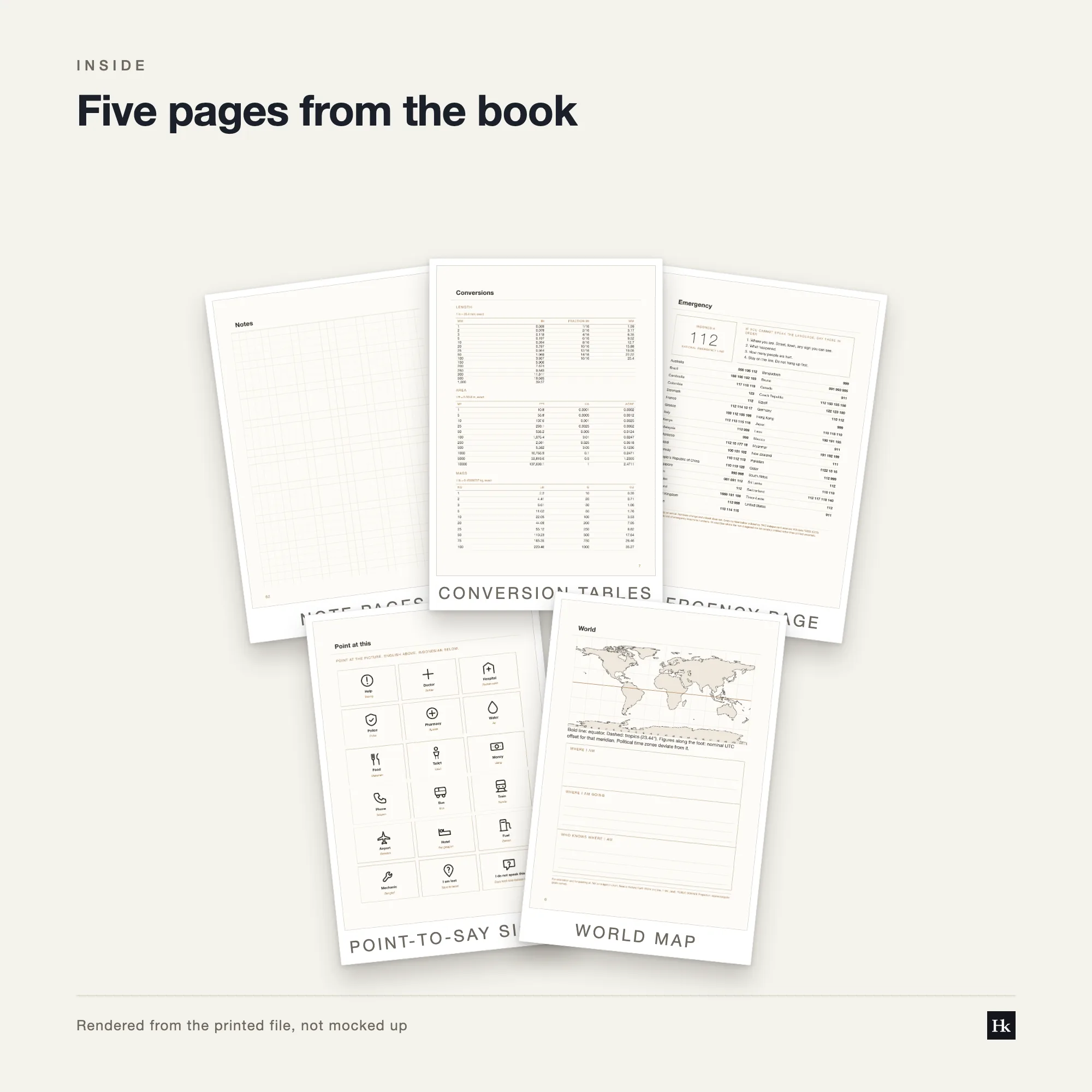
- Squared at the same 5 mm pitch, for cutting layouts and running totals.
- Reference
- 6pp
- Length and weight conversions worked from definitions, plus emergency numbers checked against two independent sources.
- Last leaf
- 1pp
- A pen-test page, printed on purpose, so a real page does not take the hit.
The film
Page by page
A vertical film from our own bench — this page contacts nobody's server to play it, and downloads nothing until you press play.
Real pages
Made at the Hibrkraft bindery, Bogor · about the maker
Books that sit alongside it
- CNC Machining LogbookWorks alongsideshares record-keeping
- Equipment Inspection BookWorks alongsideshares record-keeping
- Production Batch BookWorks alongsideshares record-keeping
- Quality Inspection BookWorks alongsideshares record-keeping
Questions
What are the daybook columns?
Date, Hide, Yield, Waste.
How big is it?
A5, 148 x 210 mm, eighty pages, 4.58 mm through the spine.
What ruling is it?
5 mm squares throughout, daybook, job cards and notes alike, so a layout sketch and a column table sit on the same grid.
Is it dated?
No. Open it on whatever day the next hide comes in.
What goes on a job-card page?
The hide it was cut from, the grade, the stitching, the hardware fitted, and the pass or fail on the finished piece.
Who is it for?
Leatherworkers, small manufacturers and bookbinders cutting enough hides that memory stops being enough.
Another instrument for registering is used in some establishments for calendering and embossing.