
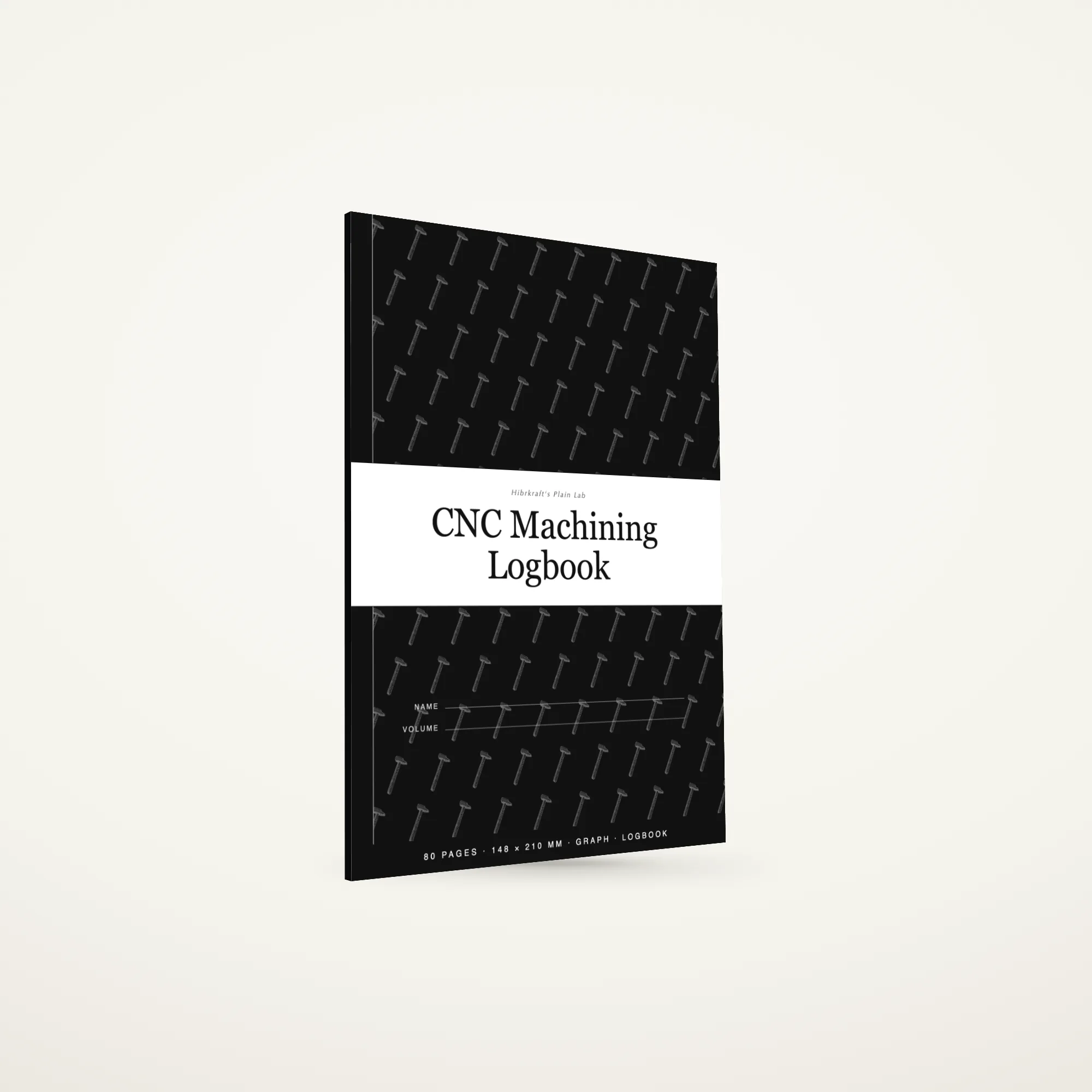
Plain Lab · logbook
CNC Machining Logbook
A ten-page day book at four columns, forty-four job-card pages, and graph-ruled notes for the machine shop.
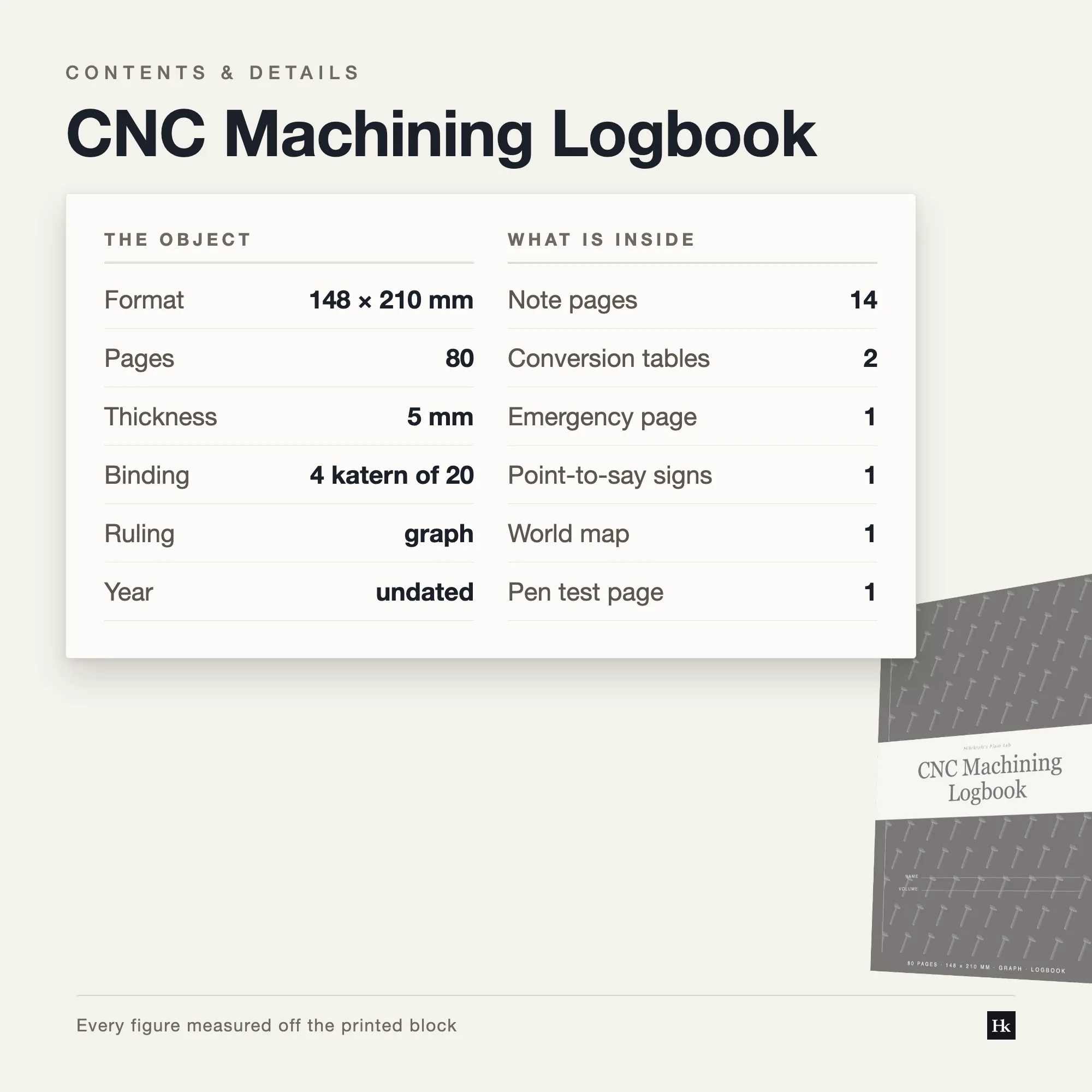
Specification
- Trim
- 148 × 210 mm · 5.827 × 8.268 in
- Pages
- 80
- Leaves
- 40
- Sheets
- 20
- Signatures
- 4 × 20pp
- Spine
- 4.58 mm
- Paper
- white
- Ruling
- graph
- Ruling pitch
- 5.00 mm · 14.17 pt
- Rows per page
- 34
Ten day-book pages sit up front, ruled to four columns: Op, Tool, Feed, Speed. A feed rate that worked on one job and is worth repeating on the next is only worth repeating if it was written down.
Forty-four job cards come next, each one covering setup, tool, feed, speed and measurement for a single job. A part that comes out oversize is a part you can trace to a card, not a shrug at the end of the shift.
Fourteen graph-ruled notes pages sit at the back, five millimetres to the square. It does not print your tolerance or your GD&T callouts. Those come from the drawing you are machining to, not from a notebook, and they change part to part. The columns hold your reading; the drawing holds the limit.
What is inside
- Day book
- 10pp
- Four columns fixed, so a feed rate worth repeating is written down, not remembered.
- Job cards
- 44pp
- One card per job, for setup, tool, feed, speed and measurement.
- Graph notes
- 14pp
- Five millimetres to the square, for a sketch a card cannot hold.
- Reference
- 12pp
- Reference pages at the back carry feed, speed and length conversions worked from definitions, plus emergency numbers checked twice.
The film
Page by page
A vertical film from our own bench — this page contacts nobody's server to play it, and downloads nothing until you press play.
Real pages
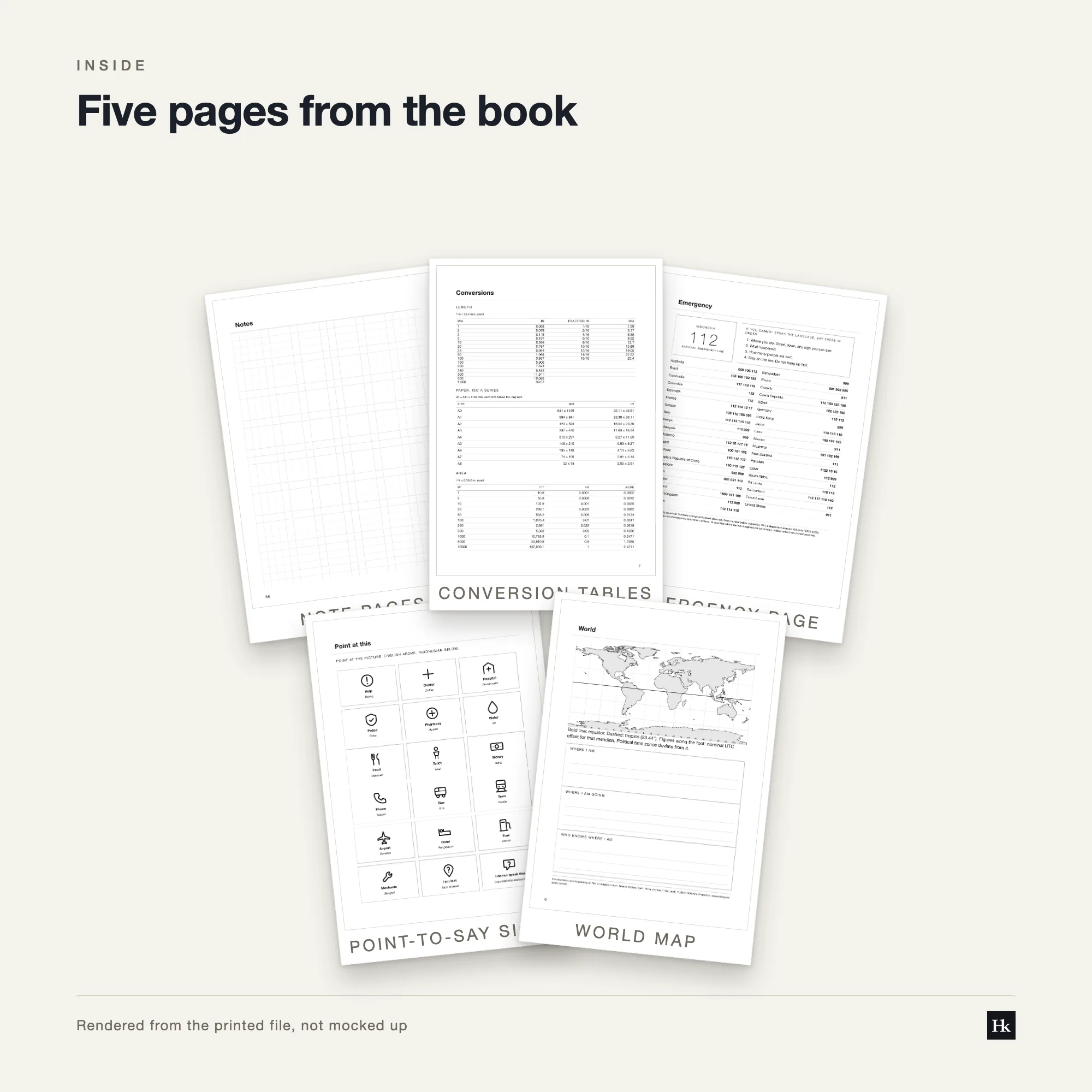
Made at the Hibrkraft bindery, Bogor · about the maker
Books that sit alongside it
- Leather Production LogbookWorks alongsideshares record-keeping
- Production Batch BookWorks alongsideshares record-keeping
Questions
What are the day-book columns?
Op, Tool, Feed, Speed.
What does a job-card page record?
Setup, tool, feed, speed and measurement, one card to a job.
How big is it?
80 pages, A5 trim, 4.58 mm spine.
Is it dated?
No. Start it with the first job you set up.
Does it print my tolerance or GD&T callouts?
No, and that is deliberate. Tolerance and geometric callouts come from the drawing you are machining to, not from a notebook, and they change part to part. The columns hold your reading; the drawing holds the limit.
What ruling are the notes pages?
Graph ruled at five millimetres, thirty-four squares down the page.
Nothing is more remarkable, and yet less unexpected, than the perfect identity of things manufactured by the same tool.