Plain Lab · journal
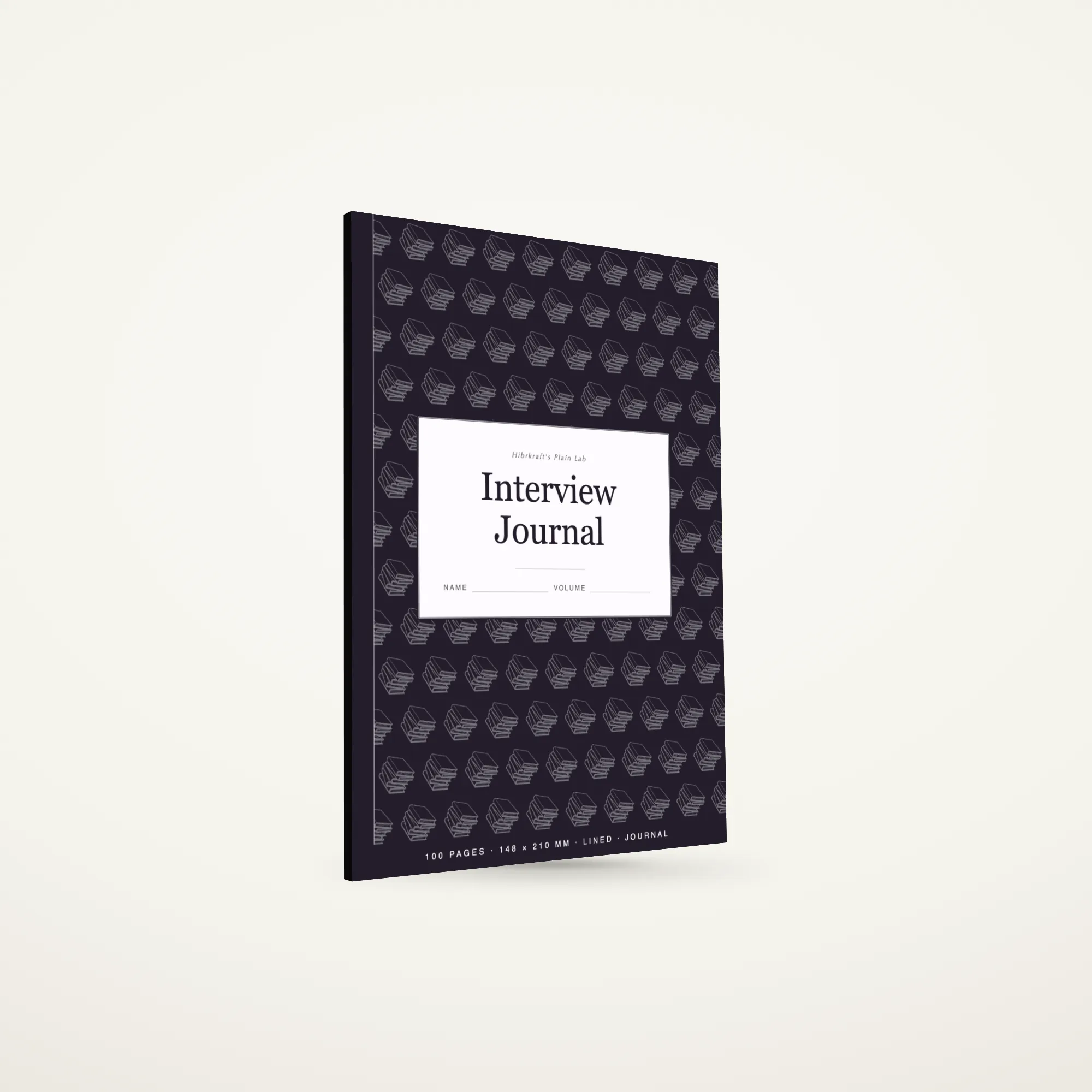
Interview Journal
One page for the interview, and the page after it for what you did not ask.
Specification
- Trim
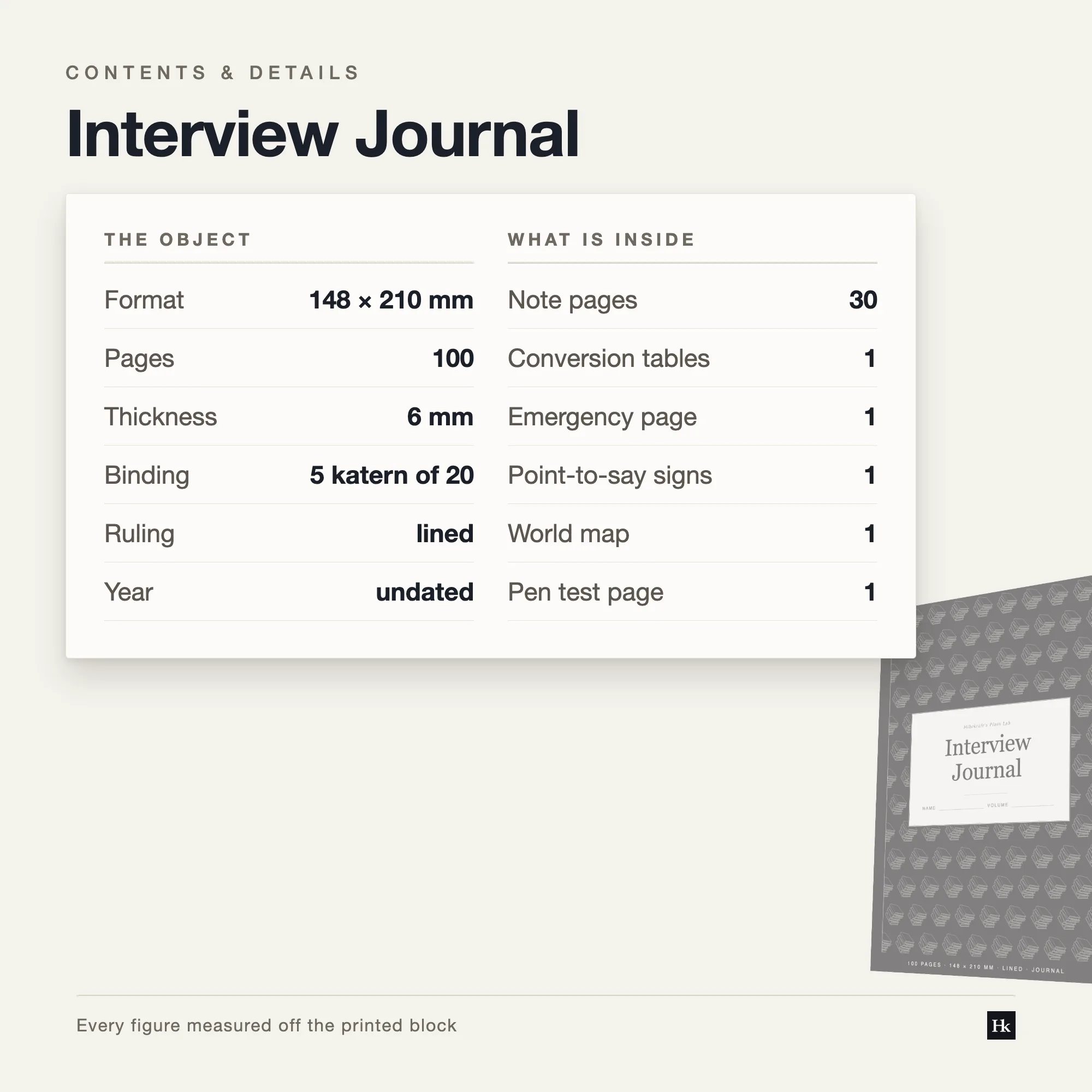
- 148 × 210 mm · 5.827 × 8.268 in
- Pages
- 100
- Leaves
- 50
- Sheets
- 25
- Signatures
- 5 × 20pp
- Spine
- 5.72 mm
- Paper
- white
- Ruling
- lined
- Ruling pitch
- 7.14 mm · 20.25 pt · 9/32 in
- Rows per page
- 24
Every interview gets a page of its own: who, when, and what they actually said, in whatever order it came out rather than the order you had planned to ask it. The page facing it is ruled and empty, for the question you thought of on the way home.
The pairing exists because the best question in most interviews arrives after the recorder is off, and there is nowhere to put it if the record already closed on the last answer given. Ruled pages further back hold the longer write-up, once the notes need turning into something readable.
It will not remember what someone said better than you did. It only gives the version you wrote at the time somewhere to survive.
What is inside
- Interview
- 60pp
- One page per interview, followed by a ruled page for whatever you did not ask.
- Notes
- 30pp
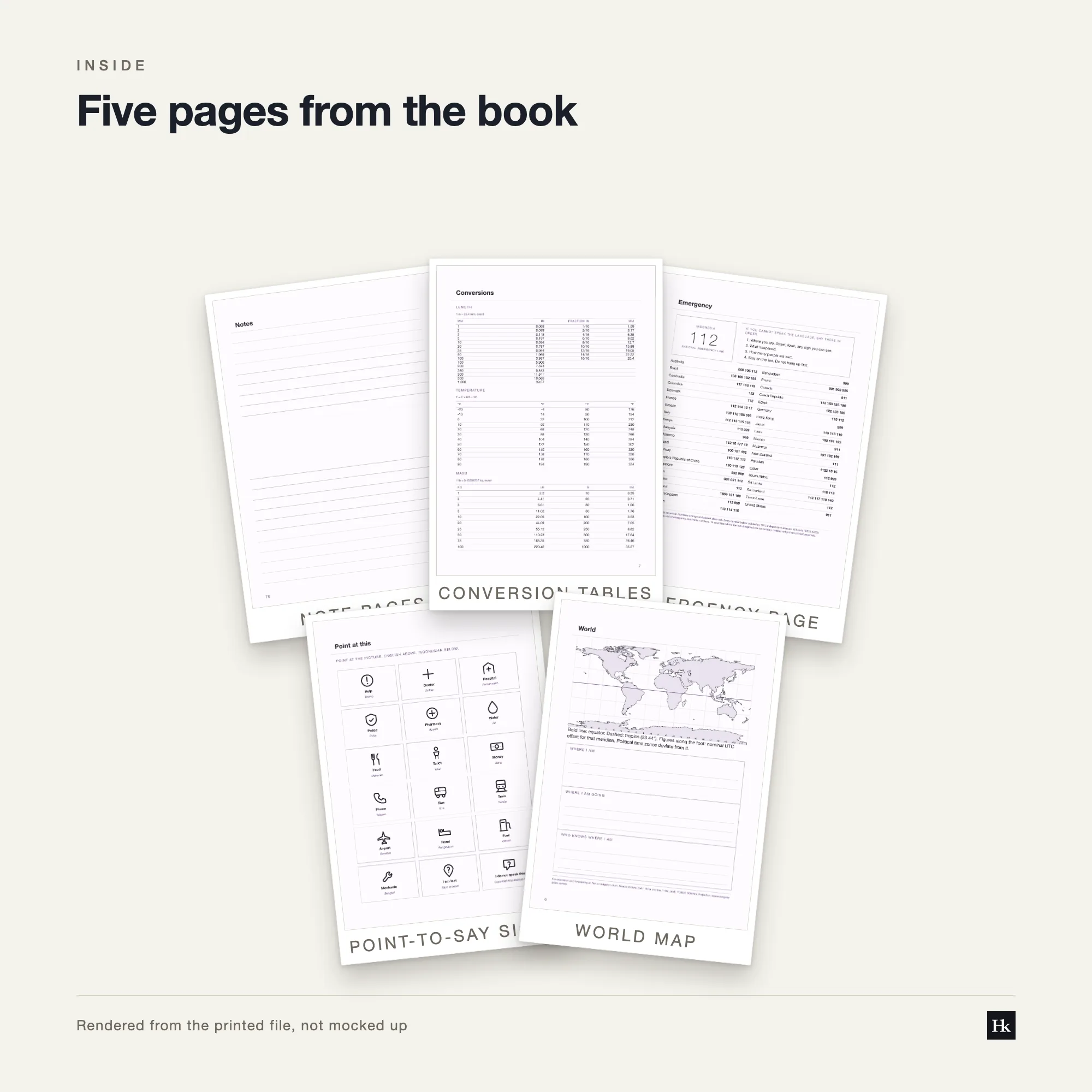
- For the longer write-up once an interview needs turning into something readable.
- Reference
- 10pp
- The owner page and reference tables at the back.
The film
Page by page
A vertical film from our own bench — this page contacts nobody's server to play it, and downloads nothing until you press play.
Real pages
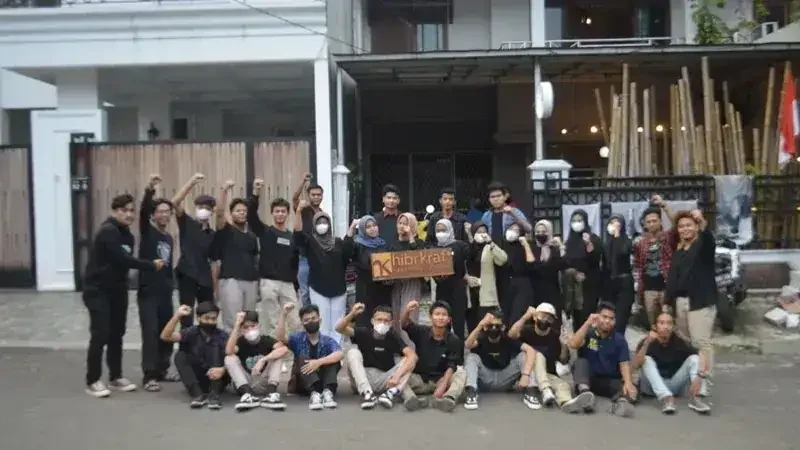
Made at the Hibrkraft bindery, Bogor · about the maker
Books that sit alongside it
- Caregiver's JournalWorks alongsideshares personal-writing
- Commonplace InsertWorks alongsideshares note-taking, personal-writing
- Dream JournalWorks alongsideshares personal-writing
- Field Notes InsertWorks alongsideshares note-taking
- Reading InsertWorks alongsideshares note-taking
- Reading JournalWorks alongsideshares note-taking, personal-writing
Questions
Is it dated?
No. Use a page whenever you sit down with someone.
What is the second page for?
Whatever you did not ask, or thought of after the interview ended.
Is it ruled?
College pitch, close-set lines, enough room to write while someone else is talking.
Is this for journalism specifically?
It works for that, and just as well for oral history, hiring, or any conversation you want an honest record of.
Does it prompt questions to ask?
No. It records what was said, not what should be asked.
A want of ready attention; only part of the request is heard at all.