
Plain Lab · logbook
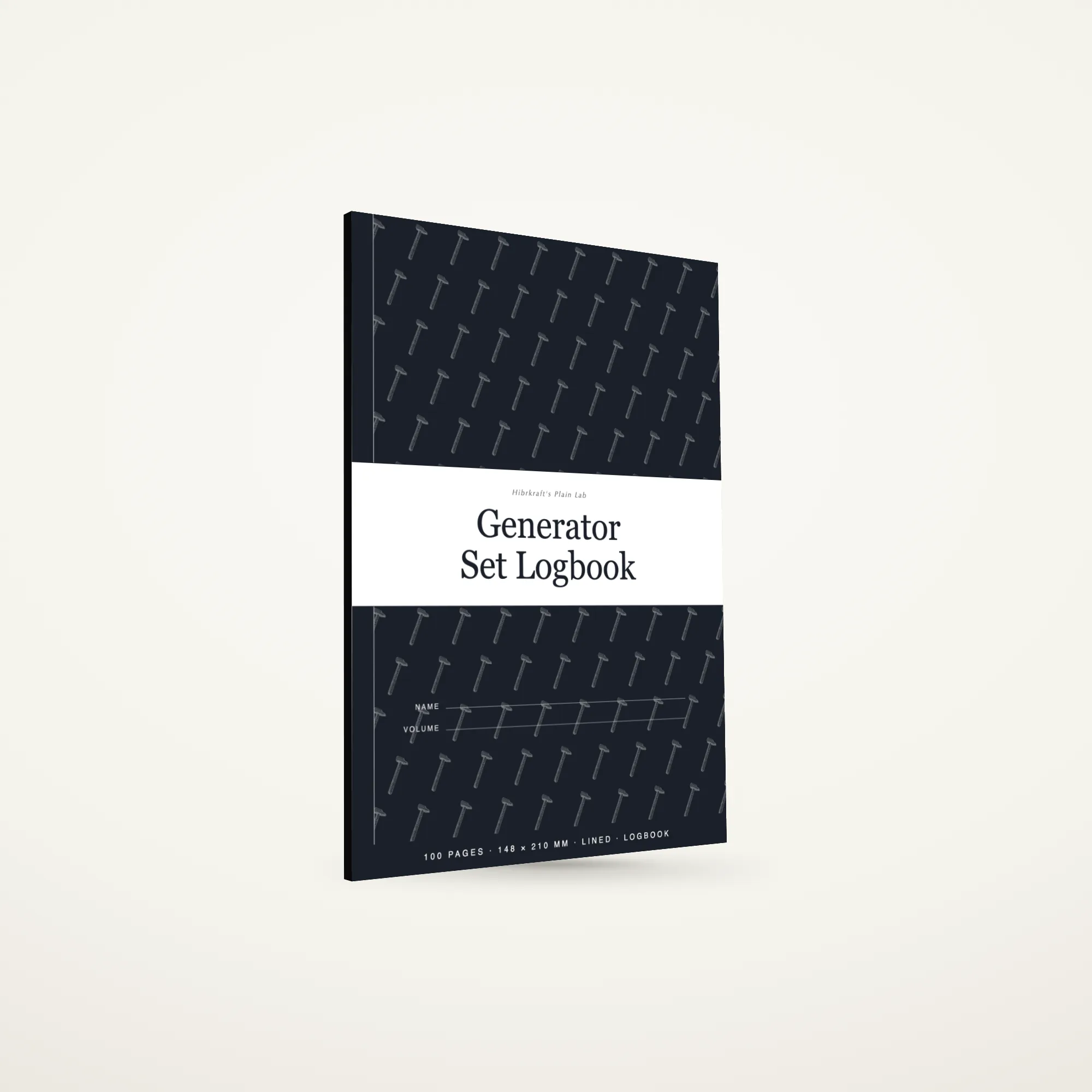
Generator Set Logbook
Eight pages of fuel log ruled into four columns, sixty lined pages for the running log behind it, and twenty pages of notes to close the working section.
Specification
- Trim
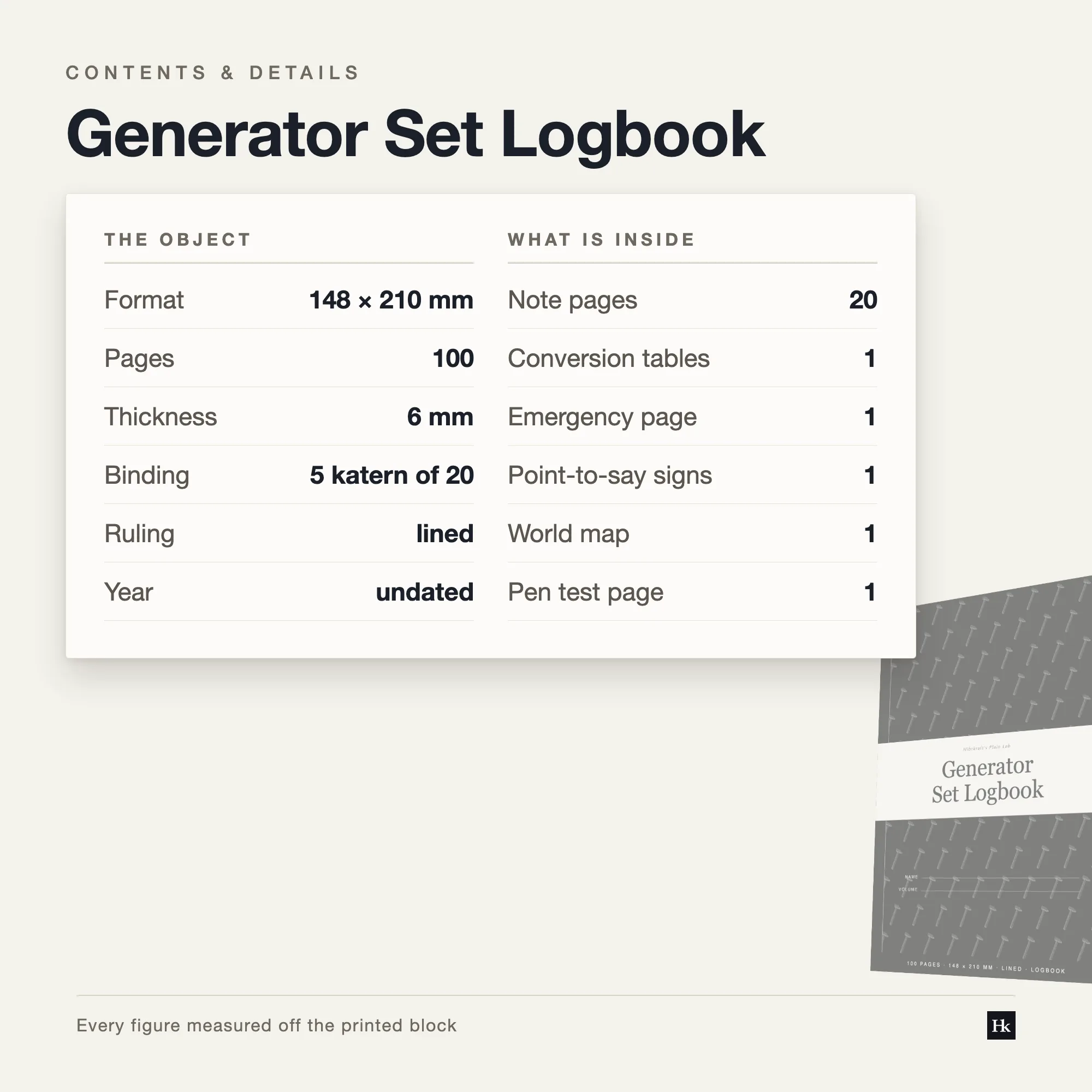
- 148 × 210 mm · 5.827 × 8.268 in
- Pages
- 100
- Leaves
- 50
- Sheets
- 25
- Signatures
- 5 × 20pp
- Spine
- 5.72 mm
- Paper
- white
- Ruling
- lined
- Ruling pitch
- 7.14 mm · 20.25 pt · 9/32 in
- Rows per page
- 24
Eight pages open the book, ruled into four columns: date, litres, hours, by. A generator that gets topped up by three different people over a month needs that last column, or nobody can say who actually checked the set the week it started surging.
Sixty lined pages follow for the running log itself, open rather than boxed into a table, because what is worth recording changes: hours run on one visit, oil pressure and coolant on the next, the load it was carrying the day it tripped. Twenty pages of plain notes close the working section, for a fault that took more than one visit to run down.
It will not set your service intervals, and it carries no acceptable oil pressure printed anywhere on the page. Those numbers come from the set's own manufacturer and from whoever wrote your maintenance plan, and they belong on the page in your handwriting, not pre-printed by somebody who has never seen your generator.
What is inside
- Fuel log
- 8pp
- Four columns fixed, so a set topped up by more than one person still has one traceable record.
- Running log
- 60pp
- Lined, not boxed into a table, because what is worth recording changes from one visit to the next.
- Notes
- 20pp
- Plain ruled, for a fault that took more than one visit to run down.
- Reference
- 6pp
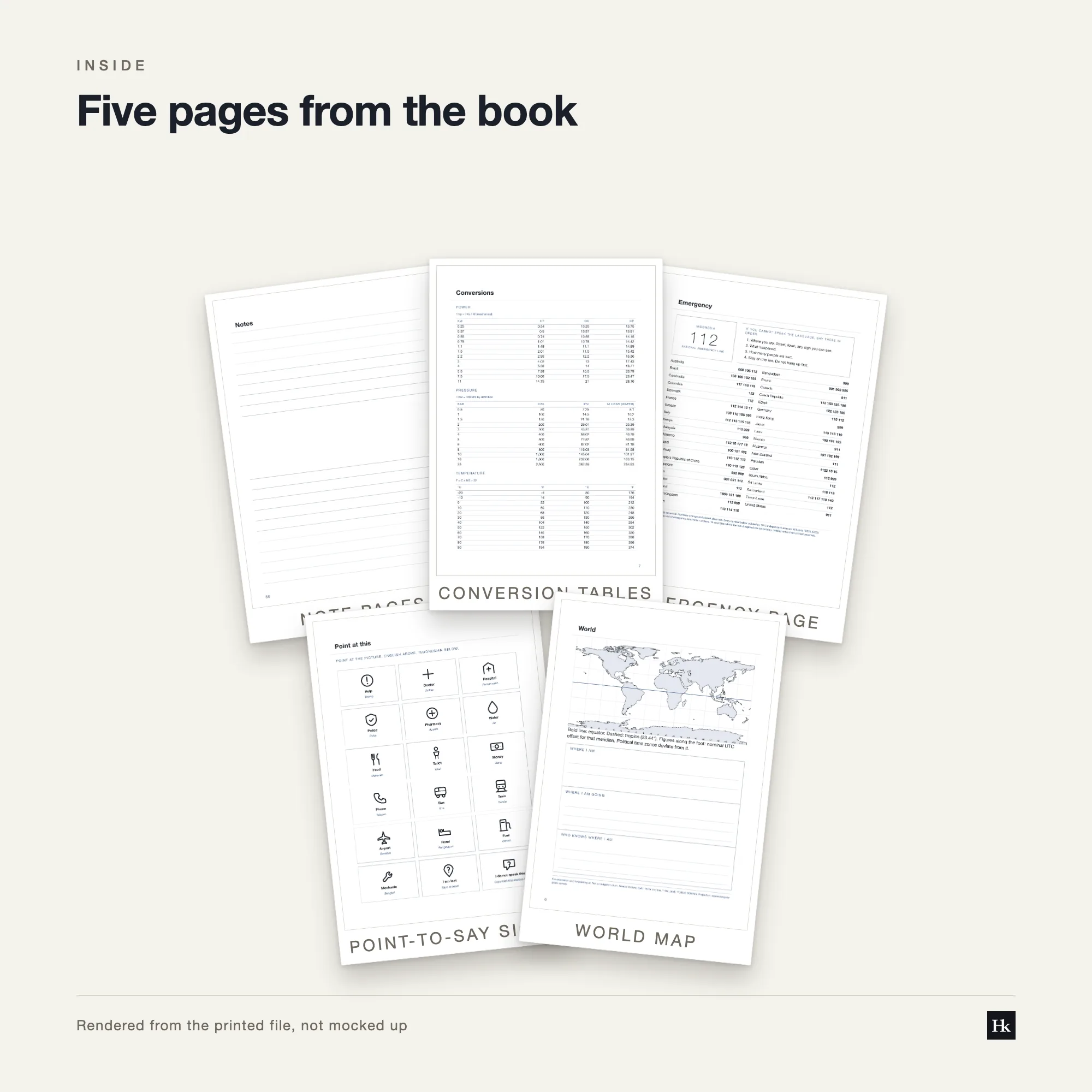
- Fuel, weight and temperature conversions computed from definitions, plus emergency numbers cross-checked against two sources.
- Last leaf
- 1pp
- A pen-test page, printed on purpose, so a real log page does not take the hit.
The film
Page by page
A vertical film from our own bench — this page contacts nobody's server to play it, and downloads nothing until you press play.
Real pages
Made at the Hibrkraft bindery, Bogor · about the maker
Books that sit alongside it
- Chemical Store and Disposal LogWorks alongsideshares field-work, record-keeping
- Compressor Service LogbookWorks alongsideshares field-work, record-keeping
- Hydraulic Service LogbookWorks alongsideshares field-work, record-keeping
- Pump Service LogbookWorks alongsideshares field-work, record-keeping
Questions
What are the fuel log columns?
Date, Litres, Hours, By.
How big is it?
A5, 148 x 210 mm, 100 pages, 5.72 mm across the spine.
Is it dated?
No. Start it when the set is first commissioned.
Does it print service intervals or an acceptable oil pressure?
No, and that is deliberate. Those figures come from the set's own manufacturer and from whoever wrote your maintenance plan, they differ from one generator to the next, and a printed book cannot be corrected once it is in your hands.
What ruling is the running log?
Lined, 7.14 mm pitch, 9/32 inch, twenty-four lines to the page, open rather than boxed into columns.
Who is it for?
Generator technicians and anyone else responsible for keeping a standby or prime-power set fuelled and running.
We will take one which relates to iron, for instance, as you have already seen iron burn a little in the atmosphere.