
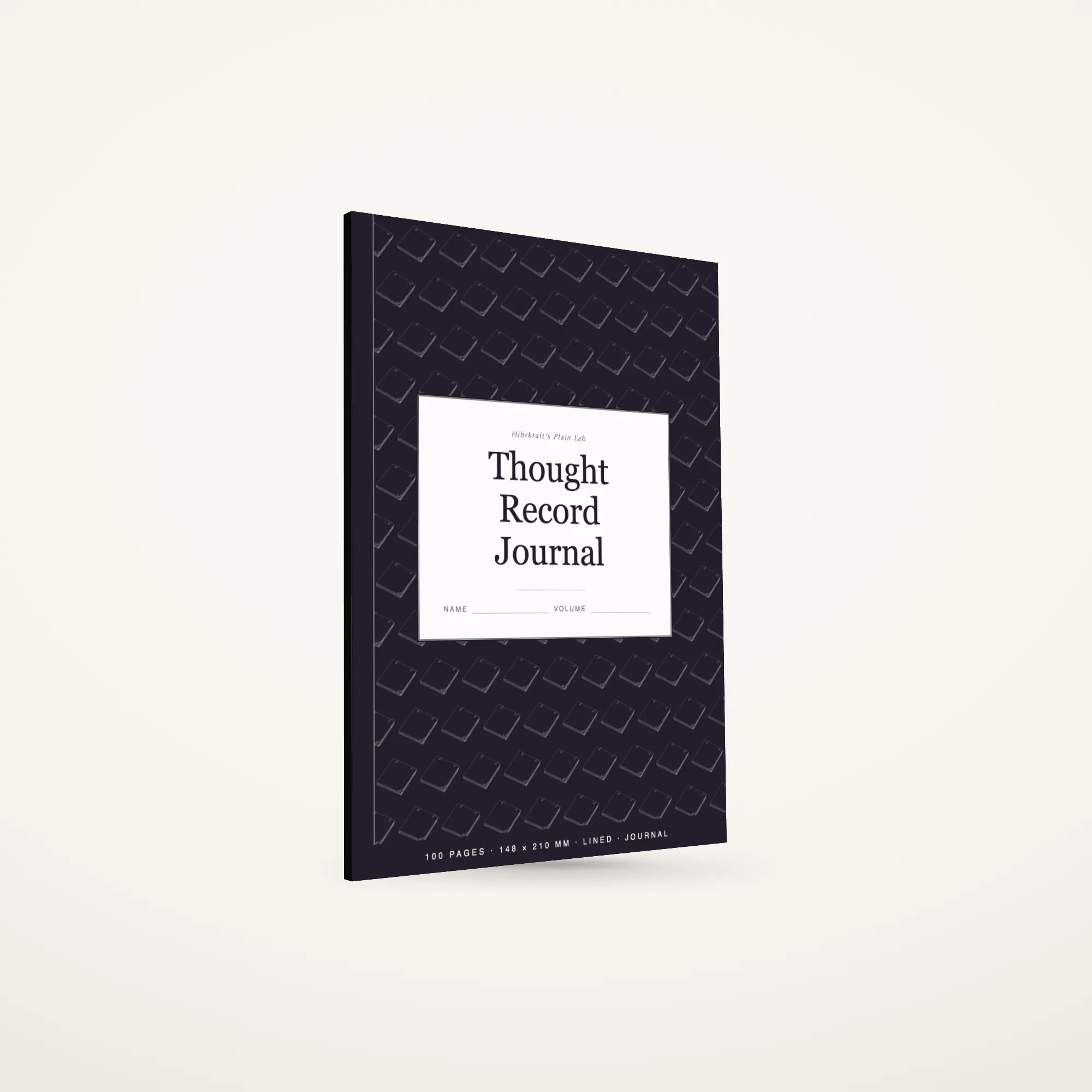
Plain Lab · journal
Thought Record Journal
Seven ruled columns for the situation, the feeling, the thought, and the case for and against it, printed properly instead of hand-ruled.
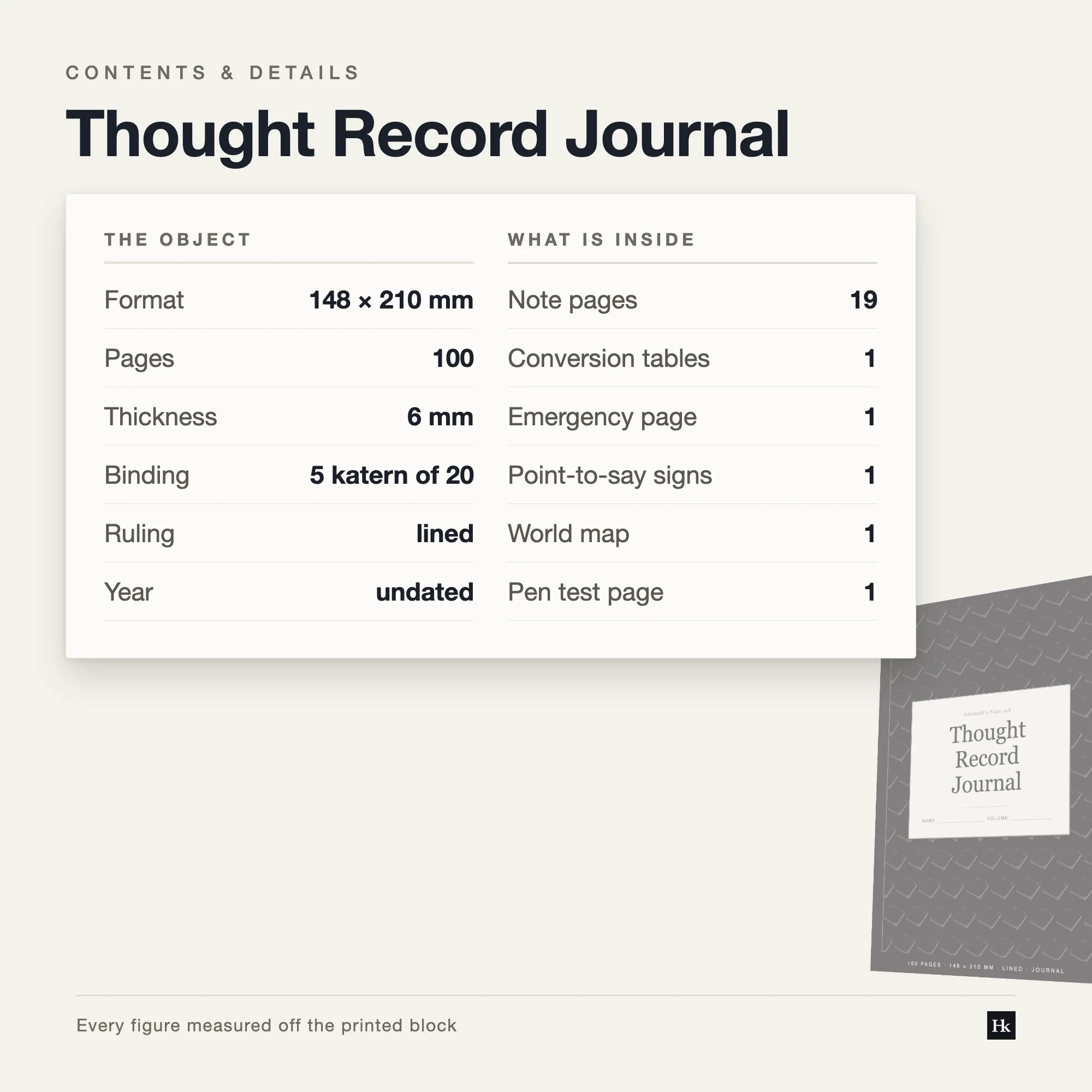
Specification
- Trim
- 148 × 210 mm · 5.827 × 8.268 in
- Pages
- 100
- Leaves
- 50
- Sheets
- 25
- Signatures
- 5 × 20pp
- Spine
- 5.72 mm
- Paper
- white
- Ruling
- lined
- Ruling pitch
- 7.14 mm · 20.25 pt · 9/32 in
- Rows per page
- 24
Seven columns run across each thought record page: the situation, the feeling and how strong it was, the thought that went through your mind, what supports it, what argues against it, a more balanced way to put it, and where you land afterward. The shape is a known one; the page just prints it properly instead of asking you to rule your own columns on plain paper.
Filling in seven columns freehand is where most people give up on the exercise before the exercise does anything. A printed grid removes that one obstacle: the columns are already there, in the same order, every page.
The book does not run the exercise for you and makes no claim about what it will change. It is the seven-column shape, printed at a size you can actually write in, and nothing beyond that.
What is inside
- Thought record
- 70pp
- Seven columns across the page: the situation, the feeling, the automatic thought, what supports it, what argues against it, a more balanced version, and where you land afterward.
- Notes
- 19pp
- Plain lined pages for anything a thought record page runs out of room for.
- Reference
- 11pp
- Conversions worked from definitions, plus emergency numbers checked against two sources.
The film
Page by page
A vertical film from our own bench — this page contacts nobody's server to play it, and downloads nothing until you press play.
Real pages
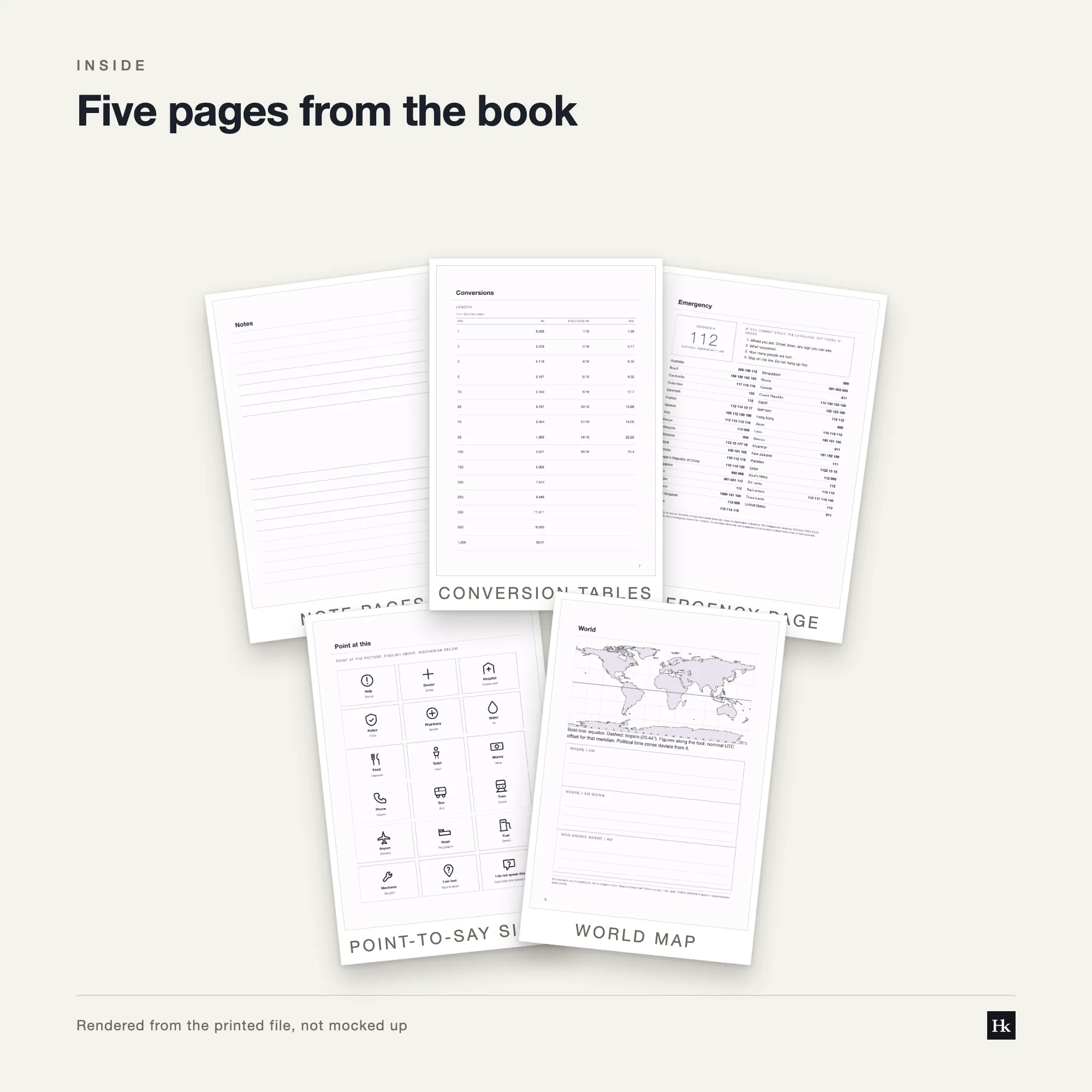
Made at the Hibrkraft bindery, Bogor · about the maker
Books that sit alongside it
- Caregiver's JournalAlso in Plain Lab
- Field Naturalist's JournalAlso in Plain Lab
- Hajj and Umrah JournalAlso in Plain Lab
- Money DiaryAlso in Plain Lab
Questions
What are the seven columns?
The situation, the feeling and its strength, the automatic thought, what supports it, what argues against it, a more balanced version, and where you land afterward.
Does this replace therapy?
No. It prints a known exercise structure. It does not deliver therapy and makes no claim about what filling it in will change.
How big is it?
A5, 148 x 210 mm, 100 pages, 5.72 mm across the spine.
Is it dated?
No. Start it whenever a thought is worth writing down.
What are the notes pages for?
Plain lined pages for anything the seven columns don't ask for.
Remember that all is but opinion, and all opinion depends of the mind.