

Stationery Packaging: The Unboxing Experience for UGC
Turn single sales into free marketing. Design a shareable unboxing experience for your custom white label journals.
by Aika Mentari · February 7, 2026
In the image, a pristine black journal stands on a warm wooden table, a silent testament to the craft that shaped it. Its journey from raw leather and paper in our Cileungsi workshop is complete. The rhythmic sounds of awls punching through signatures and the low hum of the debossing press have faded. But for the customer, the journey is just beginning. The next sounds they hear will define their perception of your brand: the satisfying tear of a mailer strip, the gentle rustle of custom-printed tissue paper, the soft slide of a branded belly band, the quiet thud of the journal resting in their hands for the first time. This carefully orchestrated symphony of sensations is the unboxing experience—and it’s your most powerful, post-purchase marketing tool.
Look at the journal’s simple, elegant form. It is the hero of the story. But every hero needs a grand entrance. The packaging is the stage, the lighting, and the opening music. It frames the product, builds anticipation, and communicates a value that transcends the physical object itself. It whispers to the customer, “What’s inside is special, and you are special for choosing it.” This bridge from a delivered package to a cherished possession is where brands are either solidified or forgotten. It’s a transition we help our White Label partners master by ensuring the product at the heart of the experience is worth celebrating.
We craft the journal you’re proud of; we guide you on the packaging that makes it famous.
The Final 18 Inches: Why Your Packaging is Your Most Underrated Marketing Channel
In e-commerce, the final 18 inches—the distance from the delivered box to the customer’s hands and eyes—is the most critical and often the most neglected part of the entire customer journey. The sale is not the end goal; it’s the halfway point. The ultimate goal is to create a customer so delighted that they become a repeat buyer and a vocal advocate for your brand. In the age of Instagram, TikTok, and YouTube, the unboxing experience has evolved from a simple logistical function into a powerful engine for organic, user-generated content (UGC).
A customer who films or photographs themselves opening your product and shares it with their followers is giving you their most valuable asset: a personal endorsement. This form of marketing is infinitely more trustworthy and effective than a paid ad. Why? Because it’s authentic. It’s a real person, genuinely excited about a product they chose and paid for. Designing your packaging with this outcome in mind is not an expense; it is a direct investment in your marketing flywheel. A plain polybag and a packing slip protect the product. A thoughtful unboxing experience protects and grows the brand.
| Factor | Hibrkraft Partner Standard (Thoughtful Unboxing) | Cheap Mass Production (Polybag & Go) |
|---|---|---|
| First Impression | A branded, multi-sensory experience that communicates quality and care. | A generic, transactional feeling. The product is a commodity. |
| Marketing Potential | High. Designed to be “camera-ready” for social media unboxing videos. | Zero. The packaging is discarded immediately and is never part of the story. |
| Perceived Value | Elevates the product inside, justifying a premium price point. | Can cheapen the product, leading to questions about the price. |
| Customer Emotion | Delight, excitement, anticipation, feeling valued. | Indifference, relief that the product arrived undamaged. |
| Likelihood of UGC | High. The experience itself is content-worthy. | Extremely Low. There is nothing to share. |
| Brand Connection | Strengthens the bond. The customer feels part of an exclusive club. | Weakens or nullifies it. The transaction feels anonymous and impersonal. |
Source: the six-factor comparison above, the article’s own qualitative contrast between a branded unboxing experience and bare polybag shipping — not measured data, and no external source is cited.
The contrast in the table is stark. The “Polybag & Go” method is a false economy. You might save a dollar per unit on packaging, but you sacrifice an opportunity for marketing that could be worth a hundred times that amount. The Hibrkraft partner, who understands the value of this final touchpoint, sees packaging not as a cost center but as a media buy. They are purchasing ad space in the most valuable location possible: their own customer’s social media feed.
This philosophy is baked into our White Label partnership model. We create a premium “hero” product—the journal itself—that is worthy of a grand reveal. The heft of the book, the scent of the genuine Indonesian leather, the precision of the Coptic stitching—these are the core elements. Your packaging is the storytelling framework that presents these elements to the world. It’s the difference between serving a world-class meal on a paper plate versus presenting it on fine china. The food is the same, but the experience and perceived value are worlds apart.

Anatomy of a Shareable Unboxing: The Core Components
Creating a shareable unboxing experience doesn’t necessarily mean spending a fortune on complex, multi-part boxes. It’s about using simple, cost-effective elements in a thoughtful, layered way to create a narrative of discovery. Each layer a customer unwraps builds anticipation and provides a new visual “scene” for their camera.
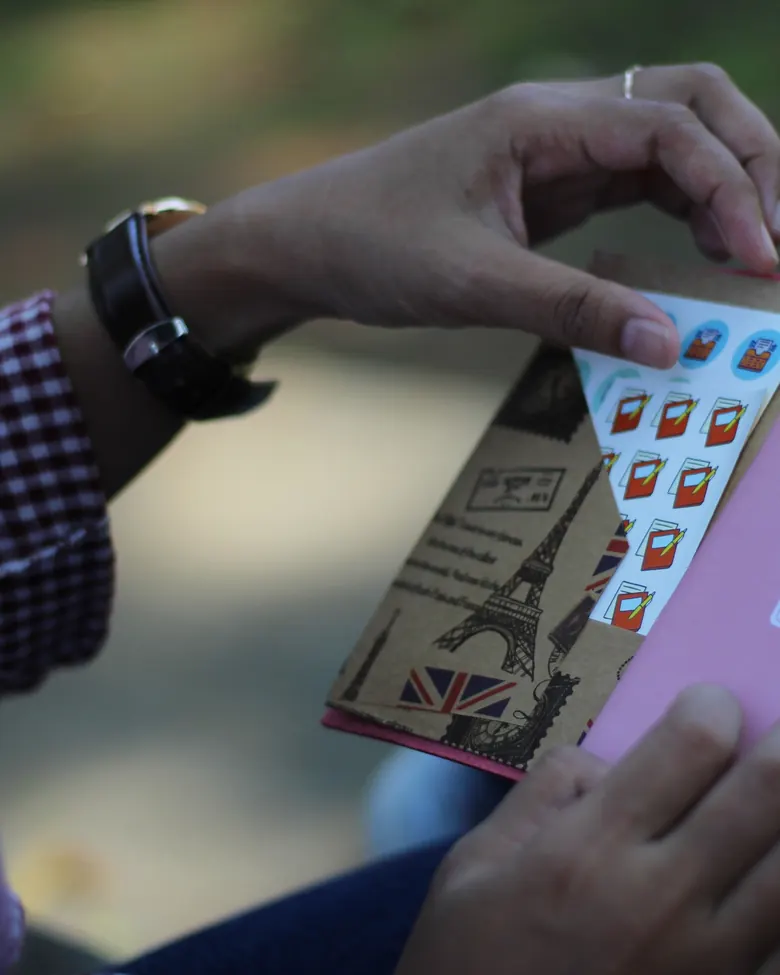
1. The Custom Belly Band: This is one of the most powerful and underrated packaging tools for stationery. A belly band is a strip of paper or cardstock that wraps around the journal. It’s a perfect canvas for your logo, a brand message, or product details. More importantly, it acts as the first “seal.” The customer must physically slide it off to access the journal. This simple action is a moment of engagement. At Hibrkraft, we can produce and apply custom belly bands to your journals, so they arrive at your facility ready for the next packaging stage. It’s a simple, high-impact addition that immediately elevates the product from a blank notebook to a branded artifact.
2. Branded Tissue Paper: The next layer is often tissue paper, sealed with a sticker. The sensory experience here is crucial. The crinkling sound of the paper is universally associated with gifts and luxury. It creates an auditory cue of quality. Custom-printed tissue paper with a subtle, repeating pattern of your logo is a fantastic investment. As the customer unfolds the paper, it creates a moment of reveal. For a video, this is a key visual transition—the “before” (wrapped) and the “after” (the journal revealed).
3. The Sticker Seal: A simple, well-designed sticker is a cost-effective workhorse. It seals the tissue paper, adding another small “ceremony” to the unboxing process—the satisfying peel. It’s also an opportunity to inject a bit of brand personality. It could be your logo, a brand icon, or a simple message like “Open Me!” or “Your Ideas Start Here.”
4. The Thank You Card / Insert: This is the most personal element and your chance to speak directly to the customer. A small, high-quality card printed on thick stock does several things. First, it says “thank you,” making the customer feel seen and appreciated. Second, it can briefly tell your brand story—perhaps mentioning the journal was handcrafted in our Indonesian workshop. Finally, it’s your “call to action.” This is where you can explicitly, but politely, ask for the share: “Love your new journal? Share your unboxing experience with us @[YourInstagramHandle] #YourBrandHashtag.” You can even include a QR code that links to your social media page. This simple insert transforms a passive customer into a potential content creator.
The “Instagram Test”: Engineering Your Packaging for the Camera
Before finalizing your packaging, you must put it through what we call the “Instagram Test.” The test is simple: can a person, holding their phone in one hand to film, easily and elegantly open your package with the other? Is the experience visually clean, satisfying, and free of frustrating elements like excessive tape or tight-fitting parts that require force? If the process is awkward, difficult, or messy, it will never be shared.
The physics of a shareable unboxing is about creating a “narrative of reveal.” It’s about layers and controlled discovery. Think of it as a series of gates.
- Gate 1: The Outer Mailer. It should be easy to open, ideally with a tear strip.
- Gate 2: The Inner Box/Wrapping. As the lid is lifted, the first thing the customer sees should be intentional—not a jumble of packing peanuts, but the neatly wrapped product.
- Gate 3: The Sticker & Tissue Paper. The peel of the sticker and the unfolding of the paper is a key moment of transition.
- Gate 4: The Belly Band. The final barrier before touching the product itself. Sliding it off is the climax.
Source: the four-gate opening sequence described above, the article’s own ordering of how the package is unwrapped — not an independently measured or verified progression.
Each of these steps is a potential 3-second clip in a TikTok or Instagram Reel. The entire sequence, set to trending audio, becomes a compelling piece of micro-entertainment. This multi-sensory journey—the sound of the crinkling paper, the feel of the matte-finish thank you card, the visual of your logo on the belly band—is what triggers the emotional response that leads to a social share. It shows a level of care and intentionality that customers associate with high-end, premium brands.

The craftsman’s job doesn’t end when the final stitch is sewn. The product’s journey is only complete when it is in the customer’s hands. The packaging is our final handshake, the last expression of care. It must be as intentional as the first cut of the leather.
This principle guides our consultation with White Label clients. We encourage them to think about the entire lifecycle of the customer’s experience. Imagine your customer. They’ve had a long day. A package with your name on it is waiting for them. They open it, and instead of a frustrating battle with tape and plastic, they are greeted with a beautiful, thoughtful presentation. The experience itself is a small moment of joy and luxury in their day. That positive emotion becomes directly associated with your brand. They take a quick photo for their Instagram story, tagging you. A follower sees it, trusts their friend’s taste, and clicks through to your profile. You have just acquired a highly qualified new lead without spending a single dollar on ads. This is the power of engineering your packaging for the camera.
The most common failure point is forgetting the “one-handed” rule. If a customer has to put down their phone to wrestle with a box, you’ve lost the shot. The experience must feel effortless and graceful. This is why elements like tear strips on mailers, lift-off lids on boxes, and simple sticker seals are so effective. They are designed for the visual medium of social media.
Library
The Journal Behind the Unboxing You’re Designing
This article has treated the journal itself as the given—the “hero” your packaging exists to introduce. These three guides go one level deeper into how that hero is actually built: cover material and proportion, paper and binding specification, and the cost math behind a real production run. All three open straight in your browser, free, with no sign-up. They are written in Indonesian for our workshop team’s own reference; message us and an English-speaking member of the team will walk you through the same decisions.
Panduan desain
Filosofi Desain Notebook Custom
Kenapa logo dikecilkan, garis dimundurkan, dan sampul dibiarkan diam. Penempatan logo, proporsi sampul, dan margin halaman — dengan alasannya, bukan sekadar aturannya.
Baca PDF
Panduan spesifikasi
Panduan Komposisi Notebook Custom
Urutan keputusan dari kegunaan sampai kulit, lengkap dengan yang saling melawan. Gramatur kertas, jumlah kuras, ukuran, dan jenis jahitan — dan di mana pilihan satu memotong pilihan lain.
Baca PDF
Untuk yang berhitung
Studi Kelayakan Notebook Custom
Kapasitas jam kerja sebagai langit-langit setiap proyeksi. Titik impas, analisis sensitivitas, dan kenapa kerajinan tangan tidak bisa dihitung seperti pabrik.
Baca PDFFiles open in your browser, not a direct download to storage. All three are in Indonesian, A5 size, and free to print for your own use.
From Unboxing to User-Generated Content (UGC): The ROI of Paper and Print
The ultimate result of a well-designed unboxing experience is a steady stream of authentic, high-quality User-Generated Content. This UGC is marketing gold. It acts as powerful social proof, showing potential customers that real people are buying and loving your products. It fills your social media feed with diverse, authentic content that you don’t have to create yourself. You can reshare your customers’ posts to your stories, creating a community gallery of brand appreciation.
The return on thoughtful packaging is best understood as leverage, not arithmetic. A modest addition to your per-unit packaging spend—a nicer box, custom tissue paper, a sticker, an insert card—does not need most customers to respond in order to pay for itself. Even a small share of buyers choosing to photograph or film their unboxing and post it turns a single sale into an impression on that customer’s own network, and a personal endorsement from a friend carries more weight with their followers than a paid ad reaching the same number of strangers. This article has no verified figure for what share of customers actually post, or how far a typical post travels, so treat the argument as directional rather than a calculation: the cost of better packaging is fixed and modest, while the reach from even one enthusiastic customer is open-ended—and occasionally large enough on its own to justify the whole line item.
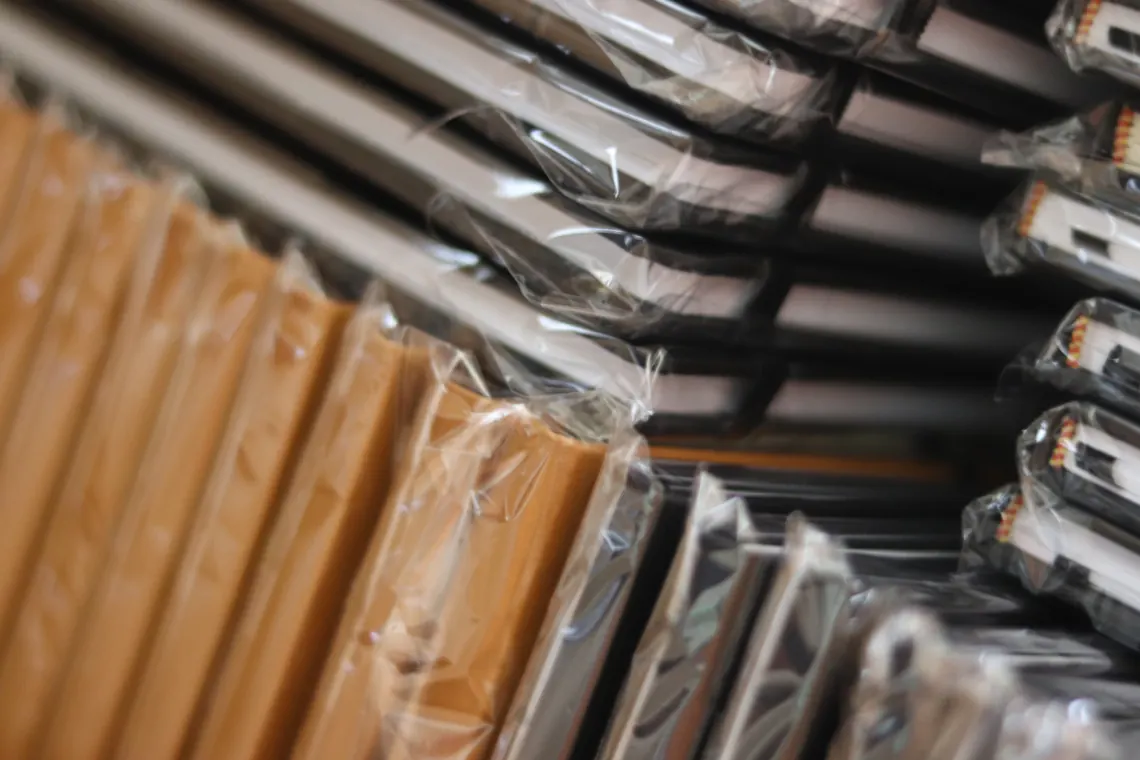
At Hibrkraft, we see our role as providing the perfect “hero” for this experience. We also offer finishing services that prepare your journal for its packaging debut. We can apply custom belly bands for you. We can also individually shrink-wrap each journal. This protects the product during transit to your fulfillment center and ensures it remains pristine, dust-free, and ready to be placed into your final branded packaging. This transparent partnership allows you to focus on designing the outer experience, confident that the product inside is protected and perfect.
Why Partner with Hibrkraft?
Your brand is a story, and the unboxing experience is a critical chapter. By partnering with Hibrkraft, you ensure the star of that story—the journal itself—is a masterpiece of craftsmanship. From our workshop in Cileungsi, Bogor, our dedicated team of nine artisans produces up to 2,000 units per month, giving you a product built with a level of care that justifies and enhances a premium unboxing experience.
Through our White Label service, we create a product that is entirely your own. We are the silent, expert hands that bring your vision to life, allowing you to build a brand that resonates deeply with your customers from the moment they receive their package. We provide the foundational quality that makes the entire experience “share-worthy.”
We handle the complexities of production and have a proven record of shipping globally to brand partners who trust us with their reputation. We empower you to focus on the crucial marketing and branding elements—like designing a killer unboxing experience—knowing that the core product is in the hands of passionate craftsmen.
Let’s create a product experience that your customers can’t wait to share.
Ready to start? Message us on WhatsApp at +62 815 1119 0336 to discuss your stationery packaging ideas and Finishing Options.
Disclaimer: this post is written in English to reach a wider, international audience.