
Metallic Content Limits: Archival Paper Quality for Journals
Hibrkraft specifies low-metallic, 100% Cotton paper for white label journals, guaranteeing archival permanence via rigorous 100% QC.
by Aika Mentari · February 5, 2026
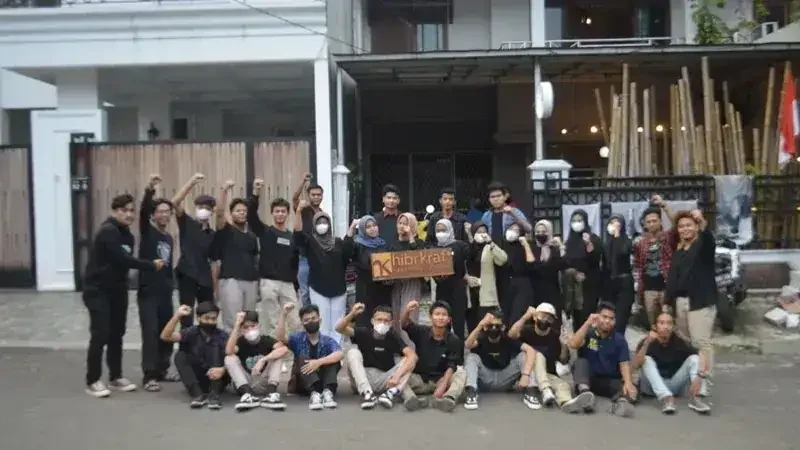
The image before you is a study in permanence. Two leather-bound journals rest together, their curved spines suggesting a quiet strength and their warm, creamy page blocks glowing softly. It’s a scene from a library, a study, a place where knowledge is gathered and preserved. In our Cileungsi workshop, this is the very ideal we build towards. The air, rich with the earthy scent of Indonesian full-grain leather and the subtle, clean aroma of archival paper, is the atmosphere of legacy. Our nine craftsmen work not with the frantic pace of a factory, but with the focused intention of artisans who understand they are creating vessels for something important—a lifetime of notes, a decade of research, a company’s foundational plans.
The soft bokeh in the background hints at a world of ideas waiting to be recorded. The gentle curve of the journal spines speaks a language of resilience and quality. This is not a disposable object. This is a permanent fixture. Our manufacturing philosophy is built on ensuring the inside of the journal is as strong and enduring as the outside. This requires us to go beyond the visible craft of leatherwork and bookbinding and delve into the invisible science of material purity. It requires a deep understanding of the hidden threats to longevity, the most insidious of which are the microscopic metallic contaminants that can turn a beautiful book into a brittle, faded liability.
We don’t just build journals; we engineer chemically stable, archival systems for your brand’s legacy.
Engineering Legacy: The Technical Case for Strict Metallic Content Limits in Archival White Label Journals
For a procurement manager or brand strategist, specifying materials for a premium product is an exercise in risk mitigation. In the context of custom leather journals, the greatest risk to long-term value is not a scuff on the cover, but the slow, inexorable chemical decay of the paper within. While many manufacturers will advertise their paper as “acid-free,” this term is only a baseline qualification, not a comprehensive guarantee of permanence. “Acid-free” simply denotes a neutral or alkaline pH at the time of manufacture. True “archival” quality is a far more rigorous engineering standard, and trace-metal purity is one of the chemistry risks it exists to guard against — though, as Exhibit 1 below shows, none of the standards that define “permanent” or “archival” paper publish a specific metallic-content ceiling. Trace amounts of metals, particularly iron and copper, are still the silent assassins of paper, acting as powerful catalysts that dramatically accelerate the oxidative degradation of cellulose fibers, leading to brittleness, discoloration, and eventual structural failure.
| Engineering Parameter | Hibrkraft Archival Standard (Low-Metallic) | Standard “Acid-Free” Paper (Unspecified Metallic Content) |
|---|---|---|
| Metallic Content (Fe, Cu) | Managed at the sourcing stage — 100% cotton or virgin chemical pulp, both inherently low in metallic contaminants — and checked against supplier technical data sheets. No governing standard publishes a single ppm ceiling for this; see Exhibit 1 below. | Unspecified and unregulated. Can be high, especially in lower-grade recycled pulps, creating “hot spots” for chemical decay (foxing). |
| Chemical Reaction Risk | Low. The purity of the cellulose minimizes the potential for catalytic oxidation (e.g., Fenton reactions), ensuring long-term chemical stability. | High. Trace metals actively speed up the breakdown of cellulose polymer chains, leading to premature brittleness and discoloration. |
| Pulp Purity | 100% cotton or high-purity, lignin-free chemical pulp. These sources are inherently low in metallic contaminants. Groundwood pulp is excluded. | May use lower-grade pulps, including recycled materials where metallic contaminants from inks, staples, or machinery are common. |
| Brand Implication | Safeguards intellectual property and associates the brand with true, verifiable, long-term quality. A secure asset. | Creates a hidden liability. A journal that degrades suggests a lack of foresight and a superficial commitment to quality. A potential risk. |
The technical justification for treating metallic content as a purity risk is rooted in fundamental chemistry. Cellulose, the primary component of paper, is a long-chain polymer. The strength and flexibility of paper depend on the length of these chains. Oxidative degradation is a process where these chains are broken down into smaller, weaker segments. While this happens naturally over a very long time, the presence of transition metals like iron and copper can accelerate this process by orders of magnitude. They act as catalysts, facilitating chemical reactions (like the Fenton reaction) that create highly reactive free radicals, which then viciously attack and sever the cellulose chains. This is the scientific cause of “foxing”—the small, rust-colored spots that appear on old paper—which are often centered around a microscopic metallic particle.
For a B2B buyer, this is not an abstract scientific curiosity; it is a direct threat to the integrity of their branded asset. Imagine commissioning thousands of beautiful leather journals for your company’s R&D division. Ten years later, a critical patent filing requires referencing a formula from a notebook from the project’s first year. You retrieve the book, only to find the pages are fragile and covered in brown spots that have obscured the key data. The journal, which should have been a permanent legal record, has failed. This is the real-world consequence of ignoring the issue of metallic content. True archival engineering, which also mandates the exclusion of unstable groundwood pulp and optical brighteners, is a holistic discipline designed to prevent this exact type of catastrophic failure. The gold standard for this is a 100% cotton substrate, which is naturally pure and far less prone to the metallic contamination that can plague lower-grade or improperly processed wood pulps.
What ISO 9706, ISO 11108, and ANSI/NISO Z39.48 Actually Specify
“Strict limits on metallic content” is a phrase that appears across the archival-paper literature, including in this article’s own bibliography below — and it is worth being precise about what the governing standards actually publish, rather than letting the phrase imply a number that does not exist in the source material. ISO 9706:1994 is the international standard for permanent paper; ISO 11108:1996 sets the stricter requirement for archival paper; their U.S. counterpart, ANSI/NISO Z39.48-1992 (R2009), was developed to cover pH value, tear resistance, alkaline reserve, and lignin thresholds. None of the summaries of these standards available to us tonight — the standards bodies’ own sites returned a Cloudflare bot-challenge rather than the document itself — publish a single numeric ceiling, in parts-per-million or otherwise, for the iron or copper content of the pulp.
What the standards do constrain is narrower, and no less real: the Library of Congress’s own preservation guide defines “archival” as acid-free (pH of 7 or higher), lignin-free, and buffered, and notes that “archival” itself is not a legally defined term. Copper and iron remain a genuine, well-documented catalytic risk — the Fenton-type oxidation described above is real chemistry, and it is the mechanism generally cited for foxing — but absent a codified ppm figure, the actual control point is upstream, at pulp selection: 100% cotton and virgin chemical pulp are inherently low in metallic contaminants, which is why we specify them and check supplier technical data sheets rather than quoting a number no standard has published.
| Standard or source | Governs | What it specifies | Metallic-content ceiling published? |
|---|---|---|---|
| ISO 9706:1994 | Permanent paper | pH, alkaline reserve, tear resistance, lignin content (kappa number) | Not in any summary we could access; iso.org returned a bot-challenge tonight |
| ISO 11108:1996 | Archival paper (the stricter tier) | Builds on ISO 9706, with additional requirements for cotton or high-alpha-cellulose fiber | Not in any summary we could access; iso.org returned a bot-challenge tonight |
| ANSI/NISO Z39.48-1992 (R2009) | Permanence of paper for library and archive documents | pH value, tear resistance, alkaline reserve, lignin thresholds | No — not found in the published scope |
| Library of Congress, Preserving Your Books | Definition of “archival” materials | Acid-free (pH 7+), lignin-free, buffered; states “archival” is not a legally defined term | No — metallic content is not named |
Source: Library of Congress, Preservation Directorate, “Preserving Your Books” (guides.loc.gov, fetched live 26 August 2026), and Wikipedia contributors, “Acid-free paper” (en.wikipedia.org, fetched live 26 August 2026), which names and summarizes ISO 9706, ISO 11108, and ANSI/NISO Z39.48-1992 (R2009). iso.org and niso.org returned Cloudflare bot-challenges when fetched directly tonight, and a Wayback Machine snapshot of the ISO standard page was rate-limited (HTTP 429) on two retries, so the primary standard text itself was not read — this table reports what these two live secondary sources say the standards cover, not a reading of the standards’ own clauses. This article states no metallic-content limit in ppm or any other unit; nothing above should be read as one.
Library
The Paper and Cost Decisions Behind a Finished Journal
Low-metallic, archival-grade paper answers one material question — but it is one line in a full specification, alongside cover material, paper weight and signature structure, and the production math behind a real order. These three guides go one level deeper into each: cover material and proportion, paper and binding specification, and the cost math behind a real production run. All three open straight in your browser, free, with no sign-up. They are written in Indonesian for our workshop team’s own reference; message us and an English-speaking member of the team will walk you through the same decisions.
Panduan desain
Filosofi Desain Notebook Custom
Kenapa logo dikecilkan, garis dimundurkan, dan sampul dibiarkan diam. Penempatan logo, proporsi sampul, dan margin halaman — dengan alasannya, bukan sekadar aturannya.
Baca PDF
Panduan spesifikasi
Panduan Komposisi Notebook Custom
Urutan keputusan dari kegunaan sampai kulit, lengkap dengan yang saling melawan. Gramatur kertas, jumlah kuras, ukuran, dan jenis jahitan — dan di mana pilihan satu memotong pilihan lain.
Baca PDF
Untuk yang berhitung
Studi Kelayakan Notebook Custom
Kapasitas jam kerja sebagai langit-langit setiap proyeksi. Titik impas, analisis sensitivitas, dan kenapa kerajinan tangan tidak bisa dihitung seperti pabrik.
Baca PDFFiles open in your browser, not a direct download to storage. All three are in Indonesian, A5 size, and free to print for your own use.

The Anatomy of Contamination: A Breakdown of Material Sourcing
To engineer a chemically stable journal, we must first understand the sources of contamination. Metallic particles can be introduced into paper pulp at multiple stages. They can be present in the source wood itself, in the water used during processing, abraded from metal components in the pulping machinery (like grinders and pipes), or introduced through recycled materials. Recycled pulp, while an excellent choice for many sustainable applications, can pose a higher risk for metallic contamination if not subjected to rigorous de-inking and purification processes, as residual inks, staples, and paper clips can reintroduce metallic particles into the slurry.
This is why our material specification process for archival white label projects is so stringent. We partner with reputable Indonesian paper mills that can provide technical data sheets certifying the purity of their pulp. We prioritize virgin chemical pulp or 100% cotton substrates, as these have a more controlled and transparent supply chain, minimizing the risk of contamination from unknown sources. This is a critical distinction that mass-producers often overlook in the pursuit of lower costs. They may use a cheaper grade of pulp that meets the baseline “acid-free” pH standard but carries a hidden payload of oxidative catalysts.
Our role as your manufacturing partner in Bogor is to act as your expert gatekeeper. Our craftsmen, through years of working with these materials, develop a keen eye. While they cannot see microscopic iron particles, they can spot the tell-tale signs of low-quality paper—inconsistent coloration, unexpected brittleness, or a texture that suggests impure pulp. This tactile quality control, part of our 100% manual inspection process, provides a crucial layer of defense against material defects. It’s the human element that ensures the scientific principles of archival permanence are successfully translated into a finished, reliable product. This is the essence of our “Handcraft at scale” philosophy.
The Core – The Purity Test: Mitigating the Invisible Threat
The ultimate test for a journal’s chemical stability is a century of aging. In its absence, our core quality strategy is to conduct a “Purity Test” at the point of material selection, eliminating the catalysts of decay before they are ever bound into your product. This test is a rigorous review of our suppliers’ technical certifications and a deep dive into their manufacturing processes. We are not just buying paper; we are investing in a verifiable chain of custody that guarantees purity from the forest to our workshop.
The physics of this invisible threat is unforgiving. A single iron ion can participate in thousands of catalytic cycles, breaking countless cellulose bonds over its lifetime. It is a chemical chain reaction that, once started, is impossible to stop. This is why prevention is the only viable strategy. The risk of ignoring this is not just “foxing.” A general increase in brittleness across the entire sheet weakens the paper at its most vulnerable points—the folds of the signatures and the stress points of the binding holes. This can lead to pages cracking along the spine or tearing away from the binding thread, a complete mechanical failure precipitated by a chemical flaw.

“A book’s greatest strength must be in its core. The leather protects, the thread holds, but the paper endures. We see it as our duty to ensure that paper is pure, to build a foundation so chemically quiet and stable that it can survive for generations. Purity is not an aesthetic; it is the fundamental principle of permanence.”
This philosophy from our Head Craftsman is why we take our role as material experts so seriously. The term “archival” is, unfortunately, unregulated and varies wildly between manufacturers. It is this ambiguity that creates risk for buyers. Our commitment to you is to cut through that ambiguity with technical clarity. We select materials based on verifiable data, not marketing claims. This protects your investment and ensures the final product is a true archival-grade asset.
The real-world application of this diligence is brand security. When you distribute a journal made to this standard, you are eliminating the possibility that in five or ten years, that product will begin to visibly degrade, reflecting poorly on your brand. Instead, it will age gracefully, becoming a trusted object that is a constant, subtle reminder of your company’s commitment to uncompromising quality and long-term vision. It becomes a permanent part of your client’s or employee’s story, with your brand playing a positive, reliable role.
The Result: A Chemically Stable Asset That Protects Value
The result of sourcing for low metallic content and verifying it against supplier data is a product that is chemically engineered for stability. It is a durable asset that actively protects the value of the information it contains and the brand it represents. This is not a journal that will be compromised by acid migration, environmental deterioration, or its own internal chemistry. It is a permanent vessel for high-value documentation, built on a foundation of verified purity.
This provides a clear and powerful Return on Investment (ROI). The marginal additional cost of specifying high-purity archival paper is minuscule compared to the immense value it protects—whether that value is measured in intellectual property, brand reputation, or client goodwill. It is a strategic investment in longevity that pays dividends for decades. While a cheap, disposable item has an ROI that evaporates in weeks, the ROI of a true archival object compounds over time, building equity with every year it successfully endures.
Our commitment to this standard of quality is unwavering, as is our accountability to you. Our defect replacement policy is a cornerstone of our B2B service. While every handcrafted item has a unique character, its technical integrity is non-negotiable. If any product fails to meet the agreed-upon archival benchmarks due to a flaw in our materials or our craftsmanship, we will replace it. This is the bedrock of a trusting, long-term manufacturing partnership.

Why Partner with Hibrkraft for Your Archival-Grade Journals?
Hibrkraft is a specialized workshop in Cileungsi, Bogor, where the art of traditional craftsmanship is informed by a deep respect for material science. Our dedicated team of approximately nine artisans allows us to operate on a model of “handcraft at scale,” producing up to 2,000 premium units per month with a level of quality control and material expertise that large, automated factories cannot achieve.
Our White Label service is a true, collaborative partnership. We function as your dedicated Indonesian production experts. The final product is built exclusively to your specifications and bears your branding, with no Hibrkraft markings. You benefit from direct communication with the owners for a transparent and efficient process, allowing you to leverage our deep knowledge of bookbinding mechanics and archival material sourcing.
We are seasoned professionals in managing global logistics, with a proven history of successfully delivering bulk orders to clients in Canada, Germany, Malaysia, the Netherlands, the UAE, and beyond. We utilize trusted carriers like DHL Express to ensure your valuable investment is protected and arrives safely and on schedule. Let us manage the complexities of manufacturing and shipping, so you can focus on building your brand with a product of true, verifiable, and lasting quality.
Let’s build a legacy of purity and permanence together.
Sources & References
Checked 26 August 2026 — the first two entries below are real and live, not broken or fabricated. Berisford is the named author on stepbystepart.co.uk, an art-tutorial hobby site, and the second entry is a reader comment beneath that same post, not a separate publication. Neither is a paper-conservation or materials-science authority. The phrase “strict limits on metallic content,” used elsewhere on this page, echoes Berisford’s own wording rather than a published standard; Exhibit 1 above states plainly what ISO 9706, ISO 11108, and ANSI/NISO Z39.48 actually specify. The Library of Congress and the ISO/ANSI standard identifiers below are the sources that carry this article’s technical claims.
- Berisford, K. M. (2024). Acid-Free vs Archival: What You Need to Know About Paper Quality for Your Art. STEP BY STEP ART, an art-tutorial site.
- StepbyStepArt (2025). Comments on Acid-Free vs Archival. A reader-comment reply beneath the article above, not a separate page.
- Library of Congress, Preservation Directorate. Preserving Your Books — Key Preservation Terms: Acid-free, Archival, Buffered, Lignin-free.
- Wikipedia contributors. Acid-free paper. For the ISO 9706 (permanent paper) and ISO 11108 (archival paper) standard distinction, and ANSI/NISO Z39.48-1992 (R2009).
Disclaimer: this post is written in English to reach a wider, international audience.